Alina Ibragimova, born on 28 September 1985 in Polevskoy, Russia, has established herself as one of today’s most respected and distinctive violinists. Her playing combines formidable technical command with an intensely personal sensitivity to colour, articulation, and musical detail.
With plenty of rhythmic flexibility, Ibragimova’s performances can feel spontaneous and unpredictably alive. Although her early career was somewhat conventional, she soon began to challenge established expectations by experimenting with Bach‘s music.
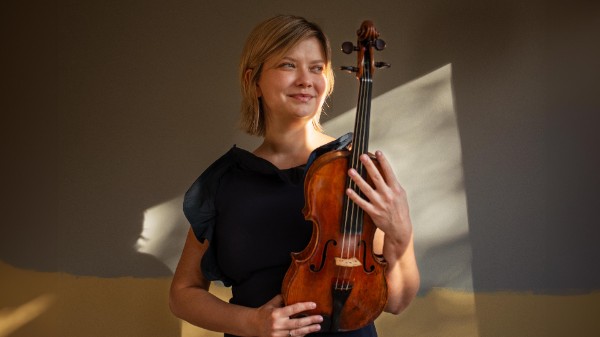
Alina Ibragimova
Ibragimova has taken experimentation to new heights with the Chiaroscuro Quartet, an ensemble she helped found in 2005. To celebrate her birthday, let’s explore the music of the Classical and early Romantic periods on gut strings and with historical bows.
Chiaroscuro Quartet performs Beethoven: String Quartet in G Major, Op. 18, No. 2
A Student Project
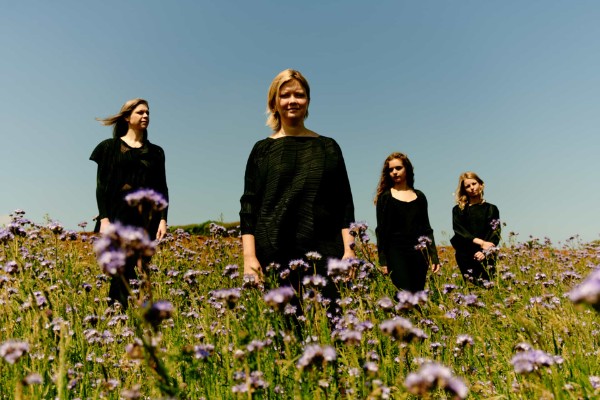
Chiaroscuro Quartet
The Chiaroscuro Quartet started as a student project at the Royal College of Music in 2005. In connection with the upcoming 250th anniversary of Mozart’s birth, Ibragimova brought together a group of fellow students and prepared a Mozart quartet.
Coached by Roger Norrington, they felt an immediate musical connection and decided naturally to continue working together. Speaking about the quartet in a 2012 interview, Ibragimova said, “We don’t do it for anything other than getting into the music.” (Service, The Guardian, 2012)
For 14 years, Pablo Hernán Benedí appeared on almost all of the quartet’s highly acclaimed recordings as the second violinist. Currently, the Chiaroscuro Quartet consists of violinists Alina Ibragimova (Russia) and Charlotte Saluste-Bridoux (France), Swedish violist Emilie Hörnlund, and French cellist Claire Thirion.
Wolfgang Amadeus Mozart: String Quartet No. 23 in F Major, K. 590, “Prussian No. 3” (Chiaroscuro Quartet, Ensemble)
A Name in Light and Shadow
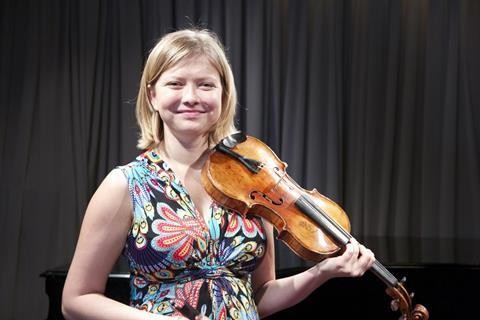
Alina Ibragimova
In a 2025 interview marking the ensemble’s 20th anniversary, the Chiaroscuro Quartet was asked whether a particular piece had inspired its name. They explained that the name came from the first piece they played together, Mozart’s “Dissonance” Quartet. (The Strad, 2025)
During their very first coaching session with Roger Norrington at the Royal College of Music, Norrington talked about the concept of chiaroscuro. Borrowed from painting, the term describes the dramatic interplay of light and darkness that defined Caravaggio’s canvases.
In music, it became a way to understand the tension and expressive contrasts in Mozart’s music. As Norrington described the interplay of light and shadow, the idea stuck, and the musicians adopted “Chiaroscuro” as the name of their newly formed quartet.
Franz Schubert: String Quartet No. 14 in D Minor, D. 810, “Death and the Maiden” (Chiaroscuro Quartet, Ensemble)
Raw, Transparent, Alive
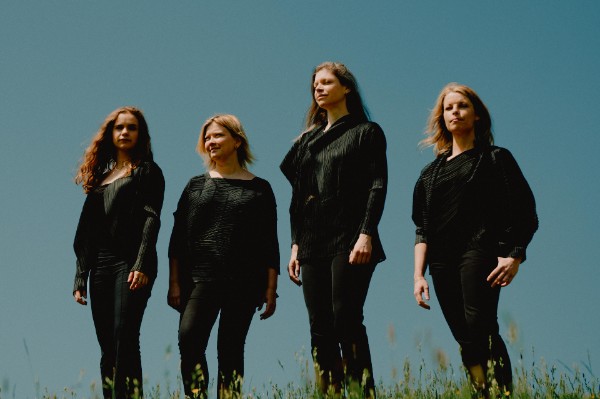
Chiaroscuro Quartet
For the ensemble, “Chiaroscuro” felt like a natural reflection of their musical identity. They are rooted in tradition, but always searching for nuance, surprise, and emotional depth. The use of gut strings has certainly shaped their sound palette.
As they explained, “Gut strings give us access to an extraordinary range of sounds, from a pure, almost transparent tone that lets the harmony shine through, to something much rougher, raw, even violent, with a strong sense of texture. Their flexibility and sensitivity require careful listening and a real-time response.”
“You can’t simply impose your interpretation; you have to work with how the string wants to speak. This creates a different kind of interaction: more alert, more spontaneous. It sharpens our awareness not just of our own instruments, but of one another. It becomes a genuine conversation, full of risk and discovery.” (The Strad, 2025)
Franz Joseph Haydn: String Quartet No. 26 in G Minor, Op. 20, No. 3, Hob.III:33 (Chiaroscuro Quartet, Ensemble)
The Beauty of Difference
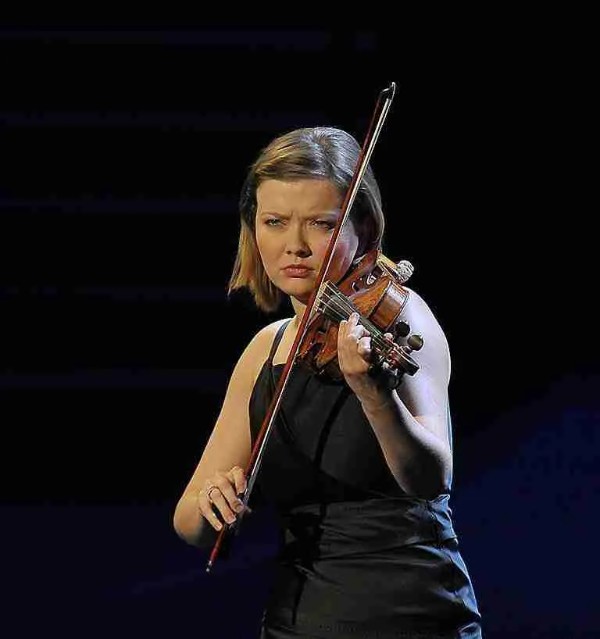
Alina Ibragimova
The quartet’s unique sound, described in The Observer as “a shock to the ears of the best kind,” is highly acclaimed by audiences and critics all over Europe, with its lithe and gracious playing combined with an extraordinarily committed ensemble mentality. (Chiaroscuro Quartet)
When talking about their major accomplishments, it becomes clear that they are not looking for prestigious awards. “What we are most proud of is that, despite the logistical challenges of living in different countries, we continue to prioritise the quartet. That ongoing commitment to making music together feels like our greatest accomplishment.” (The Strad, 2025)
Some listeners hear transparency, colour, and immediacy, while others lament the lack of warmth and conventional beauty. Be that as it may, the Chiaroscuro Quartet has made that distinctive sound an essential part of its musical identity.
For more of the best in classical music, sign up for our E-Newsletter