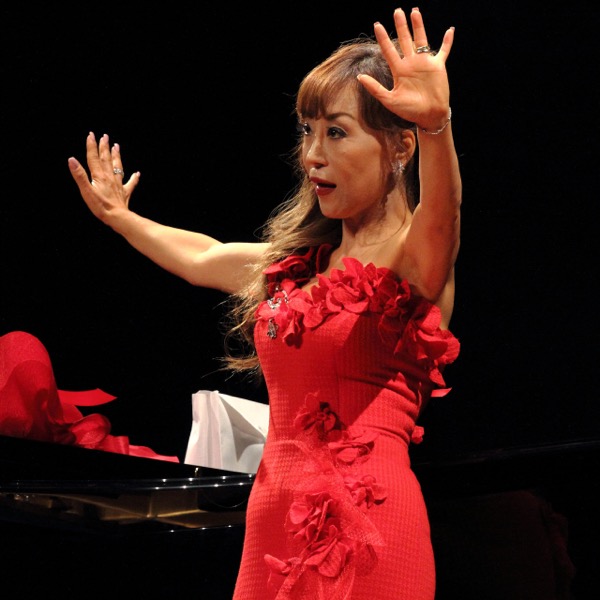
The remarkably versatile Austrian mezzo-soprano Angelika Kirchschlager was born in Salzburg on 24 November 1965. Enjoying a highly successful international career, her artistry encompasses Mozart and Handel, the great German Lied tradition, Richard Strauss and contemporary opera.

Angelika Kirchschlager
Kirchschlager has recorded a substantial discography of roughly 25 to 30 albums under her own name, or as a featured soloist. To celebrate her birthday on 24 November, why don’t we feature eight of her essential recordings?
Wolfgang Amadeus Mozart: Le nozze di Figaro, K. 492, Act II Scene 2: Arietta: Voi, che sapete che cosa è amor (Angelika Kirchschlager, mezzo-soprano; Concerto Köln; René Jacobs, cond.)
Wolfgang Amadeus Mozart—A Natural Home for Her Voice
Having been born in Salzburg, it’s not really surprising that Mozart is her favourite composer. “The fascinating thing about his music,” she says, “is that you have a view up to heaven. It’s perfect. It’s so simple, so direct. He shows us what humanity is.”
Released by Harmonia Mundi in March 2004, René Jacobs’s interpretation of Mozart’s The Marriage of Figaro featured Kirchschlager as Cherubino. This recording won a Grammy for Best Opera Recording and was Gramophone’s Recording of the Year in 2004.
During the early days of her career, Kirchschlager was considered a specialist in trouser roles, and Cherubino fits perfectly. The young page in the opera is caught between adolescence and adulthood, and in love with every woman he encounters.
In the famous Act II aria “Voi, che sapete,” Cherubino attempts to explain the sensation of being in love, and Kirchschlager’s voice, with great warmth and flexibility, conveys Cherubino’s confusion without turning him into a caricature. It is one of the most important recordings in Kirchschlager’s discography, and a strong choice for this selection of essential recordings, don’t you think?
Franz Liszt: Der du von dem Himmel bist, S279/1 (Angelika Kirchschlager, mezzo-soprano; Julius Drake, piano)
Franz Liszt: Der du von dem Himmel bist, S279/3 (Angelika Kirchschlager, mezzo-soprano; Julius Drake, piano)
Franz Liszt—The Intimate Side
Kirchschlager feels very strongly about the need to continue the German Lied tradition, and to support and encourage composers and singers. “It is my love for the genre, Lied, and the challenge of understanding and transporting the message, the emotion of a song to the audience.”
Recorded for Hyperion in 2012, Kirchschlager teamed up with pianist Julius Drake for an ambitious complete-song project featuring Franz Liszt. The album brings together eighteen songs that span about thirty years of Liszt’s creative life.
Reflecting the composer’s extraordinary cosmopolitan outlook and his lifelong fascination with the relationship between words and music, Kirchschlager avoids making the Liszt songs, set to German, French and Italian poetry, sound like miniature operatic arias.
For Kirchschlager, the poetry always determines the musical expression, subtly demonstrated by two different versions of the same Goethe setting of “Der du von dem Himmel bist.” The album won the 2013 BBC Music Magazine Vocal Award, and critics loved her distinctive vocal timbre and rich resonant voice.
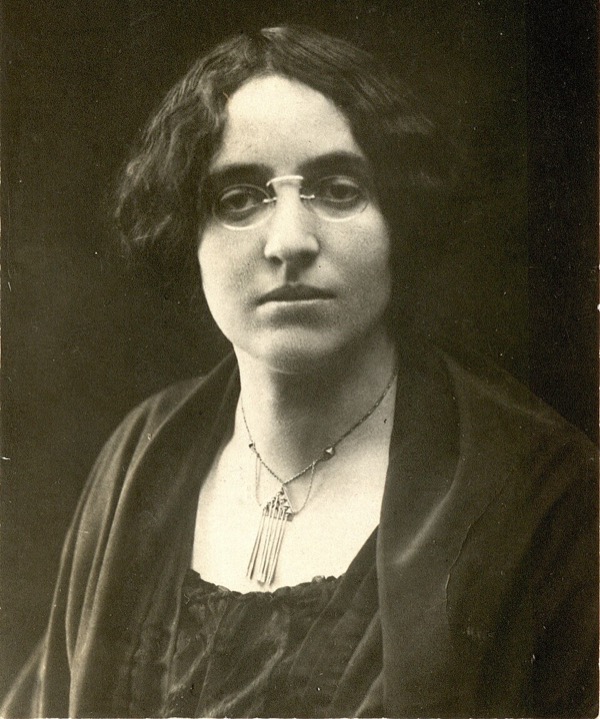
Alma Mahler-Werfel: 5 Lieder (Angelika Kirchschlager, mezzo-soprano; Helmut Deutsch, piano)
Alma Mahler—Songs of a Changing Vienna
Kirchschlager’s first solo recital disc, recorded at the Esterházy Palace in Eisenstadt, Austria, in 1996, is essential listening for anyone wishing to understand her development as a Lied interpreter. This recording brings together three composers associated with the fin-de-siècle Vienna.
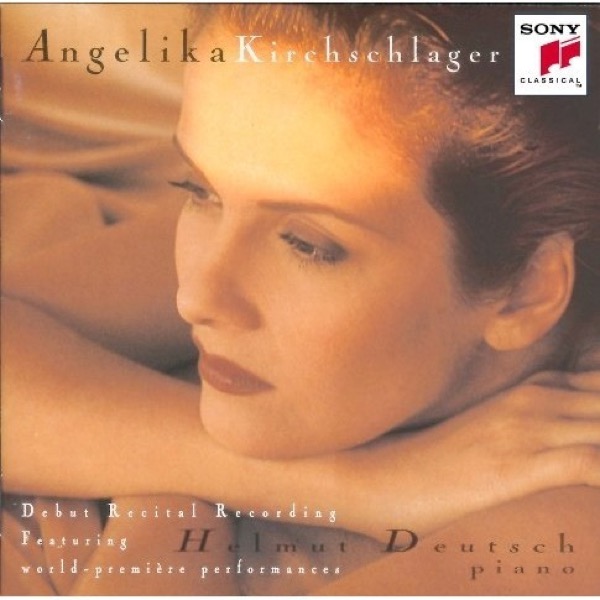
Angelika Kirchschlager: Debut Recital Recording
Featuring songs by Gustav and Alma Mahler, as well as Erich Wolfgang Korngold, the selections allow Kirchschlager to reveal different aspects of her expressive personality. We find Mahler’s mixture of folk poetry and existential melancholy, Alma’s intimate lyricism, and Korngold’s richly coloured imagination.
Kirchschlager performs the Alma songs with considerable sensitivity, and BBC Music Magazine specifically admired her interpretations of the settings of Rilke and Heine. Here, Kirchschlager creates a sense of suspended time and uneasy calm.
Kirchschlager’s emergence as a recital artist was greeted with remarkable encouragement. Critics overwhelmingly admired the balance of the programme and Kirchschlager’s dramatic command. For me personally, this recording strongly deserves a place on my list of essential recordings.
Watch Robert Schumann: Frauenliebe und -leben, Op. 42 – I.
Seit ich ihn gesehen
Robert Schumann—The Art of Expression
At the core of Kirchschlager’s Lied artistry is the interplay of intimacy, storytelling, and vocal colour. Her performances are marked by an almost conversational immediacy, combining a sense of personal narration with great attention to textual detail.
This intimacy comes into sharp focus in Schumann’s celebrated song cycle Frauenliebe und -leben, composed in 1840. The poems by Adelbert von Chamisso trace the emotional journey of a woman from first love and marriage to motherhood and bereavement.
Beautifully shaping the melodic lines to convey psychological subtlety, Kirchschlager turns each song into a miniature drama. Her complete mastery of colour and timbre allows her, particularly important in a song cycle, to inhabit multiple emotional states in rapid succession.
As she once stated, “The voice is a way to express your feelings. You don’t just want to show it off. That’s not very interesting, even if it’s beautiful.”
Hugo Wolf: Mörike-Lieder (excerpts) (Angelika Kirchschlager, mezzo-soprano; Roger Vignoles, piano)
Hugo Wolf—Poetry of the Human Soul
The psychologically intricate songs by Hugo Wolf require exceptional sensitivity to language, character, and musical atmosphere. It might well be argued that Wolf’s songs are particularly well suited to her particular vocal gifts.
The poetry of Eduard Mörike inspired some of Wolf’s finest compositions. His legacy endures in his reshaping of the German Lied tradition. Capturing every shade of meaning in a poem and expressing it through a post-Wagnerian musical language, he sought to extract the emotional and psychological truth with unflinching honesty.
Critical reception confirms Kirchschlager’s affinity with Wolf, as she comes across as a natural communicator of his songs. As she explained, “We need to understand the poetry and then bring it alive through our voice.”
Her voice has been praised for its remarkable emotional expression, allowing each song to unfold as fully realised human drama. Pianist Roger Vignoles provides a gold thread through his intricate accompaniments.
Johannes Brahms: 7 Lieder, Op. 48 (Angelika Kirchschlager, mezzo-soprano; Graham Johnson, piano)
Johannes Brahms—Emotional Restraint
Angelika Kirchschlager’s interpretations of Brahms clearly deserve a place among the essential recordings. The Complete Brahms Songs, Volume 1 was released in 2010 and features Graham Johnson as the pianist.
I particularly like her ability to communicate emotional restraint without resorting to operatic exaggeration. Her interpretations unfold completely naturally from the poetry and the changing musical atmosphere.
Graham Johnson is a particularly valuable partner, as he has the scholarly background and a deep understanding of Brahms’ contrapuntal language that enable him to produce imaginative and skilful piano accompaniments.
As Kirchschlager remarked, “The tools we need for a Lied interpretation are not a big philosophy but rather very hard work. And finally, after all this hard work of preparation, a song needs our soul to be able to fly and reach other human beings.”
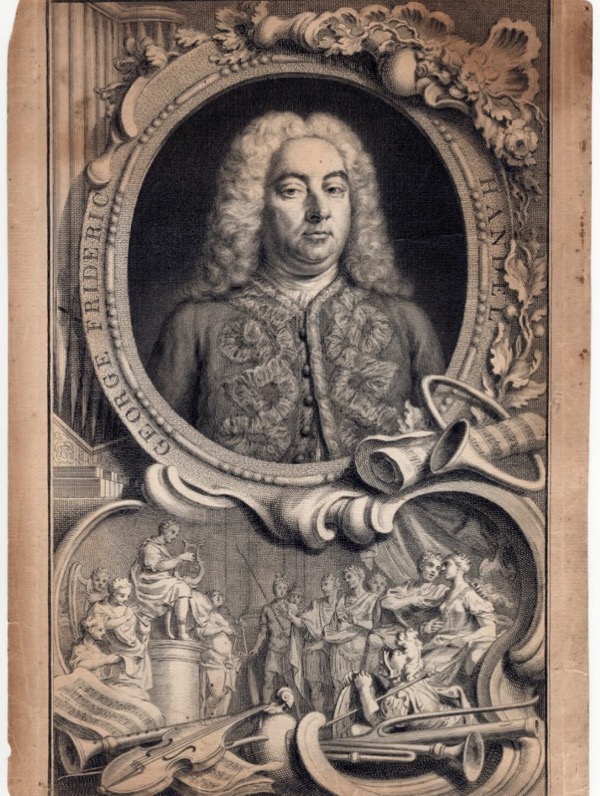
George Frideric Handel: Giulio Cesare in Egitto, HWV 17 (excerpts) (Angelika Kirchschlager, mezzo-soprano; Basel Chamber Orchestra; Laurence Cummings, cond.)
George Frideric Handel—Theatrical Passion
Angelika Kirchschlager has always been determined not to become predictable, and instead insists on artistic growth. As she explained, “If you just do Verdi your whole life, even if you are fantastic, it would be boring. The fascinating thing is to experience new things.”
I would definitely include Kirchschlager’s appearance as Sesto in Handel’s Giulio Cesare in Egitto among her essential recordings. She has sung the role on stage, particularly in the celebrated Glyndebourne 2005 production conducted by William Christie.
In her stage performances, we can certainly admire her physical acting and theatrical characterisation. Sesto is once again a trouser role, as he is the son of Cornelia, whose husband has been murdered. Overwhelmed by grief, Sesto is ready to avenge his father’s death.
The role is written for mezzo-soprano, and combines lyrical tenderness with youthful agitation. Once you add heroic resolve, the role becomes particularly suitable for Kirchschlager. She is perfectly at home within the Baroque style, and effortlessly negotiates some of Handel’s most elaborate coloratura writing.
Richard Strauss—Vocal Magic
Angelika Kirchschlager made her debut at the Graz Opera in 1993, singing the role of the teenage Octavian in the Rosenkavalier by Richard Strauss. She immediately caused a sensation and was quickly invited to Vienna, where she found herself primarily identified with trouser roles.
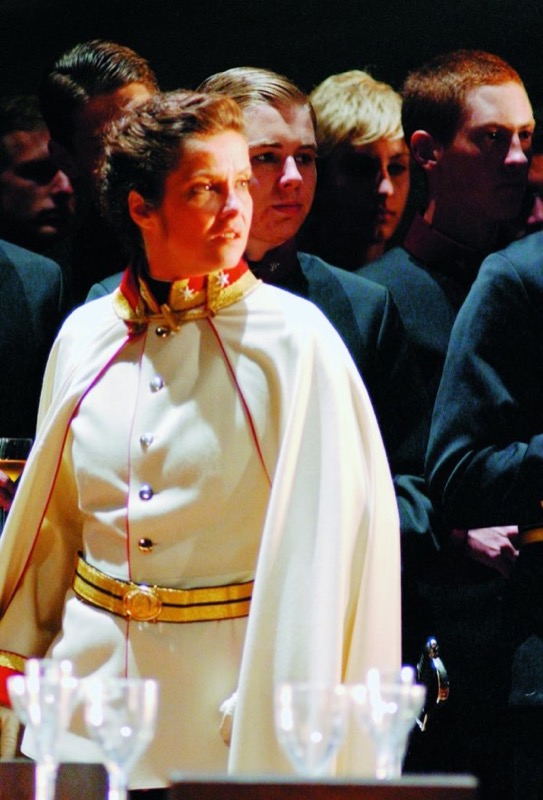
Angelika Kirchschlager as Octavian
As she explained, “That was not really my choice. It’s what I can sing with my voice, and I actually prefer male roles to female roles. Light and easy-going female characters are not really a challenge. When I play men, I have the feeling I have a direction.”
To be sure, “Octavian” is one of her signature roles, and arguably, one of the most significant documents of Kirchschlager’s operatic career. She brings an irresistible combination of youthful impetuosity and vocal sensuality to the role.
And truth be told, the presentation of the Silver Rose is one of the most beautiful moments in the opera, with Strauss asking for otherworldly delicacy. Kirchschlager responds with wonderful sensitivity and poised, affectionate phrasing. It is a scene of outstanding vocal beauty.
What I ultimately appreciate most about Angelika Kirchschlager’s performances is that she is first and foremost a storyteller. And while her voice can be admired for its beauty, it is always a means of communicating human emotions. In each of the featured roles, she projects unmistakable individuality and musical intelligence.
For more of the best in classical music, sign up for our E-Newsletter