François Couperin, [le grand], born on 10 November 1668 in Paris, was the most important member of the Couperin dynasty of musicians. He wrote some of the finest music of the French classical school, and far surpassed his contemporaries in his use of harmony, range, and melodic construction.
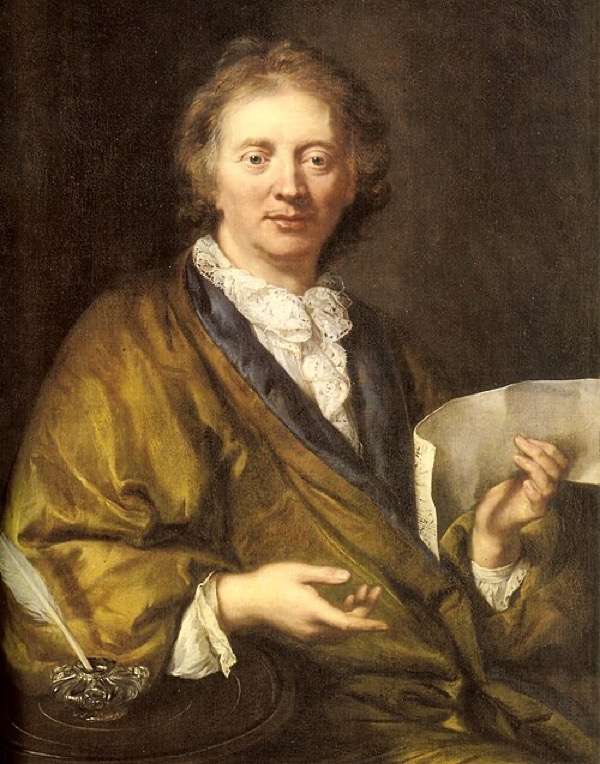
François Couperin
He published music for organ, chamber ensembles, and voice, blending French and Italian styles. However, his four harpsichord books, comprising some 226 pieces, represent his crowning achievement.
François Couperin: Pièces de clavecin, “Les Barricades Mystérieuses” (Hewitt)
Musical Portrait of an Age
As Edward Higginbottom writes in Grove Music Online, “In its wealth of ideas, range of expression, and relationship to the culture from which it sprang, Couperin’s harpsichord music stands unequalled in 18th-century France.”
“At the same time, it is an intensely personal testimony, revealing not only the most telling aspects of his art but also, intimately, his relationship with French society. The harpsichord music is a sort of social commentary, rich in humour, wit, irony, satire, charm, compassion, and disdain. In this music, Couperin observed his age as few composers have done before or since.”
François Couperin: Pièces de clavecin, Book 2: 6th Ordre: Les bergeries (naivement) (Angela Hewitt, piano)
Angela Hewitt Takes Up the Challenge
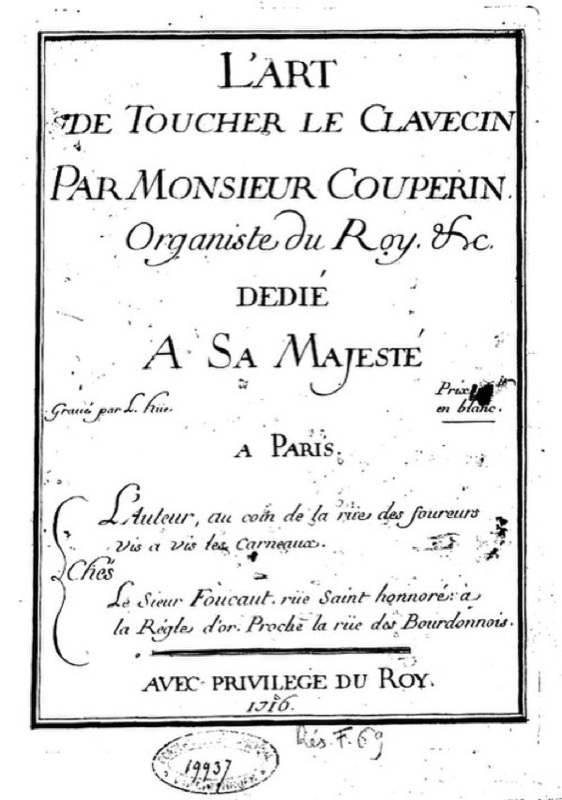
L’Art de toucher le clavecin
In his L’Art de toucher le clavecin (1716), Couperin praised the harpsichord but also described its shortcomings. “The harpsichord is perfect about its compass and its brilliance; but as one can neither swell nor diminish the sound, I am always grateful to those who, by an art sustained by taste, can render the instrument susceptible to expression.”
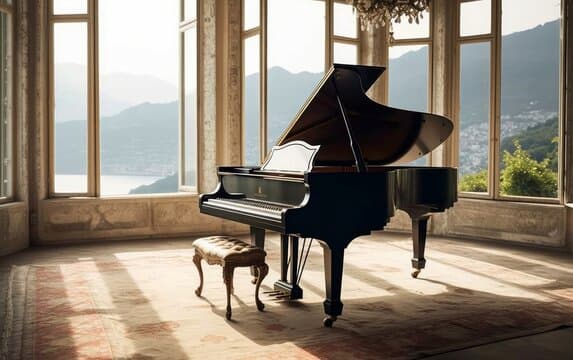
This sounds like an open invitation to transfer Couperin’s music to the modern piano, and in 2003 Angela Hewitt took up the challenge. Initially, Hyperion argued that since Bach, Scarlatti, and Handel are readily performed on modern instruments, why not Couperin?
François Couperin: Pièces de clavecin, Book 2: 8th Ordre: La Raphaéle (Angela Hewitt, piano)
A Gallery of Musical Characters
Angela Hewitt began investigating the repertoire and brought these French Baroque miniatures into her concert programmes. The result was successful enough to inspire two further volumes.
The first CD contains 25 pieces from three Ordres, including the delightful “Les Moissoneurs” and “Les Barricades Mystérieuses.” You will have noticed that Couperin attached unusual and fanciful titles to his pieces.
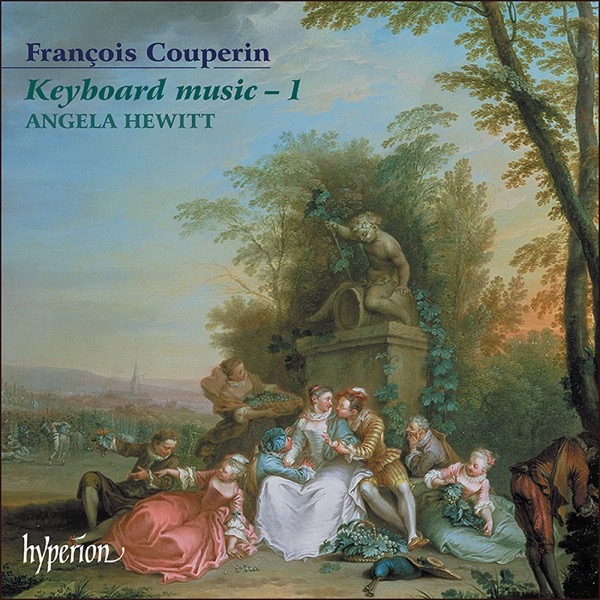
Angela Hewitt: Couperin, Vol. 1
As he writes, “I have always had an object in mind when composing these pieces, suggested to me by various events or circumstances. Thus, the titles relate to ideas that have occurred to me, and I shall be forgiven if I do not account for them…Most of these flattering titles are given rather to the amiable original which I have sought to portray, than to the settings which I have drawn from them.”
François Couperin: Pièces de clavecin, Book 2: 6th Ordre: Les moissoneurs (gayement) (Angela Hewitt, piano)
Beyond the Ornaments
In the booklet to the first volume, Hewitt explains that she initially read through all 226 pieces and then selected those that she felt would translate best to the modern piano. A substantial part of her introduction concerns ornamentation, and she insists that ornaments must be understood as part of the music itself and should neither be arbitrarily added nor removed.
As such, Hewitt uses the pedal sparingly, in essence trying to preserve the character of the harpsichord writing on a rather dry-sounding Steinway. The second volume was released in March 2004, and contains twenty-one pieces from Book IV.
François Couperin: Pièces de clavecin, Book 4: 25th Ordre: Les ombres errantes (Angela Hewitt, piano)
Pieces like “Les Ombres errantes,” “La Pantomime,” and “Les Chinois” are more inward-looking than those on the first disc. This might not be surprising, because the composer himself spoke about his deteriorating health and the fact that friends had advised him to stop composing.
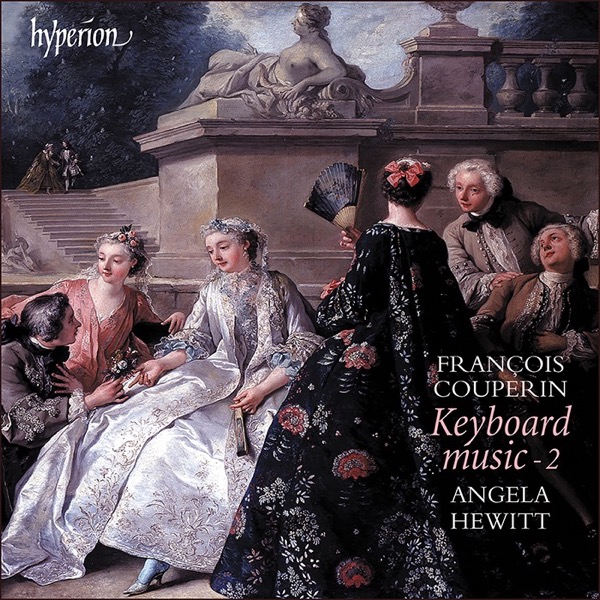
Angela Hewitt: Couperin
Hewitt sees this collection as marked by a stronger presence of melancholy and mystery. She points to wonderful descending chromatic lines, unusual tonalities, and more complex contrapuntal writing. In fact, she suggests that some passages might actually be mistaken for Bach.
François Couperin: Pièces de clavecin, Book 4: 27th Ordre: Les chinois (Angela Hewitt, piano)
When Music Becomes Theatre
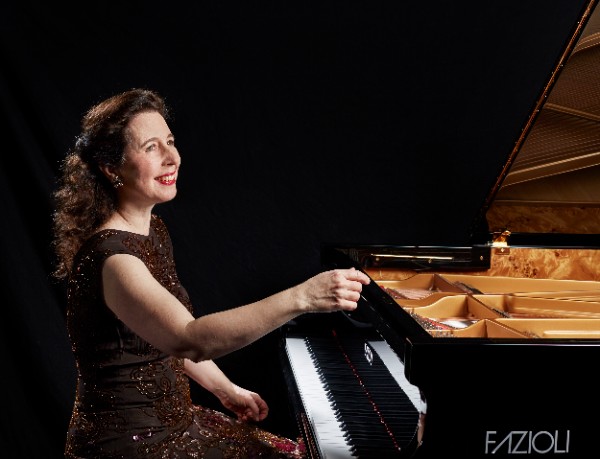
Angela Hewitt © Keith Saunders
The third and final volume was released in October 2025, and Hewitt presents the complete Treizième Ordre, which she considers one of Couperin’s finest suites. She relates it to Philippe d’Orléans, the Regent of France, who frequently organised masked balls notorious for their scandalous behaviour.
And thus, we find an entire lineup of disguises with wonderfully descriptive titles like “La Virginité,” “L’Ardeur,” “La Langueur,” and “Les Vieux Galans et les Trésorières Suranées.” Hewitt goes on to explain how Couperin translates these masked characters into musical gestures.
“Coquetry” is represented by three different time signatures in the opening four bars, and “Silent Jealousy” moves into the lower register to produce one of the darkest variations. This suite does not finish with a theatrical flourish. Instead, Couperin gives us “L’Âme-en-peine,” a piece full of sighing figures.
François Couperin: Pièces de clavecin, Book 3: 13th Ordre in B Minor (Angela Hewitt, piano)
Respecting the Past
Reviewers were full of praise, and across this three-volume set, Hewitt is not interested in transcriptions; instead, she selects the pieces she believes are particularly suitable for the modern piano.
At the same time, we find great respect for the original, as she preserves Couperin’s ornamentation, articulation, and intended musical textures. And finally, particularly clearly in Volume 3, Hewitt makes the point that the piano can reveal additional dimensions of Couperin’s lyrical writing through subtle dynamic shading.
François Couperin: Pièces de clavecin, Book 2: 7th Ordre: La Ménetou (Angela Hewitt, piano)
Journey of Rediscovery
Angela Hewitt’s recordings were not the end of the story, as other pianists have explored Couperin on the modern piano since. Alexandre Tharaud issued his “Tic toc choc” in 2007 with Harmonia Mundi, and Mariko Terashi transferred various works of French Baroque keyboard music to the modern piano, including pieces by Couperin. In a 2018 release, Clément Lefebvre paired Couperin with works by Rameau.
François Couperin’s music is finding new audiences and expressive possibilities through the modern piano. In addition, more pianists are discovering the intimacy and emotional depth within these delicate miniatures. Although originally composed nearly three centuries ago, the modern piano can reveal an unexpected freshness, fulfilling something Couperin himself had already dreamed of.
For more of the best in classical music, sign up for our E-Newsletter