If you travel a short distance outside Stockholm to the island of Lovön, you will reach the royal grounds of Drottningholm Palace. Near the main palace stands a modest, two-story building. From the outside, it looks like an ordinary country house or a small estate manor. You would never guess that behind its plain walls sits one of Europe’s most remarkable and intact opera houses.
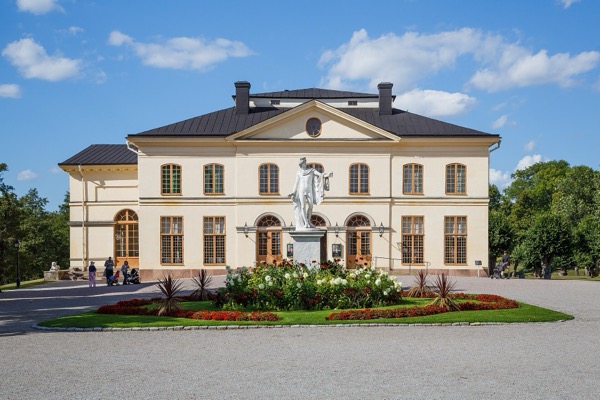
Drottningholms slottsteater, exterior
The theatre’s story begins in the mid-18th century. Queen Lovisa Ulrika had an earlier wooden theatre on the grounds, but it burned down during a performance in 1762. She hired the architect Carl Fredrik Adelcrantz to design a new opera house. As the Swedish state treasury was short on funds at the time, Adelcrantz had to find a smart solution. He used painted canvas, papier-mâché, and stucco to imitate rich marble columns and heavy gold leaf. The building officially opened in 1766.
The theatre truly flourished under Queen Lovisa’s son, King Gustav III. Gustav loved the performing arts. He wrote plays, hired foreign opera companies, and encouraged operas in Swedish. Every summer, the court moved to Drottningholm, and the theatre was the centre of royal life.
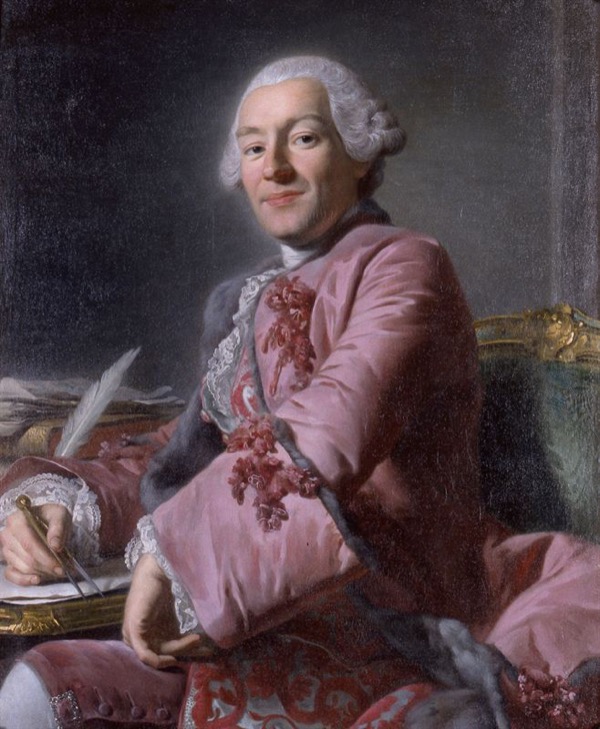
Alexander Roslin’s portrait of Carl Fredrik Adelcrantz made during the latter’s stay in Paris in 1754
(in the collection of the Royal Swedish Academy of Arts)
However, this golden age ended abruptly in 1792. King Gustav III was shot during a masked ball at the opera in Stockholm and died shortly after. Following his death, the royal family lost interest in the theatre at Drottningholm. They locked the doors and walked away.
For more than a century, the theatre remained closed. The palace used the building as a dusty storage space for old furniture and unused household items. Yet this long period of neglect proved to be a wonderful blessing. Across Europe, other 18th-century theatres were upgraded with modern equipment, modified by new owners, or destroyed by fires. Drottningholm sat in the dark, forgotten by time.
In 1921, a Swedish theatre historian named Agne Beijer walked into the long-abandoned building. He was looking for an old painting, but instead, he uncovered a historical treasure. Under the dust and cobwebs, everything was still there. The stage machinery, the wooden wheels, the hemp ropes, and the original hand-painted scenery wings were sitting exactly as the stagehands had left them in the late 1700s.
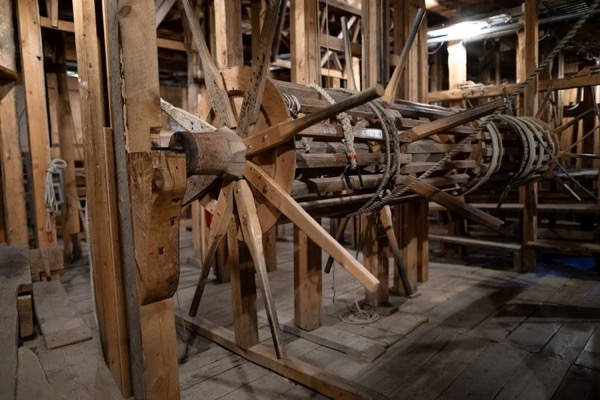
Original wooden stage mechanism
What makes Drottningholm unique today is that these wooden machines still work. Designed by the Italian engineer Donato Stopani, the system uses wooden axles, ropes, and counterweights hidden under the floor. Stagehands can turn a single central wheel under the stage to move multiple side wings at once. This allows them to change the entire stage background in just six seconds. The theatre also features classic mechanical effects: long wooden corkscrews that spin to mimic rolling sea waves. This wooden drum tumbles stones to create thunder sound effects, and overhead rigs lower gods from the ceiling.
The 1975 Story: Bergman and The Magic Flute
This amazing historical preservation leads directly to one of the most famous film stories of the 20th century. In the early 1970s, the world-renowned Swedish film director Ingmar Bergman decided to make a movie version of Wolfgang Amadeus Mozart’s opera The Magic Flute.
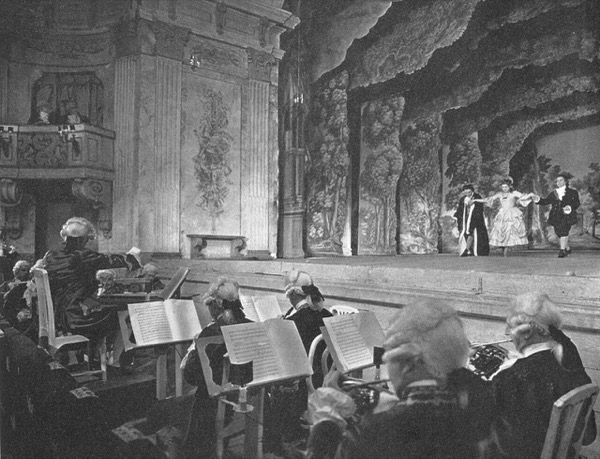
Orchestra in performance, 1966
Bergman had loved this opera since his childhood. He wanted his film to feel intimate, joyous, and theatrical. He felt that the cosy atmosphere and 18th-century scale of the Drottningholm Palace Theatre would provide the perfect backdrop for Mozart’s music. However, when Bergman and his production team inspected the building, they ran into insurmountable problems. The historic theatre was far too fragile to handle a full film crew. The structure was made almost entirely of old wood, dry canvas, and paper. The heavy cinema cameras, large crew, and thick power cables risked damaging the original floorboards and delicate painted scenery.
The Magic Flute (1975), directed by Ingmar Bergman
Even worse were the lights. Filming in 1974 required extremely hot, powerful studio lighting. Placing those blazing lamps near two-hundred-year-old wooden machinery and dry painted cloth presented a catastrophic fire hazard. The palace curators and preservationists eventually refused permission.
Bergman was disappointed, but he refused to abandon his creative vision. If he could not bring his cameras into the real Drottningholm Theatre, he would build a copy. He took his production team to the Swedish Film Institute’s main soundstages in Filmstaden. There, artisans painstakingly constructed a full-scale replica of the Drottningholm stage. They copied every detail of the auditorium and stage architecture. They built working copies of the wooden stage machinery, painted side wings, drop curtains, and wind machines. They even recreated the warm, gentle quality of candlelight using carefully controlled electric lights.
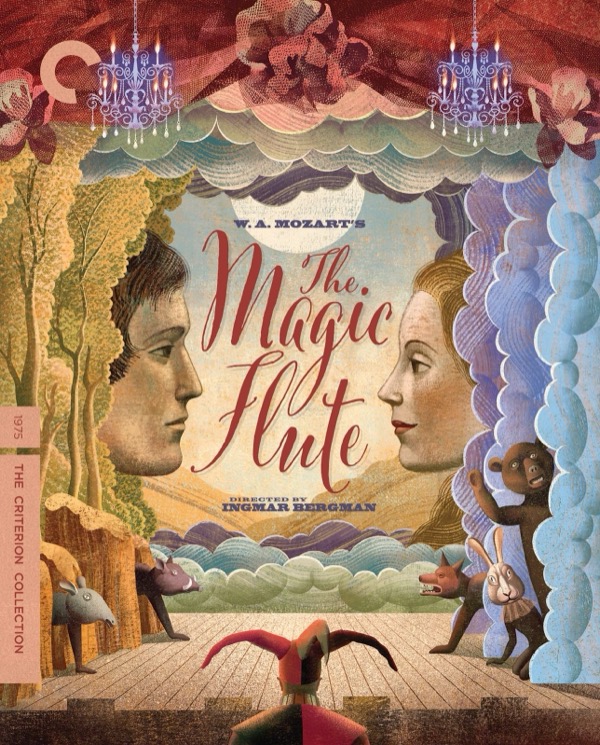
The Re-issue DVD Cover of the film
When the movie was released in 1975, the illusion was seamless. The film opens with beautiful exterior shots of the real Drottningholm Palace, its peaceful gardens, and the theatre building’s outer walls. But the moment the camera cuts indoors to show the opera performance and the audience, viewers are actually looking at a studio set built inside a soundstage.
Bergman’s trick worked beautifully. The film captures the exact warmth, playfulness, and human scale of an 18th-century court theatre. Critics worldwide praised the movie, and many viewers believed they were seeing the real historic building.
A Living Portal to the Past
In 1991, UNESCO named the Drottningholm Palace, the theatre, and the surrounding estate a World Heritage site. Today, the venue is far more than a museum exhibit. Every summer, it hosts an active opera festival, especially for Baroque repertoire.
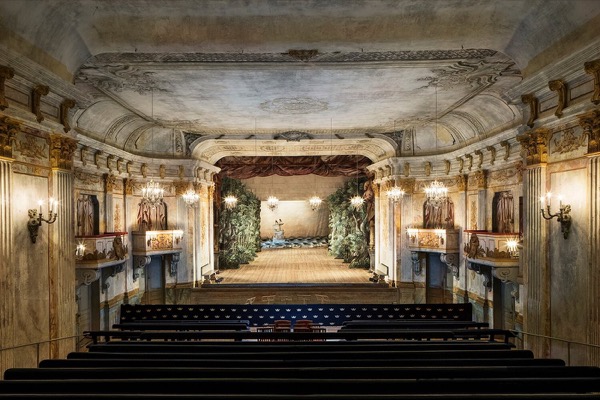
Stage of Drottningholms Slottsteater in 2016
Musicians dress in period costumes and play 18th-century music on period instruments. They do not use modern electric motors on stage. Stagehands still pull the original wooden ropes, turn the thunder drums, and roll the wave machines by hand, just as workers did in King Gustav III’s day.
When you take a seat on the wooden benches inside Drottningholm, you are stepping into a living portal to the past, experiencing opera exactly as it looked and sounded over two centuries ago.
For more of the best in classical music, sign up for our E-Newsletter