Pyotr Ilyich Tchaikovsky had one of the most striking final years of any major composer. In it, he conducted throughout Europe, earned an honorary doctorate, created arguably his greatest symphony – and then died shockingly.
Today we’re looking at everything that happened in Tchaikovsky’s final year, using New Style / Gregorian calendar dates.
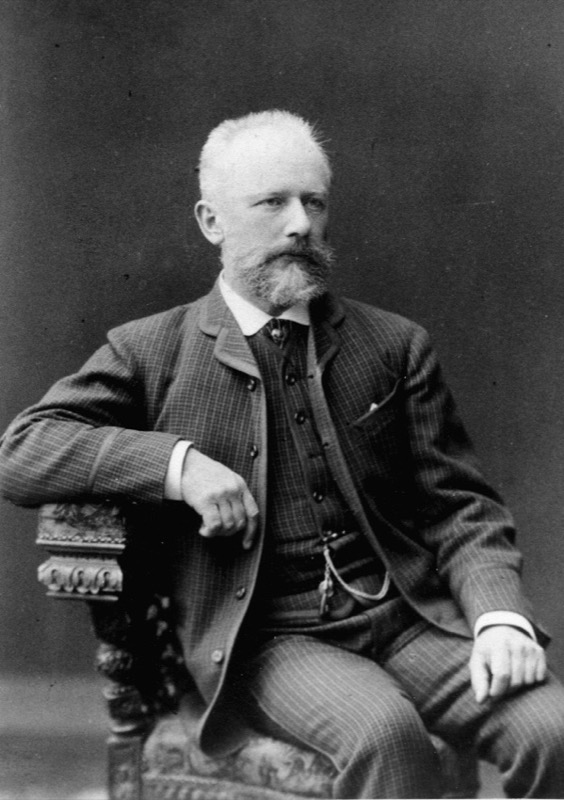
Pyotr Ilyich Tchaikovsky
November 1892
A reconstruction of Tchaikovsky’s abandoned Symphony in E-flat major
In November 1892, Tchaikovsky abandoned a Symphony in E-flat major, which is little known today. He later adapted the material he’d developed for this symphony for his third piano concerto.
In mid-November, he arrived in St. Petersburg to rehearse his new opera and ballet, Iolanta and The Nutcracker, respectively, scheduled to premiere on a double bill the following month.
During this promo cycle, he gave interviews to local media, focusing less on the music and more on his broader career.
He said he wanted to retire in five years and that he was impressed by several rising talents, including Alexander Glazunov and Sergei Rachmaninoff.
December 1892
Tchaikovsky’s The Nutcracker
The month kicked off with the St. Petersburg premiere of the revised version of his string sextet Souvenir de Florence.
But the month’s highlight came on 18 December with the long-awaited premieres of Iolanta and The Nutcracker. All of fashionable St. Petersburg society was there, including Tsar Alexander III and the imperial court.
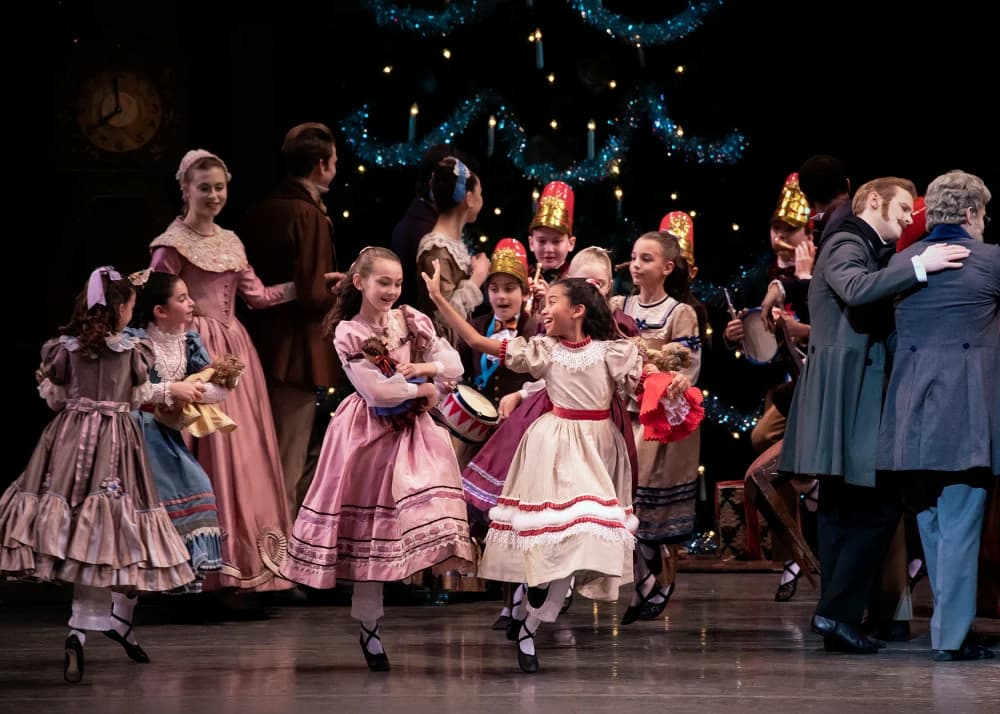
The Nutcracker with Charlotte Nebres as Clara, 2019 (photo by Erin Baiano / New York City Ballet)
Unfortunately, neither work was particularly successful. In the room, they went over well, but newspaper critics were sceptical. Iolanta’s libretto came under fire in the press (awkwardly, since the author was Tchaikovsky’s brother Modest), and The Nutcracker, while praised for the rich colour of its score, was nitpicked for its plot and pacing.
Matters weren’t helped by the fact that the premiere didn’t end until well after midnight, leaving reviewers exhausted and on a tight deadline.
Tchaikovsky left St. Petersburg on 24 December, depressed by the press’s reaction. On his way to European concert engagements, he stopped to visit his childhood governess, Fanny Dürbach, who lived near the Swiss/French border. She had kept some of his childhood papers for over four decades. He wrote to his brother about the visit, “The past rose so vividly before me that I seemed to breathe the air of Votkinsk and hear our mother’s voice.”
January 1893
Tchaikovsky’s The Queen of Spades
While travelling through Brussels, he conducted an all-Tchaikovsky concert on 14 January, to success.
He then took a long route home through Odessa, where his two-week stay turned into a major cultural event. He conducted his own music, attended banquets in his honour, and oversaw a production of his hit 1890 opera, The Queen of Spades.
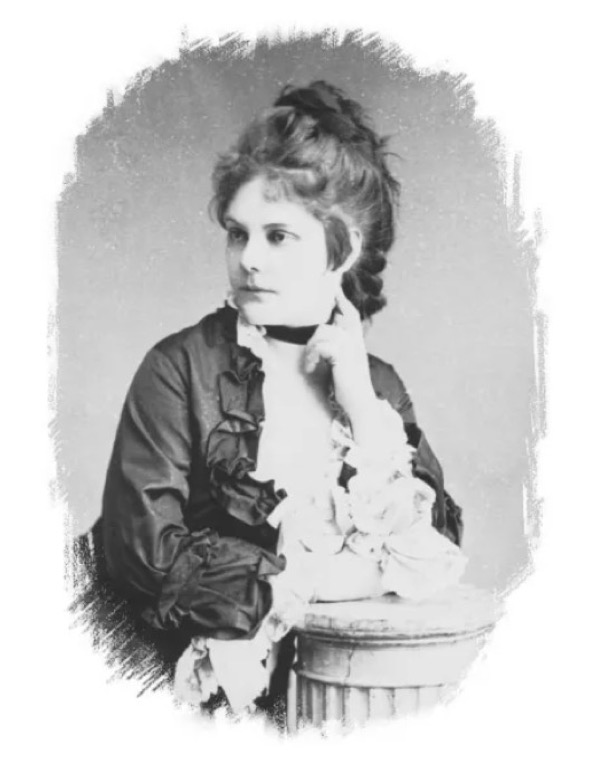
Sophie Menter
He also teamed up with Russian pianist Sophie Menter, a Liszt student famous for her beauty, virtuosity, and love of cats. Historians are unclear exactly how, but he was involved in the creation of her 17-minute-long fantasy for piano and orchestra, Ungarische Zigeunerweisen (Hungarian Gypsy Melodies). They premiered it together in Odessa during this trip.
February 1893
Tchaikovsky had been discouraged by the press reception of Iolanta and The Nutcracker, but his sojourn in Odessa was just the encouragement he needed.
He returned to his home base, a country house located 85 kilometres (roughly 50 miles) northwest of Moscow.
On 23 February, he wrote to his nephew:
“During my journey, I had the idea for another symphony, this time with a program, but with a program that will be an enigma to all – let them guess.”
There, he began sketching a brand new symphony: his sixth.
Within a week, he’d finished the entire first movement, and had a clear idea of what would happen throughout the rest of the work.
March 1893
Tchaikovsky’s The Tempest
The early part of the month was spent feverishly working on the sixth symphony. Interestingly, he put down the tragic finale before the central movements.
Late in the month, he tore himself away from composition to travel to a conducting engagement in Kharkiv in present-day Ukraine.
He enjoyed a major triumph there. When he arrived, the station platform was packed with well-wishers and curious sightseers.
The actual concert consisted of his second symphony, his tone poem The Tempest, and the 1812 Overture. He was rapturously received and couldn’t make it from the stage door to his carriage without the crowd lifting him above their heads.
It had been a heady interlude, but he returned to Klin by the end of the month.
April 1893
Tchaikovsky’s Six Romances, Op. 73
In early April, less than a week after returning home, Tchaikovsky finished his sketches for the rest of his sixth symphony.
For variety, he worked on smaller projects at the same time, including his Eighteen Pieces (Op. 72) for piano and Six Romances (Op. 73) for voice and piano.
It was an intensive, undistracted period of creative focus.
May 1893
Tchaikovsky returned to the road in May. He visited Moscow, Nizhny Novgorod (where Anatoly Tchaikovsky, his brother Modest’s twin, was deputy governor), and St. Petersburg.
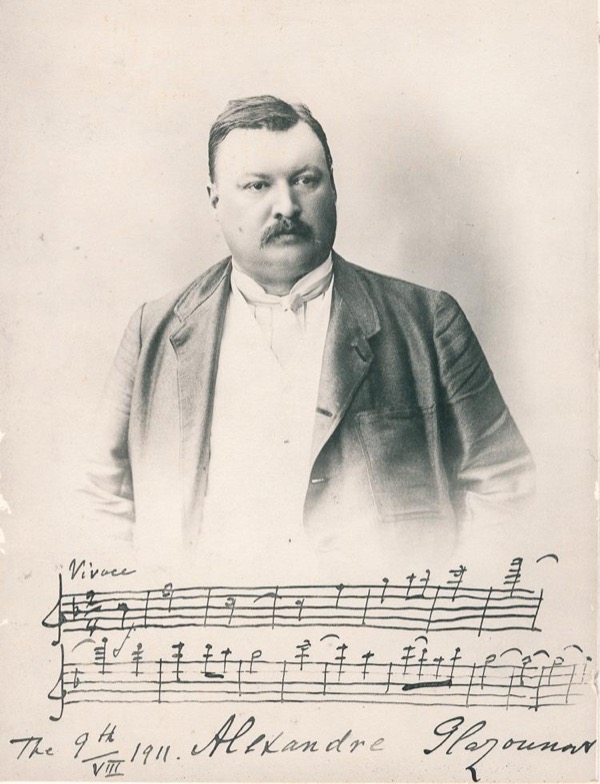
Alexander Glazunov
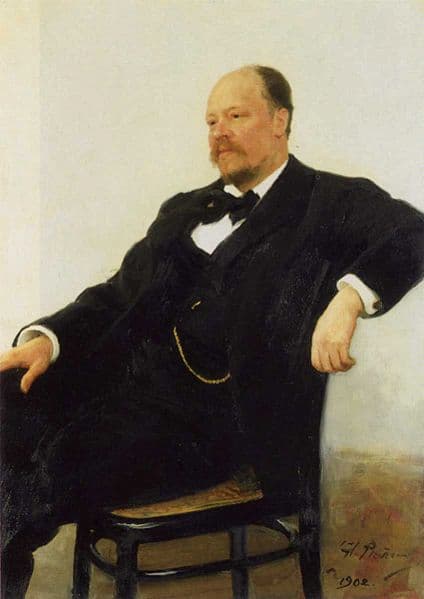
Ilya Repin: Portrait of the composer Anatoly Konstantinovich Lyadov, 1902 (Moscow: Russian Museum)
While in St. Petersburg, he met with several promising young composers, including Glazunov and Lyadov, both of whom he’d praised to the press in December.
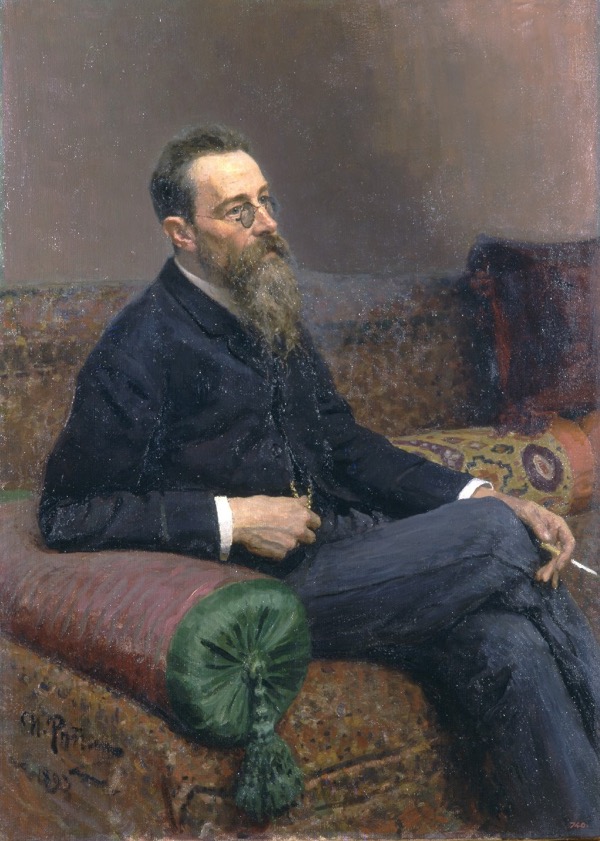
Rimsky-Korsakov (by Repin)
He also caught up with Nikolai Rimsky-Korsakov, his colleague and contemporary, on his name-day celebration. Rimsky-Korsakov asked him if he’d consider conducting four concerts of the Russian Musical Society during the 1893–1894 season. Tchaikovsky agreed.
In late May, he embarked on the long, taxing journey to England, where he was scheduled to accept an honorary doctorate conferred by Cambridge University.
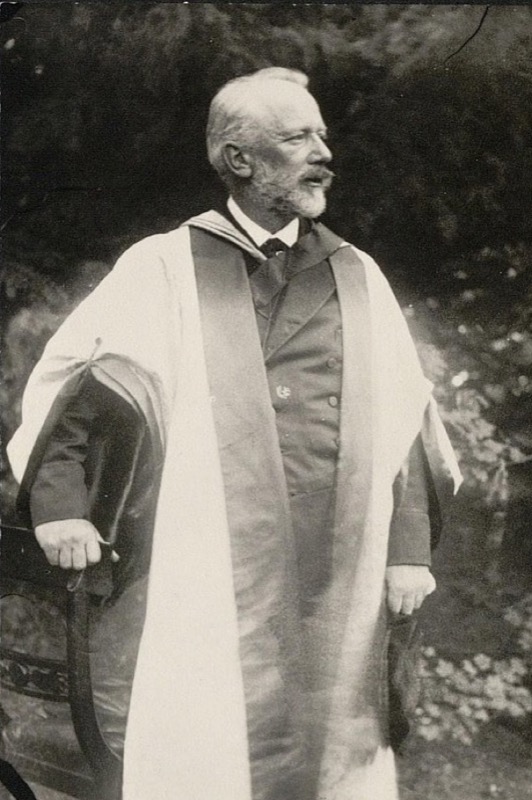
Tchaikovsky getting his honorary doctorate
June 1893
Tchaikovsky’s Francesca da Rimini
The festivities in London were extensive, beginning on 1 June, when the London Philharmonic Society gave the first of two concerts of music by the composers receiving honorary degrees that year. At that concert, they played Tchaikovsky’s Fourth Symphony. Nearly two weeks later, in Cambridge, another concert honoured the recipients.
Tchaikovsky also directed the English premiere of his symphonic poem Francesca da Rimini. Throughout the trip, he was whisked to various celebrations where he was feted.
He finally left Britain on 14 June. He travelled to a striking destination: the German castle of pianist Sophie Menter.
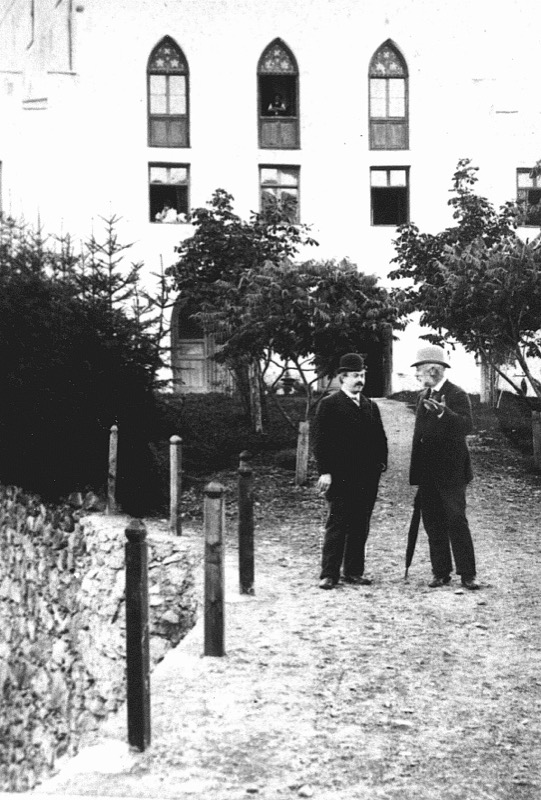
Tchaikovsky at Sophie Menter’s Castle, 1892
By the end of the month, he returned to Russia. He returned to tragic news: several of his colleagues had recently died, including brothers Vladimir and Konstantin Shilovsky, the former of whom had once been his student, and the latter of whom had co-written the libretto for his opera Eugene Onegin.
These losses would help colour the tail end of the sixth symphony’s creation.
July 1893
Tchaikovsky’s Piano Concerto No. 3
July was a quiet month, spent at home working on the sixth symphony, especially its orchestration.
He was also poking around with his third piano concerto, which he’d drawn from discarded material of his abandoned E-flat major symphony.
August 1893
By August, he was nearing the end of the sixth symphony: a major achievement that left him relieved and a little giddy.
He wrote to his publisher Pyotr Jurgenson that he’d “never been so satisfied” with himself, describing the pride and joy the accomplishment gave him.
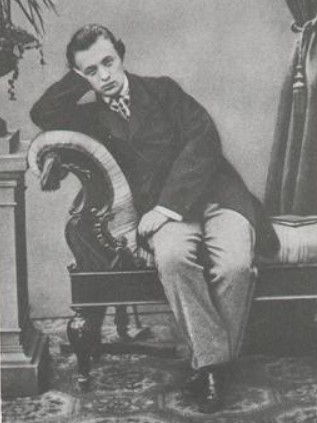
Aleksey Apukhtin
The relief was punctured by news of another friend’s death: Aleksey Apukhtin, a promising poet Tchaikovsky had known as a schoolboy. The two were close; they’d bonded over their love of art and their sexualities (both were gay).
A mutual friend asked Tchaikovsky if he’d consider writing Apukhtin a Requiem, but he believed such a project would retread emotional ground he’d just trod with his sixth symphony.
September 1893
Tchaikovsky’s Iolanta
In early September, Tchaikovsky set off for Hamburg, where he saw Gustav Mahler conduct Iolanta. This time, the audience response was more positive, which must have come as a relief. Mahler’s legendary conducting skills would have helped, too.
He also continued work on his third piano concerto while mulling over his next big project, tossing around ideas like an operatic adaptation of The Merchant of Venice or George Eliot’s Mr Gilfil’s Love Story.
This was the month he also settled on the legendary nickname for his sixth symphony. In Russian, the phrase translates more closely to the adjective Appassionata, suggesting strong emotions generally rather than strong negative emotions specifically. But in English, it has come to be known as the Pathétique.
October 1893
Tchaikovsky’s Symphony No. 6
Tchaikovsky’s surge of creativity continued unabated into October, and by mid-month, he finished scoring the first movement of the Third Piano Concerto.
On the twentieth, he set out for St. Petersburg to attend the premiere of the sixth symphony. He would never return home.
He rehearsed in St. Petersburg for a week. His brother Modest and nephew Bob also happened to be moving apartments at the time, and he helped to oversee that in between rehearsals.
The premiere of the sixth symphony took place on 28 October.
Unfortunately, audiences and critics did not warm to the work immediately, finding its unusual structure – with its devastating finale – challenging. The audience also fell for Tchaikovsky’s trick in the third movement, where the music seems to culminate in triumph, only to collapse back into sorrow while the audience is still clapping.
Tchaikovsky wrote that the audience had found it “something strange.”
November 1893
On the night of 1 November, Tchaikovsky went to see a play called The Ardent Heart. Afterwards, he went out to dinner with friends and family. A cholera outbreak in the city meant restaurants had to boil all water, and at that moment, no boiled water was available. Tchaikovsky asked for a glass anyway.
The following day, while staying over at his brother Modest’s apartment, he developed symptoms of intestinal upset. He waved off the idea of hiring a doctor, but his deteriorating condition meant that Modest was forced to.
On 3 November, his condition seemed to be improving, but by 4 November, it was clear that his kidneys were involved. He would not survive.
Tchaikovsky died at three o’clock in the morning on 6 November 1893.
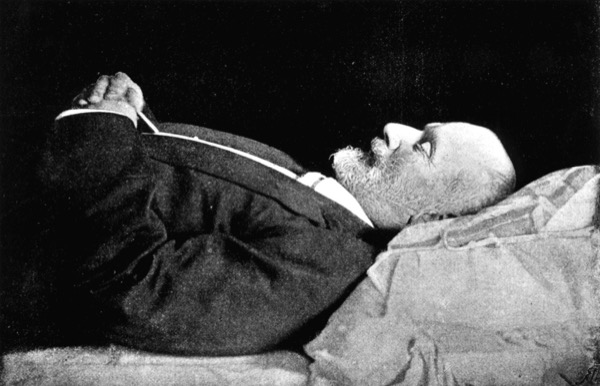
Tchaikovsky on his death bed
On 18 November, a memorial concert was staged, at which the despairing sixth symphony was played. This time, with the new context of Tchaikovsky’s death, the audience was deeply affected by the work, and it has never left the repertoire since.
For more of the best in classical music, sign up for our E-Newsletter