Dmitri Shostakovich wrote several of his greatest works knowing they might never be performed.
Between 1936 and 1949, he composed a symphony, a violin concerto, a song cycle, and a string quartet that were too dangerous to premiere under Stalin.
Each one was shelved, sometimes for over a decade, until the dictator’s 1953 death finally made public performances possible.
Here are the stories behind four of these secret works.
Symphony No. 4, Op. 43
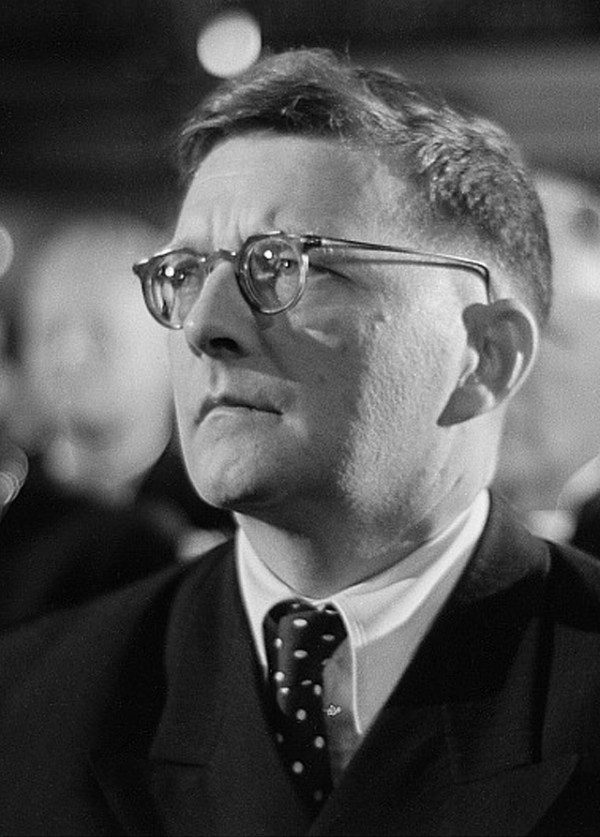
Dmitri Shostakovich © Deutsche Fotothek
Shostakovich composed his fourth symphony between September 1935 and May 1936: a pivotal year for the composer, both personally and professionally.
In late 1935, he and his ex-wife Nina got pregnant; they decided to remarry and raise the baby together.
Soon after, in January 1936, Stalin attended a performance of Shostakovich’s opera Lady Macbeth of the Mtsensk District. Stalin was offended by its violent and sexual themes, leaving before it was finished. When Shostakovich took his bows that night, onlookers said he was white as a sheet.
Presumably at Stalin’s request, on 28 January 1936, the Soviet state paper Pravda published the infamous editorial “Muddle Instead of Music.” Additional anti-Shostakovich editorials appeared in February, too.
Stalin’s disapproval was a death sentence for a composer’s career – and sometimes could even be a death sentence, period.
Shostakovich’s Symphony No. 4
During the crisis, Shostakovich kept composing this symphony. The Leningrad Philharmonic was scheduled to premiere it in December 1936.
However, at rehearsal, musicians failed to connect with it. The exact series of events that happened afterwards is unclear, but in the end, Shostakovich withdrew – or maybe was forced to withdraw – the work.
Being on Stalin’s bad side was becoming increasingly dangerous. The Great Purge reached its terrifying height at exactly this moment, 1936 to 1938. Several of Shostakovich’s colleagues disappeared or were killed, and he feared he would be next. (In fact, at night, he packed a suitcase and waited in his apartment building staircase so that his wife and young children wouldn’t be as traumatised by his disappearance.)
Any hopes of reviving the fourth symphony were snuffed out. Instead, he turned his attention to his fifth symphony – which would begin to rehabilitate his reputation.
The manuscript score for the fourth symphony was lost a few years later in World War II. Shostakovich reconstructed it from the orchestra parts used in the aborted rehearsals.
After 25 years, the Moscow Philharmonic finally premiered the work in December 1961.
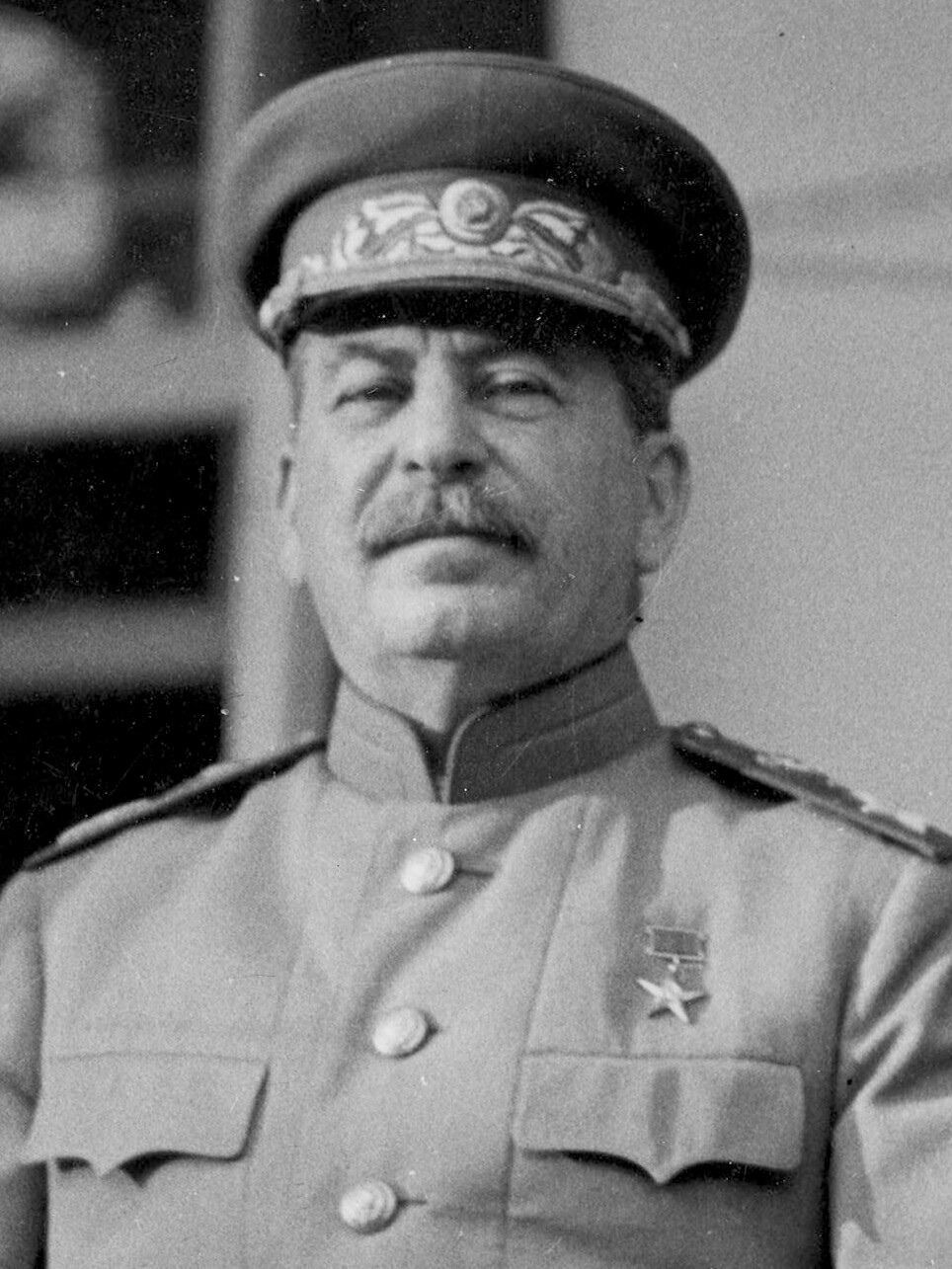
Stalin at the Tehran Conference in 1943
Violin Concerto No. 1 in A minor, Op. 77
Shostakovich wrote his first violin concerto between 1946 and 1947.
In 1946, the Central Committee of the Communist Party developed a policy known as the Zhdanov Doctrine, which mandated that artists and intellectuals create work that promoted Soviet political goals. Personal work, challenging work, or work that did not otherwise serve a pro-Soviet cultural purpose was labelled “formalism.”
Many great Soviet composers were accused of formalism, including Prokofiev, Khachaturian, and Shostakovich.
After this second denunciation in 1948, Shostakovich lost his jobs teaching at the Moscow and Leningrad Conservatories, and authorities banned his works.
While all this was going on, Shostakovich was writing this violin concerto: a personal, challenging work that authorities would have condemned. He wrote it for himself, not knowing if he’d ever see it performed.
Around this time, he began using a device that would become famous: the D-S-C-H motif. This motif was a melody made of the notes D, E-flat, C, B natural, meant to reflect his German initials (Dmitri Schostakowitsch).
The violin concerto is among the first times – maybe the first time – that he used this theme. He continued to do so until his death.
The concerto was premiered in 1955, featuring David Oistrakh as soloist.
David Oistrakh playing Shostakovich’s Violin Concerto No. 1
From Jewish Folk Poetry, Op. 79
Throughout his career, Shostakovich worked with many Jewish artists. (For example, he entrusted the premiere of his violin concerto to Jewish violinist David Oistrakh, and musicologists have noted that the concerto’s finale seems to draw on Jewish dance traditions.)
When news of the Holocaust reached the Soviet Union, Shostakovich was haunted by what he heard. The fact that he himself was a target of a totalitarian government, combined with his connections to Jewish figures and the anti-Nazi propaganda he’d composed during the war, meant the tragedy hit especially close to home.
During the 1940s, his preoccupation with processing the Holocaust, the war, and modern genocide generally led to his creating music with a clear Jewish influence.
Shostakovich’s From Jewish Folk Poetry
One of the most overt examples is his song cycle From Jewish Folk Poetry, which, as its title suggests, draws its texts from a collection of Jewish folk songs compiled in 1947.
He began the project hoping the Soviet authorities would approve the work. The Soviet-approved style relied heavily on folk songs, and attitudes toward Jews were relatively positive at the time.
Global events ended up outrunning him. He wrote the first eight songs of the cycle in August 1948, and the following month, Israeli envoy Golda Meir visited Moscow. It was becoming increasingly clear that the newly established state of Israel would ally more with the United States than the Soviets. That same month, a Pravda editorial appeared criticising Israel. Suddenly, Jewish influences were less welcome in Soviet-approved art.
A couple of months later, in a desperate bid to win the censors’ approval, Shostakovich added in a few more songs praising the treatment of Jews in the Soviet Union.
But it was too small a concession. He ended up not wanting to rock the boat by arranging a premiere and tucked the score into a drawer. The cycle wasn’t played in public until January 1955.
String Quartet No. 4, Op. 83
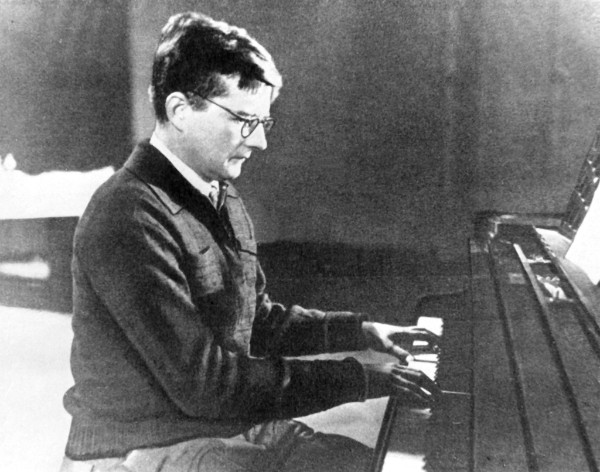
Dmitri Shostakovich
Shostakovich wrote his fourth string quartet in late 1949, the year after his second denunciation.
The loss of his teaching jobs and the halt of performances of his works were a major blow to his finances.
To survive, he began honing his writing in a state-approved Soviet Realist style. He wrote Soviet-approved soundtracks for Soviet-approved films, as well as an entire cantata about the “Great Plan for the Transformation of Nature,” which celebrated a major Stalin tree-planting initiative. This was not particularly fulfilling work.
In February 1949, he received a shocking phone call from Stalin himself. The dictator wanted Shostakovich to represent the Soviet Union at the Cultural and Scientific Congress for World Peace in New York.
Shostakovich communicated as tactfully as possible that it would be difficult to represent the Soviet Union when his works were banned from performance. Within weeks, the ban on performing formalist works was lifted, shortly before Shostakovich arrived in New York.
While in America, he heard a performance of Bartók‘s sixth string quartet. Bartók had died of leukaemia during the war, and composers in the late 1940s were processing his legacy. When Shostakovich returned home, he embarked on his own quartet, likely inspired by both Bartók and the unbanning of his own works.
Shostakovich’s String Quartet No. 4
He fully intended to present this work publicly. He organised a playthrough of the quartet for some composer friends and the head of the music division of the Committee for Artistic Affairs.
However, the audience’s leery response convinced him that seeking official Soviet endorsement of the score would be difficult, given its bleak, introverted character and clear Jewish folk music influence. Reluctantly, he withdrew the quartet and put the score away.
Shostakovich’s fourth quartet wasn’t premiered until 1953 – after Stalin’s death.
Conclusion
These four secret works show a different Shostakovich than the one Soviet censors allowed the public to hear.
Freed from the compromises built into his official catalogue, they reveal a composer writing without any guarantee of an audience – only the conviction that an honest version of his music would someday, somehow, eventually reach people who needed to hear it.
For more of the best in classical music, sign up for our E-Newsletter