English partsongs have a special sound. In this SOMM Recordings release, The Mira Ensemble presents the partsongs of Herbert Howells (1892–1983), all but one of which are first recordings.
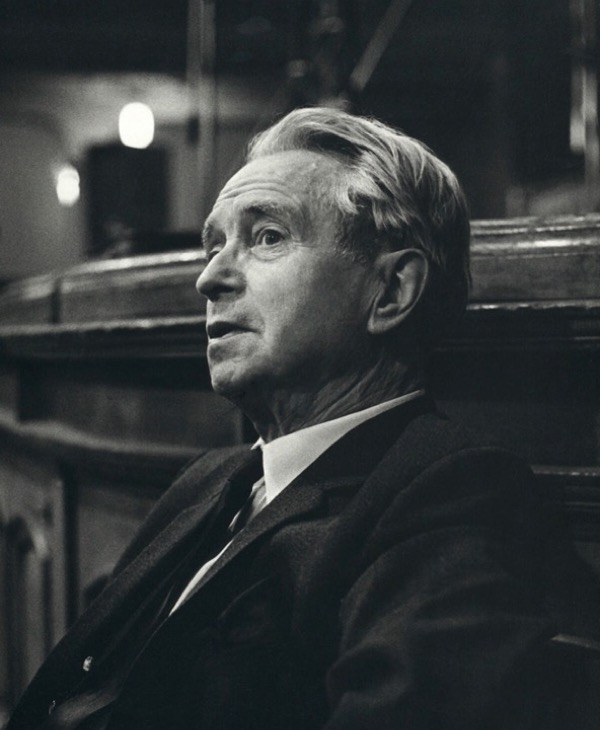
Clive Barda: Herbert Howells, ca 1969 (National Portrait Gallery)
Herbert Howells is best known for his vocal writing and, in fact, his first work was a pair of partsongs that won him a scholarship to the Royal College of Music in 1912. Like so many English composers, Howells sang both at school and in his local church.
These partsongs are little miniatures, a part of the neoclassical movement that was capturing Europe in the early 20th century. In literature, poetic miniatures matched this trend, such as those by Walter de la Mare, a frequent source for Howells. Before he entered the Royal College of Music, Howells studied with the organist of Gloucester Cathedral, Herbert Brewer. Brewer taught him all aspects of music, starting with the organ and continuing to music theory, harmony and counterpoint. Another of Brewer’s students was Ivor Gurney, and the two composers were fast friends.
In this collection of partsongs, the earliest comes from just before his entrance to the RCM. One of the earliest songs, The Shepherd (1916), is notable for its individual piano line. More than just accompaniment, the piano has a separate line that fills out the landscape around The Shepherd (both real and metaphysical) of the title.
A later work is the extensive Sea Urchins (1935). Gladys Balcomb’s text takes us to the seaside in 10 separate songs. The opening (and unexpected) piano-solo Overture sets up the scene for fun. We go to sea with the children, buying a pail and spade along the way. Everything is new: the parrot in the boarding house, the landlady’s fisherman husband and his stories. Children run and play; they take naps; they take the long view from the cliff, and dance on the beach in the moonlight. Even the train that brings everyone to the sea takes on a musical aspect.
Herbert Howells: Sea Urchins – The Musical Train
The Mira Ensemble, founded in 2025, performs music written for upper voices. The Ensemble focuses on little-known music for women’s voices (rather than children’s) that is rarely performed or recorded. The ensemble includes professional singers from the UK and seeks to provide opportunities for younger singers. This is the ensemble’s first recording.
Tom Edney directs the ensemble and is currently working on his PhD at the Royal College of Music on British choral-orchestral works of the 1960s. The pianist is Nick Salwey, who has an extensive history as a teacher and accompanist.
We opened this review by saying that ‘there’s something special about English partsong’ and in this recording for women’s voices, you’ll hear that sweetness that’s so characteristic of the genre. At the same time, this isn’t a repertoire of cloying, sugary songs. In Howells’ A Christmas Carol, a Christmas song for 1957, setting a text by 17th-century poet George Wither (1588–1667), the rhymes of jolly/holly, labor/table, are matched by a collapsed rhyme at the end of each verse that concludes with sing/ring, and is a solid, reassuring happy song that picks up all the holiday metaphors and sets them as an observer.
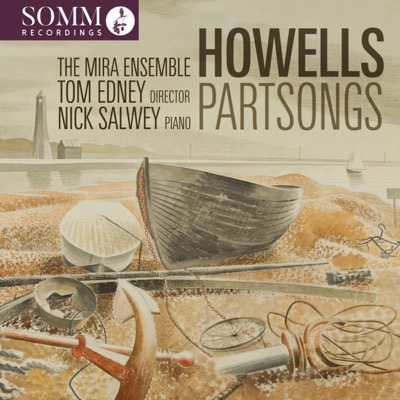
Herbert Howells: Partsongs
The Mira Ensemble; Tom Edney, director; Nick Salwey, piano
SOMM Recordings SOMMCD 0725
Official Website
For more of the best in classical music, sign up for our E-Newsletter