‘Being patient is very important in this business’
Mozart and Chinese folk music surrounded soprano Mei Gui Zhang in equal measure as a child. Growing up in China with singers for parents, one singing opera, the other folk, created an indelible fusion of cultures that she carries with her to this day.
Now based in New York, Mei Gui’s versatility and commitment to a variety of styles and roles have made her a rising star on the opera circuit.
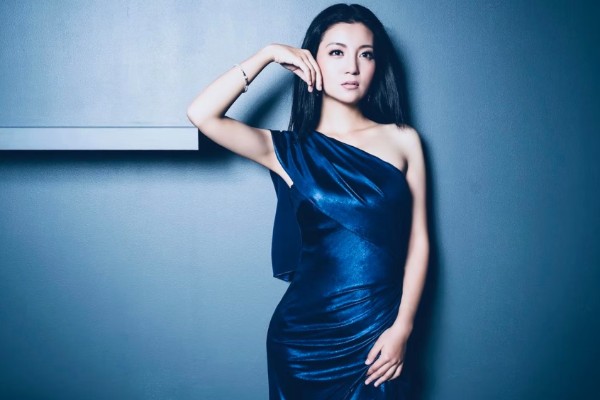
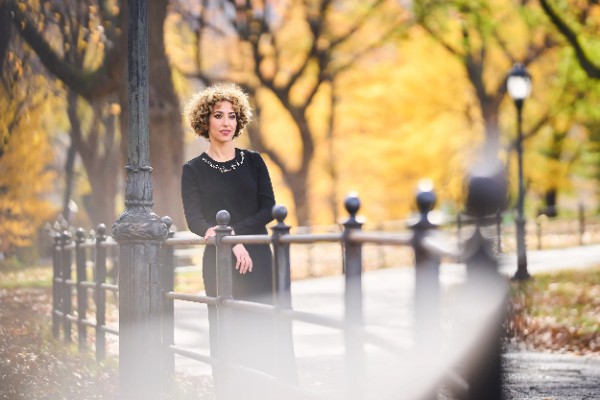
Mei Gui Zhang © Dario Acosta
Mozart is particularly close to Mei Gui’s heart, having sung Despina in Così fan tutte (Tanglewood), Zerlina in Don Giovanni (Atlanta Opera) and Barbarina in The Marriage of Figaro (Metropolitan Opera); having competed in the Glyndebourne Opera Cup in 2020 (winning the audience prize), Mei Gui makes a role debut as Susanna at the Glyndebourne production of Figaro in their autumn festival this year.
Meigui Zhang – ‘Ach, ich fühl’s’ (Die Zauberflöte)
I catch Mei Gui during Glyndebourne rehearsals, and we talk about her love of Mozart, the folk music surrounding her growing up in China, and the one thing from home she never leaves without on her international travels…
You are deep in rehearsals for your upcoming Glyndebourne debut, singing Susanna in The Marriage of Figaro. How’s it going?
I think it’s going to be a wonderful production — I’m really looking forward to it. The cast, the singers, everyone is at such a high level. I really enjoy singing Susanna. It’s a lot of fun.
Are there any challenges unique to this role?
Susanna has so many recitatives, and physically I have to anticipate singing them. It’s a long role — I have to sing from the beginning to the end — I have to tell myself where to save the energy and where to give it more, because it’s a really physical role for me. I’m always on stage!
You are renowned for your interpretations of Mozart — do you remember your first encounters with his music?
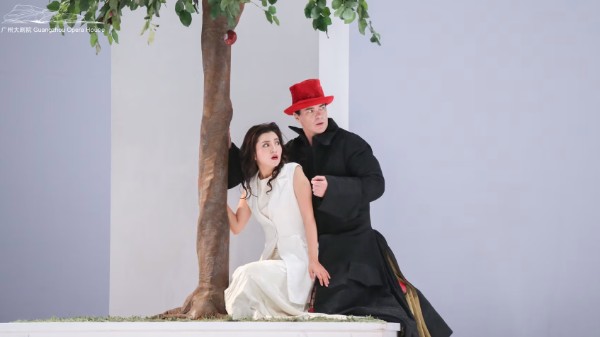
Don Giovanni, Guangzhou Opera House © Guangzhou Opera House
My parents were both singers, and I studied with my father from the very beginning. My first aria was actually Cherubino’s Voi che sapete, so The Marriage of Figaro was one of the first things I sang!
I then went to the Lindemann Young Artist Programme at the Metropolitan Opera, where I started singing Barbarina from that opera a lot. I sang it in at least thirty different performances across three productions, so I know The Marriage of Figaro quite well!
I started with Cherubino, moved on to Barbarina, and now I am singing Susanna — hopefully later on I can sing the Countess! So I knew Mozart really well from the very beginning of my training.
What kind of music surrounded you as a child, with both parents as singers?
My mother is a Chinese folk singer, and my father is a classical opera singer. The styles are totally different. Opera singers don’t use a microphone, of course, and Chinese folk singers do, so their projection techniques are very different from those of a ‘classical’ opera singer. That’s why my parents are always disagreeing with each other!
I can sing a little bit of folk music because I always heard my mum singing it, and when I was young, my mum taught me a lot of Chinese folk songs, but opera is my favourite.
Mei Gui Zhang as Guanyin in “The Monkey King” (Act II Scene II)
Your connection to your cultural roots has been described as ‘a hallmark of your career’. What do you do to stay connected?
When I was young, I learned so many Chinese traditional songs and folk songs, so I think I have those melodies in my blood. I enjoy singing them, and my classical opera training helps me sing them.
Sometimes, when I have a recital, I’ll put Chinese art songs into my repertoire. The audiences love it, even if they don’t understand the words. I include translations in the programmes, so they can really feel it and love it.
The audience always gives me good feedback when I do that, so that’s why I keep putting these art songs into my programmes.
How much does the fact that Chinese is a tonal language influence things like the melodic contour when set to music?
Chinese is not an easy language to sing, so when I sing and use my opera technique, I need to modify what I’m doing a little bit, because it’s not as easy a language to sing in as, say, Italian.
Composers do think about the tones — spoken Chinese goes up and down — but in the music it’s not as obvious. I think the most important thing for singing in any language is legato. I think that’s true for every instrument. I played the violin and piano as well, and when you think about a phrase, the legato is very important.
Did you always want to be a singer, or were you tempted by the violin or piano as well?
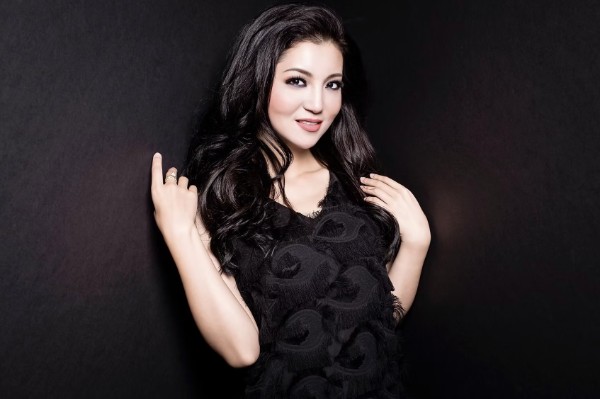
Mei Gui Zhang © Dario Acosta
I always wanted to play the violin when I was very young, but my parents told me that I had to study the piano first. They thought the piano was a necessary instrument not just for singing, but for everything, so they said I had to play the piano first — but they also said that the violin was too difficult!
I started piano when I was seven years old, and my high school major at the Shanghai Conservatory was piano. I started to play the violin only when I was fifteen. I still loved it, so I convinced my parents to let me play it!
I started singing when I was three, just as a hobby, and singing has been in my blood since childhood. My experience with instruments has been really helpful.
Meigui Zhang – Comme autrefois from The Pearl Fishers (CSOTW, 12th June 2023)
You are known for your versatility across different styles and operatic roles. What’s the key to maintaining that versatility?
I’ve sung Mozart a lot, and I also recently sang a lot of Verdi, like Gilda in Rigoletto and Oscar in Un ballo in maschera, so I think my repertoire is quite wide.
It’s wide, but not aggressive. I like to take my time. That’s why I still sing a lot of Mozart. Mozart is very essential for young opera singers, so I keep his repertoire close.
Mozart is like school for me. It’s like when kids play outside and have fun, but then have to come back in for some discipline! It feels like a safe area [for my voice].
What would you like to sing in the future?
I would love to sing Lucia from Lucia di Lammermoor, Liù from Turandot, and maybe, when I’m older, Madame Butterfly. I’d also love to sing Mimi from La Bohème — I think my voice is growing more and more as time goes on, so there are so many more roles I’d like to sing.
I think in the opera world, you have a long way to go — you have to be patient before singing everything. I feel like I’m on the right track, moving slowly! I think being patient is very important in this business. I have to grow myself and let people see me grow.
What do you do in your spare time?
For sports, I love to do scuba diving. I love the ocean, so that’s my favourite thing to do. I like swimming and being in the water. Apart from that, I like to watch movies. I get a lot of inspiration from films, which I can then use on the opera stage. Any kind of movie — Chinese, Korean, American — but not horror movies!
I also like to cook, especially Chinese food. I’m from Southwest China, so I enjoy cooking Sichuan food, which is very spicy. The red spicy peppers are one of the most important ingredients for me, so I always carry chillies with me when I travel — chilli powder, spicy sauce, anything. My fiancé, however, cannot eat spice — he says it’s pain rather than a flavour!
For more of the best in classical music, sign up for our E-Newsletter