For today’s quiz question, we turn to Żelazowa Wola in Poland. We all know that Frédéric Chopin was born there, but what famous violinist is also traditionally said to have been born in that village? The answer is Henryk Szeryng, who was born on 22 September 1918 into a wealthy Jewish industrial family.
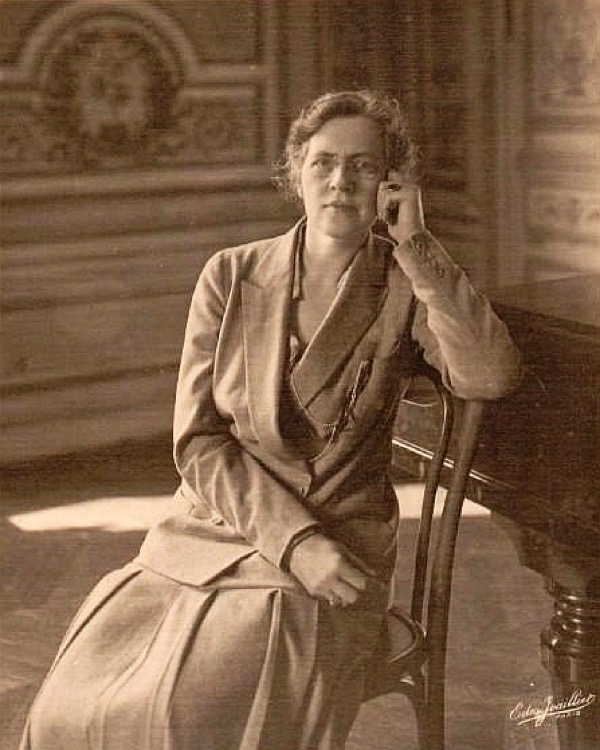
Szeryng was raised in Warsaw and started his violin studies with Carl Flesch in Berlin. He first appeared on the Parisian stage in 1933, furthered his violin studies under Jacques Thibaud and took lessons with Nadia Boulanger.
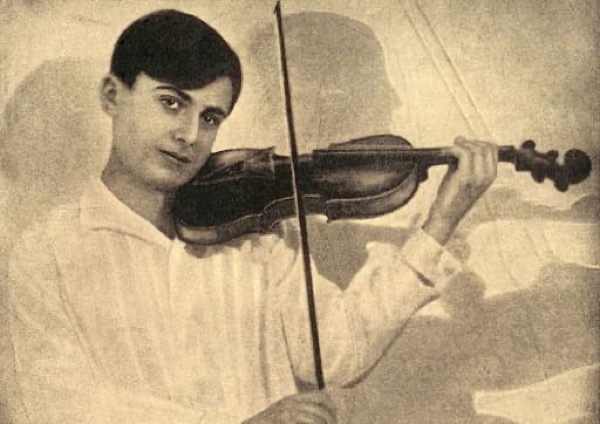
The young Henryk Szeryng
After Hitler invaded Poland in 1939, Szeryng volunteered for the Polish Army. Fluent in several languages, he was assigned to Great Britain as a translator and, by 1941, had accompanied Polish Premier Wladyslaw Sikorski to Latin America. By 1946 or 1948, depending on varying sources, Szeryng had become a Mexican citizen, and in the summer of 1950 he met his fellow Polish musician Arthur Rubinstein in Mexico City.
To celebrate Szeryng’s birthday, let us take the opportunity to listen to some of the wonderful musical collaborations between Szeryng and Rubinstein.
Ludwig van Beethoven: Violin Sonata No. 5 in F Major, Op. 24, “Spring” (Henryk Szeryng, violin; Arthur Rubinstein, piano)
A Meeting in Mexico City
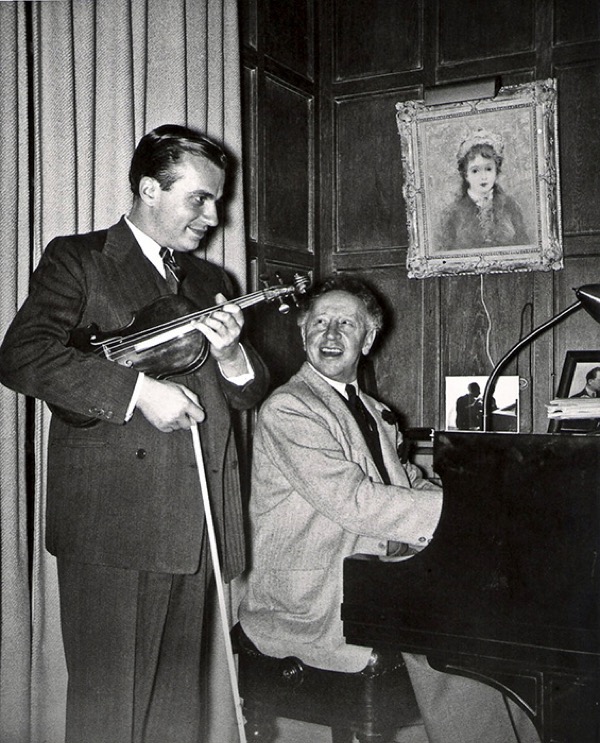
Henryk Szeryng and Arthur Rubinstein
In the summer of 1950, the exceptional pianist Arthur Rubinstein visited Mexico City and crossed paths with the elite of the classical music world. A famous photograph captures him in Mexico alongside Igor Stravinsky, Mexican conductor Carlos Chávez, composer Aaron Copland, and socialite Clare Boothe Luce.
According to the Henryk Szeryng website, Rubinstein also met Henryk Szeryng in 1950 and was apparently mesmerised by Szeryng’s playing. (http://www.henrykszeryng.net) Sources disagree, as a Time Magazine article recalls the meeting and the iconic backstage encounter between them during Rubinstein’s later Mexican tour in 1954.
According to this account, Szeryng rushed backstage, “burst into Rubinstein’s dressing room, and began hugging and kissing the startled pianist, exclaiming in Polish: ‘That was the greatest thing I ever heard!’”
When the kissing stopped, he introduced himself as Henryk Szeryng, a 32-year-old music teacher at the National University of Mexico. Intrigued to find a countryman so far from home, Rubinstein asked, “Do you play at all?” Yes, his compatriot admitted, “I love to play the violin.” Rubinstein forthwith invited the violinist to his hotel room for an impromptu audition. Recalls Rubinstein: “He played Bach sonatas and reduced me to tears.” (Time Magazine, 1954)
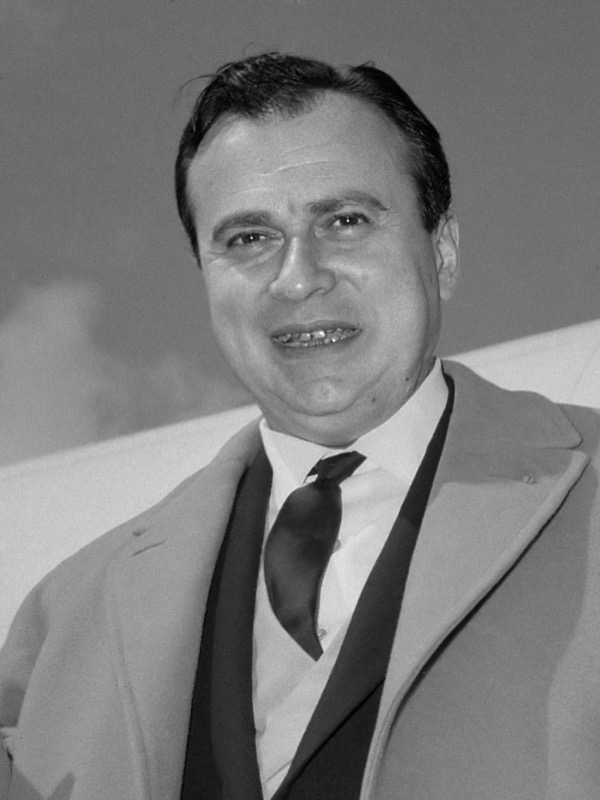
Henryk Szeryng (1964)
Johannes Brahms: Violin Sonata No. 2 in A Major, Op. 100 (Henryk Szeryng, violin; Arthur Rubinstein, piano)
A Musical Partnership
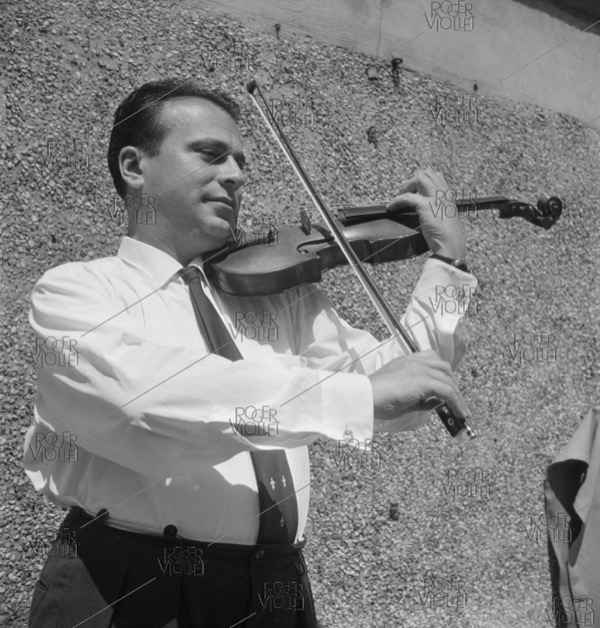
Henryk Szeryng
Rubinstein was so impressed that he asked Szeryng to record an album with him, and later convinced impresario Sol Hurok to book him for a 20-concert tour to the United States. Apparently, Szeryng hesitated to return to the concert stage, but decided, “If this great master has this sort of confidence in me, why shouldn’t I?” (Time Magazine, 1954)
They first recorded together in 1958, playing Beethoven’s “Kreutzer” and “Spring” sonatas for RCA Victor in New York. They returned to the same recording studio in late 1960 and early 1961 to record the three Brahms sonatas. Later, in 1972, they recorded the three Brahms Trios and the Schumann Trio No. 1 with Pierre Fournier. In 1974, they recorded the Schubert Trios Op. 99 and 100.
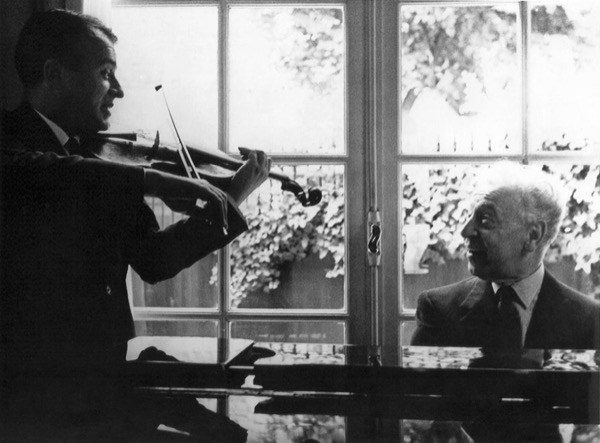
Henryk Szeryng and Arthur Rubinstein
Contemporary responses to these recordings were highly enthusiastic, with critics praising the partnership’s warmth and musical understanding. While Szeryng brought a beautifully controlled tone and immaculate intonation, Rubinstein contributed a powerful but warm presence at the piano.
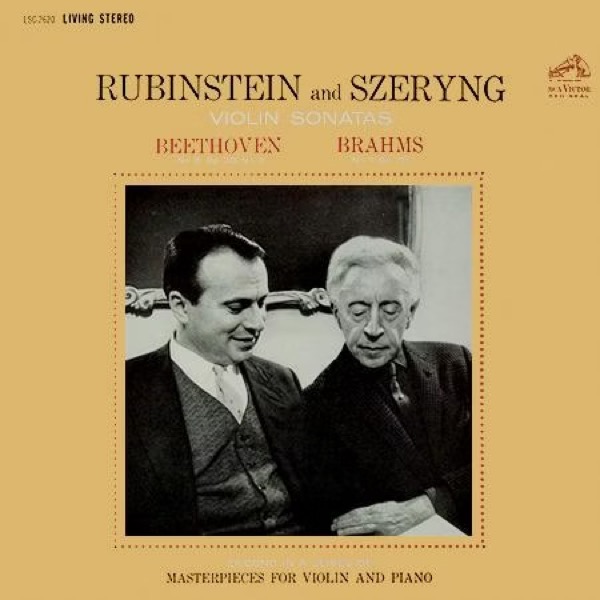
Henryk Szeryng and Arthur Rubinstein recording
The Brahms sonatas were considered particularly effective, as Szeryng and Rubinstein found a middle ground between lyricism and grandeur. Later critics continued to hear their musical conversation as the recording’s principal strength.
Rubinstein once said that Henryk Szeryng “is a musician’s musician. In the U.S., the masses go to concerts for entertainment. But real music lovers want emotion, great moments, which Szeryng’s playing gives them.” (Time Magazine, 1954)
For more of the best in classical music, sign up for our E-Newsletter
Franz Schubert: Piano Trio No. 2 in E-Flat Major, Op. 100, D. 929 (Henryk Szeryng, violin; Pierre Fournier, cello; Arthur Rubinstein, piano)