One of the greatest conductors of the 20th century, Bruno Walter [Schlesinger] detested routine performances and always strove to present a work as if it were receiving its world premiere. He held major positions in Europe and the United States, and his work is documented in hundreds of recordings made between 1900 and 1961.
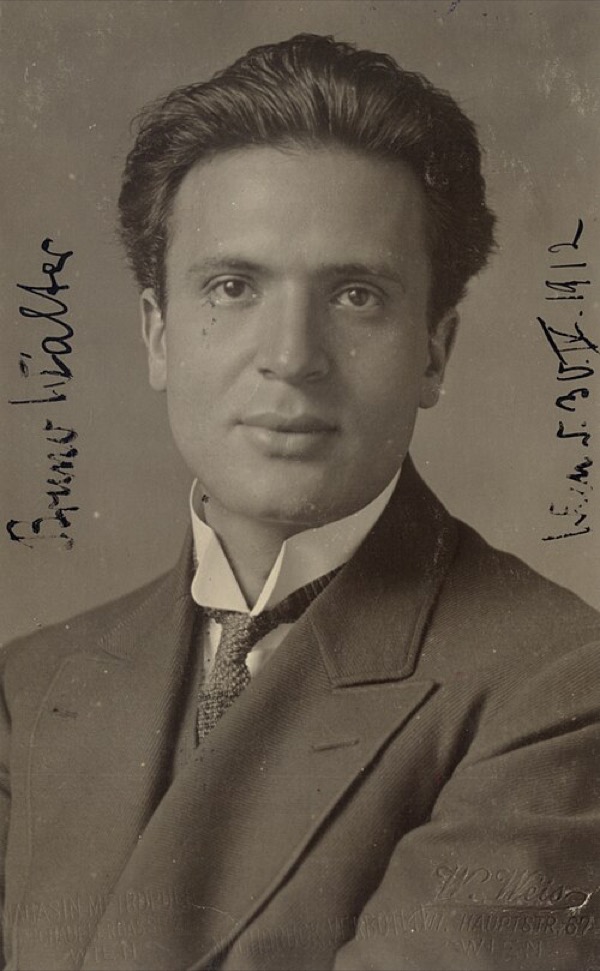
Bruno Walter, Vienna, 1912
An exceptional pianist and composer from an early age, Walter’s life-changing moment arrived in the shape of Hans von Bülow. When he watched him conduct a classical programme, Walter felt the compelling force of his gestures, the glow of inspiration, and the concentration of energy.
On 15 September 2026, we celebrate Bruno Walter’s 150th birthday, and to honour this outstanding conductor in an era of great conducting, we decided to feature three recordings that tell the story of Walter’s development as a recording artist.
Watch Bruno Walter conducts Brahms’ “Rehearsal Segment” here.
The End of an Era
The German-born conductor Bruno Walter worked closely with Gustav Mahler as an assistant and protégé. He also frequently heard Mahler conduct his own works. Since Mahler did not live to lead performances of Das Lied von der Erde or Symphony No. 9, his widow, Alma Mahler, asked Walter to premiere both works.
Walter also made the first recordings of these works with the Vienna Philharmonic in 1936 and 1938, respectively. Although we might never know for certain what kind of interpretation the composer might have had in mind, Walter’s unsurpassed intensity of expression reflects the urgency and tension of a time before he was forced to leave Austria.
Only eight weeks after the live 1938 recording of Mahler’s 9th Symphony, Austria was annexed by Hitler’s Third Reich. Walter was in Amsterdam at that time, and eventually fled westward. The recording “is the end of an era commemorated by the performance of a work that was itself commemorating the end of another.” (Duggan, Classical Music Web, 2001)
A World Unravelling
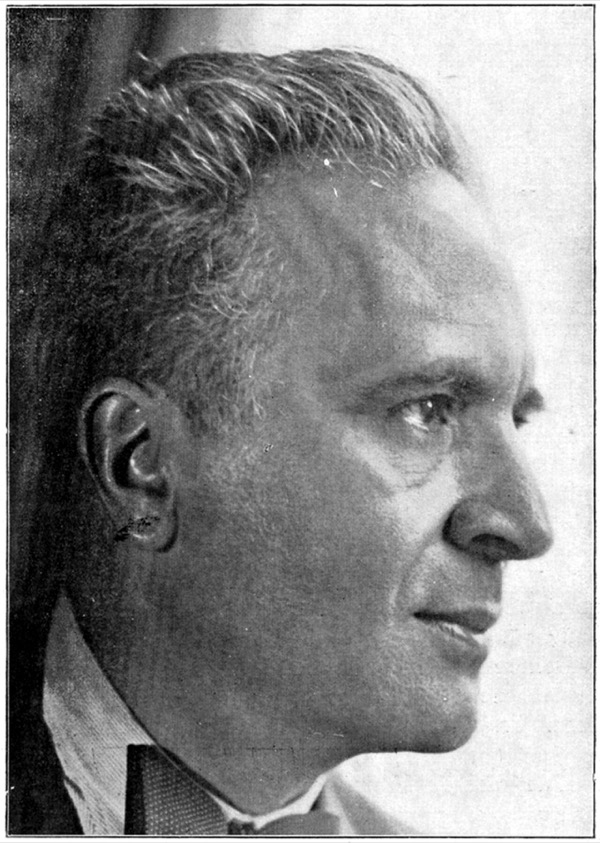
Bruno Walter, 1937
Despite its limited sound and occasional orchestral slips, this recording is unique and indispensable. A growing sense of restlessness and unease builds below the beauty and intensely nostalgic melodic lines of the opening movement. In the second movement, Walter turns the “Ländler” into rough and deliberately unpolished village music. There is no attempt to beautify Mahler’s score, as rustic elements dominate.
Can you hear the world tearing apart at the seams in the Rondo-Burleske? The sound is strained and imperfect, and the performance becomes theatrical as the orchestra is fighting to survive the music.
When compared to other 20th-century conductors, the final “Adagio” unfolds at an unusually fast tempo, as the strings return to the nostalgia of the opening. Walter does not treat the work as a series of increasingly emotive climaxes, but rather as a cumulative sequence of dynamic terraces.
Bruno Walter conducts Mahler: Symphony No. 9
A New World
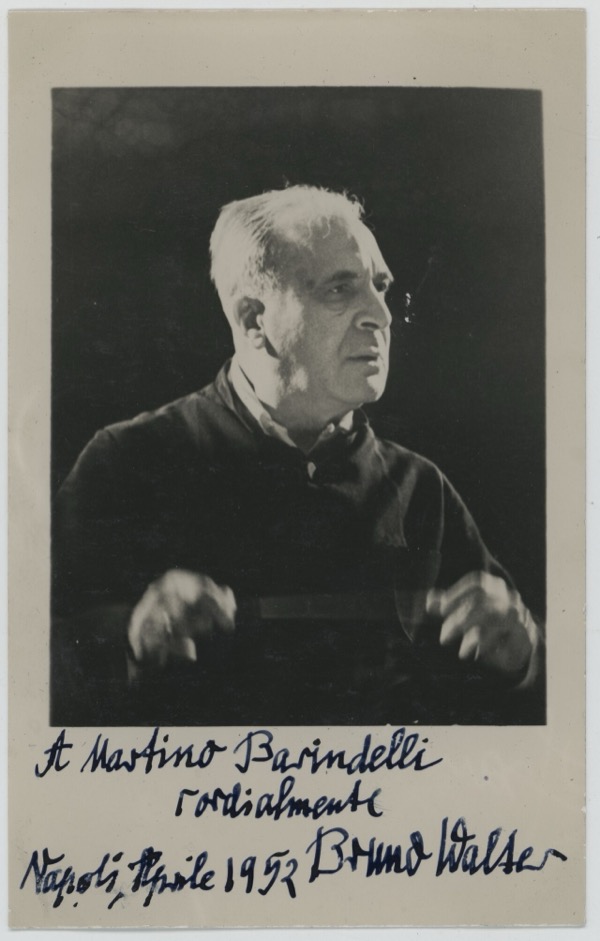
Bruno Walter, 1952 (Tino Barindelli collection)
Bruno Walter first came to New York in 1923 for his American debut with Walter Damrosch’s Symphony Society, which subsequently merged with the New York Philharmonic in 1928. When Walter was exiled from Germany, the New York Philharmonic reached out to offer him work as a guest conductor.
Walter moved to the United States in 1939 and became an American citizen in 1946. He made his debut at the Met in 1941, and conducted there until 1957. He made his first of many recordings with the New York Philharmonic in 1941, and they offered him the position of Music Director. However, citing his advanced years and declining health, he accepted only the title of Musical Advisor.
In his recordings with the New York Philharmonic, Walter still constructs an energetic and flexible musical discourse. However, with the extraordinary Viennese tradition now backing him, his narrative is less about historical association. Rather, Walter becomes the master interpreter of the German symphonic tradition.
Architecture of Motion
In our representative recording of Beethoven’s Seventh, we still find a highly energetic and rhythmically alive Bruno Walter. It features a delightful balance between rhythmic drive and expressive warmth, as the basic pulse grows into an organic whole.
There is real propulsion in the first movement, with Beethoven’s repeated rhythmic figures generating momentum. Phrases are not micro-managed, and the overall form flows naturally. There is no sense of monumentality, only a sense of musical logic.
In the “Allegretto,” Walter finds darkness beneath the famous rhythm, but he never allows the movement to become a romantic lament. While the lyricism does shine through, the music never becomes overly sentimental.
Energy and dance emerge in the “Presto,” yet the movement never loses its elegance and rhythmic clarity. One can sense an orchestra enjoying the physical aspects of the music rather than simply demonstrating how fast they can play.
The “Finale” arrives in great waves of sound, with Walter carefully controlling the architecture while letting the music unfold. As a conductor, he is physically engaged and spontaneous, and his authority does not come from dominating the orchestra.
Ludwig van Beethoven: Symphony No. 7 in A Major, Op. 92 (New York Philharmonic Orchestra; Bruno Walter, cond.)
From Urgency to Reflection
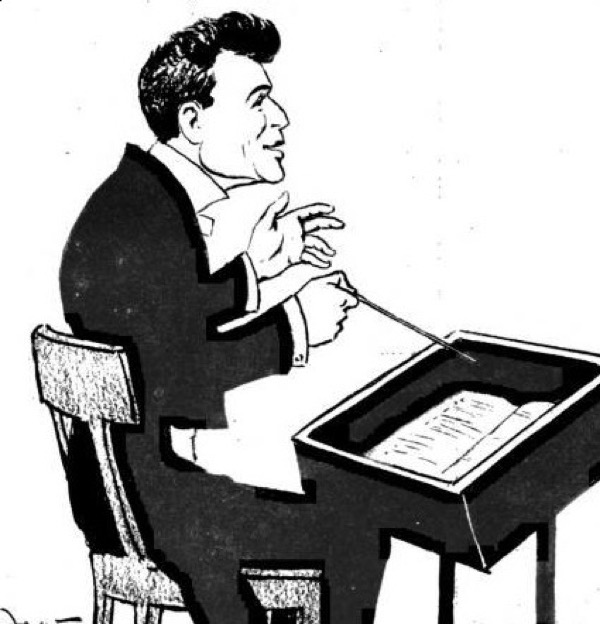
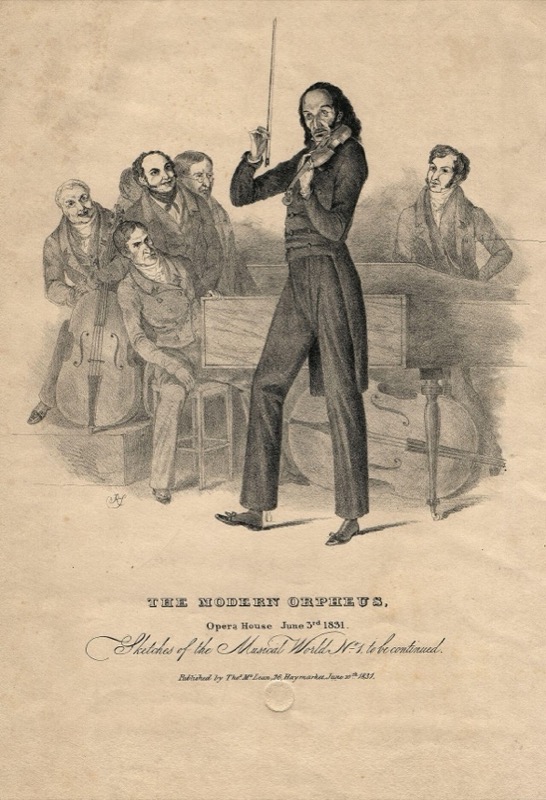
Bruno Walter caricature
During the final stages of his conducting career, Bruno Walter became a very different conductor. The urgency and intensity of youth are now replaced with a wonderful spaciousness and patience. Architectural considerations recede into the background as Walter allows the emotional content to reveal itself gradually.
His late recording of Brahms with the Columbia Symphony Orchestra, and the Fourth in particular, might be representative. As Peter Gutmann writes, “after a meltingly smooth “Allegro,” tender “Andante” and invigorating “Scherzo”, the finale is thoroughly mellow, drained of all its inborn tension and liberating drive.” (Gutmann, Classical Notes, 2019)
This performance has a wonderful sense of memory, as Walter lets the phrases breathe, and the melodies settle. The underlying control of the larger structure is secure, yet the sound becomes almost autumnal.
The Art of Transformation
We find tenderness in the “Andante,” as melodies naturally emerge from the texture, and some of that warmth does extend to the “Scherzo.” In the finale, Walter does not manufacture a grand emotional climax as the tension gradually drains away.
Musicians and conductors evolve throughout their careers, but Bruno Walter was unique, “as his interpretive outlook changed more suddenly, more often and more radically than any other.”
“Of all the conductors on record, only Furtwängler approached (but never matched) such a radical compound transformation of outlook. That one man could embrace such an astounding variety of interpretation attests to the power of music and its ineffable impact upon the human soul in ways that transcend the ephemera of our lives.” (Gutmann, Classical Notes, 2019)
For more of the best in classical music, sign up for our E-Newsletter
Johannes Brahms: Symphony No. 4 in E Minor, Op. 98 (Columbia Symphony Orchestra; Bruno Walter, cond.)