On this, my first visit to Warsaw, I discovered a wonderfully young and vibrant city that carries a proud sense of history around every corner. Its streets are lively, its people warm and friendly, and there is an infectious energy about the place that makes it a pleasure to explore.
For a couple of weeks, music is very much at the heart of Warsaw, as the Chopin and His Europe Festival 2026 brings together performers, scholars and Chopin lovers from all corners of the globe. Meticulously organised and documented by the Chopin Institute, the 2026 festival offers a succession of 16 concerts and recitals.
The opening two concerts of the festival were dedicated to the prize-winners of the most recent International Chopin Piano Competition. Second-prize winner Kevin Chen performed Chopin’s Piano Concerto No. 2 with the Orchestre Symphonique de Montréal under Rafael Payare, while the following night featured first-prize winner Eric Lu in Chopin’s Piano Concerto No. 1 with the same orchestra.
We had the pleasure of hearing two different interpreters setting the tone for the festival days ahead. Chen displayed uncanny and dazzling technique that allowed him to control the music at every level. He is often described as playing with unsurpassed crystalline clarity, and he did not disappoint. Chen offered remarkable maturity and structural clarity in his playing, yet, sadly, the orchestra obscured many of the intimate and expressive passages with a heavy, imprecise accompaniment.
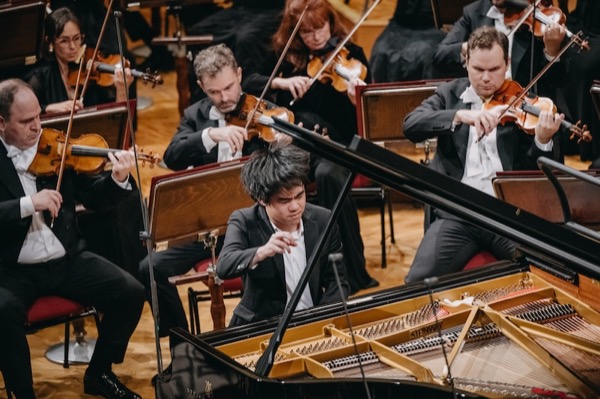
Kevin Chen
In his performance of Chopin’s Piano Concerto No. 1, Eric Lu shifted the focus to the narrative aspects of Chopin’s music, bringing lyricism and emotional engagement to the forefront. Beautifully spun melodic lines unfolded unhurriedly, and he carefully controlled pacing and phrase structure. Delightfully controlled pedalling created wonderfully nuanced colours, and an improved orchestra managed not to get in the way, even though it was not agile enough to follow Eric’s lead in the accelerando passages.
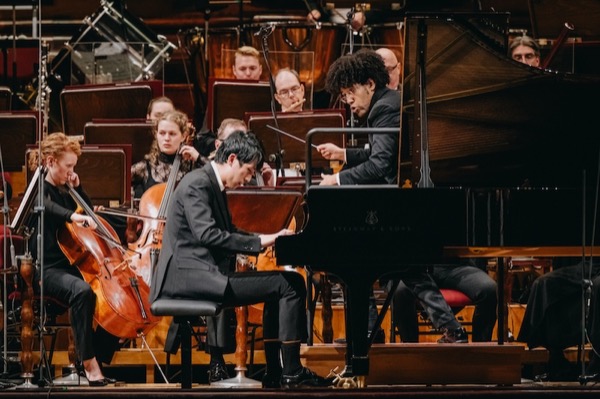
Eric Lu
After sitting through literally hundreds of piano recitals, I still have not made up my mind which I dislike more: Pianists who continuously and constantly change their programmes, or those who refuse to announce the programme in advance, citing “artistic freedom.” As is well known by now, András Schiff belongs to the latter category, making his selection announcements from the stage.
His programme was centred on Chopin’s favourite composers, Bach and Mozart, played in a 90-minute first half on a modern Steinway, followed by Chopin himself, performed on a historical Pleyel after intermission.
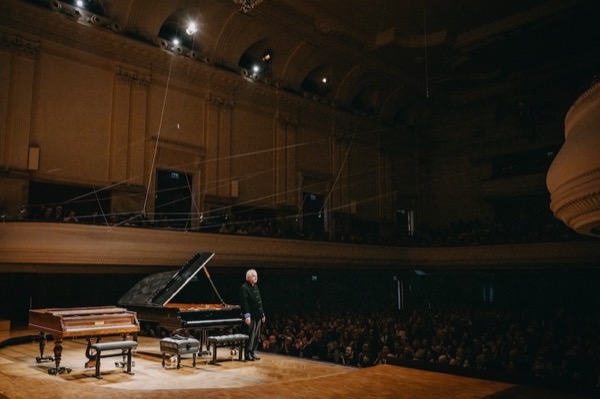
András Schiff
I have never been a great fan of Schiff’s Bach, as it unfolds like a dry academic exercise. Notwithstanding the amusing anecdotes, the musical narrative is precise, logical and structurally sound, yet it lacked any sense of warmth or sensuality.
This first half, which Schiff has performed elsewhere, offered a great opportunity to approximate the sounds that Chopin himself might have heard when playing Bach and Mozart on a contemporary 19th-century piano. However, as it was performed on a modern Steinway, the music really never came alive.
On the strength of the wonderful soundscape of the historical Pleyel piano, the second half opened a window onto the wondrous sound world of Chopin’s Preludes.
Our three-day visit to Warsaw left a lasting impression, and the combination of scholarly research, historically informed performances and impressive artist lineup establishes it as one of Europe’s most distinctive classical music festivals.
https://festiwal.nifc.pl/en/2026/kalendarium
For more of the best in classical music, sign up for our E-Newsletter