Since the passing of the twentieth century, Western classical music has continued to evolve through a wide range of movements and aesthetics, much like the world of visual arts. Impressionism, Modernism, Futurism, Expressionism, Experimentalism, Postmodernism and Minimalism all shaped the musical landscape of the previous century in distinct ways. Yet, when it comes to the twenty-first century, identifying clear stylistic boundaries has become far more difficult. Partly because a century only twenty-five years old is still too young to understand in retrospect fully, but also because today’s world is itself more complex, interconnected and fragmented than ever before. Naturally, music reflects that reality.
Unlike previous eras, contemporary classical music no longer moves in a single direction. There is no dominant school or unified aesthetic shaping the landscape as serialism or minimalism once did. Instead, the current musical world exists as a multiplicity of languages coexisting simultaneously. Some composers continue to develop the ideas of minimalism, others revisit romanticism or spectralism, while many blend electronic music, ambient, folk, jazz, or experimental sound practices into their work. In many ways, contemporary classical music today feels less like a movement and more like an open ecosystem.
Steve Reich: Music for 18 Musicians
What is particularly striking is how many recent developments are defined by the term “post.” Post-minimalism, post-modernism, post-classical. The prefix itself almost suggests a difficulty in naming what is happening. Rather than radically rejecting the past, many composers seem interested in extending it, reshaping it, or softening its edges. The spirit of innovation remains, but often through reinterpretation rather than rupture.
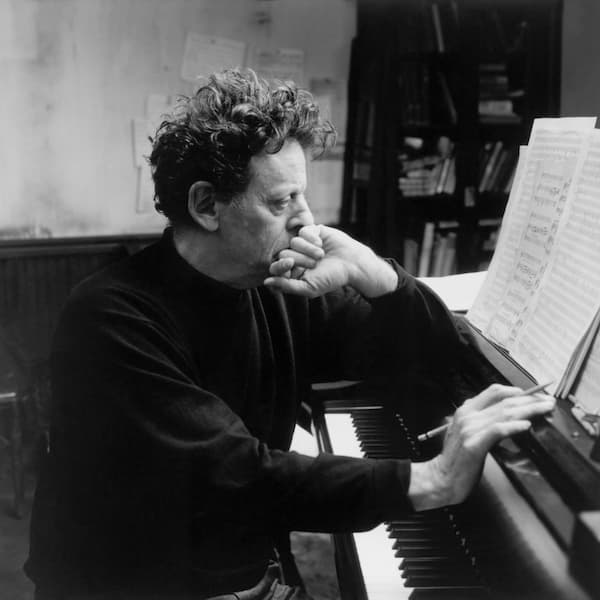
Philip Glass
Figures such as Glass, Reich and Nyman continue to cast long shadows over younger generations. At the same time, composers like Andriessen, Bryars, Oliveros, Wolfe, Dillon, Ferneyhough and Rihm helped expand the vocabulary inherited from the twentieth century. Their influence is still deeply felt in contemporary composition today. At the same time, newer voices such as Shaw, Richter, Guðnadóttir or Muhly have consciously blurred the boundaries between classical music and other genres, allowing the music to reach audiences far beyond traditional concert halls.

Hildur Guðnadóttir in 2025
Classical music remains one of the most misunderstood musical genres. To many listeners, it still simply means Mozart, Beethoven or orchestral music in general. Yet historically, what is commonly perceived as “classical music” represents only a small portion of an incredibly vast and diverse repertoire. The term itself covers centuries of radically different aesthetics — from the sacred vocal music of the Renaissance to the electronic experiments of contemporary composers. Much of today’s music, often grouped under the label “contemporary classical,” shares little resemblance with the music of the Classical period itself.
Caroline Shaw: Partita for 8 Voices
This raises an interesting question: is the term “classical music” still useful? Or has it become too broad, too vague, and perhaps even misleading? The way people consume music today has changed dramatically. Streaming platforms, playlists and algorithms have reshaped listening habits. Genres themselves have become less important to younger audiences than mood, atmosphere or emotional connection. Albums, reviews and even cataloguing systems seem to hold less influence than they once did. The age of the single track and curated playlist has blurred stylistic borders even further.
Max Richter: On the Nature of Daylight
Compared with other musical worlds, classical music historically remained relatively straightforward in its categorisation. Broad periods such as Baroque, Classical, Romantic, Modern and Contemporary were usually sufficient to describe centuries of music. Popular music, by contrast, developed an immense network of sub-genres and micro-scenes that can sometimes feel impossible to navigate. Ironically, contemporary classical music now faces a similar challenge. The term itself has become increasingly difficult to define because the music it contains can vary so drastically from one composer to another.
At the same time, classical music may actually be more accessible than ever before. The recording industry offers a good example of this transformation. While major labels such as Deutsche Grammophon or Sony Classical still dominate parts of the market, a large number of independent, boutique and artist-led labels have emerged over the past two decades. These smaller structures often support younger composers, experimental projects and hybrid musical approaches that would once have struggled to find a platform. This diversity has allowed classical music to remain alive and connected to contemporary audiences, while also creating smaller but highly engaged musical communities.
Perhaps this is the defining feature of twenty-first-century classical music: freedom. Freedom from strict schools and conservatories, from rigid genres, and from the old hierarchies that once shaped the musical world. Today’s composers are often — even though less and less — classically trained, yet their influences extend far beyond the traditional canon. They grew up listening not only to Bach or Debussy, but also to popular, electronic, jazz, folk, ambient and experimental music. Their works naturally reflect this broader cultural landscape.
Contemporary classical music no longer has a single sound at all, and it means many at the same time. Its identity lies precisely in its multiplicity — in its ability to absorb influences, reinvent traditions and evolve alongside the changing world around it.
For more of the best in classical music, sign up for our E-Newsletter