The exceptional conductor, composer and author Leonard Slatkin was born into a Russian-Jewish family on 1 September 1944. His grand-uncle was a cellist, and when he came to America, he founded the Russian Symphony Orchestra in the early 1900s.
His father, Felix, was a violinist, conductor, and founder of the Hollywood String Quartet, while his mother, Eleanor Aller, was the cellist with that quartet. Leonard studied at Indiana University and eventually at Juilliard before embarking on a stellar international conducting career.
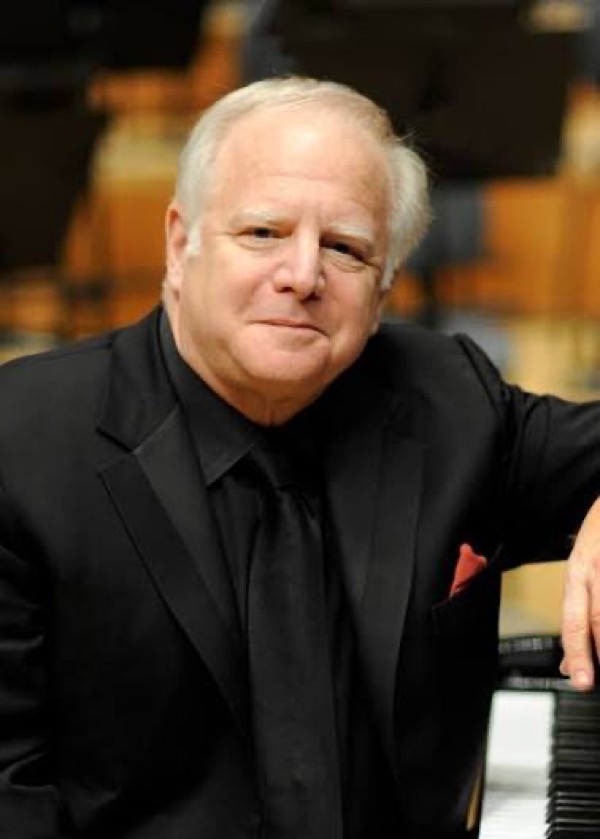
Leonard Slatkin
Slatkin’s musical activities, however, reach far beyond conducting, as he has become a substantial writer about the profession itself. To celebrate his birthday, let us take a look at his three most famous books.
Leonard Slatkin conducts: Enigma Variations, “Nimrod”
Conducting Business
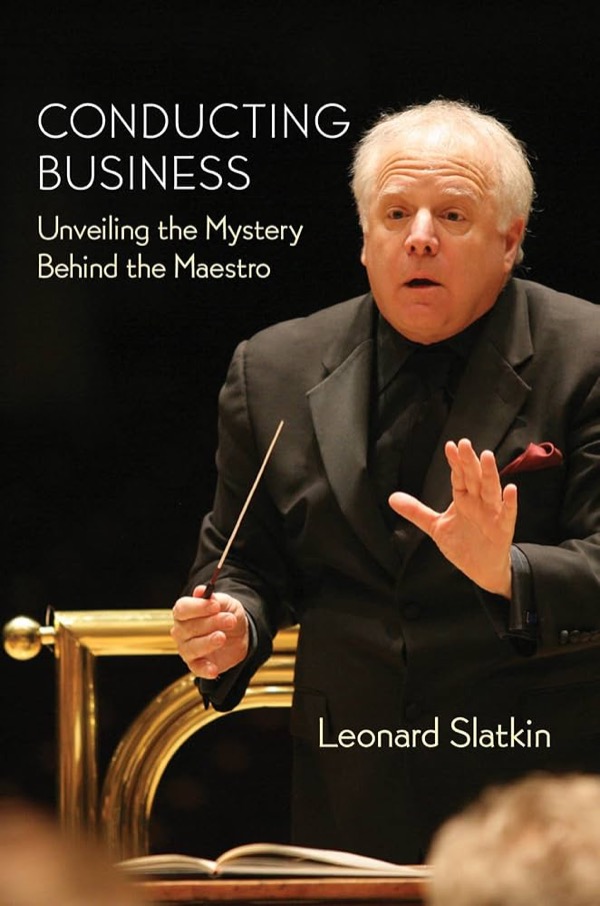
Leonard Slatkin: Conducting Business
Slatkin released his first book, Conducting Business: Unveiling the Mystery Behind the Maestro, in 2012. Published by Amadeus Press, it won the ASCAP Deems Taylor Special Recognition Award in 2013.
In this publication, Leonard Slatkin brings music lovers into the world of the baton to address the fundamental question of what a conductor actually does for a living. He begins with the premise that conducting is one of the most visible professions in classical music yet one of the least understood.
Drawing on his experiences on and off the podium, Slatkin offers not a conventional autobiography, but a blend of memoir, conducting handbook, and behind-the-scenes account of the music business.
He also tells stories about some of the most fascinating people in music, including Frank Sinatra, Leonard Bernstein, and John Williams, taking the reader to Hollywood soundstages as well as to great concert halls and opera pits around the world.
Yet, his discussion does not focus on the glamorous side, and includes his controversial appearance at the Metropolitan Opera, life on the road, difficult relationships between artists and managers, and the toll the profession took on his health.
Slatkin suffered a heart attack in 2009, and he reflects on the physical and emotional demands of a profession that involves constant travel and irregular schedules. A conductor is no longer a musical magician who waves his baton around, he argues, but a teacher, psychologist, diplomat, and a public fundraiser all rolled into one.
Leonard Slatkin conducts Mozart’s “Overture to The Marriage of Figaro”
Leading Tones
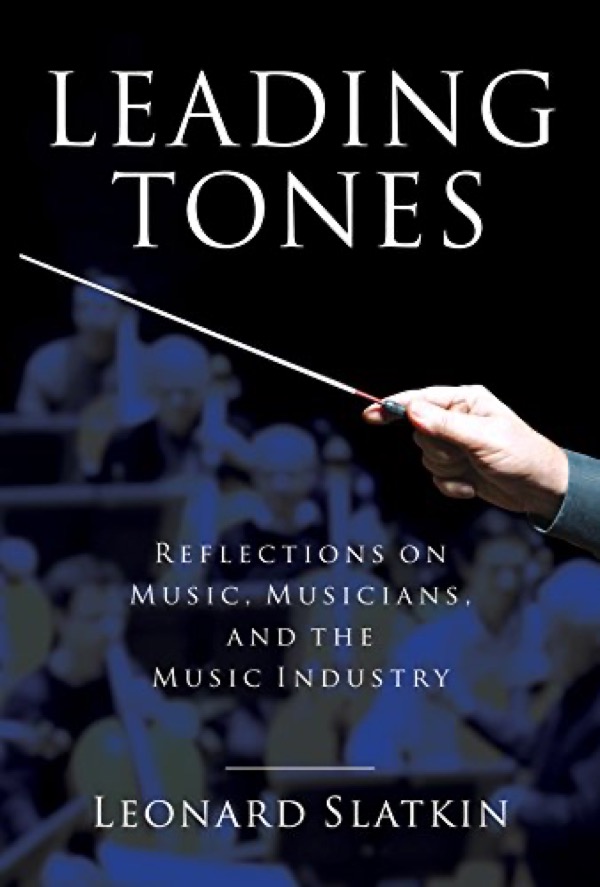
Leonard Slatkin: Leading Tones
In his 2017 publication, Leading Tones: Reflections on Music, Musicians and the Music Industry, Slatkin moves beyond the basic question of conducting. As the publisher writes, “Much of the book discusses elements of the industry that are troubling and difficult…. Auditions, critics, fiscal concerns, and labour negotiations are all matters that today’s conductors must be aware of, and this book provides helpful suggested solutions.”
This book is not merely written for musicians, but also for music lovers who wish to know more about what goes on behind the scenes. It is a rather conversational work that does not focus on the mechanics and mysteries of conducting. Rather, Slatkin takes a look back at a life spent inside the orchestral profession.
The book is divided into four sections, and we learn quickly about Slatkin’s favourite pieces to conduct, and his desert-island choices, among them Beethoven’s “Eroica” Symphony and Elgar’s Symphony No. 2.
We also find brief essays on musicians and conductors Slatkin has known and worked with, as well as a basic yet highly informative summary of his more than 50-year career. The section devoted to the business of music addresses subjects such as auditions, financial pressures, and labour negotiations.
The overall informality of the book invites non-musicians in, as it is not to be read as a scholarly history of conducting or the American orchestra. It is a highly personal view from a conductor who has spent decades moving from the podium to the rehearsal room and the boardroom. To be sure, it is a fascinating account of how a major conductor sees the profession from the inside.
Leonard Slatkin conducts Beethoven: Symphony No. 3 “Eroica”
Classical Crossroads
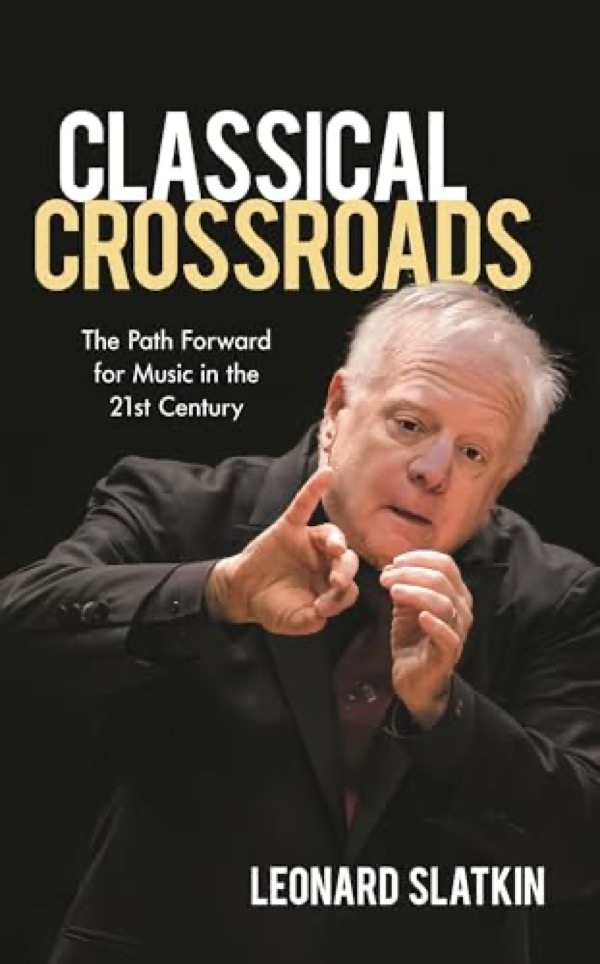
Leonard Slatkin: Classical Crossroads
Published on 15 September 2021, during the continued disruption caused by the COVID-19 pandemic, Classical Crossroads: The Path Forward for Music in the 21st Century is arguably Slatkin’s most ambitious project so far.
Slatkin conveys his thoughts on a variety of issues presently affecting the world of classical music. As such, he addresses a wide range of relevant and provocative topics, such as dwindling audience attendance, the lack of classical music in public education, technology replacing live concerts, and diversity in the classical music world.
Slatkin specifically focuses on problems with audition systems and explains that, for years, a barrier or screen was placed between the musician auditioning and the audition panel, rendering issues of race and gender moot. He contends that the screen should still be used in the preliminary rounds of the audition process, but should be removed in the later rounds to ensure that discrimination is eliminated.
Declining concert attendance is one of the fundamental issues of today. Slatkin suggests that it is unreasonable to expect modern audiences to adapt themselves to the traditions developed in a completely different era. Institutions need to reconsider how classical music is presented and understood.
Lengthy concerts are not appealing, and Slatkin’s answer is to create programmes with greater variety and contrast and with the actual audience in mind. Orchestras need to build relationships with their communities, and for Slatkin, music education is fundamental to the future of the concert hall.
For Slatkin, technology is not the enemy, as streaming and digital media can reach people who might never encounter classical music. Technology is not necessarily replacing the concert experience, but can help lead people towards it. On the question of diversity, Slatkin sees the problem extending beyond who appears onstage. He advocates programmes by more diverse composers and performers, and institutions that are more welcoming and relevant.
The new millennium has provided great obstacles, but Slatkin emphasises that there are also new opportunities. And if there was ever a time for change in classical music, he argues, the time is now. And to be sure, Slatkin is still writing. His two most recent books are the beginning of a score-study series for conductors, and an additional volume is slated for publication by Bloomsbury in February 2027.
For more of the best in classical music, sign up for our E-Newsletter