We had another chat with audio engineer Lani Spahr the other day. We spoke with him last year about his work on the century-old recordings made by Siegfried Wagner.

Lani Spahr
Now we’re talking to him about the Elgar series, Elgar from the Archives, that SOMM Recordings (on its Ariadne label) is putting out. The first 4 are already out, and since they’re based on recordings from Spahr’s own collection, we thought we’d have a chat about the whole project.
Volume 1 was released in January 2026 and includes 4 ‘acoustic’ recordings: Elgar’s Violin Sonata from 1919, with Marjorie Hayward, a fellow of the Royal Academy of Music, and the Australian pianist Una Mabel Bourne; and Elgar’s String Quartet, as performed by the London String Quartet in 1921. Due to the limitations of recording technology at the time, both of these works had to be abridged in their original releases. The bulk of the recording, however, is not one, but two Enigma Variations, one conducted by the composer in 1920 and another conducted by Sir Henry Wood in 1924.
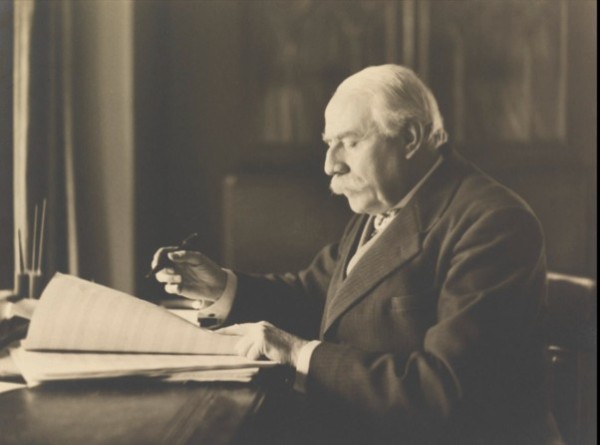
Herbert Lambert: Sir Edward Elgar, Bt, 1933
The Enigma Variations was the work that made Elgar’s name, but at the same time is a work of mystery. On its first release, the names and initials in the titles remained cyphers: who was Troyte? Nimrod? C.A.E.? As an example of British light music, it is unmatched; as a commentary on British society, it has no equal.
The Elgar from the Archives series comes from the collection of its audio engineer, Lani Spahr. For Spahr, Elgar is the composer who captures his imagination. He estimates that his collection holds some 500 copies of the Enigma Variations alone! As an audio restorer, he has equipment for playing the most esoteric of recordings, be they 16” transcription discs (used from the 1920s to 1950s) or the many kinds of Dolby systems (including A, B, C and S) for those times when he has to get back to the original forms of recordings.
When asked what it was about Elgar that appealed to him, he returned to the fact that Elgar was largely self-taught and that, in his music, Spahr often finds elements that would be forbidden in a regular music education but are integral to Elgar’s unique harmonic structures. One of the things he always keeps an eye out for is the hidden tritones in Elgar’s music, with buried chains in the middle of the chord progressions. Particularly in his early music, Elgar’s progressions can take you somewhere unexpected, much like Wagner could in his time.
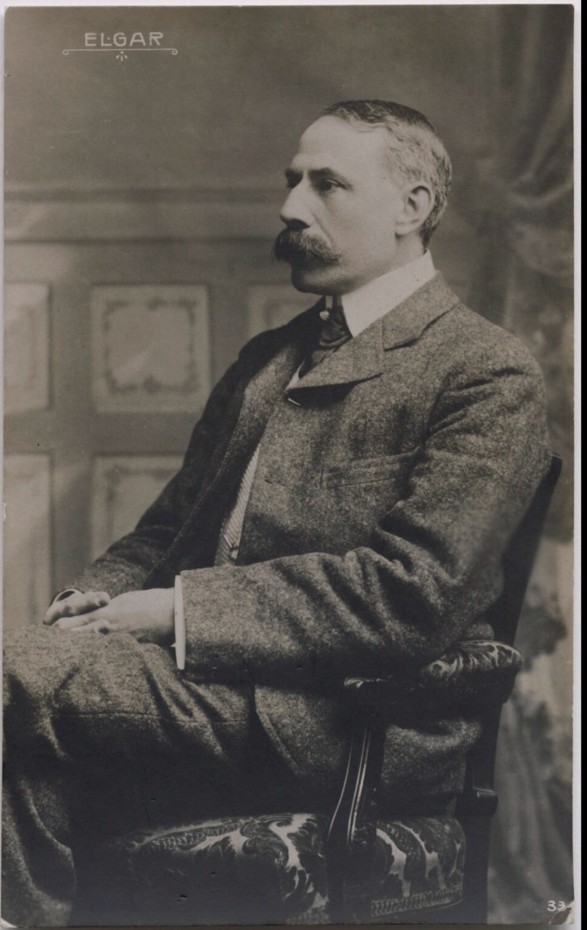
Sir Edward Elgar, Bt, ca 1910
In Spahr’s collection that forms Elgar from the Archives, we can see, time and time again, unusual performers or interpretations. Comparing the two Enigmas on vol. 1, in the end, they’re only 2 minutes apart in duration. Still, the difference between Elgar’s presentation of the theme at 1:25 and Sir Henry Wood’s performance at 1:01 can almost be described as the difference between a first hearing of the piece and what you can do once you’re free to play with a known work.
To hear how this really matters, listen to Elgar’s performance, then Wood’s, and then to Leonard Bernstein’s controversial recording with the BBC Symphony Orchestra in 1982.
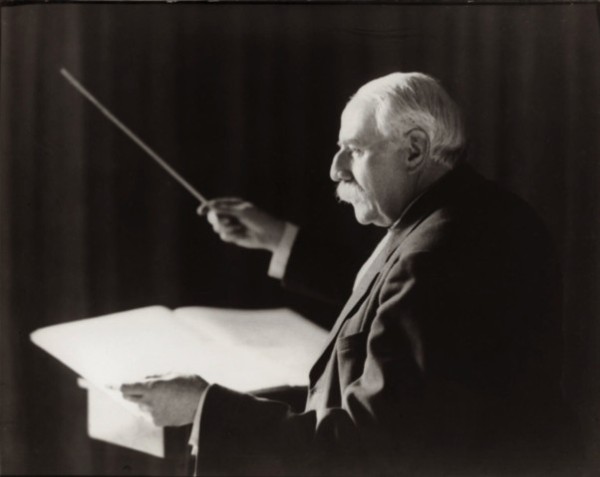
Herbert Lambert: Sir Edward Elgar, Bt, 1942
Edward Elgar: Variations on an Original Theme “Enigma”, Op. 36 – Variation 9: Nimrod (A. J. Jaeger) (Royal Albert Hall Orchestra; Sir Edward Elgar, cond.)
Edward Elgar: Enigma Variations, Op. 36 – Variation 9: Nimrod (A. J. Jaeger) (New Queen’s Hall Orchestra; Sir Henry Wood, cond.)
Edward Elgar: Variations on an Original Theme, Op. 36, "Enigma": Variation 9: Nimrod (A. J. Jaeger) (BBC Symphony Orchestra; Leonard Bernstein, cond.)
Bernstein’s recording is over 6 minutes long. It makes Nimrod lush in a way that the English conductors never even considered. He’s not the hunter as much as the hunter looking over his lands.
And, in a way, this is what Spahr is looking for. Not the usual locally trained performer playing a local work, but someone from a different tradition. On the Elgar from the Archives, vol. 2, we have Elgar in the hands of the Europeans: Jan Koetsier leading the Bamberg Symphony Orchestra, with Hungarian violinist Tibor Varga in Elgar’s Violin Concerto in B minor, Op. 61. A Dutch conductor leading a German orchestra with a Hungarian soloist.
Or the Munich Philharmonic Orchestra led by Fritz Rieger with André Navarra in the Cello Concerto in E minor, Op. 85. A German orchestra and conductor with a French cellist.
Neither of these performances will be of the expected English variety.
In this series, Spahr brings out the unusual and lets you listen to something familiar in a new way.
Upcoming in vol. 5 of the series, and currently in production, are The Apostles with Sir Malcolm Sargent and Sea Pictures, conducted by George Weldon in 1946, predating his much more famous 1954 recording.
We also talked about one of the most significant of Elgar’s works, The Dream of Gerontius. The work (not an oratorio, Elgar insisted) was based on the poem by Cardinal John Henry Newman that recounts the journey of a pious man’s soul from his deathbed to his judgment before God and his eventual progression into Purgatory. As a product of Roman Catholic theology and a Roman Catholic composer, the work encountered difficulties in Anglican Britain. Eventually, with a revised text, it became part of the English choral world. Spahr estimates there’s a performance in England nearly weekly, although it’s less popular in the US, which has a different choral tradition. It’s a work that performers love, but that audiences sometimes find difficult. Spahr brought us the 1959 Gerontius (Elgar from America, vol. III, SOMM Ariadne 5015-2) with Sir John Barbirolli leading the New York Philharmonic.
I asked about some of his favourite things he found in Elgar’s music, and he talked about a single note. The final note of the Enigma Variations is a half note (minim) with a tenuto symbol over it. Spahr noted that in performances up through the 1950s, this final note was played but not held.
Here’s Elgar’s own performance (listen at 04:36). The note is played, but he doesn’t linger.
In 1971, however, Sir Adrian Boult started to change this. Listen at 05:44 to Boult’s version.
Edward Elgar: Variations on an Original Theme, Op. 36, "Enigma": Variation 14: Finale: E. D. U. (The Composer) (George Thalben Ball, organ; BBC Symphony Orchestra; Adrian Boult, cond.)
In Bernstein’s recording (with that extraordinarily slow Nimrod), he lingers on it even longer. Listen at 06:08.
Edward Elgar: Variations on an Original Theme, Op. 36, "Enigma": Variation 14: Finale: E. D. U. (The Composer) (BBC Symphony Orchestra; Leonard Bernstein, cond.)
We talked about the effect of that change. To Spahr’s ears, the third of the G chord, played only by a few woodwinds (2nd oboe, 2nd clarinet), gets hidden when the final notes are elongated. It is also played in the strings, but when the players hold the top G, this internal B in the strings disappears. In the short versions, that third is more audible; when you hold the chord, the third vanishes.
We had a fascinating conversation, and it makes you realise more and more what a wonderful audio feast we have available to us these days. With guidance from specialist listeners, such as Lani Spahr, we can deepen our appreciation not only of the music but also of the changes it has undergone, even over the last century. Spahr’s contributions to the Elgar from the Archives series do more than give us recordings conducted by the composer or his contemporaries. They give us recordings that stand in contrast to some of today’s practices. Recordings that can show us how (and perhaps why) some of today’s practices developed. Open your ears and not only listen to history but understand what it’s telling us.
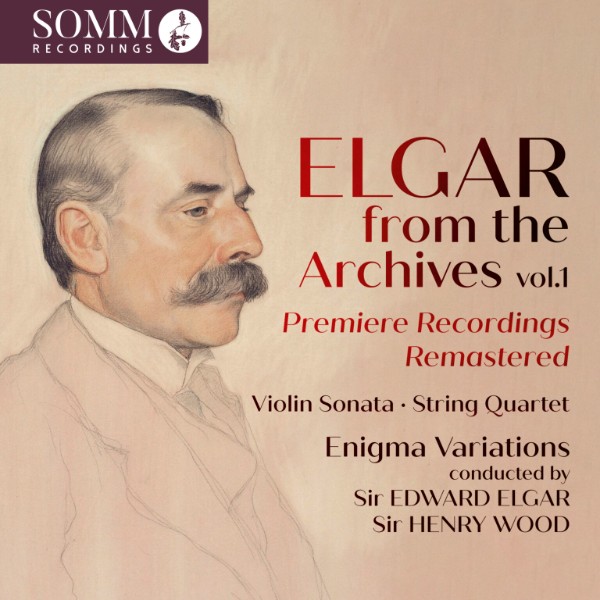
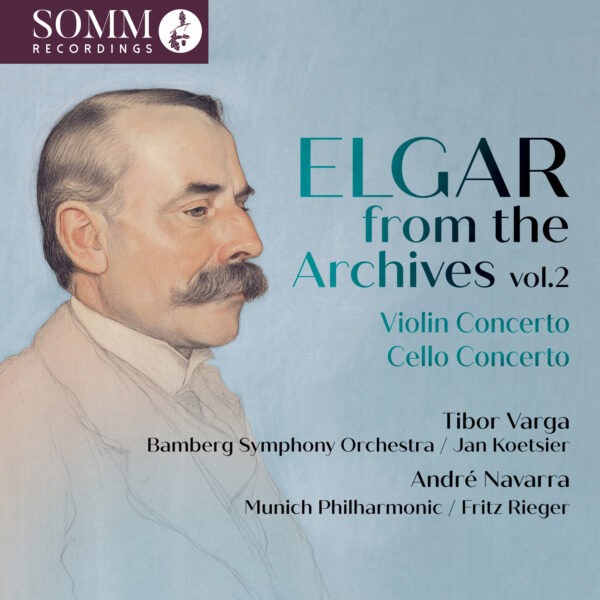
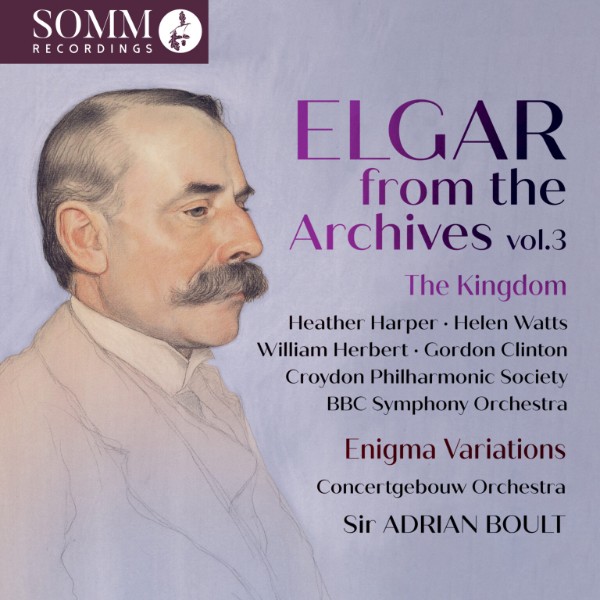
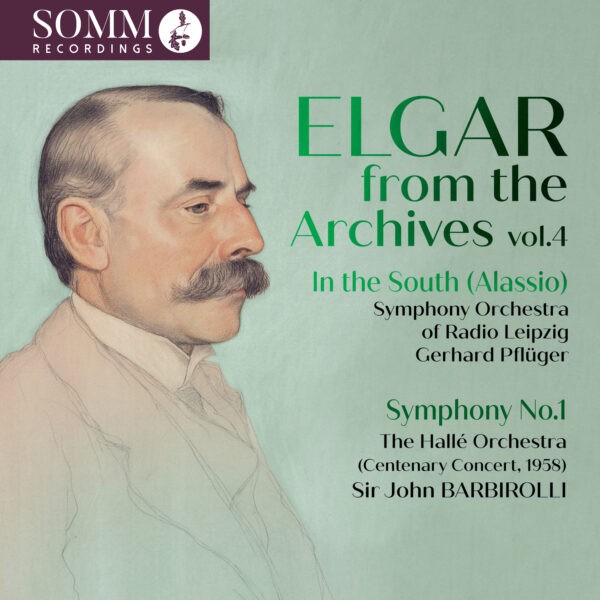
Elgar from the Archives vols. 1, 2, 3, 4
SOMM Recordings: Ariadne 5046. 5047. 5048-2, 5049
https://somm-recordings.com/?s=elgar+from+the+archives
For more of the best in classical music, sign up for our E-Newsletter