
The Swiss-German composer, pedagogue, and pianist Joachim Raff suffered a fatal heart attack in the night from 24 to 25 June 1882. That’s about as precise as we can be in terms of his passing. However, we do know that he wrote a number of wonderful and unjustly neglected concertos.
In the 1870s, Raff was one of the most frequently played German composers, and to commemorate his achievements, let’s highlight the five concertos that showcase his melodic gift and orchestral imagination.
Joachim Raff: Harbingers of Spring, Op. 55, “Reconciliation”
Violin Concerto No. 1
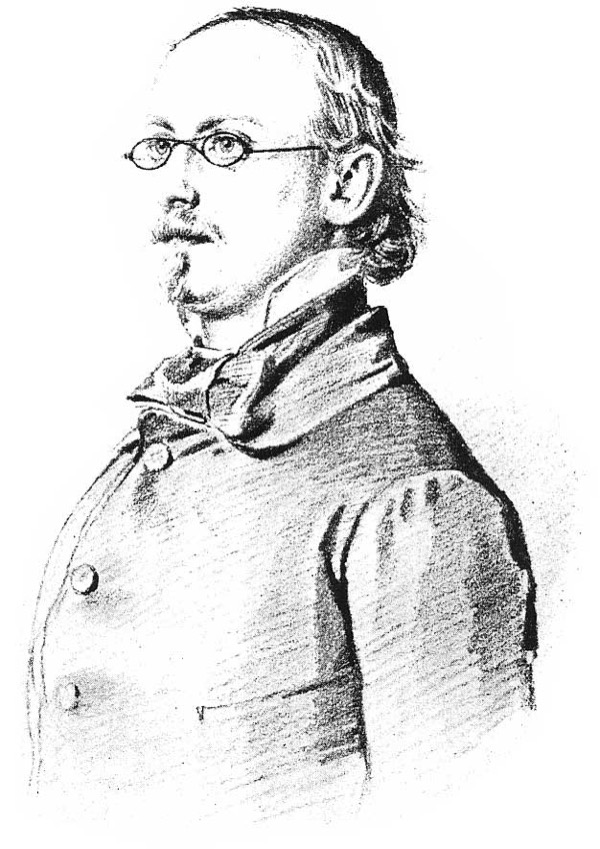
Joachim Raff (1856)
During his lifetime, Joachim Raff was greatly celebrated and admired. His music was valued, with some reservations, by Mendelssohn, Liszt, von Bülow, and Clara Schumann. Raff considered himself an independent composer, adopting elements of the New German style of Liszt and Wagner but modelling his works on the compositions of Mendelssohn and Schumann.
Raff was a prolific composer, and many famous contemporaries actually accused him of overproduction. They thought that too much of a good thing would cheapen his music. His five concertos were all written during an exceptionally productive period during the 1870s, and the violin concerto No. 1 dates from around 1870 to 1871.
It follows a traditional three-movement form with an expansive opening movement that sounds symphonic in conception. Yet, Raff does not clearly follow a symphonic argument but presents his seemingly inexhaustible melodic invention.
Raff’s extraordinary gift for melody and radiant orchestration shines in the slow movement, and the finale features agile passagework that blends technical fireworks with extended lyricism.
This concerto first sounded for the public on 24 August 1871, and after substantial revisions, it was performed in Weimar in April 1872. After the Weimar performance, the work faded, and it never really entered the repertory. By the early 20th century, it had disappeared from concert life.
Joachim Raff: Violin Concerto No. 1, Op. 161
Piano Concerto
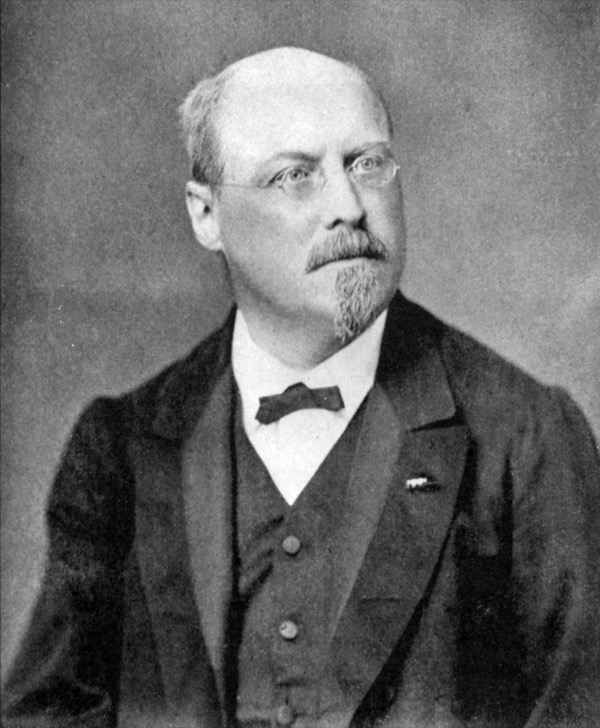
Joseph Joachim Raff
In his compositions, Raff tried to link the old with the new. He used traditional genres and forms but added programmatic elements. Raff loved traditional counterpoint and motivic work. The preference for the learned style led to rather harsh criticisms.
Franz Liszt told him that his music lacked emotion, and by the time of Raff’s death, he was accused of never having developed a consistent personal style. Raff composed only one piano concerto, and this turned out to be among his more successful works during his lifetime.
It received its first performance on 30 July in Wiesbaden, and the soloist was none other than Hans von Bülow, one of the greatest virtuosos of his time. With Bülow lending the concerto credibility, it was quickly taken up.
It’s been suggested that it even reached London within a couple of years, but I can’t really verify this statement. One thing is certain: Raff is not interested in a virtuoso showpiece, as there is plenty of orchestral action and musical workmanship beneath the surface.
It follows a traditional three-movement design, and the dramatic but lyrical opening sounds like a blend of Beethovenian drama with the lyricism of a Mendelssohn or Schumann. The central slow movement feels like an extended lyrical meditation, and the finale is full of energetic heroism and popular appeal.
Although the piano concerto was one of Raff’s better-known concertos in its day, after Raff’s death in 1882, it disappeared with surprising speed. The work has gone through a modest revival and has been recorded by a number of contemporary pianists.
Joachim Raff: Piano Concerto in C Minor, Op. 185 (Peter Aronsky, piano; Basel Radio Symphony Orchestra; Jost Meier, cond.)
Cello Concerto No. 1
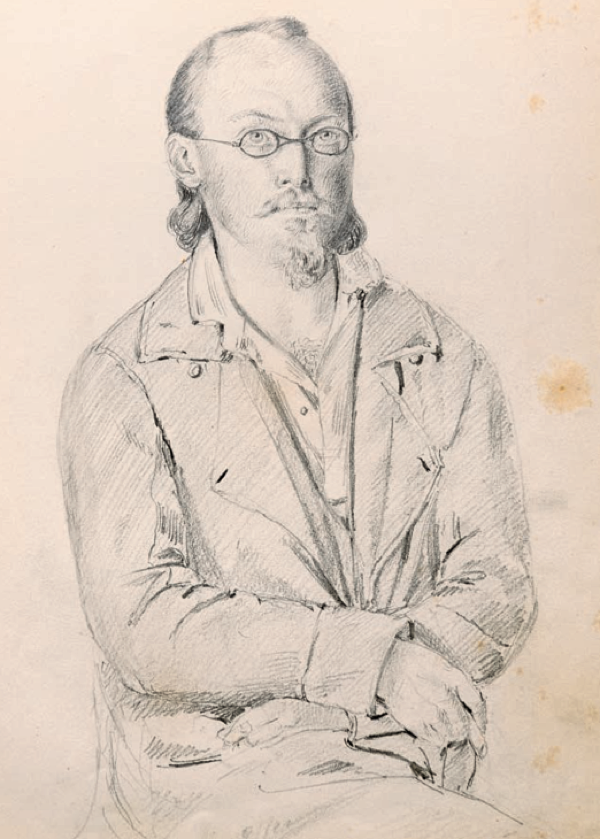
Joachim Raff (1853)
For a substantial part of his professional life, Raff was the secretary and copyist for Franz Liszt. He lived in the Villa Altenburg, Liszt’s home in Weimar, and was generally known as his assistant.
Raff had a considerable hand in orchestrating Liszt’s work, most famously producing a new version for the symphonic poem Tasso. Yet, working relationships of this kind do grow old after a while, and once Raff started to have serious disagreements with Princess Carolyne Sayn-Wittgenstein, it was time to hit the road.
Raff moved to Wiesbaden in 1856 and was appointed director of the Hoch Conservatory in Frankfurt in 1877, where he established a dedicated class for women composers, the first of its kind in Germany. He even managed to engage Clara Schumann as a piano professor.
All these concertos date from his time in Wiesbaden, and his first cello concerto is said to have premiered in 1874 in Dresden and featured the virtuoso cellist Friedrich Grützmacher. The soloist had previously approached Raff and asked to pacify us poor cellists in our truly unbearable circumstances through a concerto for our instrument.
Shortly after the performance, the soloist writes, “At the many performances, which your violoncello concerto has already experienced at different places and from various players, and which will increase significantly, it has given great pleasure. I myself feel the same, as the success predicted by me is confirmed so brilliantly.”
Other cellists did take up the work, and it was published in Leipzig in April 1875. It did achieve broader circulation than his other concertos, possibly because cello concertos in the 1870s were comparatively rare. Raff’s reputation collapsed unusually fast after his death, and so did this concerto. Personally, I think it is among the finest forgotten cello concertos of the 19th century.
Joachim Raff: Cello Concerto No. 1, Op. 193
Cello Concerto No. 2
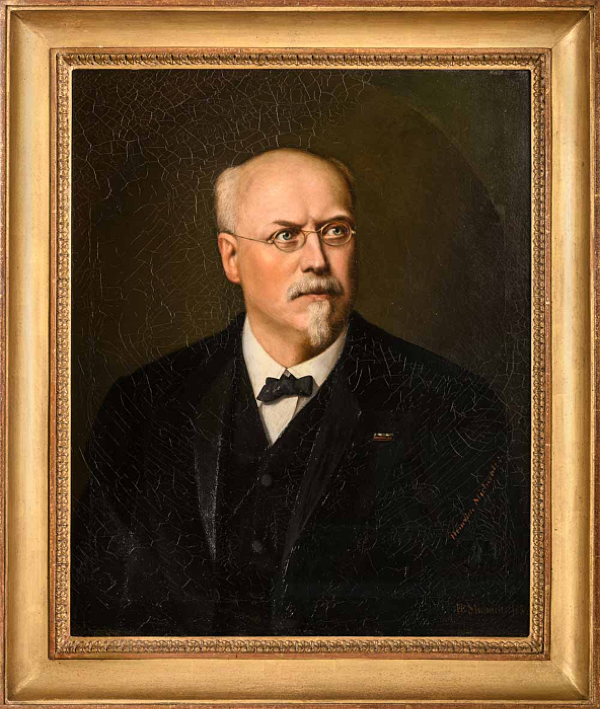
Joachim Raff
There is no doubt that Raff felt oppressed by the commanding figure of Liszt, and he must also have realised that his career opportunities in Weimar were limited. He was also unsuccessful in his applications for positions elsewhere because he was so closely associated with the radical movement of Liszt and Wagner.
Raff’s way of breaking free from the intensely pro-Wagner circle around Franz Liszt was to publish a pamphlet with the provocative title “The Wagner Question.” He simply posed the question of whether Wagner was genuinely revolutionary and valuable, or if his fame was simply a question of exaggerated worship and ideology.
Raff essentially wrote that Wagner was a major artistic force, perhaps even historically transformative. Yet he also stated that Wagner’s followers were turning his theories into a rigid religion. He later even wrote that opposing uncritical Wagner worship would become part of his life’s work.
This predictably ruffled some feathers, because Raff was not an outsider critic but part of the inner circle. Liszt, who was promoting and staging Wagner’s operas while the composer was in exile, saw Raff’s pamphlet as public disloyalty and betrayal from an insider. Do we really have to wonder why Raff’s reputation collapsed immediately after his death?
In the event, Raff’s second cello concerto remained unpublished until the late 20th century. Composed in 1876, this concerto never even entered the repertoire or circulation. There is no evidence that it was premiered in the 1870s, and Raff never heard it performed publicly.
The premiere, as far as we know, took place on 27 May 1997 in Lachen, Switzerland, Raff’s birthplace. Isn’t it amazing that this concerto waited 121 years to be heard in public? It was the 2004 Tudor recording with Daniel Müller-Schott, the Bamberg Symphony, and Hans Stadlmair that established Raff No. 2 as a serious rediscovery.
Joachim Raff: Cello Concerto No. 2 in G Major (Daniel Müller-Schott, cello; Bamberg Symphony Orchestra; Hans Stadlmair, cond.)
Violin Concerto No. 2
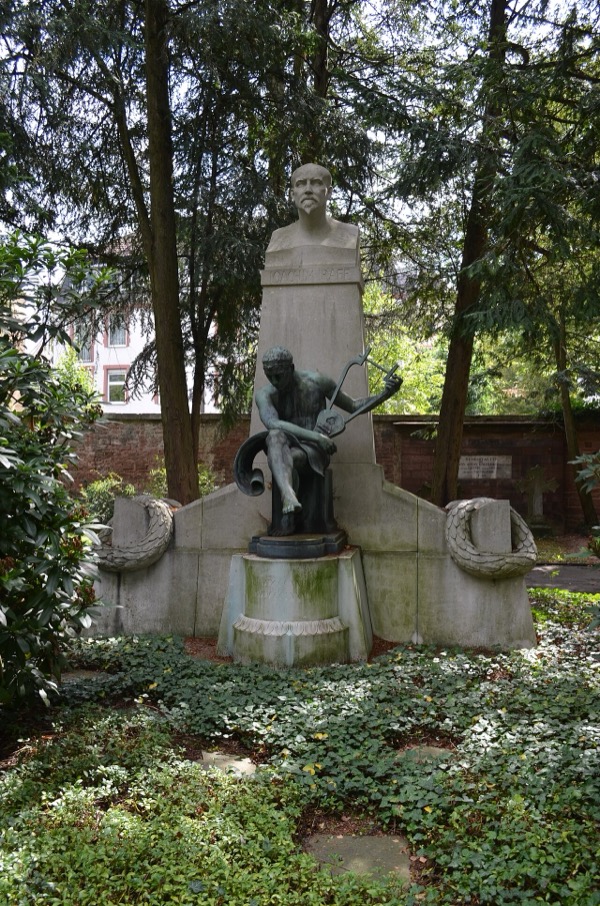
Joachim Raff’s grave, Frankfurt Hauptfriedhof
Raff’s violin concerto No. 2 was written in 1877, six years after his first. This final concerto in his catalogue is a mature work, more concentrated and structurally tighter than the first. This is a work that reflects a greater formal confidence and economy.
It was first performed on 1 November 1877 in Erfurt with the violinist Hugo Heermann as the soloist. Heermann was an important figure but not a superstar advocate like Joseph Joachim. Moreover, the field of violin concertos became rather competitive. Mendelssohn was canonical, Bruch No. 1 was hugely successful, and only one year later, the Brahms Violin Concerto overshadowed them all.
We’ve already hinted at one of the reasons why Raff’s reputation collapsed so quickly after his death, but in terms of musical quality, let’s ask an expert on his music.
James Deaville in Grove Music Online writes, “Raff’s music has a strong sense of direction and drive, and his orchestration is rather effective. His stylistic eclecticism is particularly evident in his themes, which tend to be diatonic and brilliant in his faster movements, but often adopt a sentimental salon style in slow movements.” (Deaville, GMO, 2001)
I think it is wonderful that Raff’s reputation is gradually being restored in the 21st century, as he wrote music of craftsmanship and conviction. To be sure, the neglect of the five Raff concertos tells us more about changing musical fashions and behind-the-scenes finagling than about their quality.
Joachim Raff is a composer well worth rediscovering, and his five concertos are a wonderful place to start. He was probably most famous during his lifetime as a symphonist, so I will take a look at his eleven symphonies with opus numbers in subsequent blogs.
For more of the best in classical music, sign up for our E-Newsletter
Joachim Raff: Violin Concerto No. 2 in A Minor, Op. 206 (Michaela Paetsch-Neftel, violin; Bamberg Symphony Orchestra; Hans Stadlmair, cond.)





Raff’s orchestral works deserve far more concert programming, especially his Symphony No. 5 Lenore, planning to perform the Piano Concerto on 2027-01-15