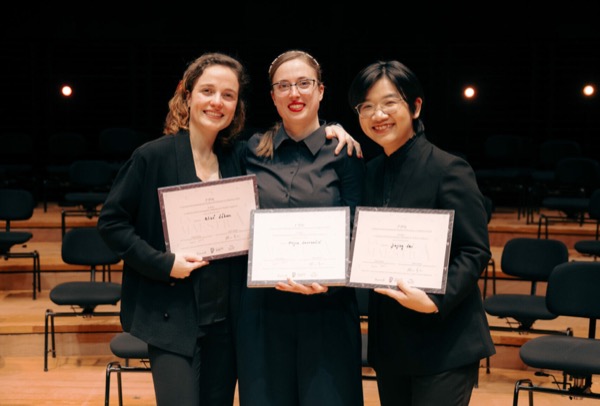
Now in its fourth edition, “La Maestra,” the International Competition for Women Conductors continues to pursue three central objectives: to champion the professional ambitions of women conductors, to unite the international musical community behind a strong commitment to gender equality on the podium, and to provide emerging conductors with the support they did not always receive during their training.
According to a study by Nathalie Krafft, “Only 4.3% of orchestras worldwide were led by women in 2018, a figure that now stands at only 8%. In France, the number of women at the head of permanent orchestras has risen from 2.7% in 2019 to 12.5% in 2023; a spectacular leap, but we are still far from gender parity.”
In 2026, the competition received 225 applications from around the world, representing 13 different nationalities. Chaired by the internationally renowned Ukrainian conductor Oksana Lyniv, the field was reduced to four finalists.
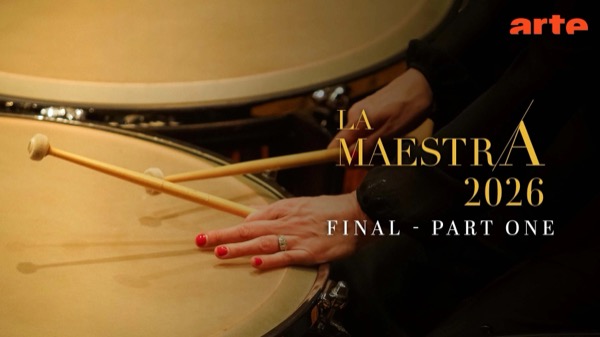
La Maestra 2026 Final — Part One (ARTE)
La Maestra 2026: The Final, Part 1
Available until 27/02/2028
Contemporary Technique and Classical Interpretation
The first part of the Final featured the Paris Mozart Orchestra, and each of the four finalists was asked to conduct a compulsory contemporary work. The Singaporean-born composer Diana Soh, who is now based in Paris, was commissioned to compose the competition work.
Au fil du geste, a work that explores the relationship between bodily movement and sound and seemed designed to explore how a conductor shapes and transforms musical energy, received its world premiere during the competition.
In addition, this first part also asked the finalists to either conduct the first movement of Johannes Brahms’ Symphony No. 2 or Ludwig van Beethoven’s Symphony No. 7, decided by a lucky draw.
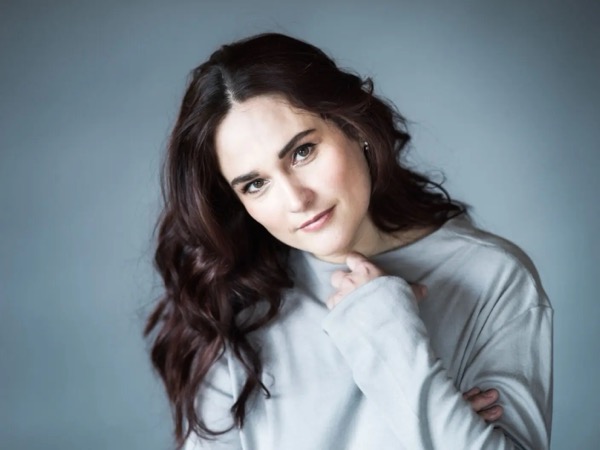
Meet The Finalists: Molly Turner
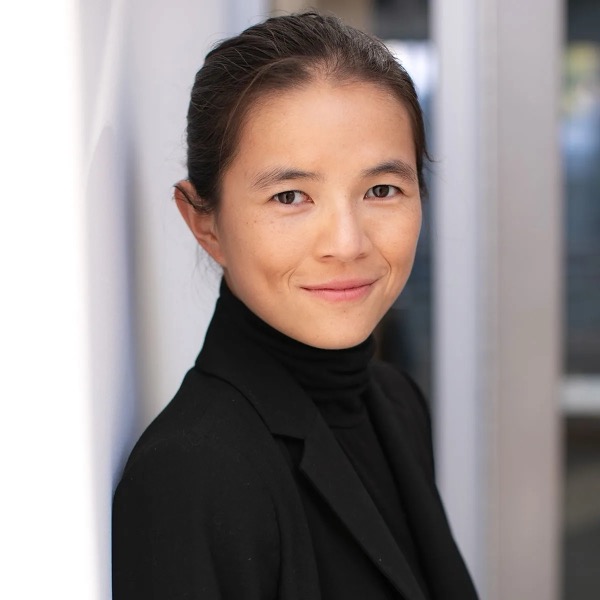
Molly Turner (Credit: Sonja Garnitschnig)
American conductor Molly Turner is described by The Washington Post as “a force of nature from the podium.” Conducting with fervour and imagination, she served as Conducting Fellow of the New World Symphony for two seasons. Concurrently, she was also a Dudamel Fellow with the Los Angeles Philharmonic in the 2024/25 season.
During a busy 2025-26 season, Turner will appear with the Orchestre de Paris, the Minnesota Orchestra, the Kristiansand Symphony Orchestra, Opera Grand Rapids, and the Los Angeles Philharmonic’s “Green Umbrella” series.
Turner completed her master’s degree in conducting at The Juilliard School, where she studied with David Robertson, and received her bachelor’s degree in music composition from Rice University. She also received an Artist Diploma from the Colburn Conservatory, where she worked with Esa-Pekka Salonen.
She cites Igor Stravinsky and Caroline Shaw as her favourite composers, and she believes that “Music is all about energy and I hope you can feel the energy that we are creating here together.”
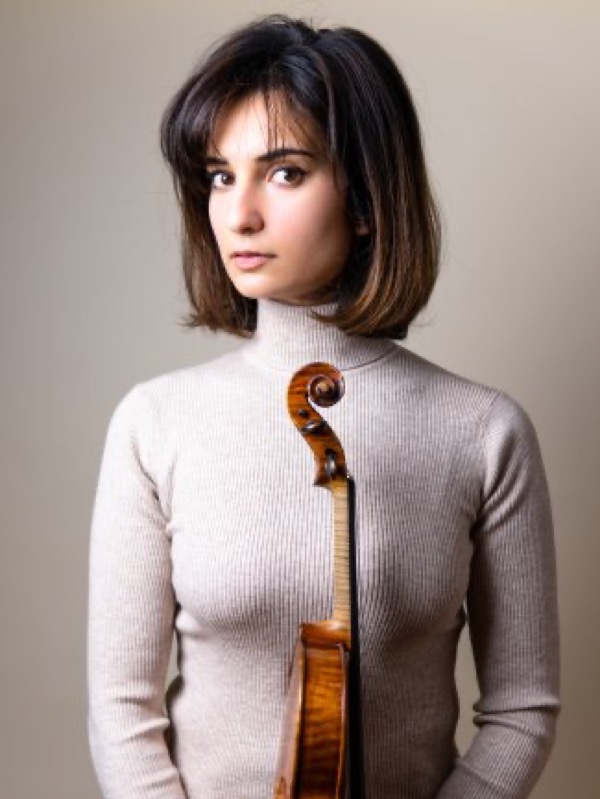
Meet The Finalists: Alizé Léhon
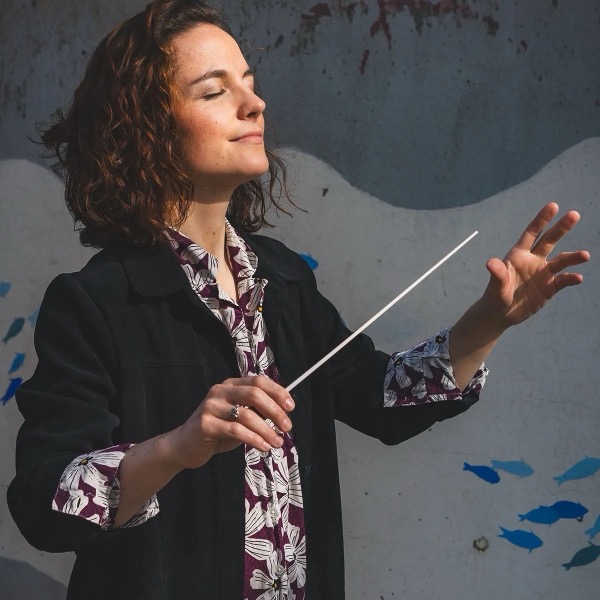
Alize Lehon (Credit: Maria Mosconi)
Arts & Patrons describes “Maestra Léhon as a rare artist with sophistication, clarity and purpose. She can inspire her teams, partners and musicians across generations and cultures to follow her vision to make music with and for the world.”
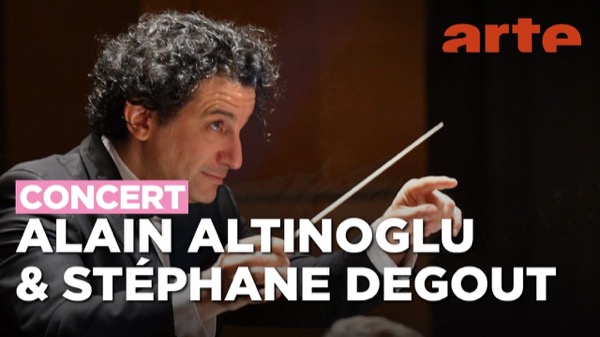
A graduate with a master’s degree from the Conservatoire National Supérieur de Musique et de Danse de Paris, where she studied with Alain Altinoglu, Alizé Léhon is launching a career marked by collaborations with major orchestras in France and abroad. Selected for the 2024 Malko International Competition, she conducted the Danish National Symphony Orchestra and received the Neeme Järvi Prize at the Gstaad Festival.
She won the position of Assistant Conductor of the Orchestre National d’Île-de-France in 2025, and the 2025/26 season marks her debuts with the Musikkollegium Winterthur, the Sinfonieorchester Basel, the Opéra Orchestre National de Montpellier, the Opéra de Tours, the Orchestre National Bordeaux Aquitaine, and the Orchestre National Auvergne-Rhône-Alpes.
Her favourite composers are Igor Stravinsky and Francis Poulenc, and she believes “to conduct is to listen deeply, bring individuals together and share an essential gesture with the audience.”
Meet The Finalists: Jiajing Lai
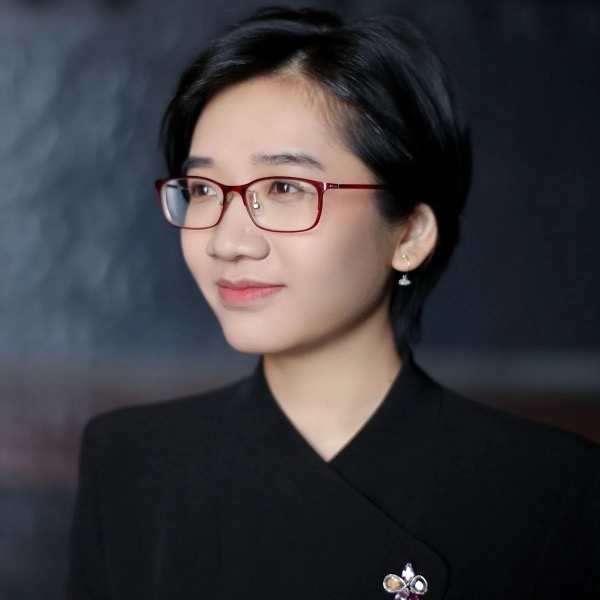
Jiajing Lai (Credit: Yi Xiao)
Jiajing Lai holds pivotal roles as Assistant Conductor of the China NCPA Orchestra and Pre-College Faculty at The Tianjin Juilliard School, where she leads both choral and string ensembles.
She is recognised as one of China’s most promising young conductors, and she served as Resident Conductor for the 2023 Tianjin Juilliard Piano Festival and conducted the commemorative concert for the 50th anniversary of China–Spain diplomatic relations.
She holds a master’s degree in Orchestral Conducting from the Cincinnati College-Conservatory of Music, where she is currently pursuing a Doctor of Musical Arts degree. Jiajing Lai honed her skills in masterclasses with Bernard Haitink and at the Gstaad Conducting Academy under Jaap van Zweden.
Her favourite composers are Johann Sebastian Bach and Qigang Chen, and her motto is “Music connects. You and me.”
Meet The Finalists: Mojca Lavrenčič
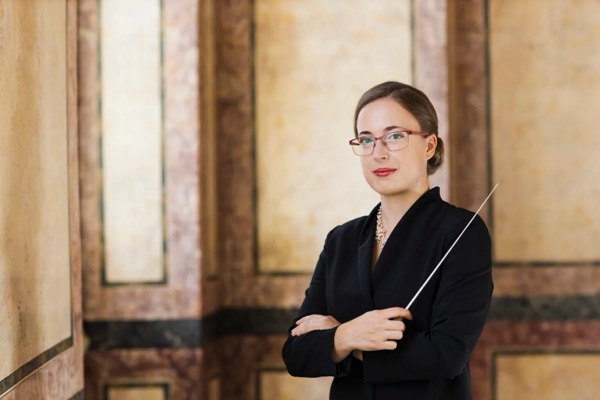
Mojca Lavrencic (Credit: Darja Stravs Tisu)
According to the International Music Press, “Mojca Lavrenčič combines technical precision with artistic depth and a natural authority.” Born in Vienna and raised in Slovenia, Mojca studied conducting at the University of Ljubljana with Marko Letonja, and furthered her development with Andrea Marcon at the Schola Cantorum Basiliensis.
For Mojca, conducting is not only a means of personal expression but also a way to empower others, connect people, and bring beauty and meaning to uncertain times. She creates working environments in which musicians feel respected, safe, and inspired to give their best.
In the upcoming season, Mojca will conduct, among others, the Orchestre Philharmonique de Strasbourg, the Orchestre National de Montpellier, the Slovenska Filharmonija, the Opera and Ballet Maribor, the Orchestre Pasdeloup, the Orchestre Symphonique de Montréal, the Orquestra Sinfónica do Porto Casa da Música, and the Orchestre National de Mulhouse.
Her favourite composers are Claude Debussy and Lojze Lebič, and she believes that “The world is hungry for love and beauty. Music has the power to convey them.” Lavrenčič is part of the final because she was the first candidate on the waiting list after Jessica Rivero Altarriba had to withdraw from the competition.
Critical Perspectives on Gesture, Control, and Interpretation
The critic Vincent Guillemin, writing for ResMusica, was in the audience, and he compiled a substantial specialist account. Here are some of his observations on Part 1 of the Final. Guillemin was rather critical of Molly Turner’s approach to Soh’s work, describing it as “still very scholastic.” In Brahms, he felt that Turner was not rhythmically settled, and also mentioned that her gestures appeared comparatively broad without eliciting strong orchestral engagement.
Alizé Léhon received one of the most glowing reviews, as Guillemin was impressed that she conducted Soh’s piece without a baton, and thereby gained flexibility in the contemporary score that depended on gesture. Particularly impressive was the fact that Léhon made sure that the horn principal was acknowledged for his solo, suggesting collegial awareness rather than mere podium technique.
Guillemin also praised Jiajing Lai highly, who also conducted the Soh work without a baton. This, he felt, gave her greater fluidity in the modern score. Lai was praised for her contrasting musical climates and for her handling of varied atmospheres and responsiveness to players. In Lai’s Beethoven, Guillemin appears to have valued nuance and atmosphere. For Guillemin and other critics present, Jiajing Lai gave a highly compelling performance in the first part of the final.
Mojca Lavrenčič received a mixed critical review in Part 1. She also used a baton in Soh’s piece, and her interpretation was called energetic but strict. By implication, although the structure was very clear, Lavrenčič was less flexible in her exploration of this work centred on gesture. Nevertheless, her high energy and clarity of gesture received high marks.
If Part 1 was all about clarity and leading a smaller ensemble in an interpretation of a contemporary work, Part 2 became a test of large-scale orchestral command and personality. Stay tuned.
For more of the best in classical music, sign up for our E-Newsletter