For pianist Ana-Marija Markovina, Fanny Mendelssohn Hensel: Complete Solo Piano Works Vol. 1 is not simply another recording release. It is the beginning of an expansive artistic and scholarly journey into the piano music of one of the nineteenth century’s most fascinating and misunderstood composers.
H 4 Klavierstück d-Moll
The new album, Fanny Mendelssohn Hensel: Complete Solo Piano Works Vol. 1, spans four CDs and represents the beginning of Markovina’s large-scale exploration of Fanny Mendelssohn Hensel‘s piano music. Following her acclaimed complete recordings of Carl Philipp Emanuel Bach and Felix Mendelssohn, Markovina now turns her attention to Felix’s older sister, a composer she describes as “completely unusual,” “bold,” and “genius.”
“I said, ‘Now it’s time for Fanny,'” Markovina recalls. “I went deeper and deeper and deeper.”
The project emerged naturally from years spent immersed in the history of the Mendelssohn family while researching and recording Felix Mendelssohn’s complete piano works. Yet she quickly discovered that Fanny possessed an artistic voice entirely her own.
“When I touched her music the first time and started to understand who she was, what personality, and what character. I was lost,” she says.
H 114 Tokkate. Allegro moderato C-Moll
What makes the album particularly significant is its scope. Rather than presenting a curated selection of familiar miniatures, Markovina is committed to documenting the entirety of Fanny’s solo piano output, including unpublished manuscripts, sketches, and fragments whenever possible.
“We’re working to put it really completely together,” she explains. “Definitely, it will be everything one can find, even the sketches and the fragments.”

Ana-Marija Markovina
The recording project also reveals the astonishing stylistic breadth of Fanny’s writing. According to Markovina, listeners who follow the series chronologically will hear a composer who is constantly evolving and experimenting.
H 193 Fugata. Largo non troppo lento Es-Dur
“She’s growing all the time,” she says. “At the beginning, it is already very promising. Then she becomes wild and very pianistic.”
At times, Markovina compares Fanny’s virtuosity to that of Franz Liszt.
“She wanted almost to write like Liszt,” she says with a laugh. “You would need three hands, or six fingers on every hand.”
Yet virtuosity is only one dimension of the music presented on the album. Markovina emphasises the emotional complexity and structural imagination that run throughout Fanny’s works.
“She was making experiments in pianistic patterns,” Markovina explains. “She didn’t accept borders or limits.”
The later works, she says, become increasingly profound and visionary.
“The latest works are mysterious. They’re transcendental.”
One particularly fascinating aspect of the album is the insight it provides into Fanny’s awareness of audiences and publication. Markovina notes that some pieces survive in multiple versions, including technically simplified adaptations.
H 202 Klavierstück f-Moll
The preparation behind the recording has been extensive. Many of the sources required consultation of original manuscripts and digital archives at the Preussischer Kulturbesitz in Berlin. During recording sessions, Markovina and her team frequently checked autograph manuscripts directly online whenever questions arose.
“When we had doubts during the recordings, we just went online directly to the autograph,” she explains.
Even for a pianist renowned for tackling monumental projects, the technical and interpretive demands of this album proved exceptional. Markovina describes Fanny’s music as uniquely difficult to perform convincingly.
“It must be safe, and then it must be musical, and it must be light,” she says. “That’s one of the problems.”
Unlike purely virtuosic repertoire, she believes Fanny’s music requires a balance between technical security and expressive spontaneity.
“My sound engineer said, ‘Stop thinking,'” she recalls. “Because it must be free and natural.”
For Markovina, the emotional truth of the music ultimately matters more than flawlessness.
“Mistakes you can correct,” she says. “But you cannot correct something which is not absolutely musical.”
The scale of the undertaking is immense. With approximately eighty-five pieces planned across future volumes, Markovina learns and prepares the works gradually, usually twenty-five to thirty pieces at a time.
“It’s very difficult to play,” she admits. “I have pieces I take from session to session to session because you can’t just play them immediately.”
Still, the challenge only deepens her connection to the composer.
“Fanny is so exciting,” she says. “I’m completely in the music, day and night.”
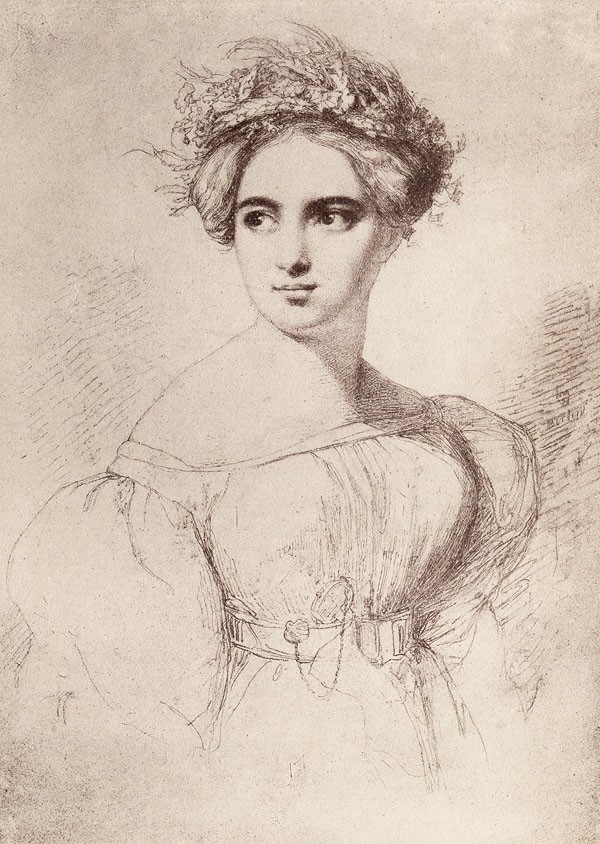
Fanny Mendelssohn-Hensel
The album, therefore, functions not only as a recording project but as a re-evaluation of Fanny Mendelssohn Hensel’s place within the piano repertoire. Through Markovina’s combination of scholarship, technical command, and personal passion, the music emerges not as a historical curiosity overshadowed by her famous brother, but as the work of a major creative voice deserving sustained attention on the concert stage and in the recording studio alike.
As the remaining volumes continue to take shape over the coming years, Markovina hopes listeners will discover the same sense of wonder that first drew her into Fanny’s world.
“She was a big soul,” Markovina says quietly. “Very intelligent, very generous, highly talented. I would say genius.”
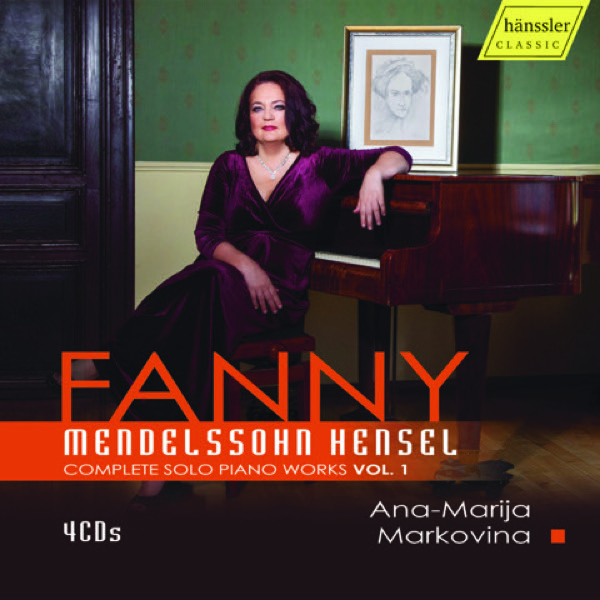
Fanny Mendelssohn Hensel: Complete Solo Piano Works Vol. 1 (Haenssler Classic HC23071)
Fanny Hensel Mendelssohn, Vol. 1
Composer: Fanny Mendelssohn Hensel
Performer: Ana-Marija Markovina
Release Date: June 19, 2026
Catalog Number: HC23071
Label: Haenssler Classic
Number of Discs: 4
For more of the best in classical music, sign up for our E-Newsletter