‘Singing is a Lifetime Lesson’
Baritone Konstantin Krimmel is a self-confessed outdoorsman, equally at home on the concert stage as hiking in the woods. Growing up in Ulm, in southern Germany, his early promise as a singer was accompanied by a great passion for the outdoors, something that continues to this day. In fact, his life as a classical singer was born out of a significantly different career, one which offered ample opportunities to be outside in nature.
Konstantin is a prize winner at various prominent competitions, including first prizes at the 2019 German Music Competition and the International Helmut Deutsch Lied Competition. He has recorded several albums with French label Alpha to great acclaim, including albums of Lieder by Schubert, Loewe, Schumann and Brahms.
Read on to discover Konstantin’s life pre-singing, along with how he keeps himself grounded today, and the techniques he has for honing the flexibility of a voice able to juggle the demands of opera, concert performances and Lied.
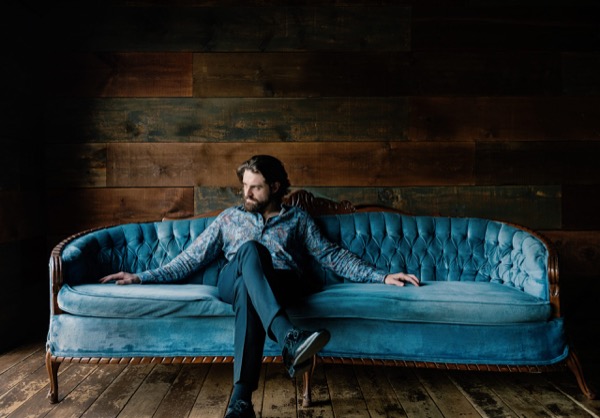
Konstantin Krimmel © Chris Gonz
SCHUBERT // ‘Erlkönig, D. 328’ by Konstantin Krimmel and Ammiel Bushakevitz
You started singing at an early age – was music around you a lot as a child?
I don’t come from a ‘musical family’, but I started in the boys’ choir when I was about five years old, and I sang there for nearly sixteen years. I did a lot of singing, and I played the piano, I played the bassoon in the orchestra at school, so I did a lot of music during the first twenty years of my life.
I never really did it quite with the intention of doing it as a proper job afterwards. It was always just a hobby.
I first went in another career direction, and after this, I felt that something was missing during that period, and this thing was music. I thought I would just give it a go, give it a try, and afterwards I auditioned for the university, and now a few years later I’m here, and I really love what I’m doing, and I really love singing.
Nearly every day, I’m still learning new poems, new opera librettos. It can be difficult, but it’s a very nice world which I can kind of call a ‘job’, although it doesn’t feel like a job – it doesn’t have this ‘I need to go to my job’ feeling. For me, it’s just making music with great colleagues.
What was the other direction you initially went in before making singing your career?
I joined the military. I joined the Mountaineers, the ones who climb and ski and do all the stuff in the mountains, because this is my other big passion. This is what I also do today when I’m not on stage, when I’m not singing. I’m very much outside, in the mountains, with skis, with a backpack, with everything possible.
I thought at first the military could be a direction for me, and it was, sport-wise. It was amazing. I learnt a lot. All the things like knotting ropes, things you need to know for climbing, I learnt there, so for all that stuff it was a great time.
The military scheme is another world, and either you have the character for this world or not, so after nearly a year, I just thought, ‘Ok, I saw that, I did that, it’s fine. Maybe music is more than I thought it would be at the beginning.’
I think also these days it’s good to have at least one other big passion. This is my opinion, but if you just have this one thing [music] that you want to do, maybe this is not the healthiest way to survive.
I think it helps to do a little bit of something else for a moment or a few days or a week or two: just letting the music be music and doing something else, whatever it is. Sport, anything you can do outside, is my big thing. I think it’s good to have these two worlds.
Does having this passion for the outdoors help you to keep perspective on your work as a singer?
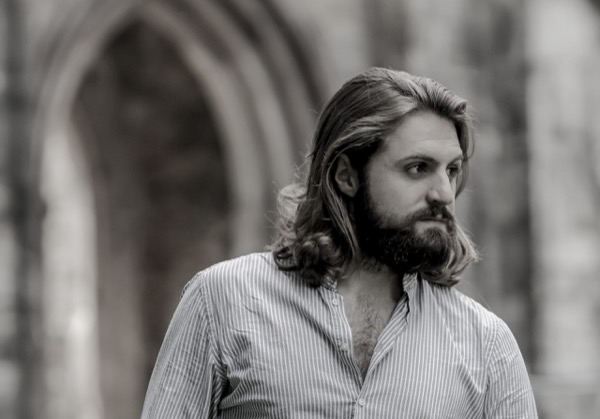
Konstantin Krimmel
Yes, it does. It also recharges the batteries, and I don’t really need a lot – two or three days outside or in my camper van can be enough. I had a recital in Bath, in the UK, and because I had a little bit of time either side of the recital, I combined it with a little trip along the coast, in my camper van. It was really nice. It’s not always possible, but I’m trying to do these things much more.
A lot of times you just fly somewhere, you rehearse, you sing a concert, then you fly elsewhere and you don’t really see things from the area of the city where you’re in, and it’s a shame because there are many many beautiful places, especially in Europe.
You don’t need to go really far, and when I realised I could do it like that, to combine [work] with a little trip, just to be able to have new things to see, new things to hear, new pictures, it helps the soul. I think for me it helps the creativity for recitals, for all the things I’m singing about, just to create these new worlds.
A lot of Lied are about nature, and people in nature. Does your travelling inspire you when engaging with this repertoire?
You find yourself in different situations that the poems are talking about. You’re living these pictures: just standing in front of the sea, standing in front of a cliff, seeing a beautiful place with a lot of flowers, a beautiful forest, or standing in a forest and hearing different noises, different animals. It’s great – it helps me to get more input for my imagination, for the inspiration to tell these stories to the public.
SCHUBERT // ‘Die Schöne Müllerin, D. 795: No. 1, Das Wandern’ by Konstantin Krimmel & Daniel Heide
Can you talk more about your journey back to music from the military?
My workplace was a military base from Monday to Friday, so I only had the weekends free. Sometimes you don’t even have enough time to leave because you need to be back on the base on Sunday evening. I didn’t really see old friends, because you barely have two days. I just went home and spent the time with my family, and whilst I felt that sport-wise it was amazing, I felt that something was missing, which was the music.
I first tried to combine these two worlds, to join the military orchestra with the bassoon. That didn’t really work out the way I imagined, so I just said to myself, ‘Ok, I signed for a year, I will do this for a year and then I will go back and just try and see what this thing is with the music.’
As a young boy in the choir, my chorus master always used to say I had a nice voice. I sang a few solos in different pieces from time to time, but really the change was when after the military phase I joined a scheme at the local opera house.
There is this scheme in Germany in many opera houses, especially the smaller ones, where they have a main chorus, where all the singers are professionals, and then there is an extra chorus made up of people with different jobs. There are teachers and architects and doctors, but they just love to sing, and they like opera. You need to apply and audition but it’s much easier to get into this extra chorus than it is as a professional.
When you’re doing big Italian operas or Wagner, you need a lot of people on stage. Often, the extra chorus gets the chance to be on stage, to sing with the professionals, and this was my first experience with opera. My first opera was Verdi‘s Otello, and I was standing for the first time on stage in costume, with the scenery, and it was amazing. It was a very different world to me, and it was very exciting. I thought, ‘Wow, this is cool, maybe this can be it!’
The chorus master there suggested I apply for the main chorus. I trained, I learned, I auditioned, and then I got a place at the university in Stuttgart, and had an amazing time there. I’m still seeing my teacher, Teru Yoshihara, from time to time there. He’s an amazing vocal teacher.
Teru is Japanese but studied in Milan. He has an amazing way of teaching, different from person to person. His main thing is the breath, combining singing with breathing, and for me, he is the perfect teacher. I’m very happy because without him, I wouldn’t be in this position now, singing all these nice things in these beautiful places. I’m very thankful to him.
At the end of this one and a half years doing this ‘extra chorus’ at the opera house in Ulm (my birth town), I just thought, ‘I hope doing this professionally won’t destroy the joy of my hobby,’ and until now it hasn’t, so I hope it will continue like this!
How does it feel now, having done more opera, to sing Lied as opposed to operatic roles or being in a chorus?
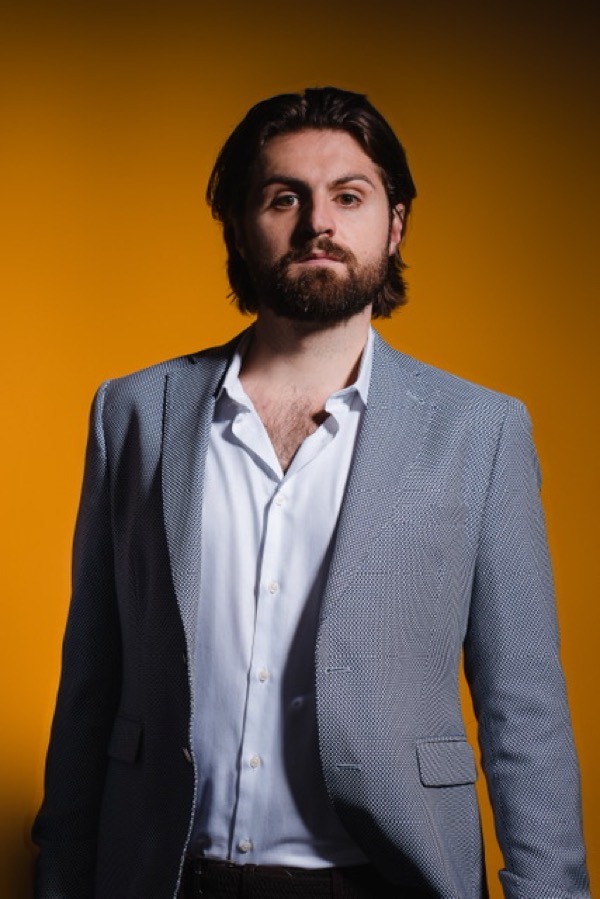
Konstantin Krimmel
For me, I feel it’s very nice to have all three things: singing opera, singing oratorios, and singing recitals. For me, I feel that it keeps the voice flexible. Opera is good for singing Lied and vice versa. With Lied, it’s not necessarily a different technique, but it’s a different way to use your voice because it’s more intimate, it’s smaller, it’s thinner, it’s finer. But this also helps for opera.
I’m just very happy that I get to do all three things: to sing Mozart operas, to sing recitals, and to sing Bach. Bach, especially, is so tricky. It’s hard to sing, but when you get to the point technique-wise to be able to do it, it’s so much fun. It’s so enjoyable, especially when you’re singing a St Matthew Passion with an amazing group of people.
How do you manage the change between singing different styles of music in different contexts?
I don’t change day by day – I don’t do a recital one day and then an opera the next, as that’s not a healthy way to do it. To be able to do a few concerts, and then come back to opera, and then sing a concert or two with Bach and then come back to opera, this flexibility is, for me, a big plus. It keeps the voice fresh and flexible, and it also keeps the brain fresh and flexible. I just need one or two days to get the voice going in the right direction again, and then it’s great.
Are these challenges with changing between styles more technical or physical, or a bit of both?
One of the big challenges is just technical. Singing Bach is tricky. Bach has quite a big range sometimes. In the cantatas, with a bass or baritone voice like mine, you sometimes need to cover two octaves, which is quite heavy. You can’t sing Bach as a big Verdi opera. In the higher pitches, you need to be able to sing very fine, very thin, very light, and this requires a very good technique.
Schubert is the big Lied god, but often it’s quite difficult because of the range, because of how it’s written. If you sing early music but your voice is not a natural early music voice, then that can be quite a challenge.
We just have one voice, one throat, so we need to have one technique for all things. You can play Bach on a normal violin, but if you want to play it historically informed, you play it on another instrument. We need to find a vocal technique to be able to sing everything with one voice, and that’s why you can study it at university, because it’s tricky. The voice as an instrument is a very challenging thing.
Do you think this is also why there is a culture of singers continuing lessons throughout their careers?
I always say that singing is a lifetime lesson. The voice and the body change as you get older. Maybe when you’re young, you can eat and drink whatever and sing anyway, but when you get older, you need to change this!
Knowing how the voice sounds outside yourself is the big mystery. You can never be one hundred per cent sure how the voice sounds outside, in the hall, compared to inside you. That’s why, in my opinion, it’s good to have a teacher or two, or a coach, for your whole life, and to have a few people who are listening to your concerts, to your rehearsals, to your recordings, from time to time, and who can really be honest with you when it’s not really going in the right direction.
For more of the best in classical music, sign up for our E-Newsletter