Depending on your sources, Franz Schubert (1797–1828) has his final symphony, The Great, D. 944, variously numbered as Symphony No. 7 or Symphony No. 8 or Symphony No. 9 or Symphony No. 10. We now know, through style and paper studies, that many different works got confused in the numbering of the symphonies.
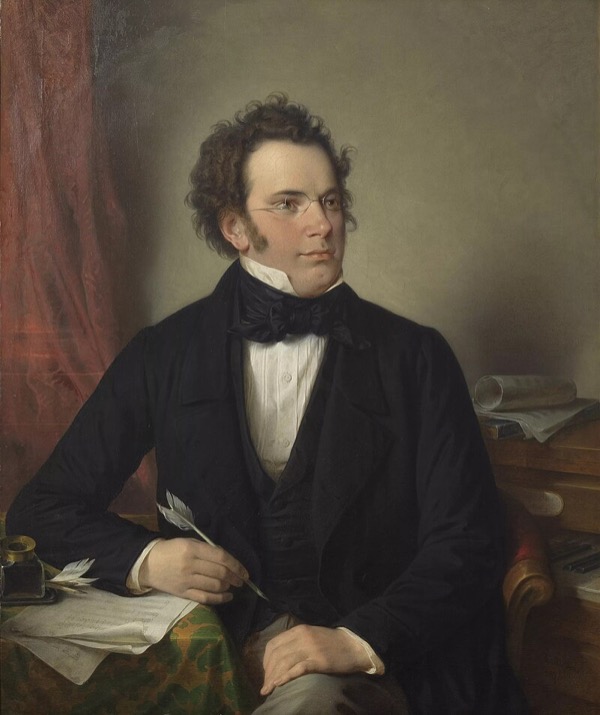
Wilhelm August Rieder: Franz Schubert, 1875 after 1825 watercolour (Vienna Museum)
Knowing the D. numbers is important here! D. stands for Otto Erich Deutsch (1883–1967), an Austrian musicologist who created the first comprehensive catalogue of Schubert’s works (just as Bach‘s works have BWV numbers and Mozart‘s have K. numbers, the D. numbers are for Schubert’s works).
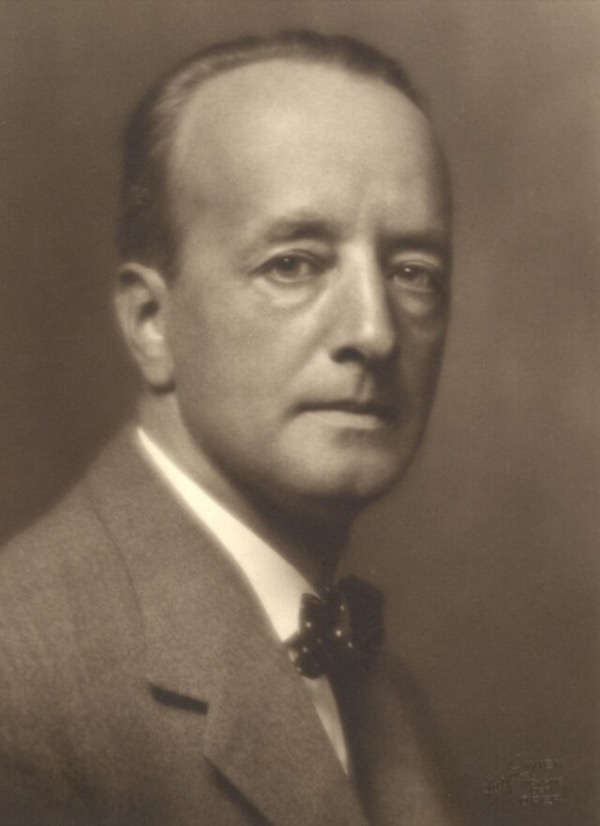
George Fayer: Otto Erich Deutsch, 1927
The problem stems from two places: Only one of Schubert’s last symphonies was truly completed, and, as publishers started to publish the works, they didn’t want gaps in the numbering.
Symphony No. 7 in E minor, D. 729, written August 1821, never went beyond a draft. It was never completed by Schubert, who sketched out the entire work but abandoned it in the middle of scoring the first movement. It showed a radical change from his earlier symphonies, which were very much based on Haydn and Mozart. D. 729 was originally not given a number, but when later scholars and performers started to make editions of it, it received a number, bumping D. 759 and the following symphonies.
With the addition of the now-completed D. 729, the earlier numbered Symphony No. 7 in B minor, D. 759, we now know as Symphony No. 8, with the nickname of ‘The Unfinished’ because there are only two completed movements of it (a third movement only exists in sketches). It was written in October 1822 and sent by Schubert to his friend, Anselm Hüttenbrenner, as a thank-you to Hüttenbrenner’s Graz Music Society, which had given Schubert an honorary diploma.
There’s a hypothetical D. 849 symphony that was written between June and September 1825, which was referred to in Schubert’s letters. It has been nicknamed the Gmunden-Gastein Symphony after the place where Schubert was located when he wrote his letter.
There’s a Symphony D. 936a that exists only in sketches and might have been written in mid-1828. This is now known as Symphony No. 10.
Then there’s the symphony in C major, D. 944. Now known as Symphony No. 9, this is the only symphony among his late works that Schubert actually completed. No matter what the number of the symphony might be, keeping track of the D. numbers will help you sort them all out!
Although originally thought to have been written in Schubert’s last year (1828), we now know that it was begun when he was in Gmunden-Gastein. D. 849, as numbered by Deutsch, actually does not exist. The Great C major, D. 944, was begun in 1824 (as evidenced by the letter dated March 1824, and as evidenced by the use of paper from that time). It was completed in the spring or summer of 1826, and it was sent to the Gesellschaft der Musikfreunde. Schubert couldn’t afford to have the orchestral parts copied, so he dedicated the work to the Gesellschaft. In response, they gave him a small payment, had the parts copied, and did a trial run-through sometime in 1827. They never did a public performance of the work, though, as they thought it too long and difficult for the orchestra on hand. It wasn’t until Robert Schumann saw the manuscript in 1838, 10 years after Schubert’s death, that a public performance took place. He brought a copy of the score, given to him by Schubert’s brother Ferdinand, back to Leipzig, where it was given its premiere at the Leipzig Gewandhaus on 21 March 1839, with Felix Mendelssohn conducting. Robert wrote an article of celebration for the work in his magazine, the Neue Zeitschrift für Musik, where he praised its ‘heavenly length’. When Mendelssohn took the symphony to Paris and London, orchestras refused to perform it because of its length and difficulty.
The work is considered Schubert’s finest work for orchestra, and the Scherzo movement is one of particular joy. The symphony is important in changing Schubert’s style from working solely on thematic development (as he learned from Beethoven) and focusing more on melody. The work is full of optimism and grand statements, starting from its opening horn call. The ‘joyous alfresco dance’ of the Scherzo develops from its opening statement to form a movement that is more monumental than scherzo movements were expected to be.
This recording was made in November 1957 in the Salle Wagram in Paris, with the Orchestre des Cento Soli under the direction of Ataúlfo Argenta.
The Orchestre des Cento Soli was a French classical orchestra based in Paris that began recording in 1953.
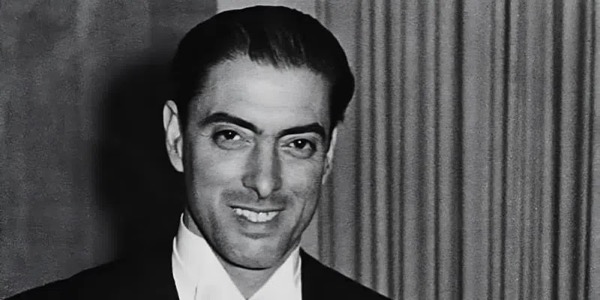
Ataúlfo Argenta
Spanish conductor Ataúlfo Argenta (1913–1958) studied at the Madrid Royal Conservatory and held his first positions with the Orquesta Nacional de España (Spanish National Orchestra), becoming the second conductor in November 1946 and, by January 1947, joint director. By 1950, he began conducting the Paris Conservatory Orchestra, appearing with them until his accidental death in 1958. He also started appearing with the Orchestre de la Suisse Romande from 1954. This recording brings out his energetic approach to Schubert’s music.
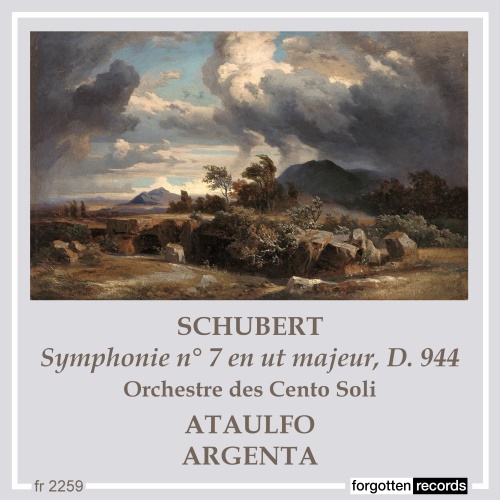
Performed by
Ataulfo Argenta
Orchestre des Cento Soli
Recorded in 1957
Official Website
For more of the best in classical music, sign up for our E-Newsletter