Arts Inspired by Meyerbeer’s Robert le diable
Giacomo Meyerbeer (1791–1864) was born the year Mozart died and became the link between Mozart and Wagner in his operatic works. He took French grand opera to new heights, and his success came from merging German orchestra style with the Italian vocal tradition. His libretti were sensational (dead nuns!) and melodramatic, written by Eugène Scribe, a master of popular theatre and dramatic incident.
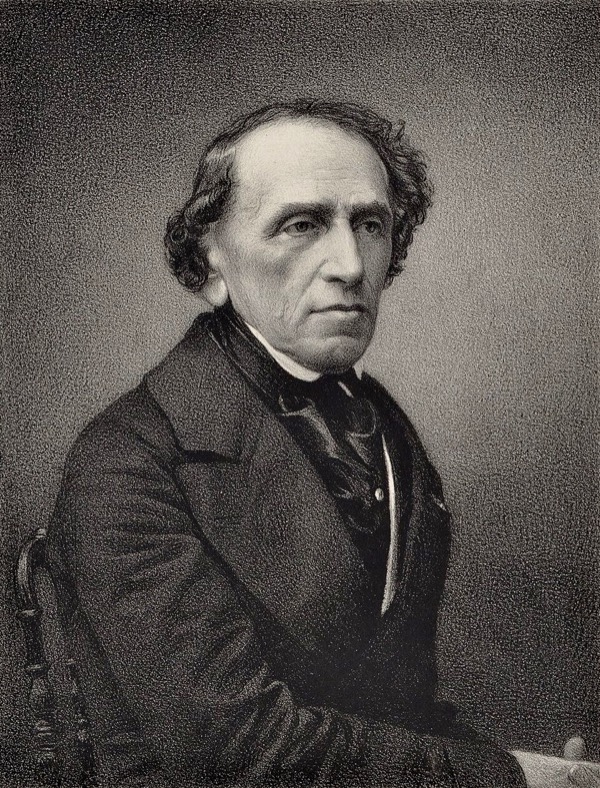
Pierre Petit: Giacomo Meyerbeer, 1865 (Gallica: btv1b8422630f)
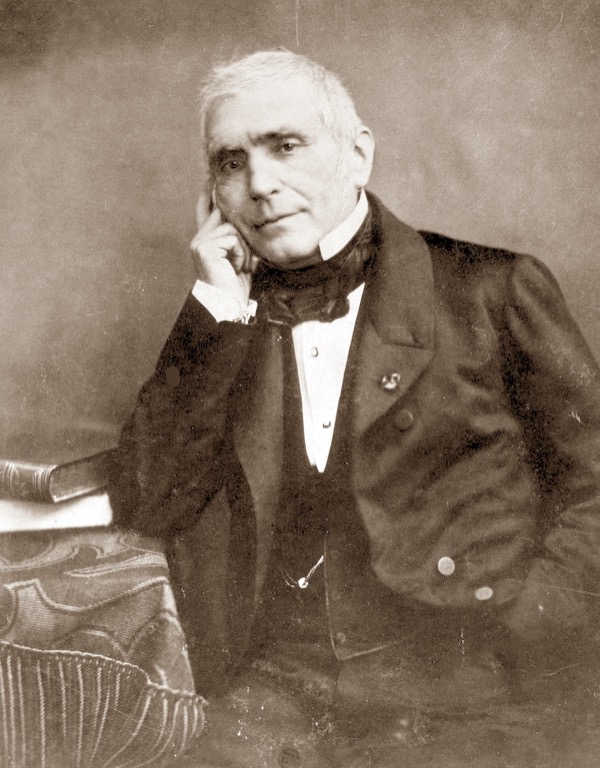
Nadar: Scribe (Gallica: btv1b531202733)
Scribe wrote the majority of his libretti for Daniel Auber, for whom he co-wrote 39 librettos, including La muette de Portici, considered the first grand opera. The dramatic ending of the heroine hurling herself into Mount Vesuvius set the stage for even more excess. He wrote/co-wrote 6 librettos for Meyerbeer, starting with Robert le diable.
Robert le diable, one of the first grand operas at the Paris Opéra, was successful from opening night on 21 November 1831. It was also the start of Meyerbeer’s success. His 10 previous operas, starting in 1812, did not capture the audience like Robert. The story is pure melodrama. There are rumours of a child who is the son of a princess and a devil; magic spells that cause all on stage to freeze; ghosts of nuns who rise from their tombs to praise drinking, gambling, and lust; and a final descent into hell by Robert’s false friend Bertram brings the evening to an end. Scribe loaded the opera with everything that it could hold and more.
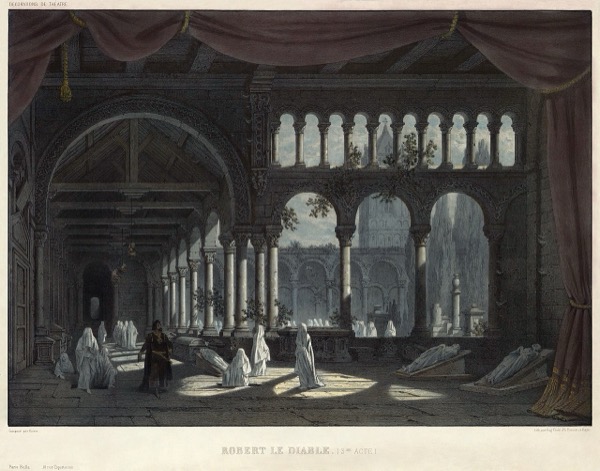
Pierre-Luc-Charles Cicéri: Robert le Diable, Act III, Ballet of the Nuns set, 1831 (Gallica: btv1b531177449/f1)
We know from Degas’ work that he found the ballet to be the best source for his art. However, he did two paintings where we can see that he also attended the opera. The Bacchanale of the Dead Nuns was always the highlight of the opera, and so Degas made it the subject of his painting. At the same time, we can read something about the audience at the performance.
Giacomo Meyerbeer: Robert le diable: Act III Scene 7: Bacchanale (Orchestra Internazionale d’Italia; Renato Palumbo, cond.)
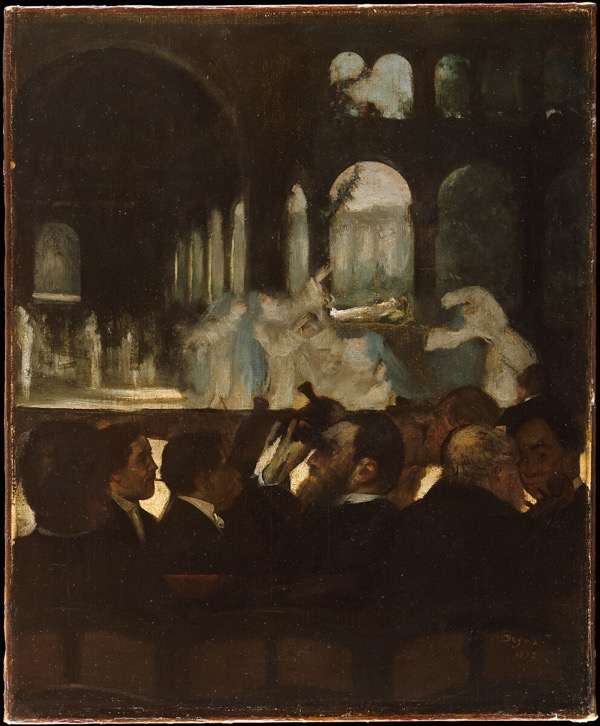
Edgar Degas: Le Ballet de ‘Robert le Diable’, 1871 (New York: Metropolitan Museum of Art)
In the first painting, done in 1871, the lower third of the picture is a mix of the audience and orchestra. Of note is that the most prominent audience member, placed in the centre, is not, in fact, watching the dance of the nuns, but rather has his eyes on someone up in the balcony. He has been identified as the collector Albert Hecht, known for his extensive collection of Impressionist art. He was a friend of Édouard Manet, Claude Monet, Camille Pissarro, Pierre-Auguste Renoir, and Edgar Degas.
Five years later, Degas painted another version of the same scene on a larger scale for the French baritone Jean-Baptiste Faure, who starred in the opera as the false friend Bertram.
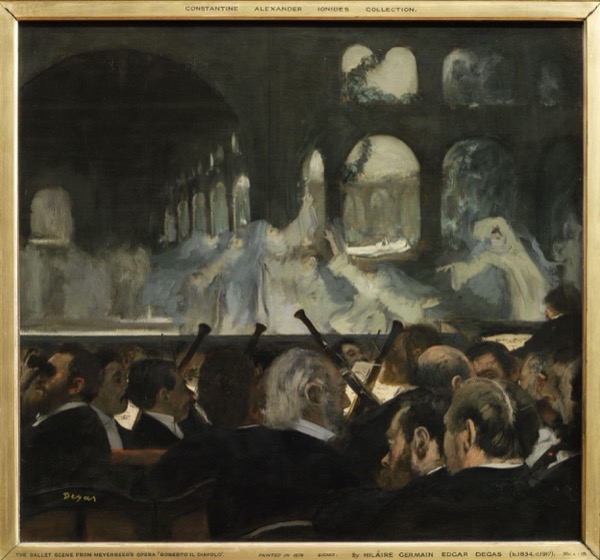
Edgar Degas: The Ballet Scene from Meyerbeer’s Opera Robert Le Diable, 1876 (London: Victoria and Albert Museum)
The original 1871 painting was 26 x 21 3/8 in. (66 x 54.3 cm); the new one was 30 x 32 in (76.6 cm x 81.3 cm). The emphasis is still with a division of the painting into thirds, but now three rows of the audience are shown, and the orchestra, which is largely the bassoon section, is in focus. The man with the glasses, Albert Hecht, has been moved to the far right, where he’s less prominent. We can also identify the bassoonist behind him as Désiré Dihau, and the bearded figure seen from behind towards the right is the amateur painter Count Ludovic-Napoléon Lepic. Lepic appears in some 11 paintings by Degas.
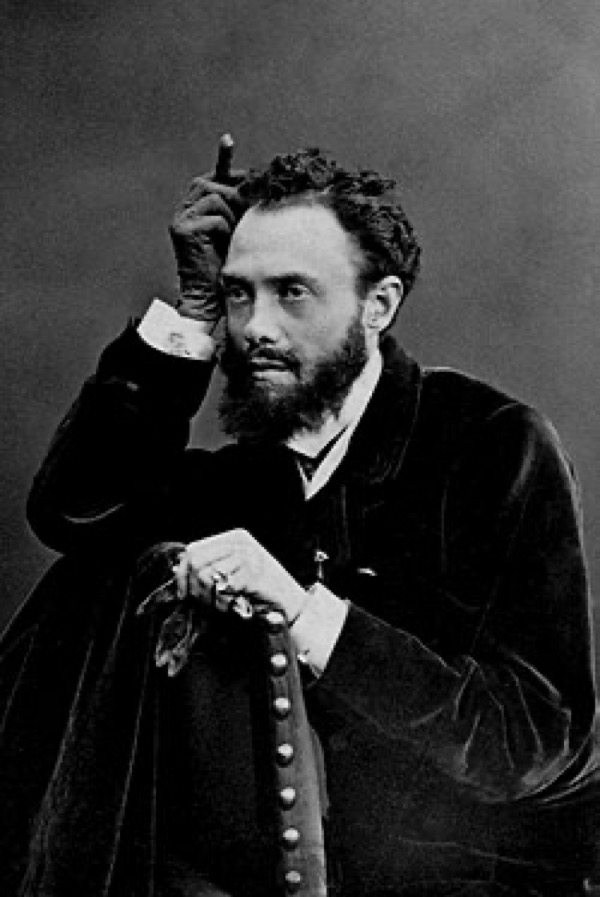
Nadar: Lepic, 1900 (Gallica: btv1b530659419)
Both paintings show the same section of the ghost nuns, with matching poses in each image. The contrast between the stiff audience members and the movement of the dancers serves to highlight the dancers, as we might expect in a Degas theatre painting.
The V&A also holds some studies for this painting, also done in 1876.
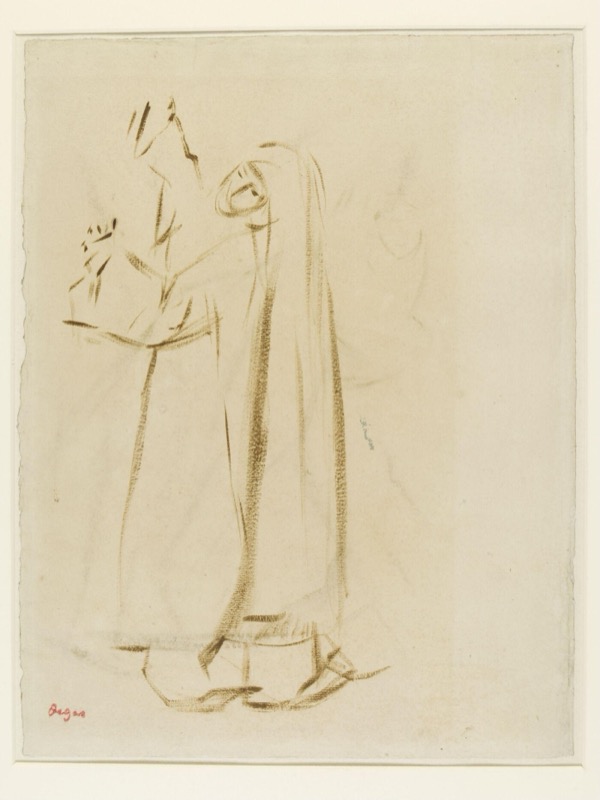
Study for the Ballet Scene – 1, 1896 (V&A Museum)
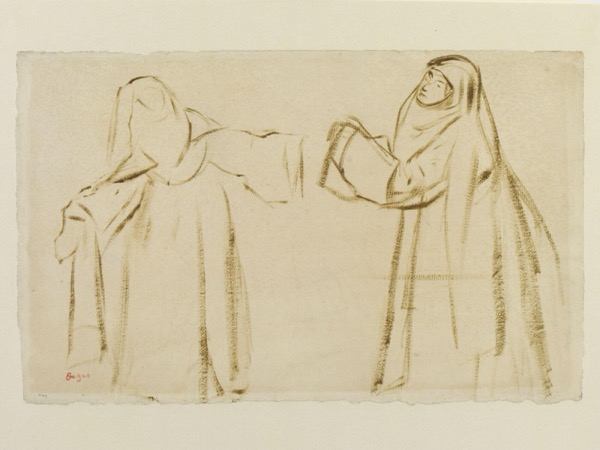
Study for the Ballet Scene – 2, 1896 (V&A Museum)
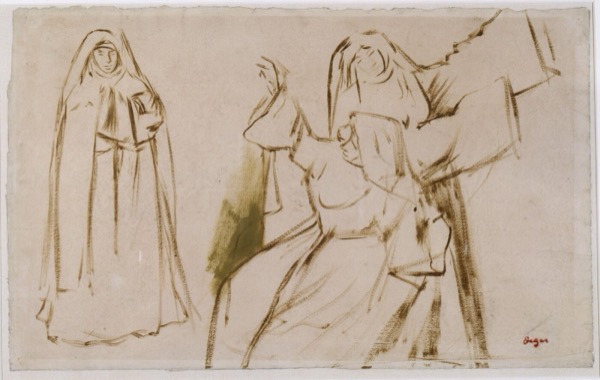
Study for the Ballet Scene – 3, 1896 (V&A Museum)
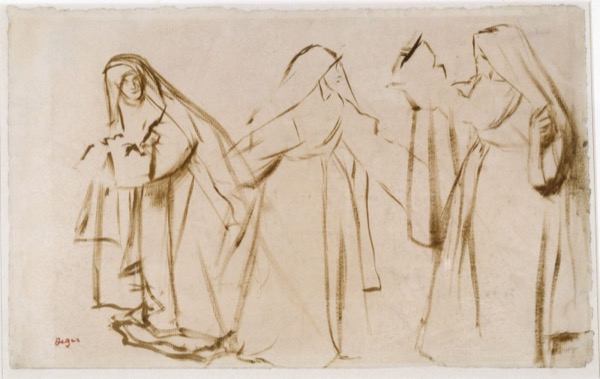
Study for the Ballet Scene – 4, 1896 (V&A Museum)
The opera closes with Bertram pressing Robert to sign the document, where he will serve Bertram for all eternity, while Alice intervenes. When Bertram can’t get Robert’s signature in time, the ground opens, and Bertram goes back to hell. The heavenly chorus sings Robert’s praises.
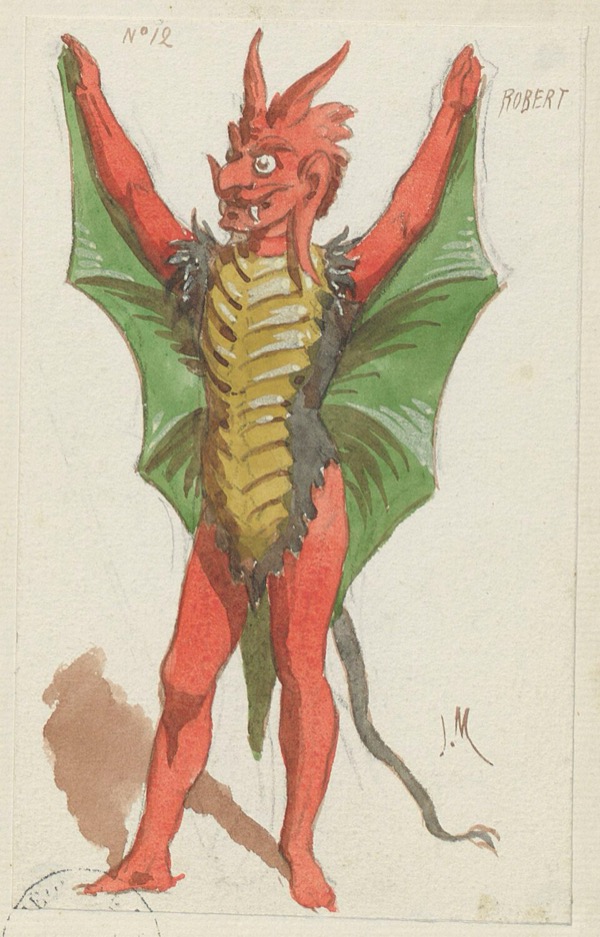
Jules Marre: Robert le diable: a devil’s costume, 1831 (Gallica: btv1b6401892z/f12.item)
Giacomo Meyerbeer: Robert le diable: Act V Scene 3: Mon fils, ma tendresse assidue (Warren Mok, tenor; Annalisa Raspagliosi, soprano; Giorgio Surian, bass; Orchestra Internazionale d’Italia; Renato Palumbo, cond.)
Giacomo Meyerbeer: Robert le diable: Act V Scene 3: Chantez, troupe immortelle (Patrizia Ciofi, soprano; Annalisa Raspagliosi, soprano; Bratislava Chamber Choir; Orchestra Internazionale d’Italia; Renato Palumbo, cond.)
By the time Degas painted his two paintings, Robert le diable had been on the stage for over 40 years and even in the most (in)famous scene, that the audience is not focused on the stage tells us something about the progress of grand opera in France in the later 19th century.
For more of the best in classical music, sign up for our E-Newsletter