Cédric Tiberghien, born on 5 May 1975, achieved his international breakthrough in 1998 when he won the First Grand Prize and five special prizes at the Long-Thibaud-Crespin Competition. Since then, he has engaged in a truly international career, and he is consistently praised for his wide-ranging repertoire and an openness to explore innovative concert formats.
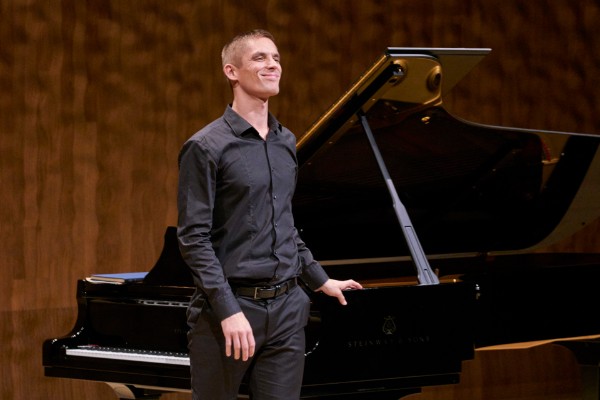
Cédric Tiberghien © Claudia Höhne
Tiberghien is an accomplished soloist; however, he also cherishes chamber music collaborations. And this particular passion for chamber music is reflected in numerous recordings, including complete cycles by Schubert, Szymanowski, Mozart, and Beethoven, as well as sonatas with Alina Ibragimova.
As we celebrate Tiberghien’s birthday, let us recognise an artist for whom chamber music accentuates the practical musical values of equality, flexibility, and shared discovery.
Cédric Tiberghien/ Castalian Quartet perform Schumann: Piano Quintet in E-flat Major, Op. 44
Cédric Tiberghien and Alina Ibragimova first met as members of the BBC Radio 3 New Generation Artists scheme in 2005. Immediately finding a rare musical and personal rapport, they performed together in a number of studio sessions and in concerts at the Wigmore Hall and at festivals around the UK.
A review in The Times of London of their final recital concluded that “both of these players have the potential to conquer the world.” They have gone on to perform throughout Europe and North America, and the Editors’ Choice in Gramophone suggested “it would be hard to imagine more persuasive performances than we have from the ever-rewarding Tiberghien-Ibragimova duo.”
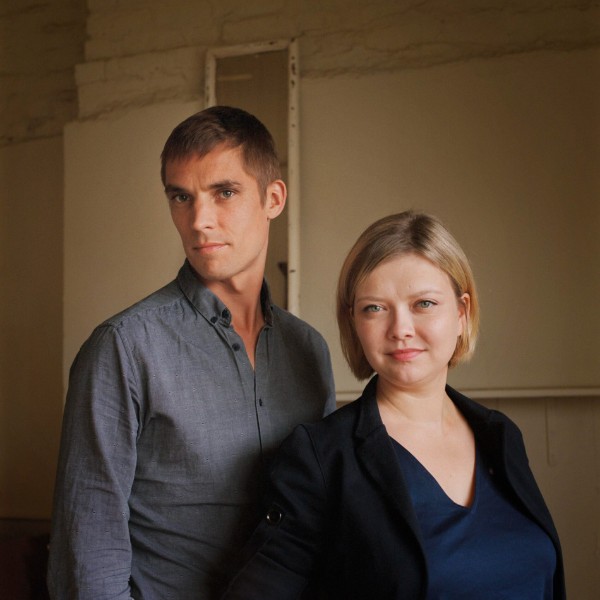
Cédric Tiberghien and Alina Ibragimova © Eva Vermandel
Their Beethoven cycle, recorded from their Wigmore Hall recitals, is considered “exhilarating and thought-provoking. Ibragimova and Tiberghien are a wonderfully matched pairing, with her astonishing command of tone colour and articulation complemented by his rhythmic alertness and lightness of touch,” writes Andrew Clemens. (Clemens, The Guardian, 2011)
Cédric Tiberghien/Alina Ibragimova perform Beethoven: Violin Sonata No. 5 in F Major, Op. 24 “Spring”
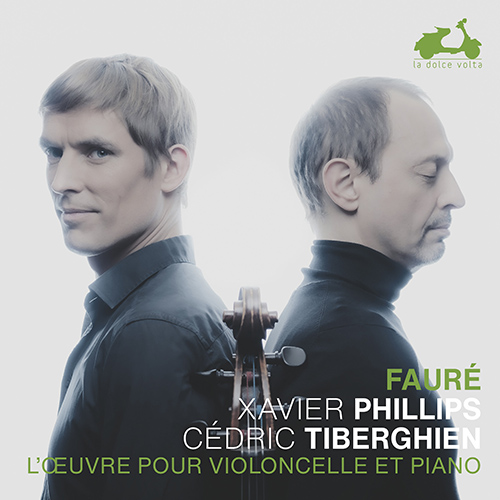
Cédric Tiberghien met Xavier Phillips through their respective children, who went to the same school in Paris. They lived in the same neighbourhood, but had not been aware of each other. One day Fauré came up in conversation, and they decided to make a recording.
For both performers growing up in France, Fauré was the music of their childhood. Unlike Xavier, who had the cello and piano music by Fauré on his fingertips, Cédric had to basically learn the music for the two sonatas.
Interestingly, they did not follow a regular rehearsal process. Instead, they just played through the music over and over again to find the musical flow, and the right tempo gradually established itself.
Gabriel Fauré: Cello Sonata No. 1 in D Minor, Op. 109 (Xavier Phillips, cello; Cédric Tiberghien, piano)
French viola star Antoine Tamestit and Cédric Tiberghien have collaborated on a number of projects, and a recent recording of Brahms for Harmonia Mundi has received much praise. Tamestit has had the Brahms Viola sonatas in his repertoire, but always feared that he didn’t understand the maturity behind them.
This all started when they started performing them with Cédric Tiberghien. As Tamestit explains, “Cédric is so poetic and so refined, and as a pianist, he is always looking to make intricate chamber music, to subtly link all the parts together. Suddenly I had another view of these pieces.” (IDAGIO meets Antoine Tamestit)
The success of the recording also rests on using a period piano. Tamestit visited a collection of pianos in Vienna, and some of them were owned and played by Brahms. That specific sound completely changed his views, and as the fear lifted, he became totally obsessed with these sonatas.
Johannes Brahms: Viola Sonata No. 2 in E-Flat Major, Op. 120, No. 2 (Antoine Tamestit, viola; Cédric Tiberghien, piano)

Stéphane Degout and Cédric Tiberghien
Stéphane Degout might well be today’s leading French baritone, and together with Cédric Tiberghien creates spellbinding combinations of vocal and keyboard colours. Their collaborations are a recurring artistic partnership that frequently invites additional performers.
Stéphane and Cédric share a great admiration for Ravel’s “Chansons madécasses,” a piece which is seldom performed because of the cello and flute joining the voice and piano. But is it exactly the kind of unusual repertoire championed by Tiberghien?
For Cédric Tiberghien, chamber music is not a secondary pursuit. It is a central part of his artistic personality, and his collaborations reveal an artist immersed in creative conversations. With everything negotiated in real time, chamber music becomes an open-ended stage for interpretation.
For more of the best in classical music, sign up for our E-Newsletter