For centuries, women composers have shaped the history of opera, but hardly ever received the recognition they deserved for doing so.
Today, we’re surveying that remarkable history.
From the earliest surviving opera (written by a woman in 1600s Italy) to the groundbreaking contemporary works of today, we’re looking at ten powerful, exciting, innovative operas that pushed the art forward.
Taken together, these ten operas reveal just how rich women’s contributions to the genre have really been.
Francesca Caccini — La liberazione di Ruggiero (1625)
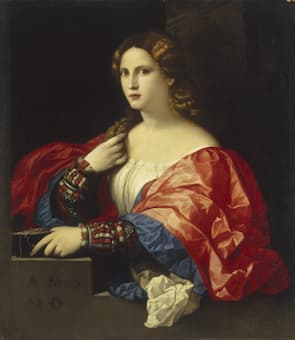
Francesca Caccini
Francesca Caccini: La liberazione di Ruggiero dall’isola d’Alcina (arr. E. Sartori) (Elena Biscuola, mezzo-soprano; Mauro Borgioni, baritone; Gabriella Martellacci, alto; Francesca Lombardi Mazzulli, soprano; Emanuela Galli, soprano; Raffaele Giordani, tenor; Yiannis Vassilakis, baritone; Allabastrina, Ensemble; La Pifarescha, Ensemble; Elena Sartori, harpsichord; Allabastrina Choir; Elena Sartori, cond.)
Francesca Caccini (1587 – c. 1640) was a leading Italian Baroque composer and singer, daughter of composer Giulio Caccini, and, at one point, the highest-paid musician at the Medici court.
Her opera La liberazione di Ruggiero dall’isola d’Alcina (1625) – written when she was about 38 – is the oldest surviving opera by a woman composer.
Based on Ariosto’s epic poem Orlando Furioso, the opera tells the story of the knight Ruggiero, enchanted by the evil sorceress Alcina, and the virtuous sorceress Melissa, who ultimately frees him from Alcina’s spell.
Musically, the opera exemplifies groundbreaking techniques of the Italian Baroque stile moderno: a new style that included recitatives, prioritised solo voices, and employed harmony for dramatic effects.
Élisabeth Jacquet de La Guerre — Céphale et Procris (1694)
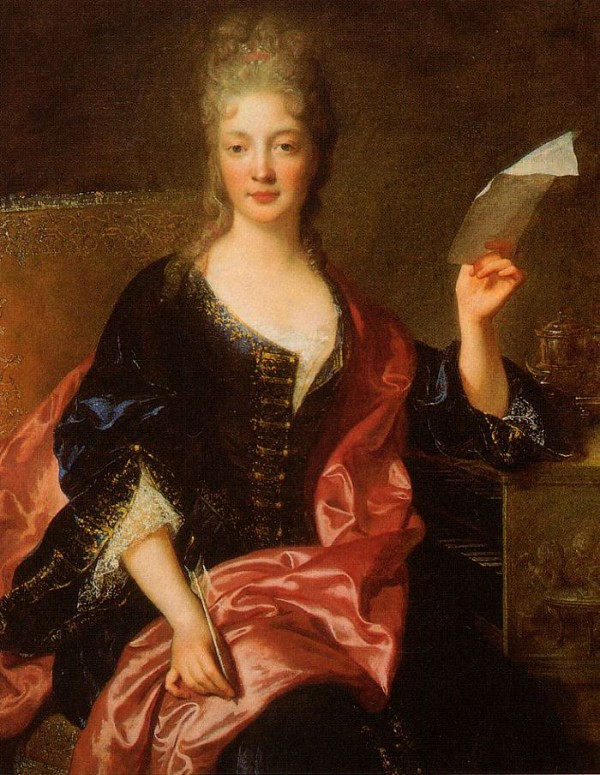
Élisabeth Jacquet de La Guerre
Élisabeth Jacquet de La Guerre: Céphale et Procris (Reinoud van Mechelen, tenor; Ema Nikolovska, mezzo-soprano; Deborah Cachet, soprano; Lore Binon, soprano; Gwendoline Blondeel, soprano; Marc Mauillon, baritone; Lisandro Abadie, bass-baritone; Samuel Namotte, baritone; Wei-Lian Huang, soprano; Pauline de Lannoy, mezzo-soprano; Gert-Jan Verbueken, tenor; Laurent Bourdeaux, baritone; A Nocte Temporis, Ensemble; Namur Chamber Choir; Reinoud van Mechelen, cond.)
Élisabeth-Claude Jacquet de La Guerre (1665–1729) was a French harpsichordist-composer and child prodigy who served in Louis XIV’s court.
Her tragédie lyrique Céphale et Procris (1694) was the first opera by a woman composer ever performed in France.
The five-act plot, inspired by Ovid’s Metamorphoses, tells a tragic love story. The hunter Cephalus falls in love with the princess Procris. Disaster strikes when Cephalus, deceived by the dawn-goddess Aurore, accidentally kills Procris.
The music is in the grand French Baroque style: dramatic and lyrical, with ornamented arias typical of the era.
Maria Antonia Walpurgis — Talestri, regina delle Amazzoni (1760)
Maria Antonia Walpurgis (1724–1780), a Bavarian princess who became Electress of Saxony, was both a patron and composer of opera.
Her best-known work is Talestri, regina delle Amazzoni (Talestri, Queen of the Amazons), which premiered in Munich in 1760. She wrote both the music and libretto herself.
The plot follows Queen Talestris and the Scythian prince Orontes as they navigate love, politics, and the tantalising possibility of peace between their peoples. Ultimately, they work their differences out, and peace rules the day.
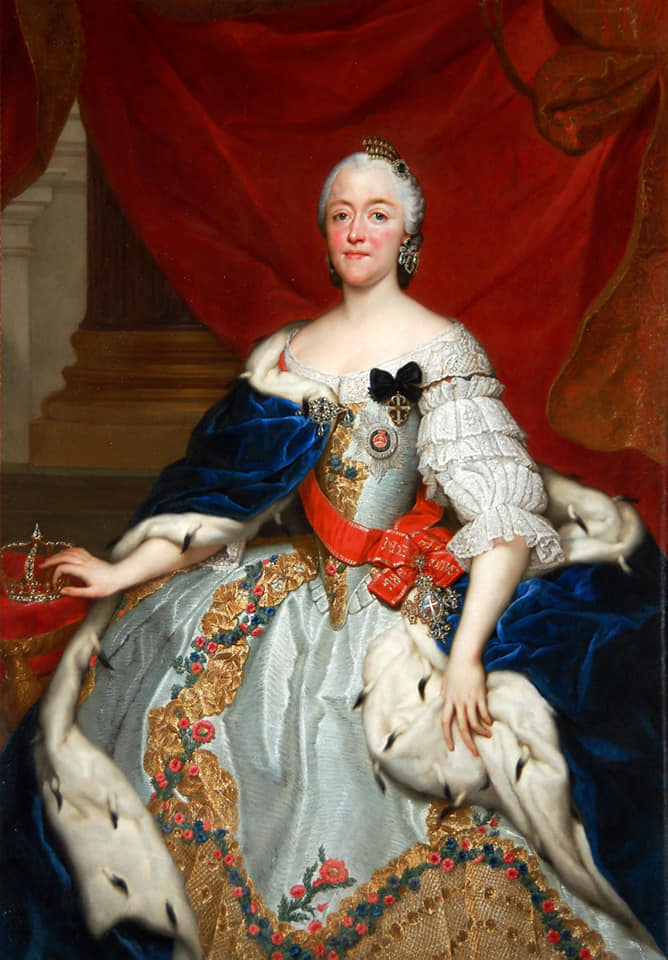
Maria Antonia Walpurgis
Some scholars have wondered if the wise and powerful queen character was meant to be a stand-in for the princess herself.
Interpreted this way, the opera becomes more than just an artistic achievement: it becomes a masterful meta act of PR and politicking.
Stylistically, the opera sits firmly within the tradition of mid-1700s opera seria, featuring da capo arias and accompanied recitatives.
Louise Bertin — La Esmeralda (1836)
(The performance above features English subtitles if you click closed captioning.)
Louise-Angélique Bertin (1805–1877) was a French composer and poet born to the editor of the influential Journal des débats, which meant she grew up surrounded by the intellectual and artistic elite of Paris.
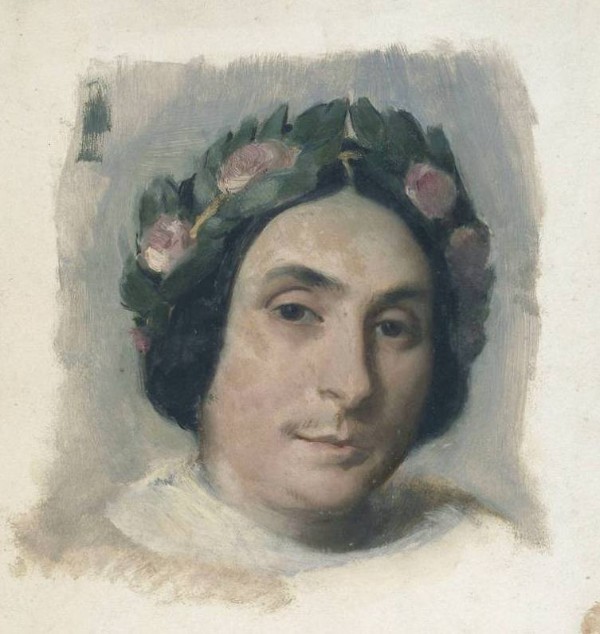
Louise Bertin
Early in life, she endured some kind of injury or illness that made it difficult for her to walk. She was written off as a candidate for the marriage market, and so, unlike many women of the time, was allowed and encouraged to pursue her love of music.
She studied with François-Joseph Fétis and Anton Reicha, who taught some of the most important French composers of the day.
Her most ambitious project, the grand opera La Esmeralda (1836), featured a libretto by none other than her personal friend Victor Hugo, adapted from his wildly successful novel Notre-Dame de Paris. It would be the only opera libretto he’d ever write.
Musically, La Esmeralda embodies the hallmarks of French Romantic grand opera: lavish orchestration, large choral scenes, ballet episodes, and the polished, lyrical vocal writing typical of 1830s Paris.
It was an impressive accomplishment, and her colleague Hector Berlioz was impressed by it. (He also, for what it’s worth, wrote for her father’s paper.)
Unfortunately for Bertin, some believed that her work was only given a chance in the expensive, politics-ridden world of grand opera because of her family name and the influence of the Journal.
Although the work was scorned by some at the time, Bertin’s achievement stands as one of the earliest large-scale operas by a woman composer.
Read more about the exciting modern premiere of another one of Bertin’s operas, Fausto. (It was the first operatic adaptation of the Faust story.)
Pauline Viardot — Le dernier sorcier (1867)
Pauline Viardot (1821–1910), the celebrated French mezzo-soprano of Spanish descent, was also a talented composer. She enjoyed writing salon operas for her artistic circle.
One of her most delightful works is 1867’s Le dernier sorcier (The Last Sorcerer), a miniature opera with a libretto by her dear friend Ivan Turgenev, who was hopelessly in love with her.
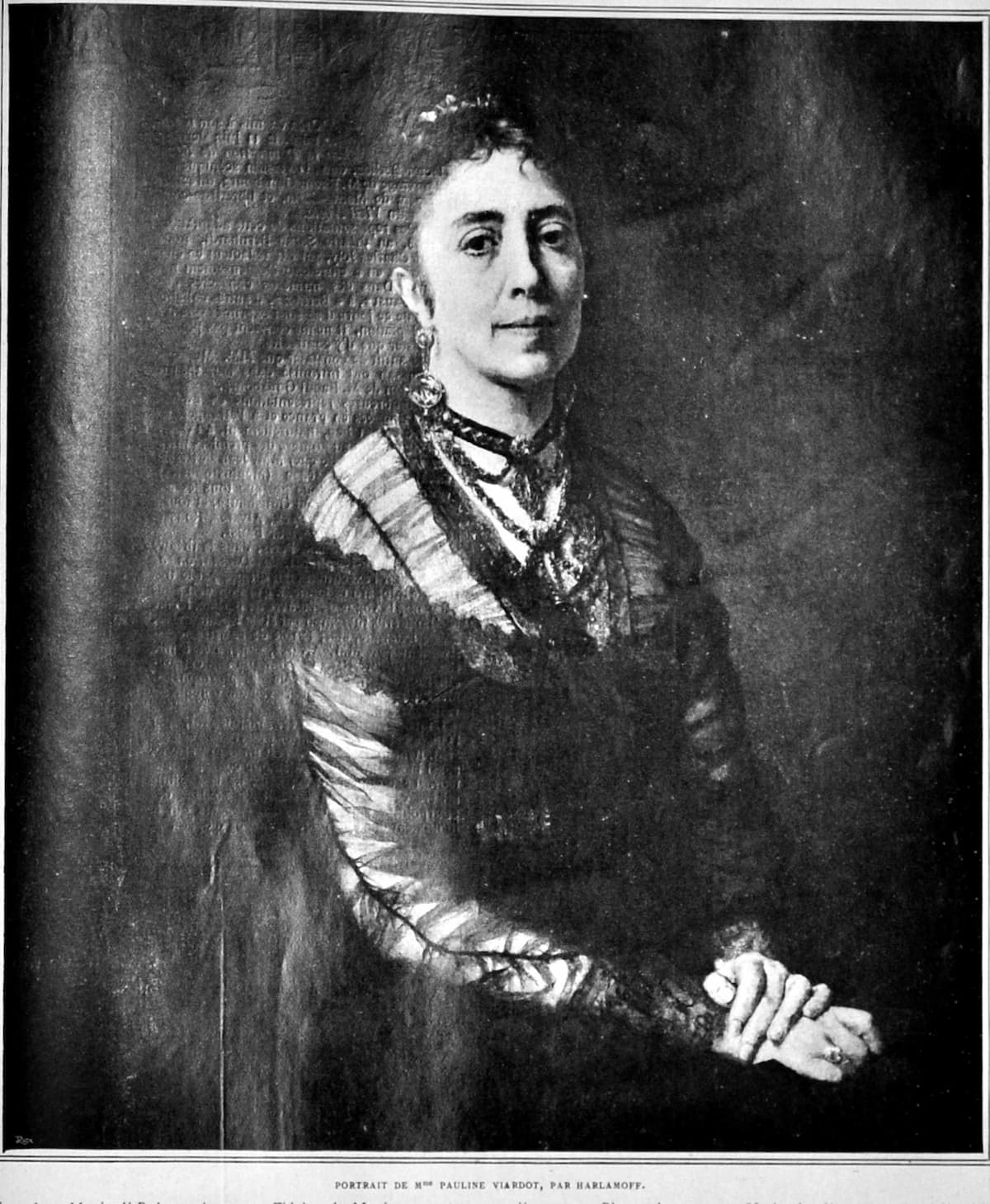
Pauline Viardot in 1910
Premiered at Viardot’s home theater in her Baden-Baden villa in 1869, it tells a whimsical fairytale about Krakamiche, an irritable old sorcerer who bullies the local elves, and his daughter Stella, who loves the gentle Prince Lelio. With the help of the Elfin Queen, the characters settle their differences and the young couple’s marriage is secured.
Musically, the piece reflects Viardot’s style, featuring lyrical, folk-tinged melodies and writing intended for an intimate setting.
Johannes Brahms was at the premiere in 1869 and conducted the second performance ten days later.
Learn about Viardot’s productive creative partnership with Chopin.
Ingeborg von Bronsart — Jery und Bätely (1873)
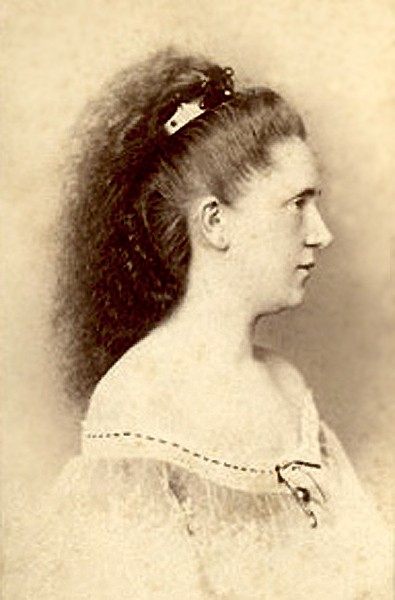
Ingeborg von Bronsart
Ingeborg Bronsart von Schellendorf: Jery und Bätely (Harrie van der Plas, tenor; Caroline Bruker, soprano; Laurence Kalaidjian, baritone; Sönke Tams Freier, bass-baritone; Thorsten Edén, boy soprano; Ruxandra Voda von der Plas, alto; Malmö Opera Orchestra; Dario Salvi, cond.)
Ingeborg von Bronsart (1840–1913) was a composer of Finnish and Swedish ancestry who studied piano with Franz Liszt.
In 1861, she married her fellow Liszt student, Hans Bronsart von Schellendorff. Six years later, he would win a job as general manager of the Royal Theatre in Hanover, Germany.
Due to court rules, she became prohibited from earning money by performing, so she chose to pivot to composing instead.
Over the course of her career, she wrote multiple operas.
Her one-act opera (singspiel) Jery und Bätely dates from 1873 and features a libretto by Goethe. It is a bucolic comedy set in rural Switzerland.
The story depicts the comical courtship of Jery, a handsome young bachelor, and Bätely, a pretty village milkmaid.
After some mistaken signals and jealousy, the two lovers are ultimately united through a farcical turn of events.
Ethel Smyth — The Wreckers (1906)
Dame Ethel Smyth (1858–1944), the trailblazing English composer and suffragette, created one of her most gripping works with The Wreckers, a stark three-act opera set in a desolate Cornish village.
In Smyth’s drama, the villagers deliberately lure ships onto the rocks so they can seize the wreckage, kill the sailors, and live off the plunder.
At the centre of the story is a tense love triangle: Pascoe, the zealous lay preacher who leads the community; his unhappy wife, Thirza; and the idealistic fisherman, Mark.
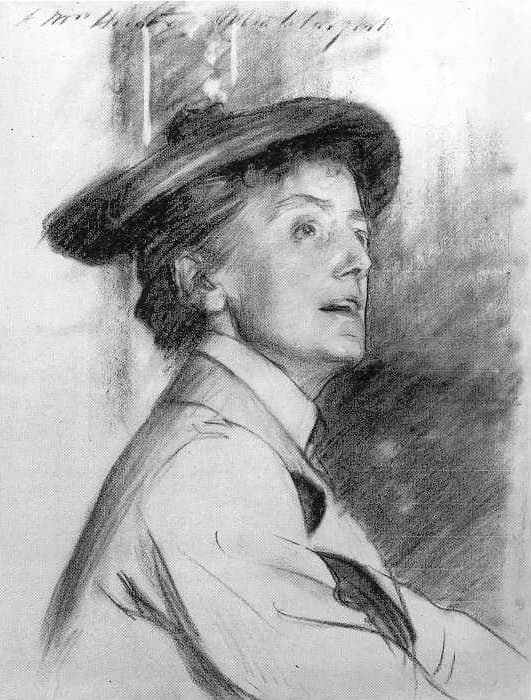
John Singer Sargent: Dame Ethel Smyth
When Mark tries to save an incoming ship by lighting a warning beacon – an act Thirza helps him carry out – the villagers condemn them both. Mark and Thirza, who have become lovers, choose to face the rising tide together, chained in a cave by their fellow townspeople as the tide rises.
Smyth’s score is lush and late-Romantic, full of dark harmonies and turbulent orchestration that bring the terrifying story to life.
Many commentators have noted how the work’s emotional intensity foreshadows the searing psychological dramas of later British operas, especially Benjamin Britten’s Peter Grimes from 1945.
Amy Beach — Cabildo (1932, premiered 1945)
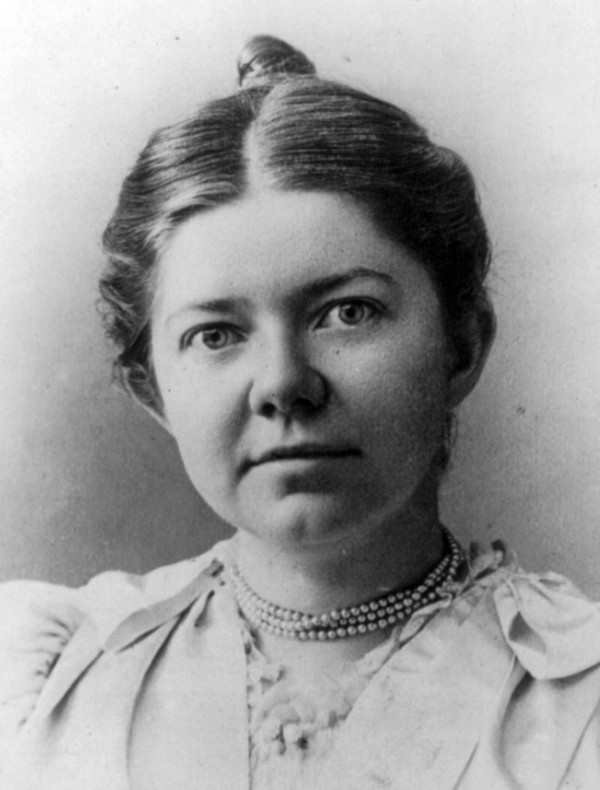
Amy Beach
Amy Beach: Cabildo, Op. 149 (Stephen Mo Hanan, actor; Anthony Dean Griffey, tenor; Charlotte Hellekant, mezzo-soprano; Eugene Perry, baritone; Paul Groves, tenor; Thomas Paul, bass; Lauren Flanigan, soprano; Mark Peskanov, violin; Carter Brey, cello; Christopher O’Riley, piano; New York Concert Singers; Ransom Wilson, cond.)
Amy Beach (1867–1944), the first American woman to have a symphony performed by a major orchestra, only wrote one opera: her compact, one-act chamber work Cabildo (Op. 149).
Composed in 1932 but not performed until the year after her death, the opera employs an English libretto by Nan Bagby Stephens.
In a cell inside a New Orleans museum, a tour guide recounts the legend of the imprisoned pirate Pierre Lafitte. Newlyweds Mary and Tom listen in. She says she’s tired and decides to rest in Lafitte’s cell. She proceeds to fall asleep.
The scene then slips back to the War of 1812, where Lafitte languishes in prison awaiting execution, accused of ordering the destruction of his ship and the death of his beloved Lady Valerie. A message from General (later President) Andrew Jackson arrives, granting him freedom in exchange for his services in fighting the British.
Lafitte initially wants to die so that he can join Valerie, but her ghost appears and urges him to clear his name and join the battle. He agrees.
Mary awakens in the modern day, convinced that it was not politics but love – and, importantly, the advice of a woman – that ultimately inspired Lafitte’s change of heart.
Beach’s score blends lush neo-Romantic writing with touches of American folk music, evoking the atmosphere of New Orleans.
Kaija Saariaho — L’Amour de loin (2000)
Kaija Saariaho (1952–2023), the Finnish composer celebrated for her shimmering, spectral sound world, achieved international acclaim with her opera L’Amour de loin (Love from Afar).
Premiered at the 2000 Salzburg Festival, this five-act work reimagines the medieval legend of the troubadour Jaufré Rudel.
In the opera, Jaufré grows disillusioned with the superficiality of his life and becomes captivated by the idea of a “distant love” after hearing a pilgrim speak of a mysterious woman, the Countess Clémence of Tripoli.

Kaija Anneli Saariaho
Although he only knows the idea of her, Jaufré decides to cross the sea to meet her. He reaches Tripoli, but has become fatally ill due to his anxiety over their relationship, and dies in her arms after a brief, transcendent encounter. Clémence, guilt-stricken, enters a convent.
Saariaho’s score features hypnotic music uniquely well-suited to the opera’s themes of yearning, imagination, and desire that is felt across great distances.
Missy Mazzoli — Breaking the Waves (2016)
Missy Mazzoli (b. 1980) is one of the most prominent American composers of her generation, and her opera Breaking the Waves is widely considered her breakthrough work.
Based on Lars von Trier’s film of the same name, the opera unfolds in a stark Scottish coastal village in the 1970s.
It follows Bess McNeill, a devout, emotionally fragile young woman who is devoted to her husband, Jan, an oil-rig worker.

Missy Mazzoli
After Jan is paralysed in a work accident, he convinces Bess to seek intimacy with other men and then tell him about the encounters. She comes to believe that these encounters will restore his will to live and therefore save his life.
Mazzoli’s music merges rock-inflected rhythms with a lush, dark orchestral palette. The result is an opera brimming with spiritual fervour and psychological intensity.
We wrote an article about another Mazzoli work, Millennium Canticles.
Conclusion
The operas featured here show that women composers have been creating influential works for centuries, and that the operatic canon is far richer than the standard repertoire suggests.
For listeners, students, and opera fans eager to expand their horizons, these operas by women composers are all worth checking out. Their works are a tour through the output of some of the art’s most fascinating creators. Chances are, you’ll find something new and remarkable to love here.
For more of the best in classical music, sign up for our E-Newsletter