Wolfgang Amadeus Mozart may be the most famous musical child prodigy of the Classical Era, but he was by no means the only one.
Today, we’re looking at other musicians from Mozart’s lifetime who were also celebrated child prodigies.
Many of them he actually met – or even worked with!
Here are eight Classical Era child prodigies whose stories (and music) are all deeply impressive.
Joseph Bologne, Chevalier de Saint-Georges (1745–1799)
Violin Concerto in A-major by Joseph Bologne, Chevalier de Saint-Georges
Joseph Bologne, also known as the Chevalier de Saint-Georges, was famous for his glamorous lifestyle and wide-ranging talents.
Born in 1745 in Guadeloupe to a French planter and an enslaved African mother, he sailed to France with his father at the age of seven to begin his education.
There, he started intensive violin training and quickly demonstrated his aptitude for music.
He also became renowned for his dancing skills, horsemanship, and shooting ability.
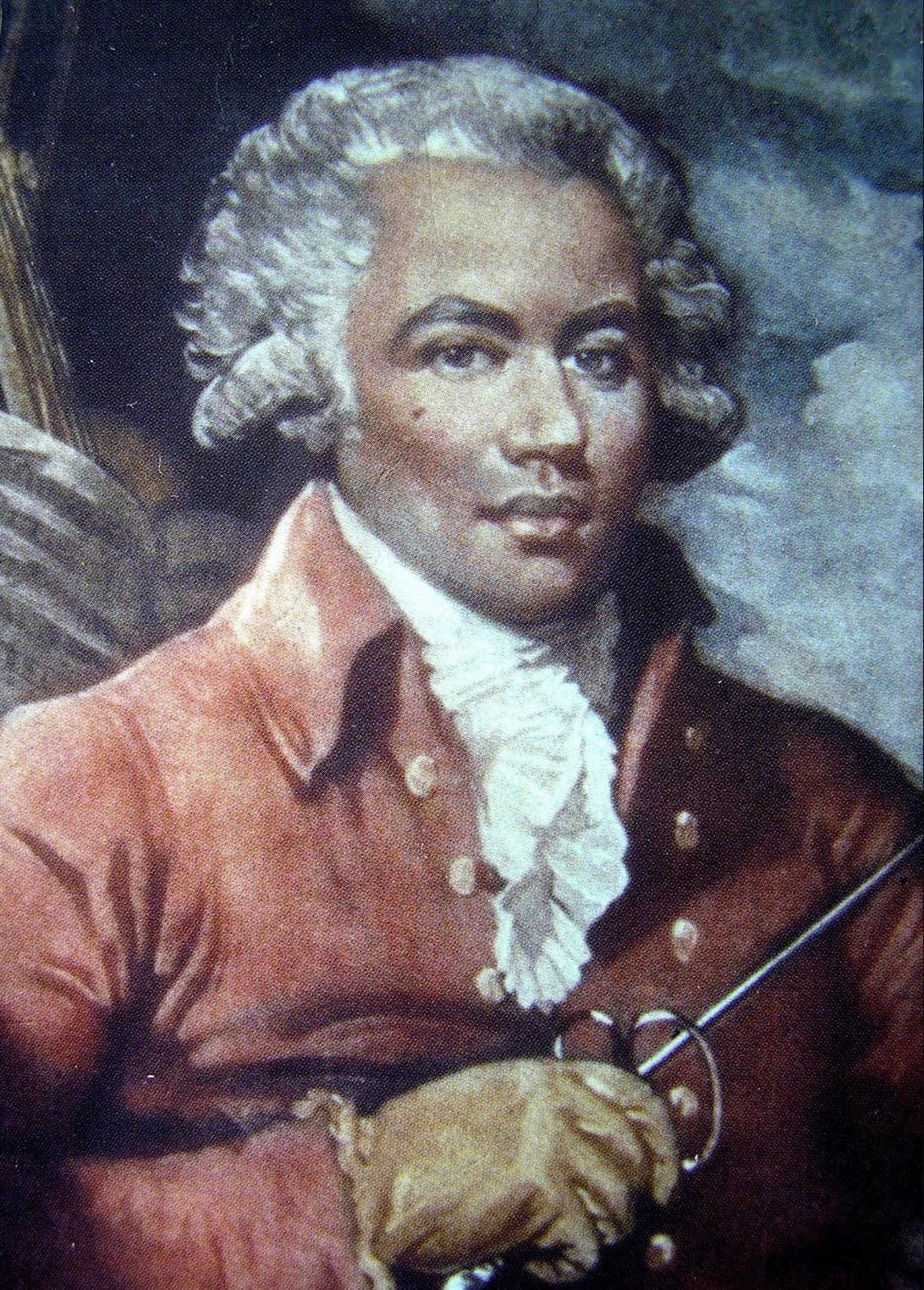
Joseph Bologne, Chevalier de Saint-Georges
American Founding Father John Adams wrote of him in 1779, “He is the most accomplished Man in Europe in Riding, Running, Shooting, Fencing, Dancing, Musick.”
Saint-Georges’s brilliance has garnered him the nickname “the Black Mozart.”
However, violinist Randall Goosby has recently said, “I prefer to think of Mozart as the white Chevalier.” Given that Bologne was eleven years older than Mozart, Goosby has a point!
Here’s an interesting tidbit about their connection: the two lived across a Parisian courtyard from each other in 1778, so it’s very possible these two musical giants crossed paths.
Learn more about the controversy-filled life of Joseph Bologne.
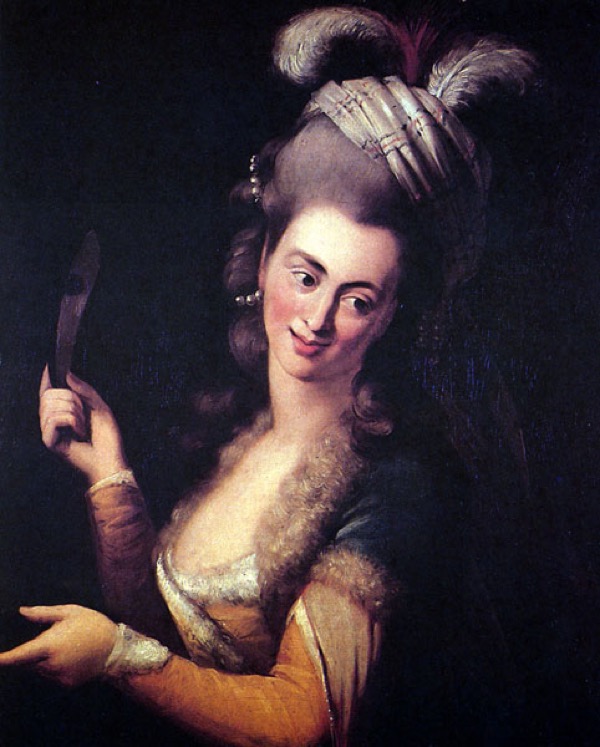
Maria Anna “Nannerl” Mozart (1751–1829)
A scene from the movie Mozart’s Sister
Maria Anna “Nannerl” Mozart was Wolfgang Amadeus Mozart’s older sister and an astonishing musical prodigy in her own right.
Under the tutelage of their father Leopold, Nannerl developed into an outstanding keyboard player as a child.
She began harpsichord lessons at age seven and progressed so rapidly that by eleven she was performing the most difficult sonatas and concertos with “incredible ease, in the very best of taste,” according to contemporary accounts.
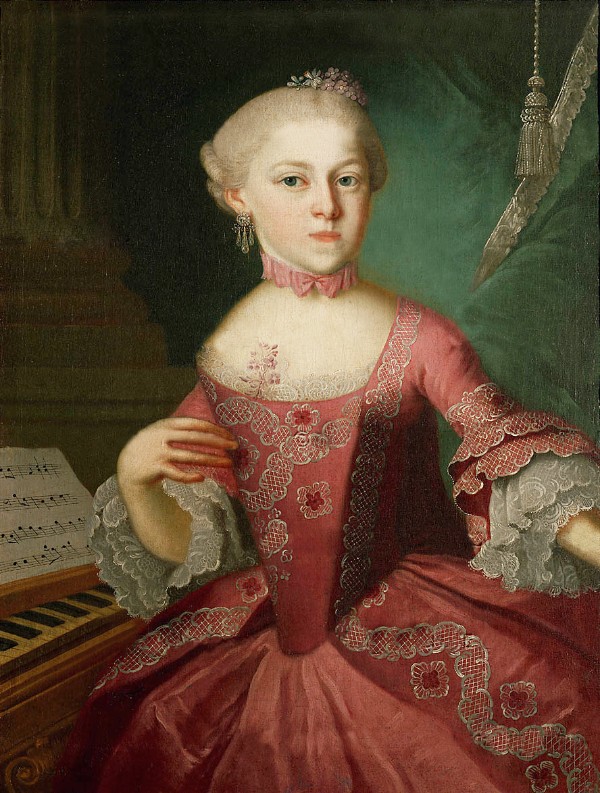
Nannerl Mozart
Her father proudly described 13-year-old Nannerl as “one of the most skillful pianists in Europe.”
During her childhood, Nannerl toured extensively across Europe alongside Wolfgang, dazzling royal courts and public audiences alike. All were amazed by the sight of a young girl who could perform with such mature artistry.
Although her public performing career ended once she reached marriageable age (as was customary for most eighteenth-century women), Nannerl’s early brilliance and virtuosity inspired Wolfgang’s development, and also helped to enhance his early reputation.
Read our article on Nannerl, featuring thirteen facts about her life.
Joseph Siegmund Bachmann (1754–1825)
Capriccio for Organ by Joseph Siegmund Bachmann
Joseph Siegmund (Sixtus) Bachmann was a German organist-composer who was Mozart’s contemporary.
He showed notable musical talent from an early age, particularly on the organ.
He was so talented that in 1766, when the Mozarts were traveling through the town of Biberbach on the tail end of their multi-year European tour, Wolfgang and Joseph had an organ-playing competition.
At the time, Bachmann was twelve, and Mozart was ten.
Biographer Stanley Sadie reports that “each [acquitted] himself with honour.”
Bachmann later joined the Benedictine order (taking the name Sixtus), serving as a church organist and working as a composer in adulthood.
Today, however, he’s most famous for that childhood meeting with Mozart.
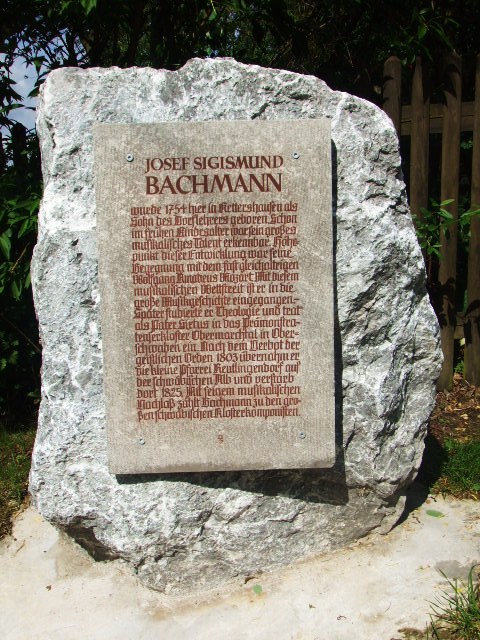
Memorial stone for Joseph Siegmund Bachmann in Kettershausen
Thomas Linley, Jr. (1756–1778)
Selection from Violin Concerto in F-major by Thomas Linley, Jr.
Born the same year as Wolfgang, Thomas Linley, Jr. was nicknamed the “English Mozart.”
The eldest son of composer Thomas Linley, Sr., young Thomas first began his music studies in Bath, England, where his father was a prominent music teacher and concert organiser.
In fact, he started working at his father’s concert venues, taking tickets when he was just six years old.
His abilities were obvious at an early age. At seven, he performed a violin concerto in Bristol.
Later, around the age of thirteen, Linley was sent to Italy to study violin and composition with composer Pietro Nardini.
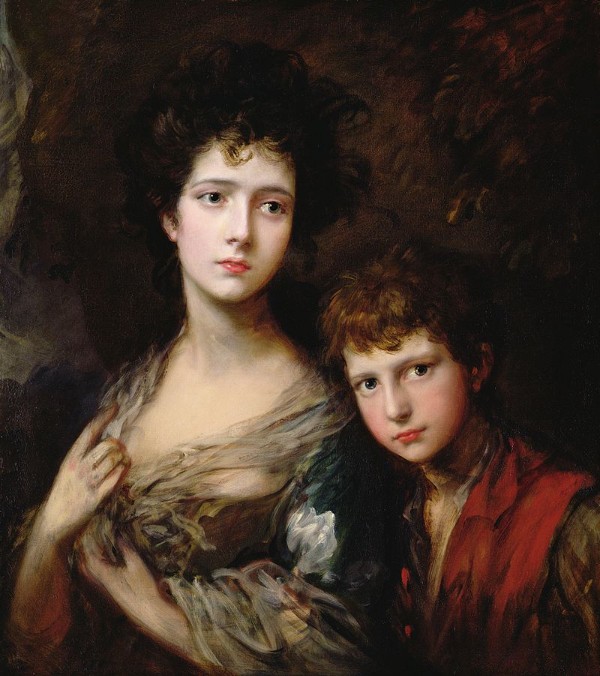
Thomas Linley and his sister
While in Florence, the 14-year-old Linley met the 14-year-old Wolfgang Mozart; the two became friends, performing music together and impressing listeners.
Their connection ran deep. When Mozart left for Rome, Linley followed their coach to the Florence city gates to wave goodbye.
Tragically, Linley’s brilliant career was cut short when he died in a boating accident at the age of 22.
Later in life, Mozart would remember him wistfully, calling him a genius.
Maria Theresia von Paradis (1759–1824)
Maria Theresia von Paradis’s Fantasie in G-major for Piano
Maria Theresia von Paradis was an Austrian pianist, singer, and composer.
Although she became blind when she was a toddler, she excelled at her early musical studies.
She studied piano, singing, composition, and theory with some of Vienna’s finest teachers – including Leopold Kozeluch and Antonio Salieri – and developed an astonishing ear and memory. It was reported that she learned over sixty concertos by heart.
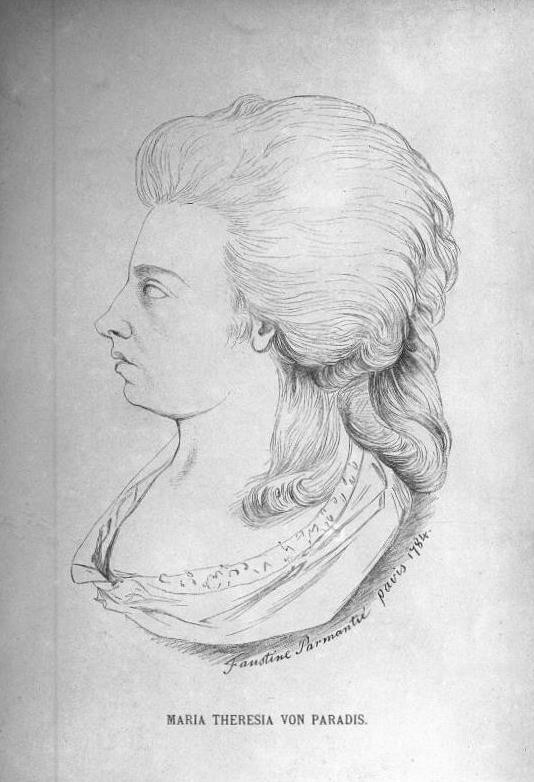
Maria Theresia von Paradis
By her mid-teens, Theresia von Paradis had become a celebrated child prodigy. She performed as a vocalist and pianist at Viennese salons and even for imperial audiences.
She would grow into a mature artist and go on to an international career.
Mozart himself was inspired by Paradis. Historians believe that he wrote his Piano Concerto No. 18 in B-flat-major for her.
Wolfgang Amadeus Mozart: Piano Concerto No. 18 in B-Flat Major, K. 456 (Ingrid Haebler, piano; Stuttgart Chamber Orchestra; Karl Münchinger, cond.)
We wrote about the tragic and triumphant life of Maria Theresia von Paradis.
Daniel Steibelt (1765–1823)
Aria by Daniel Steibelt
Daniel Steibelt was a German pianist and composer who emerged from childhood with prodigious musical skills.
Born in Berlin in 1765, nine years after Mozart, Steibelt was the son of a master keyboard-builder (his father built harpsichords and pianos).
Growing up around instruments, the young Steibelt developed an early passion for music that drew the attention of local nobility.
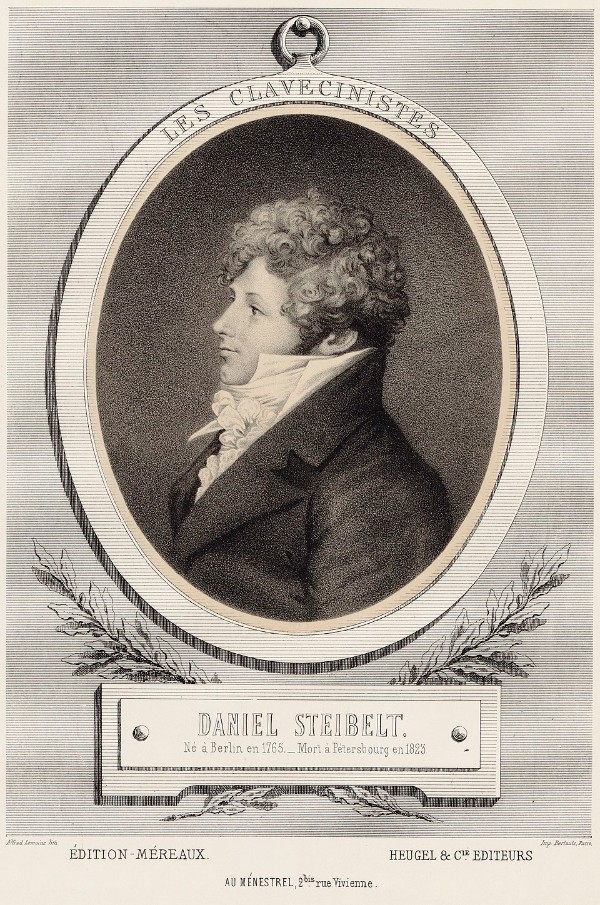
Daniel Steibelt
The Crown Prince of Prussia took notice of his talent and arranged for the boy to study harpsichord and composition with Johann Kirnberger, one of Berlin’s leading music pedagogues and a former student of J.S. Bach.
Steibelt’s formal musical education was interrupted in his adolescence when his father made him enlist in the Prussian army. However, he eventually deserted so that he could devote himself to music.
In his late teens and early twenties, he became a notorious virtuoso pianist. He even got into an infamous piano duel with Beethoven in 1800…although that didn’t end very well for him.
Learn more about how Steibelt’s duel with Beethoven went.
Samuel Wesley (1766–1837)
Samuel Wesley’s Gavotte for Organ
The son of the famous hymn-writer Charles Wesley, Samuel grew up in a musical household and was playing violin, harpsichord, and organ as a young boy.
In 1774, at the age of eight, young Samuel wrote out an oratorio titled “Ruth.”
The work drew the attention of Dr. William Boyce, then one of Britain’s leading composers. When Boyce visited the Wesleys to examine the boy’s score, he was astonished.
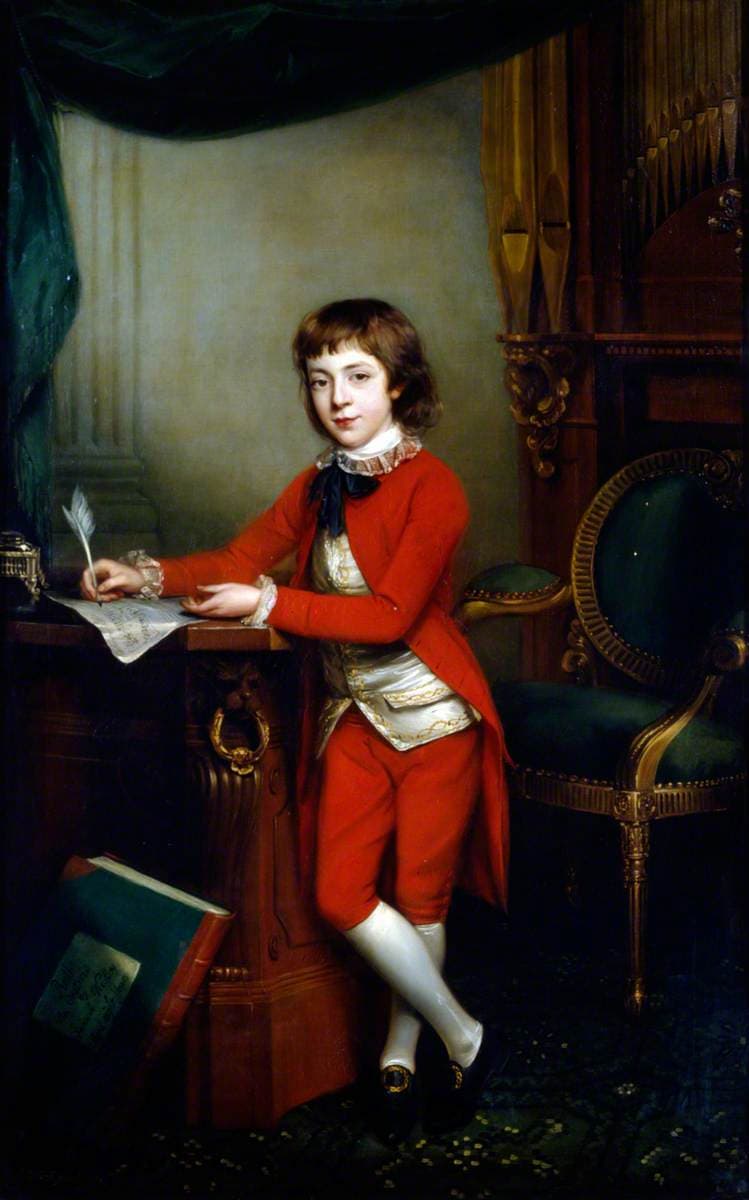
Samuel Wesley
Reportedly Boyce exclaimed to Samuel’s father, “Sir, I hear you have an English Mozart in your house.”
Samuel was also famous for his extemporaneous organ improvisations.
William Crotch (1775–1847)
William Crotch’s Overture in G-major
William Crotch stands out as one of the most gifted prodigies of the eighteenth century.
Born in 1775 in Norwich, England, Crotch was a toddler when he first demonstrated his genius.
His father, a carpenter who built organs, noticed that by age two, little William could pick out tunes on the family’s organ keyboard. The child quickly became a local celebrity.
He would perform simple pieces on the organ for visitors, including noted musicologist Charles Burney, who came to observe him in-person and document what he witnessed.
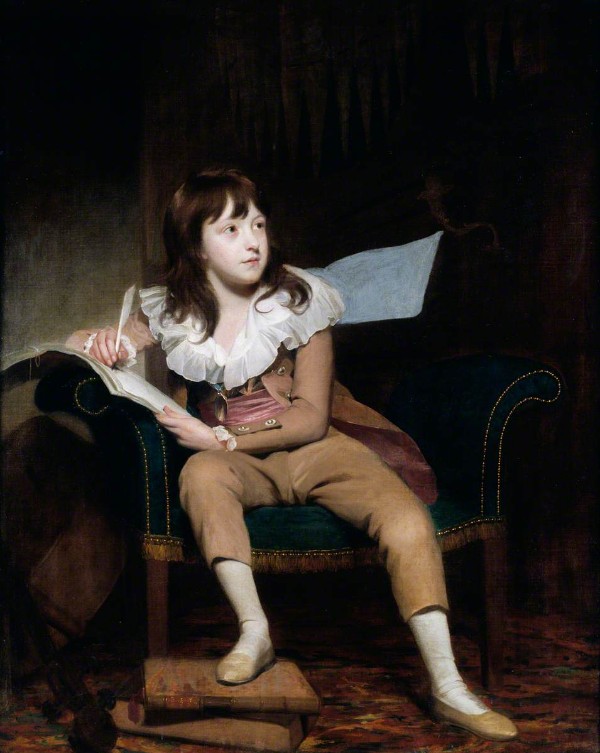
William Crotch
By the time he was three years old, William Crotch was performing on the organ in public. In 1779, when he was still three, he played the organ at the Chapel Royal of St. James’s Palace and even performed for King George III.
The London Magazine in April 1779 recounted how William would dutifully play “solemn tunes and church music” on the organ, then break off to act like any other playful toddler…only to be lured into giving another tune with the promise of cake or an apple.
William Crotch continued to develop his art as he grew. In adulthood, he became a respected composer and Oxford professor.
Arguably, he was the poster boy for later Classical Era prodigies, just like Mozart had been two decades before him.
Find out why William Crotch might have been the most musically precocious child of all time.
Conclusion
Mozart may have set the standard for what it meant to be a musical prodigy in the Classical Era, but the fascination with his early talent was not necessarily unique; it was part of a wider cultural phenomenon.
The eighteenth century was a time that was eager to celebrate youthful genius and accomplishment, and as we’ve seen, many gifted children dazzled audiences long before adulthood.
Each of these musicians – from Saint-Georges excelling in multiple artistic and athletic pursuits, to Paradis memorising dozens of concertos, to William Crotch giving organ recitals as a toddler – raised the societal bar of what could theoretically be expected from young musicians…for better or for worse.
When their stories are taken together, they lend context to Mozart’s life and paint a fuller picture of the Classical Era’s fascination with talent, genius, and child development.
For more of the best in classical music, sign up for our E-Newsletter