Daniel Barenboim is one of the rare musicians whose career defies boundaries. Born on 15 November 1942 in Buenos Aires, he made his debut as a pianist at seven and soon revealed a mind as dazzling as his technique.
Equally at home on the concert stage and the conductor’s podium, Barenboim has spent a lifetime pursuing music as both art and dialogue, between composers and performers, between cultures, and between people.
Daniel Barenboim: Radio Recital 1955
From his legendary Beethoven interpretations to his founding of the West-Eastern Divan Orchestra, an ensemble of young Arab and Israeli musicians, Barenboim embodies the belief that music is not just sound, but a language of understanding.
To celebrate his birthday on 15 November, let’s revisit the establishment of the West-Eastern Divan Orchestra, one of the most extraordinary cultural initiatives of the late twentieth century.
Harmony Crossing Enemy Lines
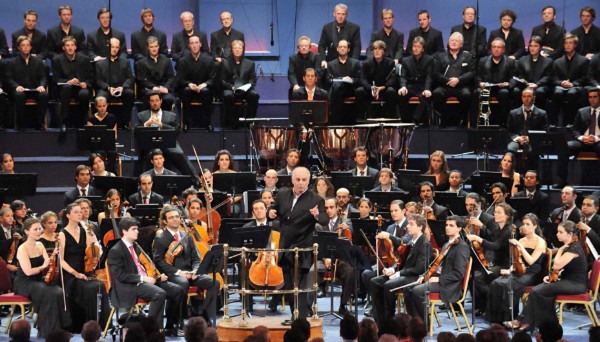
Daniel Barenboim with the West-Eastern Divan Orchestra
In the summer of 1999, while the Middle East was suffering from the collapsed Oslo Accords and suicide bombs tore through Jerusalem buses, Daniel Barenboim and Palestinian-American scholar Edward Said envisioned a project that would bring together young musicians from across the Middle East to collaborate on the common ground of music.
They called it the West-Eastern Divan Orchestra, borrowing from Goethe’s 1819 poetry collection, which itself is a dialogue between Western and Eastern cultures. The first workshop took place in Weimar, spiritual home of Bach, Schiller, and the former Buchenwald concentration camp.
Barenboim, then 56 and already music director of the Berlin Staatsoper, knew the risks. Inviting Syrians who had never spoken to Israelis, Egyptians who boycotted anything Israeli, and Israelis who viewed every Arab as a potential threat was diplomatic dynamite.
Barenboim & West-Eastern Divan Orchestra perform Ravel: Bolero
Harmony Built on Hope
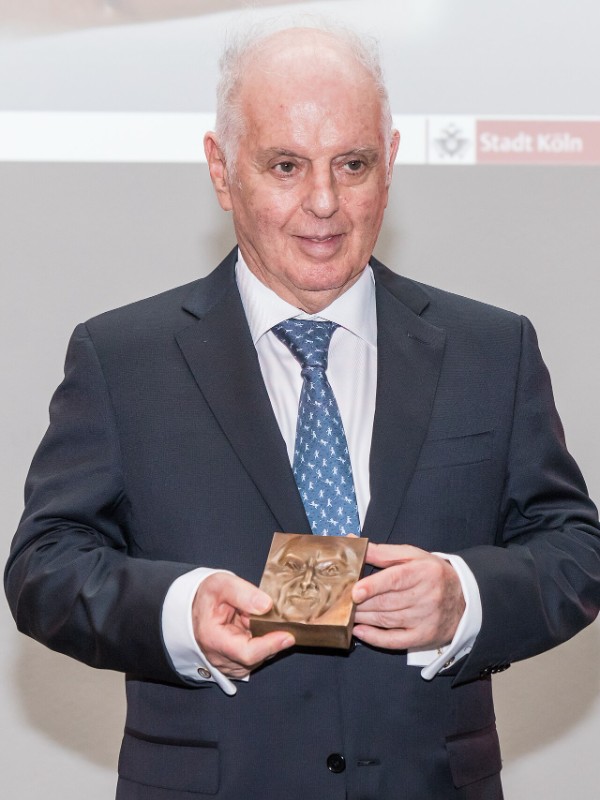
Award of the Konrad Adenauer Prize of the City of Cologne 2019 to Daniel Barenboim
Funding was just another nightmare. From the outset, the West-Eastern Divan Orchestra depended not on grand political sponsorship but on a patchwork of cultural partnerships and idealistic patronage.
The first home in Weimar was made possible by the German government, which saw in the project both artistic value and moral symbolism, as it was a chance to reclaim Weimar’s legacy as a cradle of humanism.
When the orchestra later found a more permanent base in Seville, Spain, the Junta de Andalucia became its principal sponsor, offering rehearsal spaces, administrative backing, and financial stability.
Barenboim & West-Eastern Divan Orchestra perform Beethoven: Symphony No. 5
The Sound of an Idea
Over time, the Divan’s funding evolved into a collaborative model that mirrored its own philosophy of cooperation. Governmental institutions, private foundations, and cultural ministries all played a part. The Barenboim-Said Foundation, established in 2003, formalised this structure, ensuring that the orchestra’s work could continue beyond any single political moment.
The West-Eastern Divan Orchestra has long transcended its origins as a cultural experiment and become a first-rank artistic ensemble in its own right. While its founding ideals of dialogue and coexistence are rightly celebrated, the orchestra’s true persuasive power has always come from its musical excellence.
Daniel Barenboim’s insistence that peace must be grounded in shared mastery, not mere symbolism, has forged a fine orchestra. The Divan astonished audiences with its technical precision and emotional depth. Barenboim trained the young players with the same intensity he applied to the Berlin Staatskapelle or the Vienna Philharmonic, refusing to indulge them as idealists alone.
Barenboim & West-Eastern Divan Orchestra perform Beethoven: Leonore Overture No. 3, Op. 72b
Barenboim’s Greatest Composition
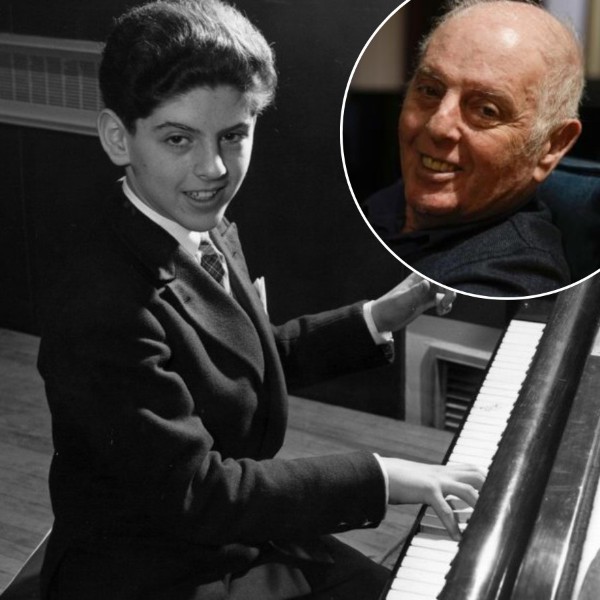
Daniel Barenboim
Their interpretations of Beethoven became signature achievements, filled with youthful energy but grounded in a profound sense of architecture and humanity. Beyond Beethoven, the Divan has tackled Wagner, Brahms, Mahler, Strauss, Tchaikovsky, and Schoenberg.
Perhaps the orchestra’s greatest musical achievement, however, lies in its sound itself. It is a sound that embodies its philosophy. The West-Eastern Divan does not strive for homogeneity as its character emerges from the dialogue of diverse musical traditions, training styles, and temperaments.
Under Barenboim’s direction, that diversity has become unity, not through erasure, but through listening. In the end, the West-Eastern Divan Orchestra stands as Daniel Barenboim’s most eloquent statement.
What began as a daring experiment in dialogue has matured into a living testament to the power of art to transcend enmity and geography. As Barenboim himself has often said, music cannot bring peace, but it can teach us how peace might sound. On his birthday, we are reminded that his legacy lies not only in performances and recordings, but in this enduring belief.
For more of the best in classical music, sign up for our E-Newsletter