The release of Wilhelm Taubert: Piano Sonatas Nos. 1, 2, 4, 6 (Naxos, Romantic Piano, Vol. 2) brings long-neglected music back into the spotlight. Pianist and scholar Lucas Wong presents the first complete recording of these works, giving audiences the chance to hear Wilhelm Taubert’s sonatas in their full scope for the first time.
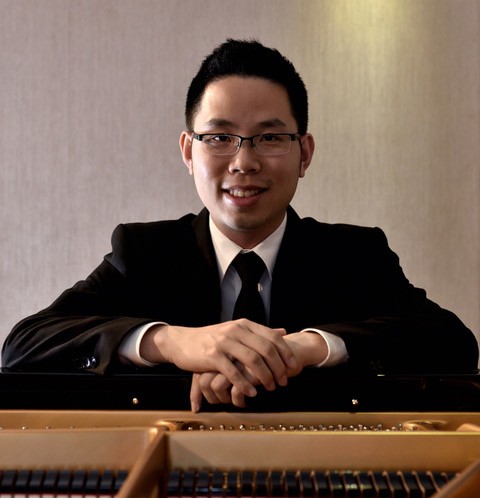
Lucas Wong
Wilhelm Taubert: Piano Sonata No. 2 in C Minor, Op. 20, “Grande Sonate” – I. Allegro appassionato (Lucas Wong, piano)
Currently on faculty at the University of British Columbia, Wong describes himself as a multi-faceted pianist and scholar who has performed and taught across four continents. His career has embraced a broad spectrum of repertoire, from early harpsichord works and chamber music to operatic reductions and contemporary keyboard techniques. He has also collaborated with vocalists, instrumentalists, and composers.
Born in Hong Kong, Wong began his early training at the Hong Kong Academy for Performing Arts’ pre-junior program with Tak Poon. After moving to Vancouver, he studied with Edward Parker before pursuing music at the University of British Columbia School of Music under Robert Silverman. He went on to complete his Master of Music, Master of Musical Arts, and Doctor of Musical Arts degrees at the Yale School of Music, where he studied with Boris Berman. This international journey of training and mentorship helped shape his identity as both pianist and scholar, preparing him for projects that combine performance with discovery.
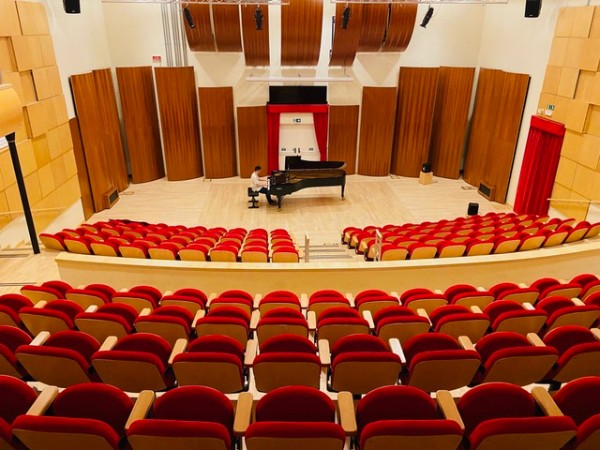
Recording in Fazioli Concert Hall in Italy
Wong recalls his first encounter with the sonatas: “From the very first page I opened, I was struck by their drive, playfulness, and lyricism. That initial spark of discovery convinced me that these works truly deserved to be brought to life and shared with a wider audience.”
This wide-ranging background made Wong an ideal contributor to the Naxos Romantic Piano series, which features overlooked repertoire from the 19th century. Reflecting on his role in the project, he says, “It felt like a rare privilege to engage with music that had never been officially performed or recorded, nearly two centuries after its creation.”
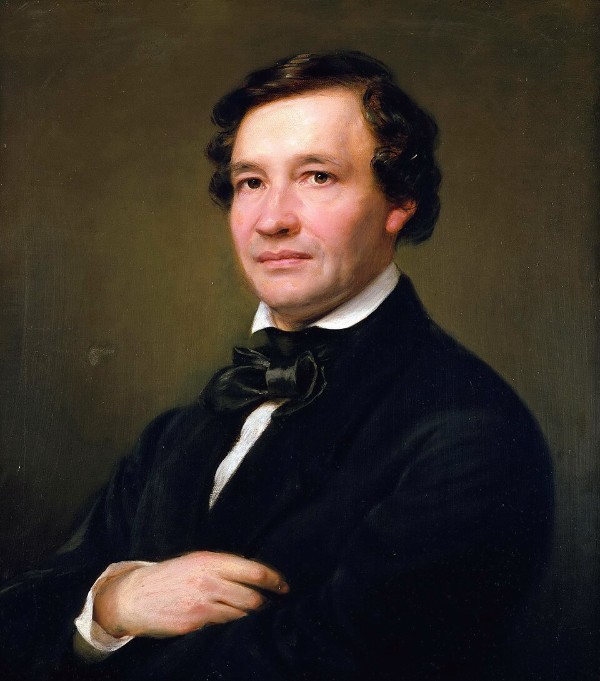
Wilhelm Taubert in 1862
Wilhelm Taubert (1811–1891) was a leading figure in Berlin’s musical scene, serving as a composer, conductor, and teacher during a period when the city began to rival Vienna and Paris as a major European cultural center. While Chopin, Schumann, and Liszt pushed the technical and emotional boundaries of the piano, Taubert’s style remained more traditional, grounded in Beethoven and Weber but enriched by the lyricism of opera composers like Rossini and Cherubini. His works, especially his sonatas, display a combination of structural clarity, poetic reflection, and theatrical flair that mirror the transitional trends of the 1830s.
The 1830s were a particularly fruitful decade for the piano. Taubert composed five of his six sonatas during this time, closely connected with Felix Mendelssohn‘s work. The similarities are clear: while Mendelssohn was creating his Songs without Words, Taubert was composing movements with similar lyricism and a comparable vocal quality. The slow movement of the Fourth Sonata, for instance, could easily be interpreted as a “Song Without Words” for piano.
Wong points out that Taubert’s lyrical instinct extended beyond the sonatas. “In his An die Geliebte, Op. 16: 8 Minnelieder for piano solo, the open, flowing melody of the third piece recalls Mendelssohn’s Auf Flügeln des Gesanges,” he explains. “What I found especially fascinating is that Taubert attached a poem by Heinrich Heine to this piece, the very same text that Robert Schumann would later set in Dichterliebe. It makes me wonder whether Taubert influenced Mendelssohn, or the other way around. What role did these early piano ‘lieder’ play in shaping the genre?”
What is clear is that Taubert was recognised by his contemporaries. Schumann himself reviewed four of the sonatas in his journal. Yet despite this recognition, the music fell into obscurity. One sonata, the Fifth, has even been lost to history, its manuscript missing from the Berlin State Library since wartime.
Wilhelm Taubert: Piano Sonata No. 4 in C-Sharp Minor, Op. 21, No. 2 – I. Allegro vivace (Lucas Wong, piano)
For Wong, reviving this repertoire meant working directly from the first editions, which are the only sources available. This brought a host of interpretive challenges, since misprints, omissions, and inconsistencies required not only scholarly diligence but also stylistic intuition. “One example comes at the opening of Sonata No. 4, where accidentals may have been omitted by mistake,” Wong explains. “Deciding how to interpret such passages required a balance of scholarship, stylistic knowledge, and artistic instinct. This process ultimately shaped not just accuracy but also how I conveyed Taubert’s musical voice.”
His preparation was equally rigorous. “My philosophy is to make as few edits as possible,” Wong explains. “For me, a performance that is natural yet spontaneous captures the spirit of the music more faithfully than one pieced together from countless takes.” Achieving this involved careful practice, including slow study, memorisation, and in-depth exploration of the music.
A particularly illuminating moment came when Wong performed the Second Sonata at A = 415 on a period instrument from the Cobbe Collection in the UK, built by a close friend of Beethoven and now on loan from King Charles III. “That gave me a vivid sense of the sound world Taubert might have imagined,” he recalls. “In the final stages of preparation, I like to refresh my ear and sharpen my harmonic awareness by transposing passages into all the other eleven keys.”
Wilhelm Taubert: Piano Sonata No. 6 in D Minor, Op. 114 – IV. Finale: Allegro con fuoco, ma espressivo (Lucas Wong, piano)
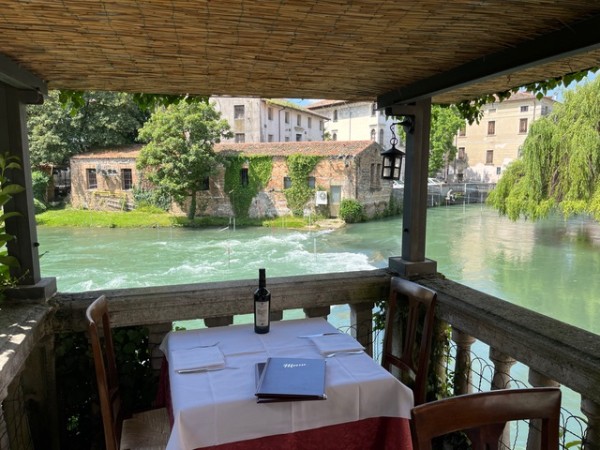
Lucas Wong’s favourite place for lunch in Sacile, Italy – Ristorante Cellini
The recording sessions took place over two days. Strategic planning was key: the demanding Sixth Sonata was tackled first, when Wong’s energy was at its peak. The First and Second Sonatas followed, with the Fourth reserved for the final day. This order allowed him to balance stamina with musical freshness, ensuring that each sonata could be approached with focus and vitality.
In studying Taubert’s sonatas, Wong was most struck by the composer’s affinity for opera, a passion he shares. “The lyrical slow movements, the dramatic pacing, and the vocal qualities of the themes reveal a theatrical sensibility woven into the sonata form,” he says.
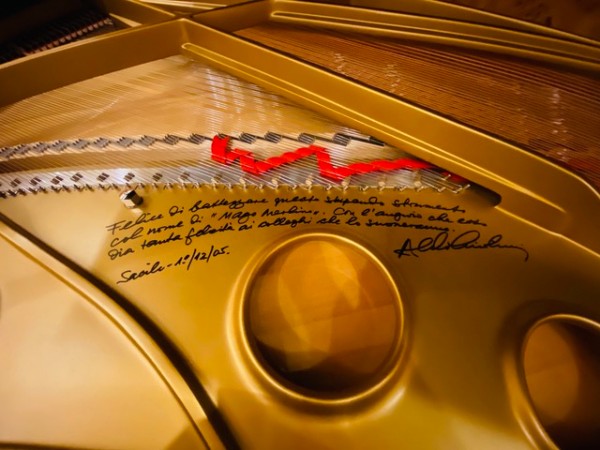
Fazioli F278 Concert Grand in the Fazioli Concert Hall
Even more surprising was the lack of evidence that these sonatas were ever widely performed, despite Taubert’s connections with Mendelssohn and Schumann. “Fame and fate often shape what history labels as great art,” Wong reflects, “yet I am continually struck by how many forgotten voices created music that is both deeply profound and immediately accessible. Taubert is one of those voices, and I feel privileged to help bring his music back into the conversation.”
This recording is not only a premiere but also a reminder of the breadth of 19th-century musical life, where many composers made meaningful contributions to the piano repertoire, even if they did not become household names. Wong’s interpretation brings warmth, clarity, and vitality to works that deserve recognition alongside those of Taubert’s more famous contemporaries. By reviving these long-neglected sonatas, Wong helps restore Wilhelm Taubert to the broader narrative of Romantic piano music. The result is a recording that enriches our understanding of the period while providing listeners with a fresh and rewarding musical experience.
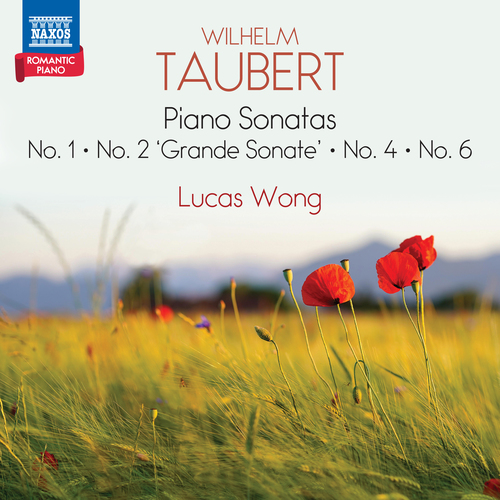
Wilhelm Taubert: Piano Sonatas Nos. 1, 2, 4, 6
Performed by Lucas Wong
Label: Naxos
For more of the best in classical music, sign up for our E-Newsletter