In the late nineteenth and early twentieth centuries, Felix Blumenfeld was one of the best-known composers, pianists, conductors, and music teachers in Russia.
He worked with colleagues now considered to be masters: figures like Nikolai Rimsky-Korsakov, Anton Rubinstein, and Alexander Scriabin.
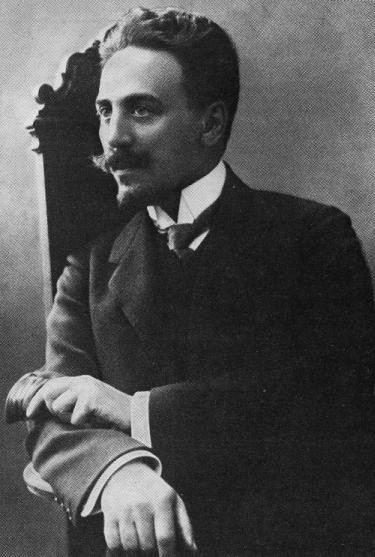
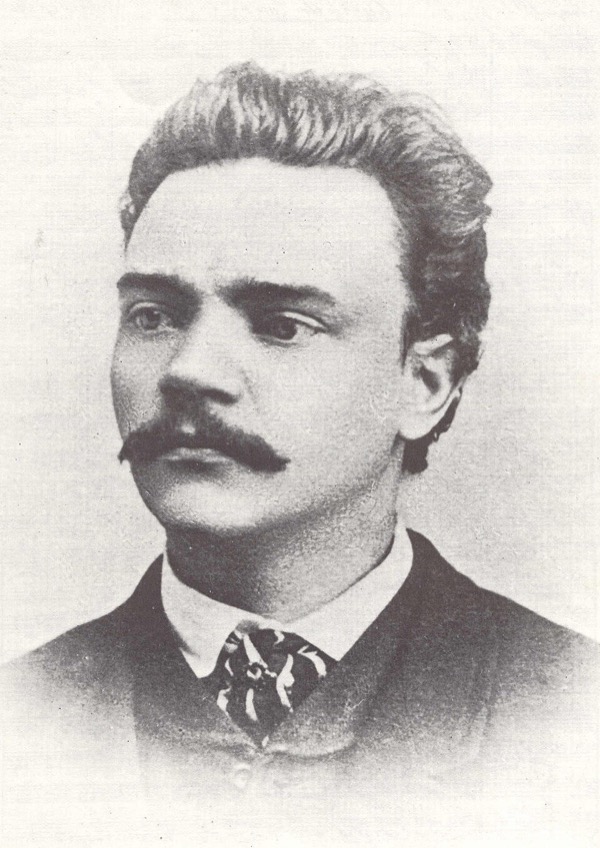
Felix Blumenfeld
Although he may not be as famous as those men today, Blumenfeld’s many contributions to the art are still worth examining, and his life and career advanced musical performance and pedagogy in important ways.
Here’s our exploration of the life and work of Felix Blumenfeld…as well as what Vladimir Horowitz, his most famous pupil, thought of him.
Blumenfeld’s Beginnings
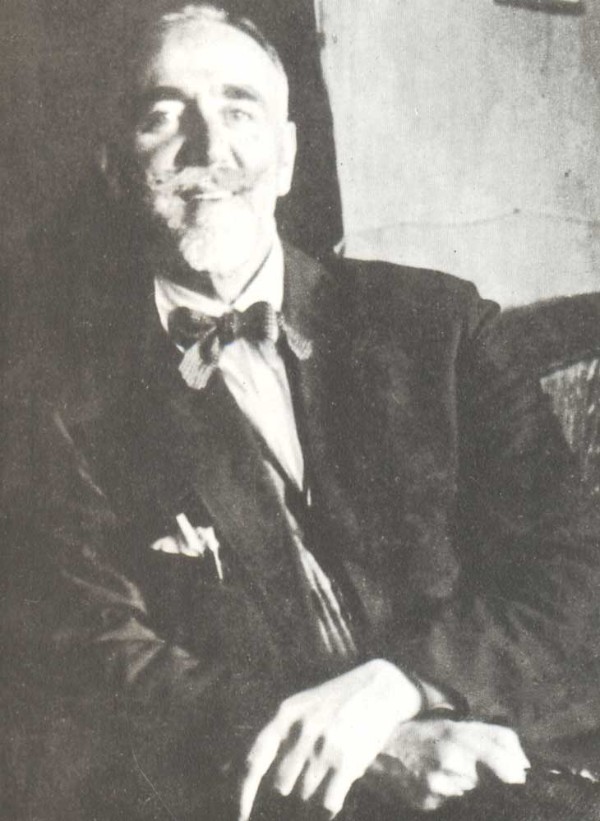
Felix Blumenfeld
Felix Blumenfeld was born in April 1863 in the town of Kovalevk, in present-day Ukraine. His family would later move to the larger city of Elizavetgrad.
He would later write that he was “swimming in music since the day I was born.”
Blumenfeld’s entire family was strikingly musical. His father taught music and French at a boarding school. Meanwhile, several of his seven siblings became musicians in their own right, and his first piano teacher was his brother.
In addition, through his mother, Felix and composer Karol Szymanowski were first cousins once removed.
To top it off, Felix’s nephew Heinrich Neuhaus became one of the most influential piano teachers of the century, teaching giants like Richter, Gilels, and Lupu.
Quitting Music Lessons – Then Coming Back With a Vengeance
It would have been natural for a boy from such a musical family to pursue music professionally, but Felix was hesitant at first.
He stopped taking formal piano lessons when he was only twelve years old (although he continued playing on his own). He eventually enrolled in a polytechnic school in the city of Riga, and his life path appeared to be set.
Everything changed in the summer of 1881 when he met Nikolai Rimsky-Korsakov. Both men were deeply impressed by the other.
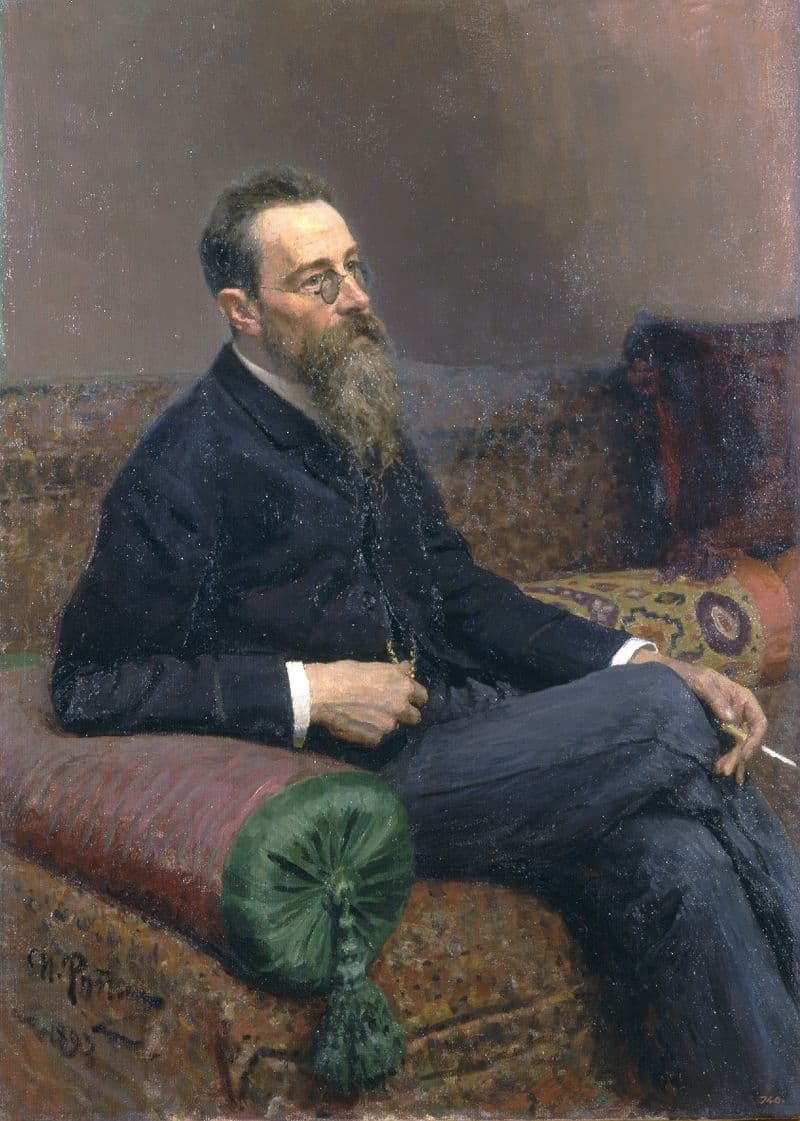
Repin: Nikolai Rimsky-Korsakov
After befriending Rimsky-Korsakov, Blumenfeld decided he wanted to make a life in music, so he dropped out of the school in Riga and moved to St. Petersburg to study at the conservatory.
Felix Blumenfeld: Nocturne-Fantaisie Op. 20
Blumenfeld’s Early Career
Between 1881 and 1885, he studied composition with Rimsky-Korsakov and piano with Fiodor Stein, an elderly man who had known Chopin personally.
Upon graduating in 1885, Blumenfeld won a gold medal. That same year, he was hired to teach at the conservatory.
He also continued performing, as well as branching out to conducting and composing. Listeners and fellow musicians were deeply impressed by his work, believing that he was among Rimsky-Korsakov’s most talented students.
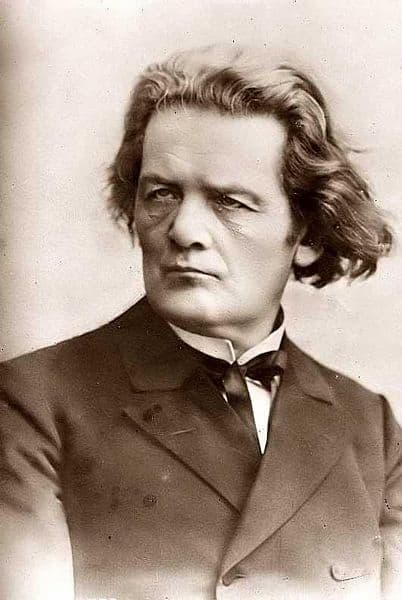
Anton Rubinstein
In 1898, he made his debut at the prestigious Maryinsky Theatre, conducting Anton Rubinstein’s opera Feramors. Around the same time, he also gave important premieres of works by Scriabin and Rimsky-Korsakov.
Felix Blumenfeld: Près de l’Eau : 6 Pieces, Op. 38 (performed by Daniel Grimwood)
Controversy While Teaching at the Conservatory
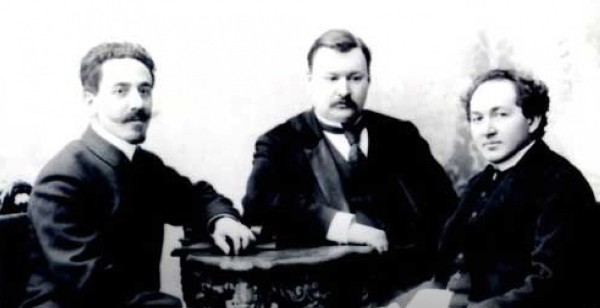
Felix Blumenfeld with Alexander Glazunov and Leopold Godowsky
Blumenfeld continued teaching at the St. Petersburg Conservatory from his graduation in 1885 to 1918, with two noteworthy breaks.
The first break happened during the 1905 Revolution, when his teacher and colleague Rimsky-Korsakov found himself swept up in political drama.
Rimsky-Korsakov was chosen to be, in his words, on a “committee for adjusting differences with agitated pupils.”
At the time, activist students were pushing to establish a constitutional monarchy in Russia after dozens of protesters were killed at the Bloody Sunday demonstration.
Rimsky-Korsakov believed that students should be free to express their political opinions and still attend the conservatory. Officials didn’t agree, and he was pressured to endorse extreme moves to crack down on the protesters, including shutting down the institution entirely.
Instead, Rimsky-Korsakov co-signed a letter calling for the resignation of the conservatory’s director.
The final outcome was that Rimsky-Korsakov was fired, along with some colleagues. That in turn triggered other faculty members to resign, and Felix Blumenfeld was among them.
Blumenfeld did return by the end of the year, but left again due to his commitments as a performer and conductor.
Blumenfeld would return again to the Conservatory, but in 1918, after the Russian Revolution began, he returned to Kiev to teach, hoping to escape wartime illness and famine.
Felix Blumenfeld: Etude de concert Op. 24
Teaching Vladimir Horowitz in Kiev
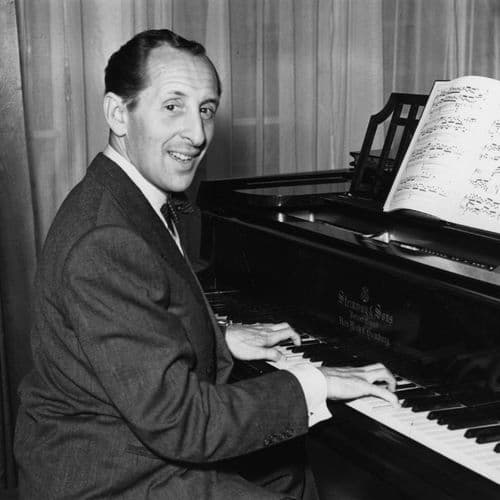
Vladimir Horowitz
Blumenfeld taught in Kiev for several years. There, he took on a promising up-and-coming sixteen-year-old named Vladimir Horowitz.
Decades later, Horowitz remembered his time with Blumenfeld:
Blumenfeld knew his playing by heart, from every angle. Unfortunately, when I came to him, Blumenfeld was paralysed on his right side, the victim of syphilis. He was still a vibrant and handsome person, but he had many vices.
His piano class was small, and it was the best. Anatole Kitain and Simon Barere were with me there. Barere had a tremendous technique. He played professor Blumenfeld’s Etude for the Left Hand like a miracle.
Blumenfeld, even though he could not demonstrate much anymore, was exactly the teacher I needed because he was creative. It was with Blumenfeld that I started to develop my flat-finger technique. I started to practice in a sort of portamento, which made my fingers like steel.
Vladimir Horowitz Plays Chopin Polonaise in A-flat major, Op. 53
Blumenfeld’s Pedagogical Legacy
Horowitz became his most famous pupil, but Blumenfeld taught a number of great Russian and Soviet pianists. Among them were:
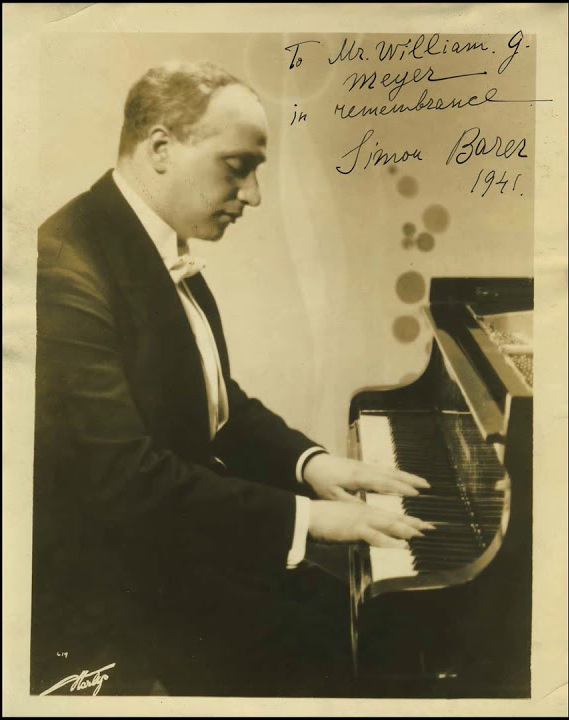
Simon Barere
Simon Barere (1896-1951). A Ukrainian pianist who taught at the Kiev Conservatory until he fled Europe in the 1930s. He would die onstage at Carnegie Hall while performing the Grieg piano concerto.
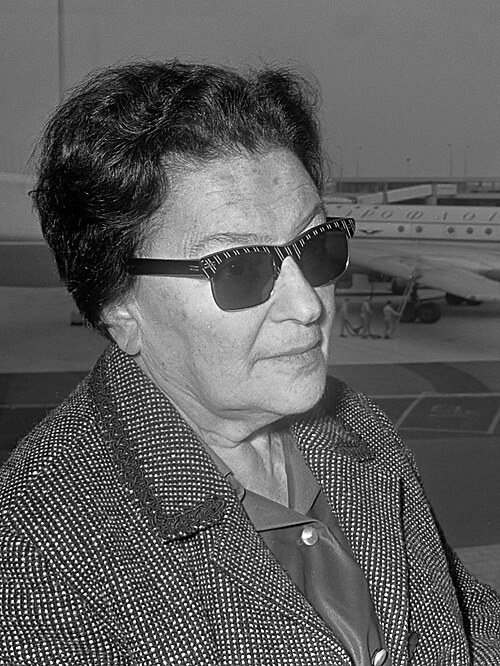
Maria Grinberg in 1968
Maria Grinberg (1908-1978). She and her family ran into conflicts with Soviet authorities; both her husband and father were executed in 1937. She wasn’t allowed to leave the Soviet Union until after Stalin’s death. Once she toured internationally, she was praised as one of the most gifted pianists of her generation. She became the first Russian pianist to record all 32 Beethoven sonatas.
Anatole Kitain (1903-1980). A wildly talented young pianist, Kitain fled the Soviet Union in 1923. He was a finalist at the first Franz Liszt Competition in Budapest in 1933.
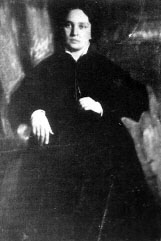
Maria Yudina
Maria Yudina (1899-1970). In addition to being a world-class pianist, Yudina also studied theology. She taught at both the Petrograd Conservatory and Moscow Conservatory. She became known for her advocacy of challenging modern music in a political environment that discouraged its propagation.
Final Years
In 1922, Blumenfeld and his cousin Heinrich Neuhaus were instructed by a government official to move to Moscow to teach at the conservatory there.
Blumenfeld would teach in Moscow until he died in January 1931.
Upon his death, he left behind a legacy of incredibly talented students and dozens of striking compositions.
For more of the best in classical music, sign up for our E-Newsletter