Friedrich Wieck – Clara Schumann’s much-maligned father – is one of the great villains of classical music history, infamous for how he tried to keep Clara and her future husband Robert Schumann apart.
However, Wieck had a fascinating biography apart from Robert and Clara’s love story, and today we’re taking a closer look at it.
Friedrich Wieck’s Childhood and Education
Friedrich Wieck was born to an unsuccessful merchant and his wife on 18 August 1785 in Pretzsch, Germany, a town sixty kilometers from Leipzig. He was the only family member with any musical talent.
In 1798, the year he turned thirteen, Friedrich began attending the Leipzig Thomas-Schule, one of the oldest schools in the world. Johann Sebastian Bach had worked there as music director from 1723 to 1750. However, after just six weeks, Friedrich had to drop out due to illness.
In 1800, he enrolled at a school in Torgau. While there, he took a grand total of six hours of piano lessons. Astonishingly, those six hours would be the only formal music training he’d ever have.
He attended college in Wittenberg and began studying theology with the goal of entering the ministry, but that goal would never come to fruition.
Instead, between 1803 and 1812, he worked as a tutor, specialising in working for wealthy families.
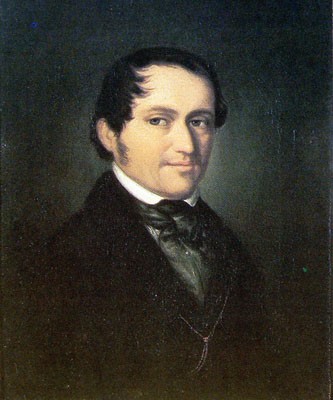
Friedrich Wieck
Friedrich Wieck’s Unlikely Musical Career
Despite the fact that he only attended his first big concert in his twenties, he began to dream of pursuing a career in music.
During this time, he befriended a music teacher named Adolph Bargiel. This friendship would prove to be hugely consequential.
In 1815, the year he turned thirty, he composed a set of songs and sent them to composer Carl Maria von Weber, who had mixed feelings about their worth.
These songs were published and reviewed in the Allgemeine musikalische Zeitung (General Music Newspaper), a hugely influential weekly periodical.
The feedback was positive enough that Wieck decided to embrace a career change. He moved to Leipzig and began teaching piano, administering a sheet music rental business, and selling instruments, hoping to scrape together a living in music.
Marriage and Children
On 23 June 1816, Friedrich married one of his students, a famous singer and pianist named Mariane Tromlitz, who sang at the prestigious Gewandhaus on a weekly basis.
The marriage was not just a love match; it granted him social cachet. Mariane also helped him with his business by teaching Wieck’s advanced students.
Their first child, Adelheid, was born in 1817 but died the following year.
After Adelheid’s death, in September 1819, they had their second child, Clara.
Friedrich chose the name because he thought its meaning – brightness, clarity, fame – would be fitting for a piano virtuoso.
Additional children followed: Friedrich Alwin Feodor Wieck in 1821, Gustav Wieck in 1823, and Victor in 1824.
A Nightmare Marriage
Despite his total lack of qualifications, Friedrich desperately wanted to become a great piano teacher – and, perhaps just as importantly, to be known as a great piano teacher. He always had a pressing need to prove his doubters wrong.
In part because of this, Friedrich was a difficult man to live with. He had high standards; he held everyone around him to them, and he wanted to control both his career and his musical family.
Not surprisingly, his marriage began to crumble. As it did, Mariane fell in love with Friedrich’s friend, Adolph Bargiel. In 1824, Mariane left her husband for Bargiel, and in 1825, the two were married.
According to German law at the time, fathers exercised control over their children after divorces. So after Clara turned five years old, she came to live permanently with her father.

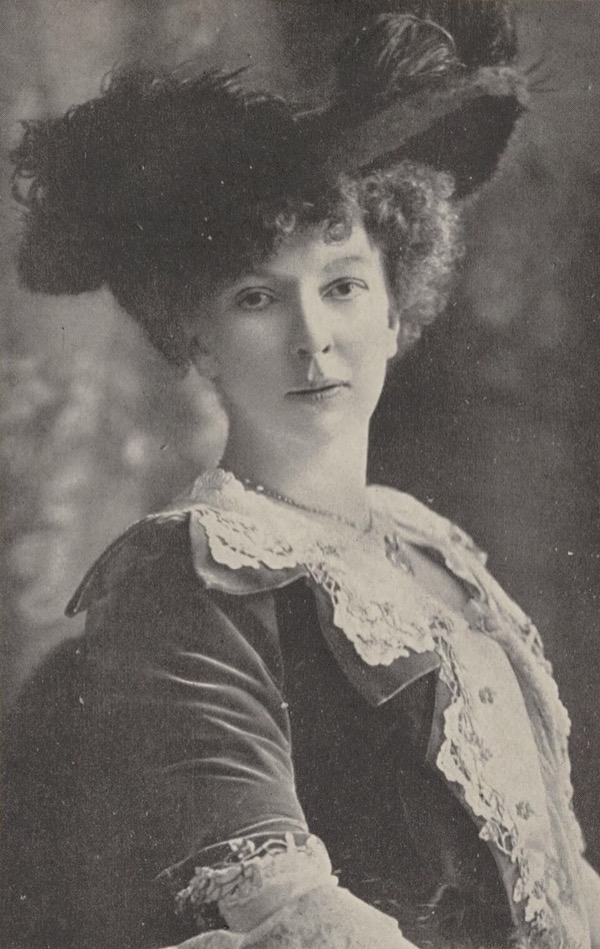
Clara Wieck at 16 years old
Teaching Clara
Mariane had been Clara’s first piano teacher, but after Mariane left, Friedrich took over Clara’s lessons.
He insisted that those lessons be rigorous and methodical. He desperately wanted his daughter to become a kind of walking billboard for his teaching and music supply business.
Little Clara was required to take a one-hour daily lesson, then expected to practice for two hours a day on top of that.
In addition to piano, she studied elements of theory like counterpoint and harmony, as well as violin and singing.
Friedrich also taught her the languages she would need to speak once she became a traveling virtuoso. However, her general education fell by the wayside, which would turn into a lifelong insecurity.
Friedrich made Clara keep a joint diary, a document that is today both fascinating and horrifying. He would often assume her identity, writing as if he were her.
Sometimes he would write about how lazy and obstinate she was.
He also used the diary as a pedagogical tool, forcing Clara to copy letters having to do with choosing repertoire and negotiating fees with concert promoters.
Clara Schumann’s piano concerto, composed between 1833-35
Meeting Robert Schumann
In March 1828, when Clara was eight and a half years old, she played a fateful performance at the Leipzig home of Ernst Carus, a socially prominent administrator of a local mental hospital.
One of the guests present was a seventeen-year-old pianist named Robert Schumann, who was astonished by the virtuosity of the little girl.
Friedrich’s ploy to attract students was working. Dazzled by Clara, Robert began studying with Wieck, going so far as to rent a room in the Wieck house for a year to be near him.
While he lived with the Wiecks, he was horrified to see Friedrich physically abuse Alwin Wieck, with no reaction from Clara.
An unnerved Robert famously wrote in his diary after witnessing the abuse, “Am I among human beings?”
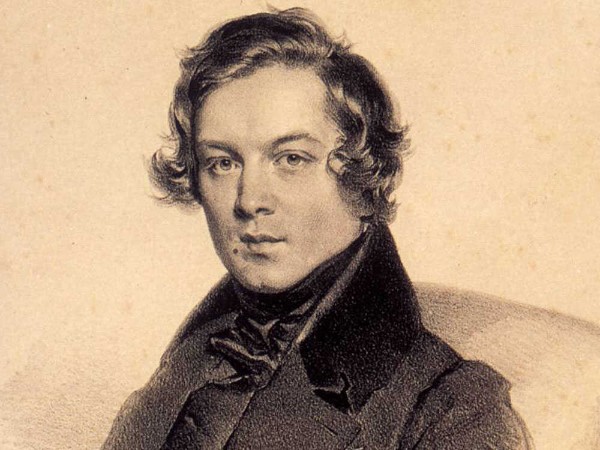
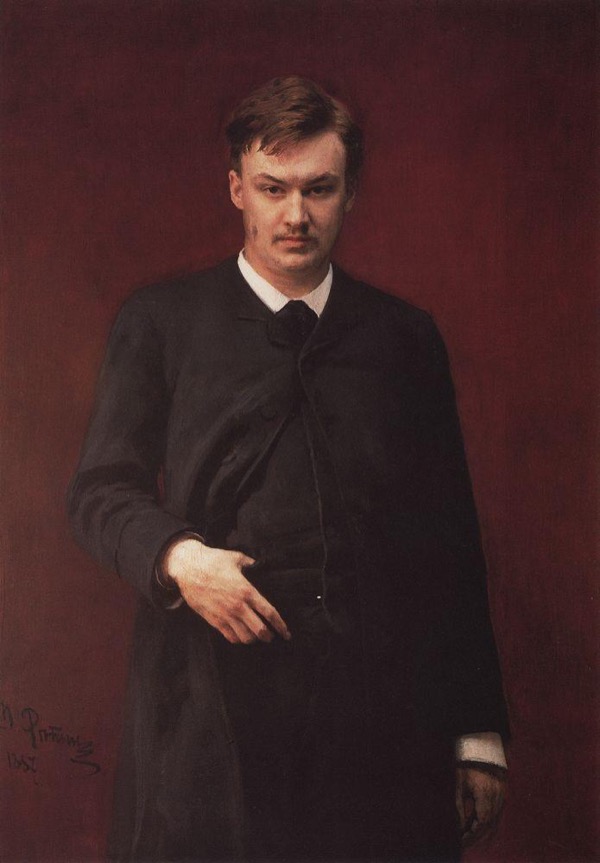
Robert Schumann
Friedrich Wieck’s Remarriage
After his divorce, Friedrich remarried on 3 July 1828 to a 23-year-old woman named Clementine Fechner, who was closer in age to Clara (who was eight years old at the time) than Friedrich (who was forty-two). This created hostile dynamics between the two Wieck women.
Friedrich and Clementine had three children: Clemens in 1829, Marie in 1832, and Cäcilie in 1834.
Marie’s life and career were especially interesting: she was groomed to become Clara 2.0, but was ultimately less successful than her older half-sister.
Clara’s Career Takes Off
In 1828, the month after she turned nine, Clara made her debut at the Gewandhaus. It was the beginning of a major international career.
In 1831, she began touring Europe at the age of twelve alongside her father. Her touring schedule was brutally demanding, but Clara made major impressions everywhere she went, often garnering reviews as glowing as those of Liszt’s or Paganini’s.
Friedrich’s life on tour is described by Clara Schumann biographer Nancy Reich in her book Clara Schumann: The Artist and the Woman:
All the concert arrangements were in Wieck’s hands: he made the required rounds of visits to impress important people; he secured the permission of the police; he rented the concert halls; he borrowed or rented the pianos for practice and performance; he had posters and programs printed; he prepared publicity for the newspapers; he paid a visit to Mendelssohn‘s mother.
“The amount of work is frightful,” he wrote, but he did not forget to mention the many contacts he was also making for his piano business.
Clara Wieck’s Nocturne, 1834
Clara Falls In Love With Robert Schumann
In 1837, Clara and Robert Schumann, who had stayed in touch, fell in love. He proposed, and she accepted.
Friedrich was apoplectic: he did not want his walking billboard to start promoting another man.
He threatened to sever ties with her, disinherit her, and sue her for lost income, among other things. He started sending letters to contacts across Europe, denouncing Clara. He even threatened to shoot Robert.
The young couple went to court to get permission to marry and to sue Friedrich, and ultimately they emerged successful. Wieck was forced to pay them a large amount, and Robert and Clara married the day before her 21st birthday in 1840.
Friedrich was predictably bitter about this outcome and acted out. He forbade Clara from moving her piano out of the Wieck household. Humiliatingly, a court had to order its relocation.
Clara Schumann’s 4 Pièces fugitives, 1840
Reconciliation
Despite their turbulent relationship, Clara longed for reconciliation with Friedrich. In 1841, she sent birthday greetings to him, which he didn’t respond to.
However, a few years later, after Robert enjoyed triumphant premieres of two symphonies, Friedrich apparently rethought his position. He’d long claimed that Robert wasn’t a serious composer because he hadn’t produced a symphony, and his anger toward him seems to have softened somewhat after Robert did.
Robert Schumann’s first symphony, 1841
Friedrich began to approach the topic of rapprochement, suggesting that the whole family could be reconciled if they just ignored the conflicts of the previous years. Given his past behaviour, it was an audacious suggestion, but Clara was willing to accept the terms in order to reconcile with the parent she felt she owed everything to.
In 1843, after she had her first two children, Clara began visiting her father. In December, the entire family, including Robert, met and spent time together.
Although everyone was civil to each other, the intra-family relationships never fully recovered.
Later Life
Later in life, Friedrich focused on promoting the career of Marie Wieck, but she never caught fire the way her half-sister Clara had.
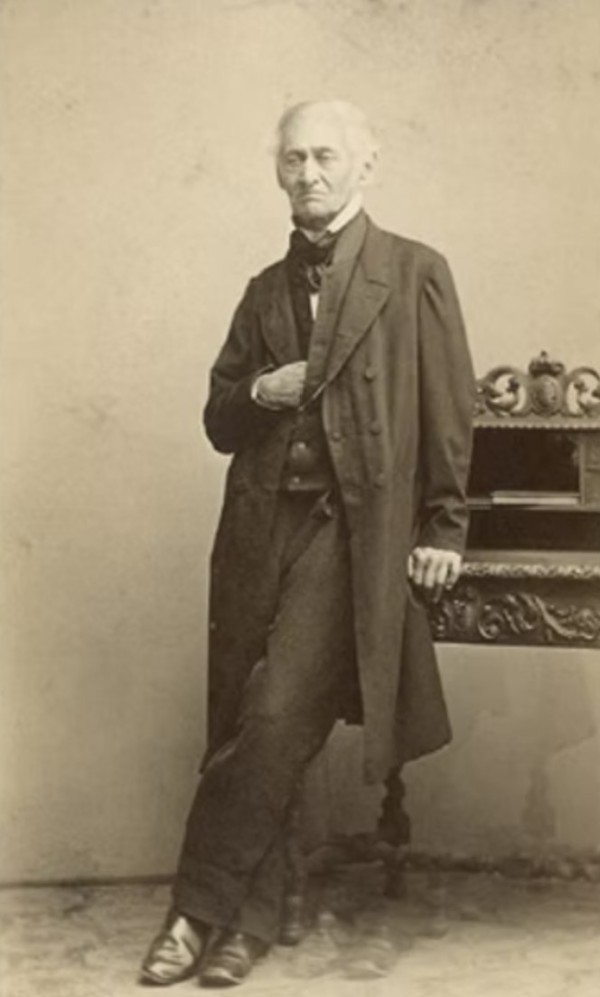
Friedrich Wieck
Wieck kept his name in the spotlight by publishing pedagogical material for music lovers curious about the training of Clara Schumann, whose post-marriage career was cementing her reputation as one of the greatest musicians of the nineteenth century.
Friedrich Wieck’s Study No. 65
Friedrich Wieck died in 1873. Despite the dysfunction and drama of her relationship with her father, Clara remained grateful for his influence for the rest of her long life.
She wrote to a biographer after his death:
To my sorrow, I must say that my father was never recognised as much as he deserved it! I even thank him for his so-called cruelties all my life. How would I ever have been able to practise art and continue to live with all the heavy blows I had to suffer, if my constitution had not been so healthy and strong thanks to my father’s care?
As much as people love to hate Friedrich Wieck, the great villain of classical music, perhaps it’s a valid question.
For more of the best in classical music, sign up for our E-Newsletter