One of the wonderful aspects of the 1937 International Exhibition held in Paris was the amount of music written for the fair.
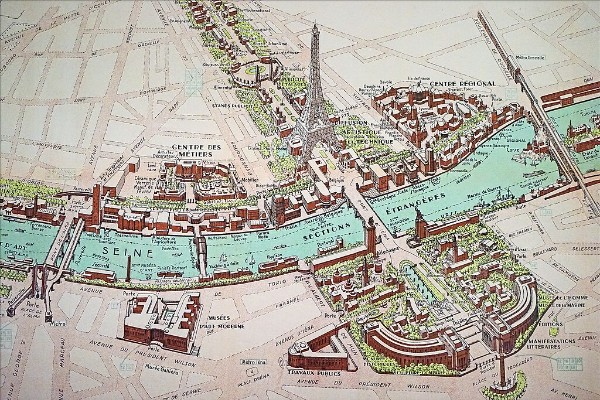
Jean-Pierre Dalbèra: Map of the exhibition, 1937
Centred on the Jena Bridge and the Eiffel Tower, the exhibition involved buildings up and down both sides of the Seine and on the Champs de Mars that runs under the Eiffel Tower. We wrote earlier on the music written for the 1937 International Exhibition, but there were also other musical works on display.
The Paris publisher Max Eschig commissioned a set of works for the piano. Published as Parc d’attractions Expo 37, it contained works by both French and foreign composers. The French composers include Milhaud, Honegger, Mompou and foreign composers associated with the Paris School: Ernesto Halffter, Bohuslav Martinů, Alexander Tcherepnin, Alexandre Tansman, Marcel Mihalovici, and Tibor Harsányi. The collection, as a whole, was dedicated to the French pianist Marguerite Long.
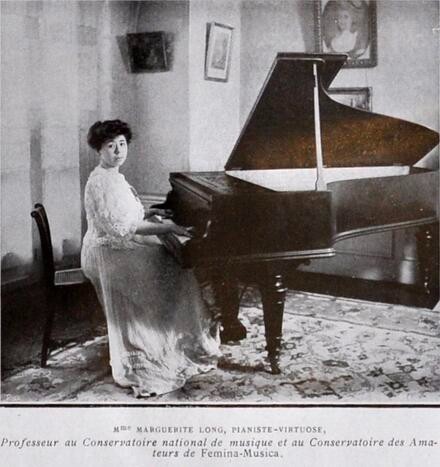
Marguerite Long
The opening work, by Ernesto Halffter, who originally came from Spain, is a sendup of all things Spanish in music in the hands of foreigners. You might remember that there was a big business in both French, German, and Russian music writing music about the composers’ visits to sunny Spain.
In his brilliant piano work, L’Espagnolade (The Spanish Day), he takes all the tired clichés that were associated with Spanish music and links them all together in a bravura work both takes us to Spain and makes us laugh in self-realization at our own beliefs. And, to add to the sense of vague familiarity, he uses the first Spanish Dance from Manuel de Falla’s La vida breve as his point of reference.
Manuel de Falla: La vida breve, Act II: Danse espagnole No. 1 (arr. E. Pujol for 2 guitars) (Andrew Blanch, guitar; Ariel Nurhadi, guitar)
It’s just a hint of Falla, not Falla in its entirety. Falla wrote his opera between 1904 and 1905, but couldn’t get a performance in Spain. He finally secured its performance (in French) in Nice in April 1913. Debussy suggested a revision of the work to make it not a number opera (proceeding from number to number) but to make it continuous and to improve the orchestration. This revised version made its debut at the Opéra-Comique in December 1913.
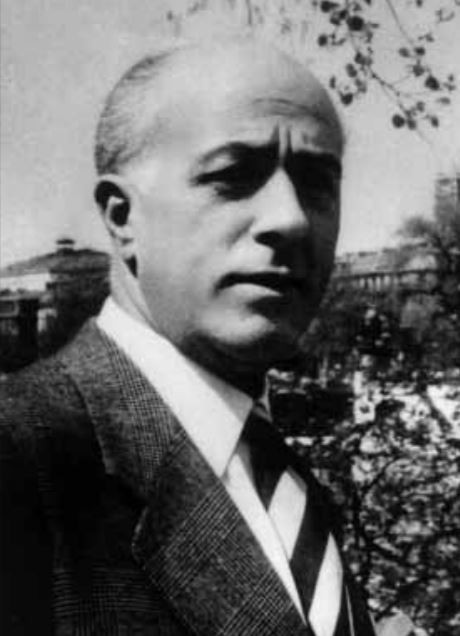
Ernesto Halffter
Twenty-five years later, Halffter wrote his L’espagnolade. Halffter was born in Madrid in 1905, and both his older brother and his nephew were composers. Halffter met Falla in 1923, and they were friends for years. Halffter received composition lessons from the older composer, so his use of a version of music from La vida breve wasn’t a slam at his teacher!
What Halffter was taking issue with was that most pieces in a ‘Spanish’ style were written as though the entire country only knew about Andalusian flamenco. The guitar imitations, the drag rhythms, the triplets decorating the melodies, and the old-fashioned Phrygian cadences were all elements of flamenco, but not what the Spanish composers would consider really ‘Spanish’.
Ernesto Halffter: Parc d’attractions: L’espagnolade (Adam Kent, piano)
By taking all those little pieces and making his mock-serious spoof of Spanish music and then having it played by the leading French virtuoso pianist of the day, Halffter is also asking us to think about what Spain could really represent.
At the 1937 International Exhibition, the Spanish pavilion was the centre for some of the strongest political art in Paris, most notably because of the inclusion of Picasso’s Guernica, along with antifascist works by Alexander Calder (Mercury Fountain) and Juan Miró (The Catalan Peasant in Revolt).
Calder created his Mercury Fountain (which, indeed, flowed with mercury and not water) because the Spanish government was focusing on the mercury mines in Almaden, in southwest Spain, and he was given some 200 litres of mercury for his fountain.
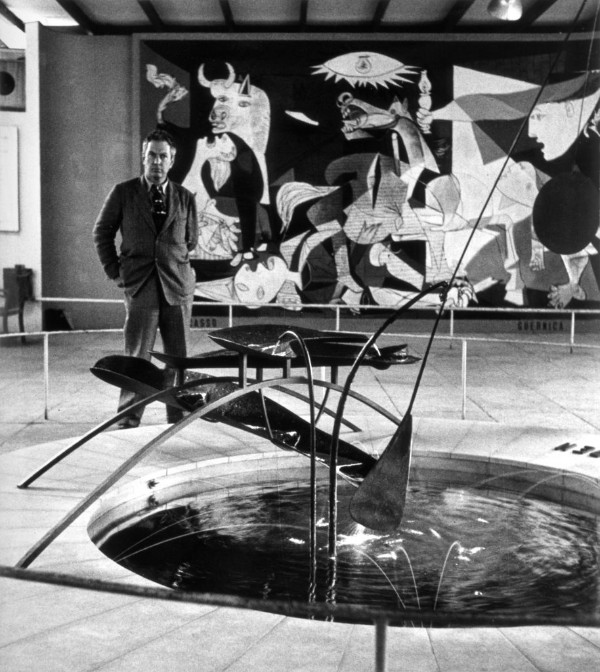
Calder with Mercury Fountain in the Spanish Pavilion at the Paris World’s Fair, July 1937 (Photograph by Hugo P. Herdeg © Christian Herdeg
One beneficial side effect of the fountain was that its density meant coins would float on its surface, so viewers would pitch coins. Calder reports that it wasn’t uncommon for 300 francs a day to be collected, to be used ‘for the benefit of the Spanish children’.
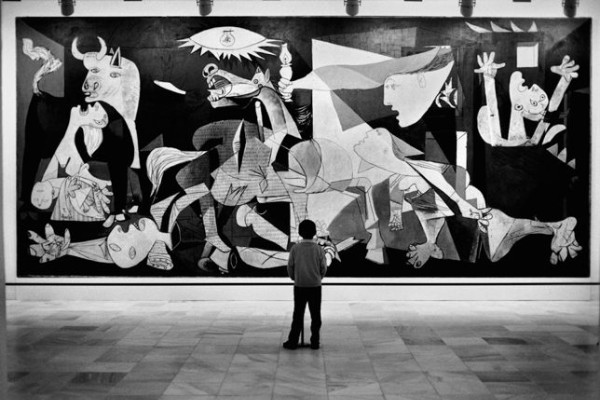
Picasso: Guernica, 1937
Guernica, with its passionate portrayal of the havoc of war, is now in the Museo Reina Sofía in Madrid. Miró’s work has been lost since 1938.
Halffter’s work is funny and fast, but behind it all were the aching problems of Spain in turmoil. When we think about what Spain in 1937 meant, it wasn’t just flamenco and flouncy dresses. It was more than guitars in the evening. There was something more that should be listened to (and watched for).
For more of the best in classical music, sign up for our E-Newsletter