This year’s 124th season opener of the Minnesota Orchestra on September 25th in Minneapolis was a smash. In fact, the packed audience leapt to their feet as did I. Conducted by Music Director Thomas Søndergård, the program included George Walker Icarus in Orbit, Prokofiev Piano Concerto No. 2 in G minor Op. 16 with Ukrainian-born pianist Vadym Kholodenko and the entirety of Stravinsky’s The Firebird. The distinctive feature of the program was that Tal Rosner, the outstanding prize-winning video artist, added his remarkable video conception to the famous story from Slavic mythology and folklore that has fascinated audiences since its premiere.
Through his designs, Rosner has enhanced the experiences of audiences and performers in concerts, theatre and dance productions, and at museums and other events. His many accomplished undertakings have included a collaboration with composer David Lang and the Bang on the Can All-Stars. The work “before and after nature” with director Tom Morris presented a semi-staged performance of Mahler’s Eighth Symphony held at the Southbank Centre in London, and also with the San Francisco Opera for their inaugural Pride concert.
In theatre, his conception of Hunger Games on Stage premiered in 2025, and Rosner was the video designer for the blockbuster exhibit DIVA at the Victoria and Albert Museum in London, England.
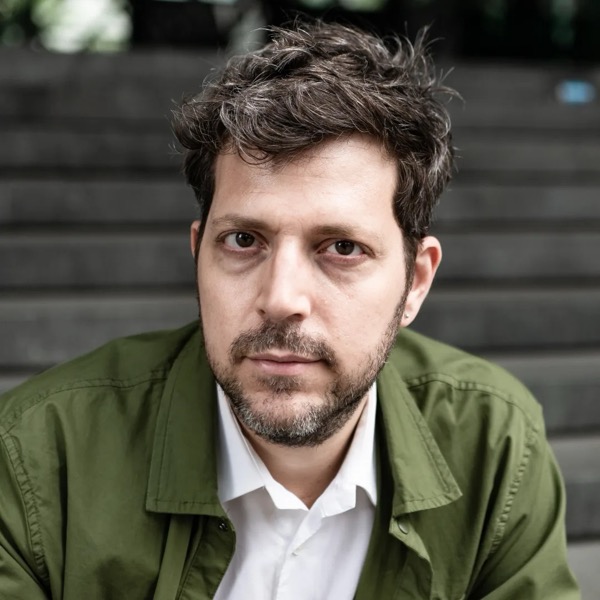
Tal Rosner © Garry Maclennan
Last season we experienced Rosner’s mesmerising take on a semi-staged version of https://interlude.hk/bartok-duke-bluebeards-castlepremiered-today-1918/Bartók’s one-act opera Bluebeard’s Castle, and so I was really looking forward to what he has conceived for the Firebird.
The evening’s experience included wonderful artwork from the Minneapolis Museum of Russian Art displayed in the lobby before the concert as well as a short dance performance inspired by the story of the Firebird.
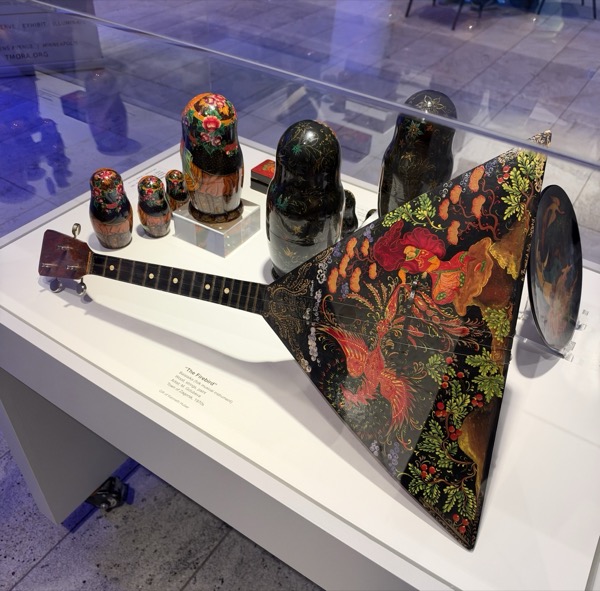
The Firebird Balalaika folk instrument
Artist: M. Golubeva 1970s
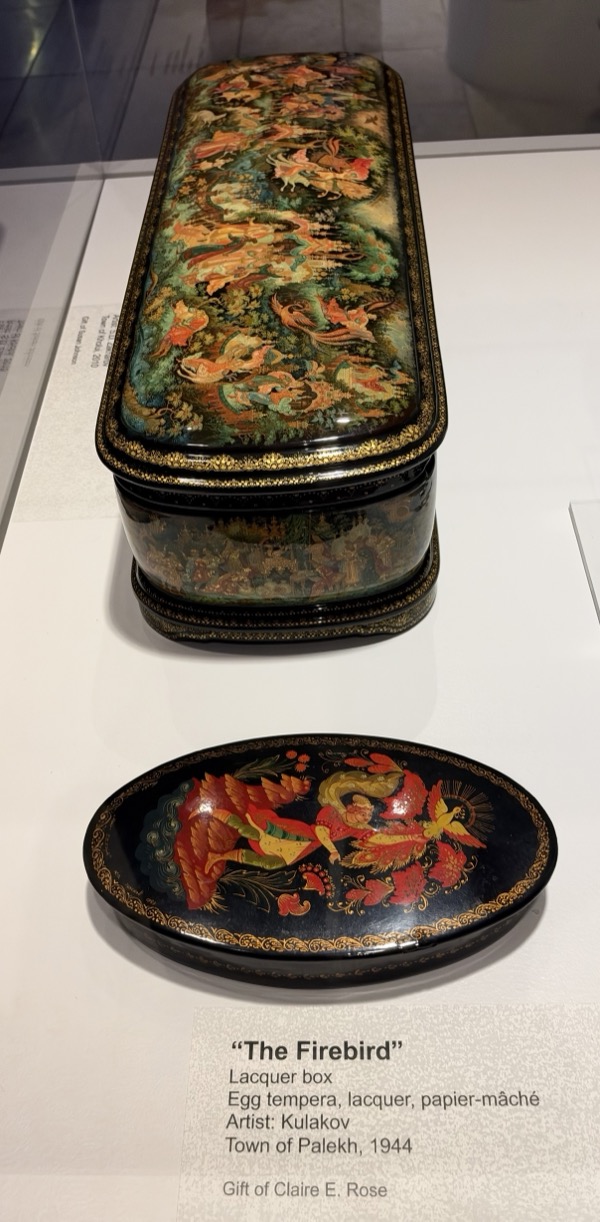
The Firebird Lacquer boxes
The long one is “Ivan Tsarevich The Firebird and Grey Wolf” – A. D. Zakharov 2010
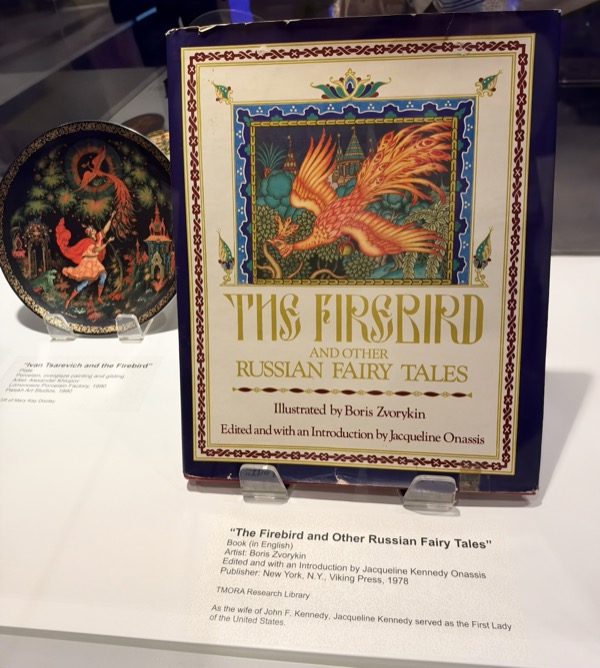
The Firebird artwork
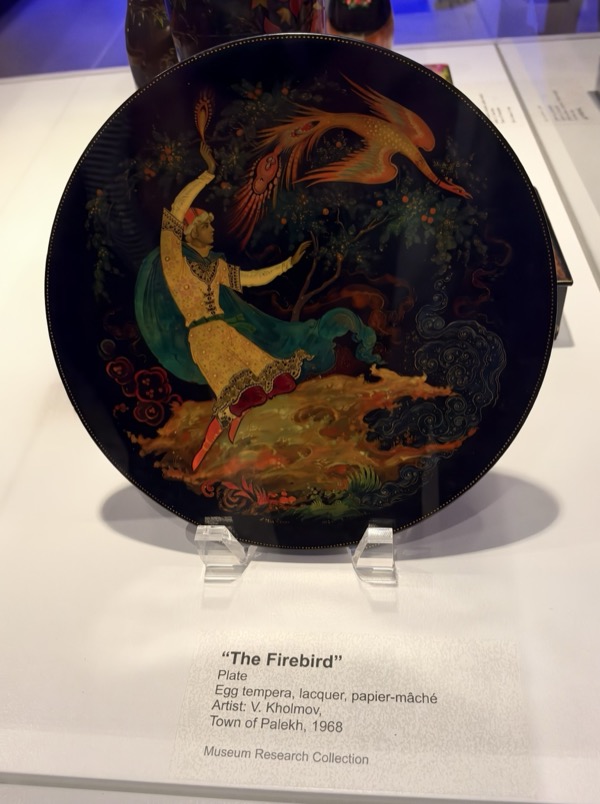
The Firebird artwork
American composer George Walker’s Icarus in Orbit premiered in 2004 and features the musical and moral tale of the Greek character Icarus. He defied his father’s instructions not to fly too close to the sun to escape the island of Crete where he and his father were trapped. The music reflects the melting of Icarus’s wings as he flies dangerously close to the heat of the sun. The short work ends with belligerent crashes.
The Prokofiev Concerto, in four movements, is an astounding display of the composer’s compositional skills requiring virtuosity from the pianist, the orchestra, and the conductor. Each movement represents a breathtaking array of sonorities and complexity. Just the finale Allegro Tempestoso is a world unto itself, with a second extended cadenza and stunning power. Prokofiev employs the entire keyboard and huge orchestral forces to conclude this dynamic piece. Gold medalist of the Van Cliburn International Piano Competition, the pianist Vadym Kholodenko performed with spectacular virtuosity, breakneck tempos, and strong command. Listen to the last movement.
Sergei Prokofiev: Piano Concerto No. 2 in G Minor, Op. 16: IV. Finale: Allegro tempestoso (Yundi Li, piano; Berlin Philharmonic Orchestra; Seiji Ozawa, cond.)
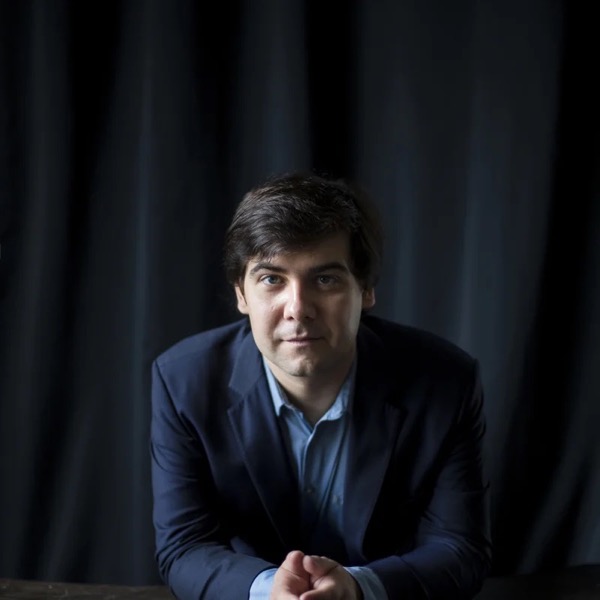
Vadym Kholodenko © Ira Polyarnaya
The Firebird in its original version from 1910 was a huge success when it premiered in Paris in June of that year, Stravinsky’s first collaboration with the Ballets Russes. The entire work runs about 45 minutes, whereas the much-loved and often-played 1919 suite is about 20 minutes. This music is wonderful on its own, but since it’s originally conceived as a ballet, it lends itself to a visual interpretation.
The orchestration is massive, with 3 flutes, piccolo, 3 oboes, English horn, 3 clarinets, E-flat clarinet and bass clarinet, 3 bassoons, contrabassoon, 4 horns, 3 trumpets, 3 trombones, tuba, timpani, an array of percussion, 3 harps, piano, celesta, and strings. Offstage, we also heard 3 trumpets, bells, and, unusually enough, 2 tenor Wagner tuben and 2 bass Wagner tuben.
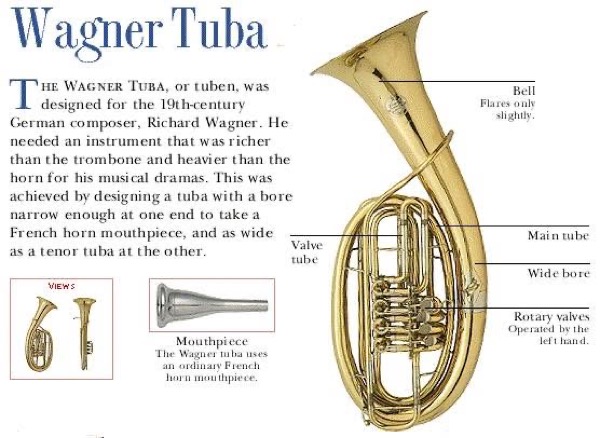
Wagner tuben
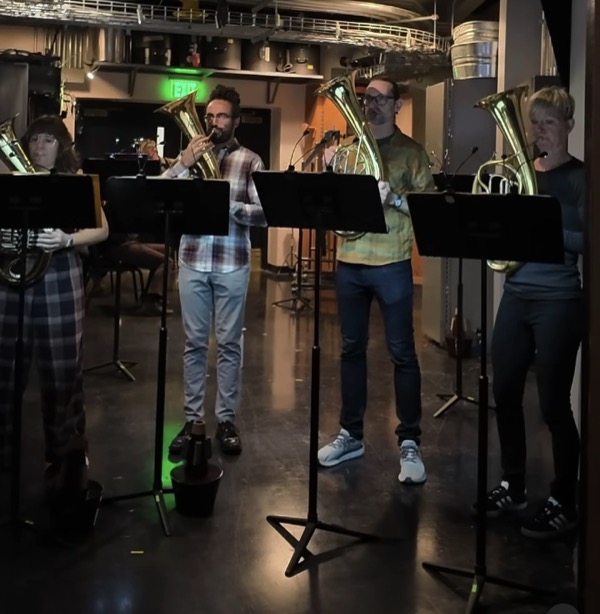
Wagner tuben
The tuben are typically heard in works of Bruckner and Wagner, but other composers also used them, such as Strauss in Alpine Symphony and his opera Elektra, Bartók in Piano Concerto No. 3, and Schoenberg in Gurrelieder. It’s a hybrid instrument with a dark, warm tone usually played by the French horn player.
Orchestra Hall in Minneapolis is known for its wonderful acoustics and for the architectural feature of 114 cubes on the back wall and ceiling to disperse the sound. Rosner’s visual depictions of the enchanted saga were mainly abstract, and he took advantage of the cubes behind the orchestra as well as the edges of the balconies to enhance his projections.
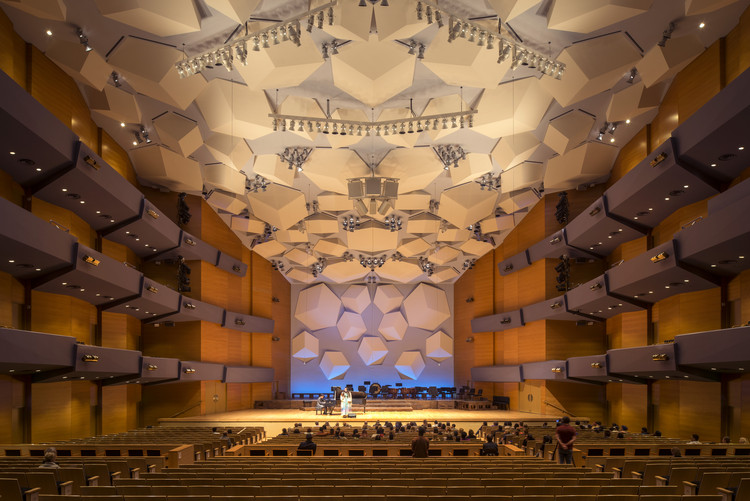
Orchestra Hall in Minneapolis © Nic Lehoux
The piece opens in this version and in the suite with menacing pp low strings slowly introducing the story. There are lovely harmonic effects. This leads into Night: Kastchei’s enchanted garden, with ponticello effects in the strings that are playing on the bridge for a glassy, scratchy sound. The Firebird enters, pursued by Ivan Tsarevich, the harp prominent. Let’s hear some of Stravinsky’s own interpretation from a recording with the Columbia Symphony Orchestra.
Igor Stravinsky: The Firebird: Introduction (Columbia Symphony Orchestra; Igor Stravinsky, cond.)
Igor Stravinsky: The Firebird: Scene 1: Night. Kastchei’s Enchanted Garden (Columbia Symphony Orchestra; Igor Stravinsky, cond.)
Igor Stravinsky: The Firebird: Scene 1: The Firebird enters, pursued by Ivan Tsarevich (Columbia Symphony Orchestra; Igor Stravinsky, cond.)
The thirteen princesses enter. The strings are muted, and there are lovely solos in the strings, flute, oboes, and clarinets. The princesses then play with the golden apples. This is lovely and charming music.
Igor Stravinsky: The Firebird: Scene 1: Entrance of the Thirteen Enchanted Princesses (Columbia Symphony Orchestra; Igor Stravinsky, cond.)
Igor Stravinsky: The Firebird: Scene 1: The Princesses play with the golden apples (Scherzo) (Columbia Symphony Orchestra; Igor Stravinsky, cond.)
The Magic Carillon depicts the appearance of Kastchei’s guardian monsters, his entrance and the dialogue with Ivan Tsarevich. The music becomes nasty and threatening in the horns and other brass.
Igor Stravinsky: The Firebird: Scene 1: Magic Carillon – Appearance of Kastchei’s Guardian Monsters – Capture of Ivan Tsarevich (Columbia Symphony Orchestra; Igor Stravinsky, cond.)
Igor Stravinsky: The Firebird: Scene 1: The entrance of Kastchei the Immortal (Columbia Symphony Orchestra; Igor Stravinsky, cond.)
Igor Stravinsky: The Firebird: Scene 1: Dialogue between Kastchei and Ivan Tsarevich (Columbia Symphony Orchestra; Igor Stravinsky, cond.)
The familiar Infernal Dance of Kastchei and his subjects under the Firebird’s magic spell is terrifying, with brilliant trumpets, piercing piccolos, and a driving rhythm. The Firebird’s lullaby is beautiful writing for the bassoon in conversation with the mournful oboe.
Igor Stravinsky: The Firebird: Scene 1: Infernal Dance of Kastchei and his subjects under the Firebird’s magic spell (Columbia Symphony Orchestra; Igor Stravinsky, cond.)
Igor Stravinsky: The Firebird: Scene 1: The Firebird’s Lullaby (Columbia Symphony Orchestra; Igor Stravinsky, cond.)
The piece ends with Kastchei’s spell broken, his place disappears, and there is general thanksgiving. The solo horn introduces the triumphant ending. The brass dominates while the strings play tremolo, and the piece ends with a huge final cymbal crash.
Igor Stravinsky: The Firebird: Scene 2: Kastchei’s spell is broken, his palace disappears, and the Petrified Knights return to life. General Thanksgiving (Columbia Symphony Orchestra; Igor Stravinsky, cond.)
The swirling images and whimsical, sinuous shapes followed the rhythms of the music more than the actual story, although Rosner did depict the magic feather, the masked monstrous faces of the inhabitants of the castle, the red flames of the fiery Infernal Dance, and finally, accompanying the noble horn solo, the enchanted appearance and rise of the cathedral. The timing with the orchestra was perfect.
The orchestra musicians sounded magnificent, with especially fine playing from the principal horn, gentle and lovely bassoon and flute playing, an astonishing solo on the xylophone, intense trumpet playing, and dazzling strings.
The works of the program complemented each other well, I thought—each with their worlds of fabulous colours, range of dynamics and sonorities, and breathtaking power.
And here’s an historical tidbit: the orchestra, formerly known as the Minneapolis Symphony, performed this very piece with Igor Stravinsky at the helm in 1940, and thirty years later in the 1960s, conducting once again, this time his Rite of Spring.
After tumultuous applause, Søndergård took the microphone, thanked the audience for supporting this wonderful orchestra, and announced that there would be further collaborations with Rosner in a new series with a visual dimension entitled Sound Unbound. It bodes well for drawing in younger audiences who are accustomed to fanciful visuals and multidimensional experiences.
For more of the best in classical music, sign up for our E-Newsletter