Manuel Blancafort (1897-1987) had the ideal exposure to the world via his parents’ hotel, located in the spa town of La Garriga, near Barcelona. Artists, intellectuals, and politicians all came to the resort. Another influence was unexpected. In addition to his hotel, his father also established a factory in the town to produce pianola rolls, thus providing the young Blancafort with his own music school.
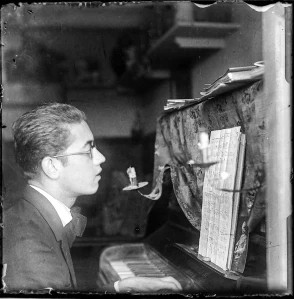
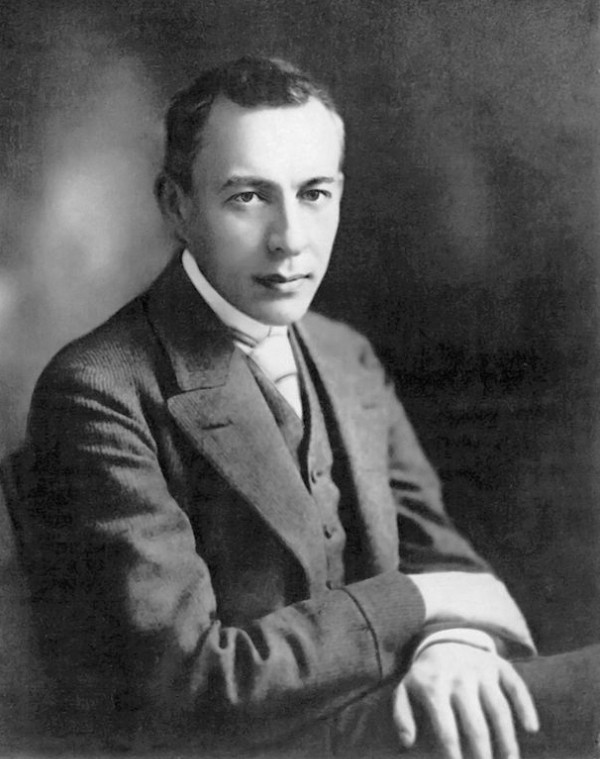
The young Manuel Blancafort, 1916
(Fons Manuel Blancafort (Biblioteca de Catalunya))
He had started his music study with his father, a specialist in choral music. The true test of his piano skills came in the La Victoria pianola factory, where he was responsible for creating the music rolls after examining the scores. All the current music styles of the day, from Debussy to Schoenberg, came through for conversion and examination and became his introduction to the current fashions in music. At the hotel, visitors such as Frederic Mompou looked at his early compositions and offered their insights. He also travelled to the US as a representative of the La Victoria company, and also to find out the current state of manufacture, visiting Chicago and New York.
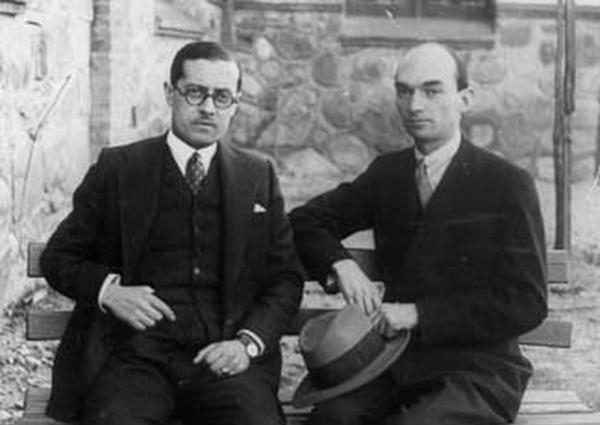
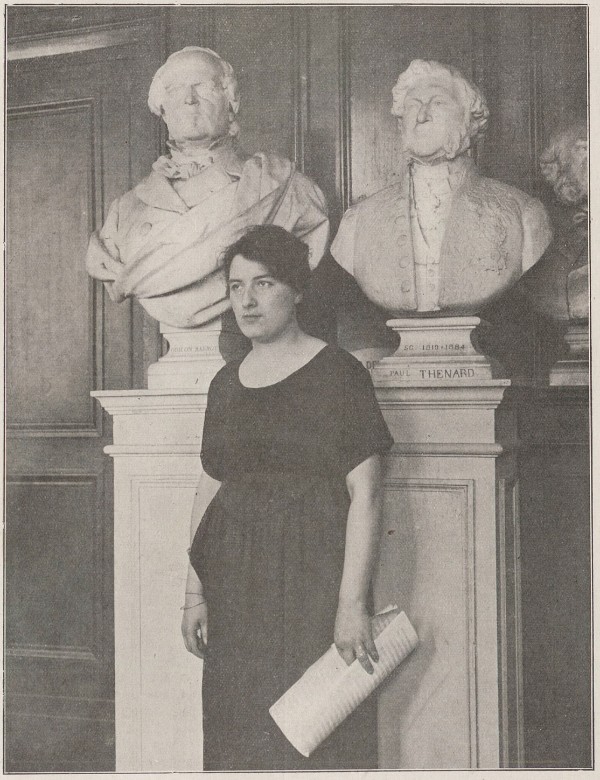
Manuel Blancafort and Mompou, 1922 (Fons Manuel Blancafort (Biblioteca de Catalunya)
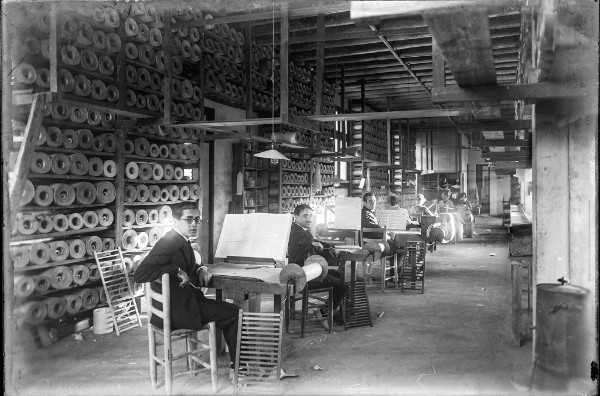
Manuel Blancafort at the pianola-roll factory, before 1930 (Fons Manuel Blancafort (Biblioteca de Catalunya)
Mompou was also Blancafort’s guide through 1920s Paris when he arrived there. His promising start as a composer was cut short by social problems (The Spanish Civil War), family problems (his father’s factory was closed after the gramophone became popular) and personal problems (he had 11 children). He returned to Barcelona and, like Charles Ives, worked for an insurance company. With the help of his wife, he was able to carve out time to compose and build up a substantial works list.
We have forgotten how closed and isolated Spain was during the Franco years, and, as a consequence, Blancafort’s music wasn’t widely known outside the country. However, inside Spain, he regularly won prizes and official notice from 1949 until his death in 1987 at age 90.
Blancafort’s first international hit, El parc d’atraccions (Fun Fair), had its premiere in Paris with the Spanish virtuoso pianist Ricardo Viñes. Viñes is familiar through his connections with Debussy and his contemporaries. He championed them and was a member of Les Apaches with them. They dedicated their works to him. He gave the premieres of works by Ravel, Debussy, Satie, Falla, Albéniz, and many others in 1920s Paris. As a teacher, his students included Francis Poulenc and Joaquín Nin.
Viñes gave the premiere of El parc d’atraccions in 1926. Blancafort had finished the work in 1924 and, in the work, skilfully combined French impressionism and the ideas being bandied about by Cocteau and Les Six. Catalan folklore also had a place. One of the important structural points was the use of cyclic form, where theme can reappear but may be transformed in their new versions.
Using the very Spanish idea of a fiesta, Blancafort gives us 6 images of the fair’s activities – all of the atmosphere, the colour, the humour (and the irony) come through in the music.
We open with L’orgue dels cavallets – The organ of the little horses – but in actuality a carousel. We can hear the galloping horses, frozen forever in position, and the use of cyclic form is perfect for an attraction that goes around and around.
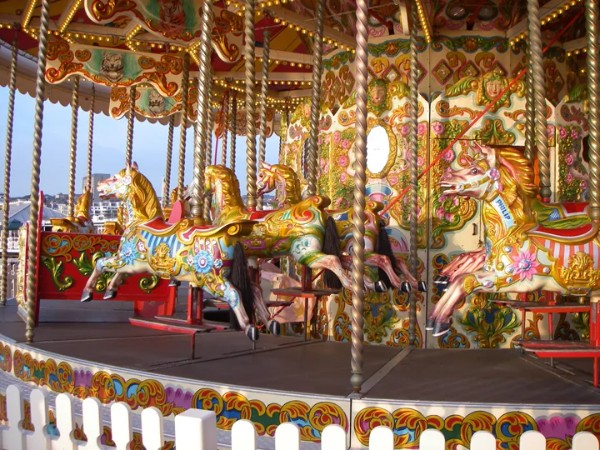
Carousel on the Palace Pier, Brighton, England (photo by Wonderlane)
Manuel Blancafort: El parc d’atraccions (Fun Fair) – I. L’orgue dels cavallets (Miquel Villalba, piano)
Next, the noise of the fun fair awakens memories, and we’re in a slightly melancholic mode.
Manuel Blancafort: El parc d’atraccions (Fun Fair) – II. El tumult desvetlla records (Miquel Villalba, piano)
In a very Debussy-like line, we sink into our memories. The same themes we’ve heard before return at different tempos and styles.
Manuel Blancafort: El parc d’atraccions (Fun Fair) – III. Abstraccions (Miquel Villalba, piano)
The dancer in the high-wire act prances along her wire, keeping our hearts in our mouths. One of the most widely known of the movements, it was published separately as a piano piece, orchestrated, and set by choreographers. The dancer Joan Magriñà danced it in 1932, with designs by Grau-Sala, in the Cine Urquinaona in Barcelona, taking it also to Switzerland in 1934 and Buenos Aires in 1935.
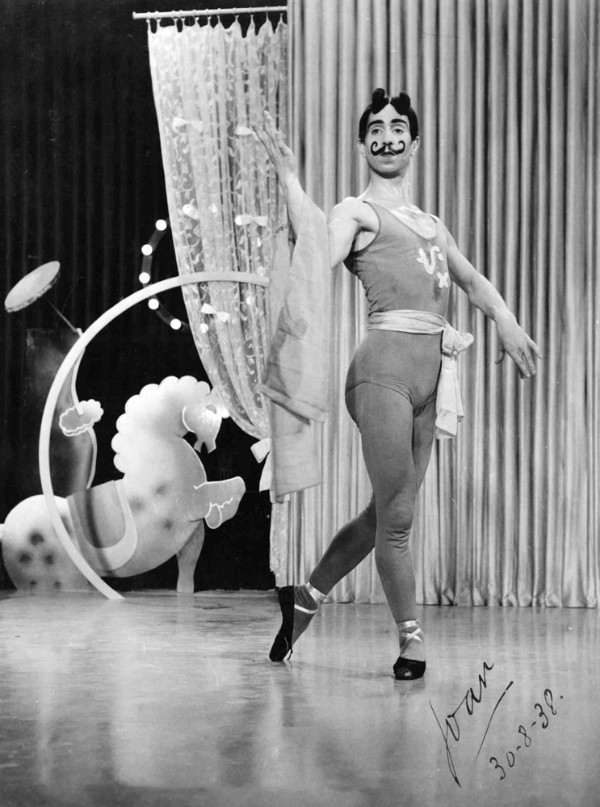
Joan-Magriñà in Polca de l’equilibrista
Manuel Blancafort: El parc d’atraccions (Fun Fair) – IV. Polca de l’equilibrista (Miquel Villalba, piano)
Up on the terrace, the military band gathers, their uniforms bright and their instruments glittering in the sunlight. Their music is less military and more on popular lines.
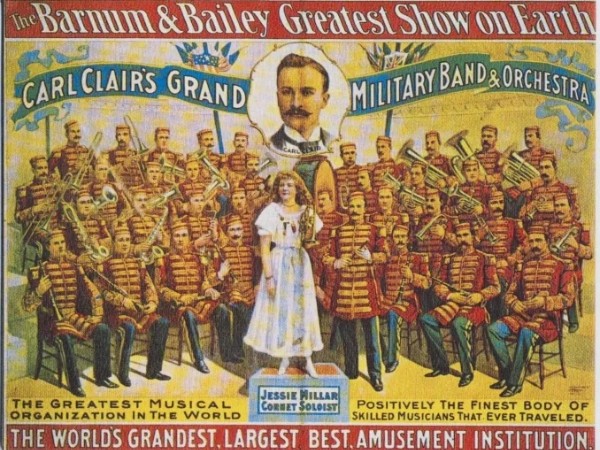
The Barnum & Bailey Circus with Carl Clair’s Grand Military Band and Orchestra
Manuel Blancafort: El parc d’atraccions (Fun Fair) – V. La terrassa i la musica militar (Miquel Villalba, piano)
We close our visit at the fun fair with dancing, showing off one’s fancy dress, a key part of circus performances. The work ends on a melancholy note, as we return home, tired, thinking of all we saw and experienced on our grand day out.
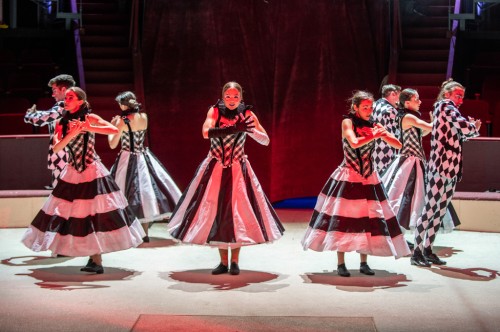
Circus dancing (Budapest Circus Arts and Contemporary Dance College)
Manuel Blancafort: El parc d’atraccions (Fun Fair) – VI. Prop del dancing (Miquel Villalba, piano)
Blancafort’s visit to the fun fair is probably a lot less dramatic than one might have thought for a work with that title. Perhaps it’s that this is the French and Spanish circus tradition, which is in a very different style than English or American circuses.
For more of the best in classical music, sign up for our E-Newsletter