The renowned Welsh actor Sir Anthony Hopkins (b. 1937) reveals a new facet to his talent with the release of his orchestral album, Life is a Dream on Decca. The CD has a mix of music, some of it sentimental tributes (My Fatherland), memories of the past (Margam and the 1947 Suite) and a recent work written for the Royal Philharmonic Orchestra’s performance in Riyadh, Saudi Arabia, in 2025.
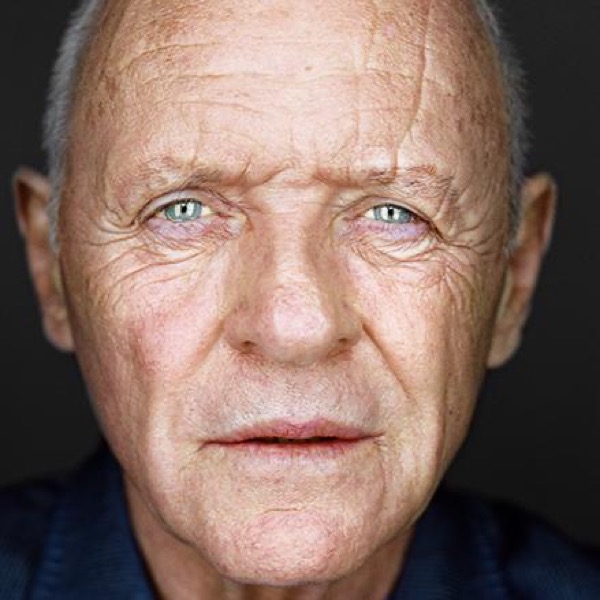
Anthony Hopkins
Some of this music was written in memory of films he’d seen as a child, such as Hamlet with a score by William Walton. The filmic quality of Fanfare and March comes through clearly, as does that of Margam, which he wrote for his film August. That 1996 film was an adaptation of Chekhov’s Uncle Vanya, transported to turn-of-the-20th-century Wales. Hopkins had asked the composer George Fenton to compose the score for the film, but Fenton was too busy and suggested that Hopkins write it himself, with Fenton’s oversight. The result is a lush and resonant look into the past.
The Suite for Orchestra, 1947, takes us back in time to his childhood. 1947 was the hottest summer on record in Wales. The 7-year-old Anthony goes to the circus with his grandfather in 1944, and it’s the elephant’s strength and power that remain forever in the child’s mind. Bracken Road is described as being ‘an homage to the slow movement of Elgar’s 1st Symphony, with the front desks of string players carrying the melody, and the remainder shadowing them with the harmony, interspersed with solo piano, muted trumpet, and clarinet’. At the same time, he’s remembering ‘the slow ballads of the Harry James Orchestra, and Jackie Gleason’. Hopkins developed the melody he began improvising in 1968, when he was at the Liverpool Playhouse. The final movement, The Plaza, takes him back to the Plaza Cinema in Port Talbot, which is where he discovered the great art form, film, that would become his passion. In this frenzied salsa, he ‘evokes the bright lights, excitement, and magic of the silver screen’.
Anthony Hopkins: Suite for Orchestra, 1947 — III. The Plaza
This is where we see some of the true genius of Hopkins’ music, where he’s able to pull in both the sound in your ear and the action in your eye, unforgettably brought together in film.
What’s different in these pieces is his use of voices. In My Fatherland, his tribute to his home country of Wales, he builds the work around 6 traditional Welsh melodies, with four of them sung in their original Welsh. The most distinctive of these is Men of Harlech. Written about the late 15th-century Siege of Harlech Castle during the Wars of the Roses, the song came to international recognition in the 1964 film Zulu and is still used as a military march, particularly by the Welsh Guards.
The Two Pieces for Orchestra that close the album are two tone poems on Middle Eastern themes, both in the story and in the music. He started with the W. Somerset Maugham retelling of the “Appointment in Samarra”:
A servant is walking the marketplace in Baghdad and meets Death; terrified of the omen, he flees to his master and requests his fastest horse to escape, riding as fast as he can to Samarra. Later in the day, the master himself sees Death, and angrily inquires why it was necessary to scare away his most loyal servant; Death is puzzled and tells the master that he was surprised to see the servant in the marketplace in Baghdad, because he has an appointment with him that evening – in Samarra.
Hopkins’ skill in setting the scene in Samsara with the dangerous rattling of percussion and a flowing oboe melody is perfectly evident. The voice of the choir sets a melancholy air, re-emphasised by the lament in the cello.
The second piece, The Eagle, opens with a fanfare before taking to the skies. The choir in this movement recites pre-Islamic poetry from the 7th century that likens a horse at full gallop to the flight of a bird of prey. It’s a surprisingly complex ending for a recording that spans some six decades of composition.
It’s an album that will sweep you away, catch you up in its emotions, and show you both the larger view of life and the happiness of being the artistic son of a baker in Wales. Hopkins’ unique view of the world, inflected by movies, music, and literature, makes for a highly rewarding listen.
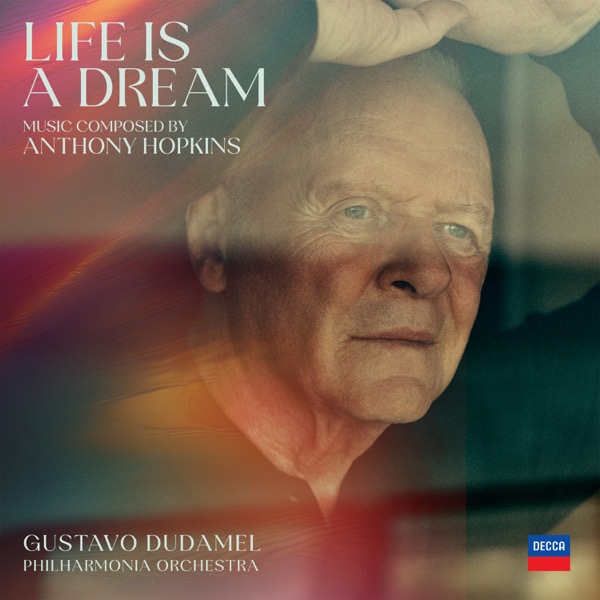
Hopkins: Life is a Dream
Philharmonia Orchestra, Gustavo Dudamel, cond.
Decca
Release date: 21 August 2026
Hopkins: Life is a Dream
Philharmonia Orchestra, Gustavo Dudamel, cond.
Decca
Release date: 21 August 2026
For more of the best in classical music, sign up for our E-Newsletter