Aaron Copland, the child of Jewish immigrants from Lithuania, was born on 14 November 1900 in Brooklyn, New York. His early published works show the influence of the jazz idioms of his time, but he eventually began to synthesise his influences and experiences into an American vernacular style.
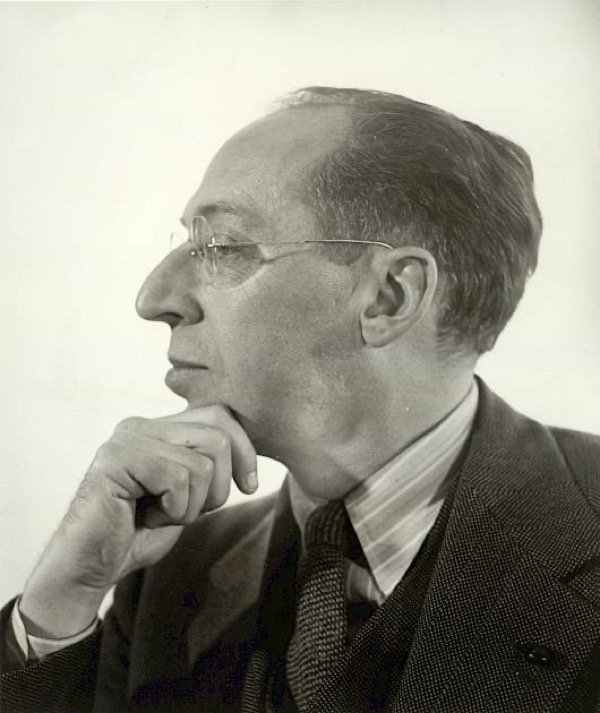
Aaron Copland
He summarised the American character of his music by pointing towards “an optimistic tone; love of rather large canvases; a certain directness of expression of sentiment, and a certain songfulness.”
His groundbreaking ballet scores for Billy the Kid and Rodeo led to the commission for Appalachian Spring, a work whose slowly changing harmonies suggested the American landscape and pioneer spirit.
The ballet, premiered in 1944, was originally scored for an ensemble of thirteen instruments. Copland arranged the music for full orchestra in 1945, earning the Pulitzer Prize for Music that same year.
To celebrate Copland’s birthday, let’s revisit this remarkable work in both versions and discover how the musical character changes with the orchestration.
Aaron Copland: Appalachian Spring (Martha Graham 1958)
Birth of a Masterpiece
The ballet centres on a pioneer celebration in the early part of the 19th century. The bride-to-be and the young farmer enact the emotions, both joyful and apprehensive, that their new domestic partnership brings. An old neighbour counsels them about the experiences of life, and a revivalist and his followers remind them of all aspects of human fate.
Copland composed all of the themes in Appalachian Spring, except for the most famous melody in the score, the Shaker hymn “Simple Gifts.” The composer presented “Simple Gifts” with variations at the midpoint of the ballet, representing the work’s emotional and musical core.
As Copland explained, “it is fascinating to work with folk materials, because there’s a kind of forced simplicity implied in the working. You don’t want to farcify it or dress it up or make it something it isn’t meant to be. So that it’s a kind of a challenge to see how interesting you can be as a composer within a comparatively small frame.”
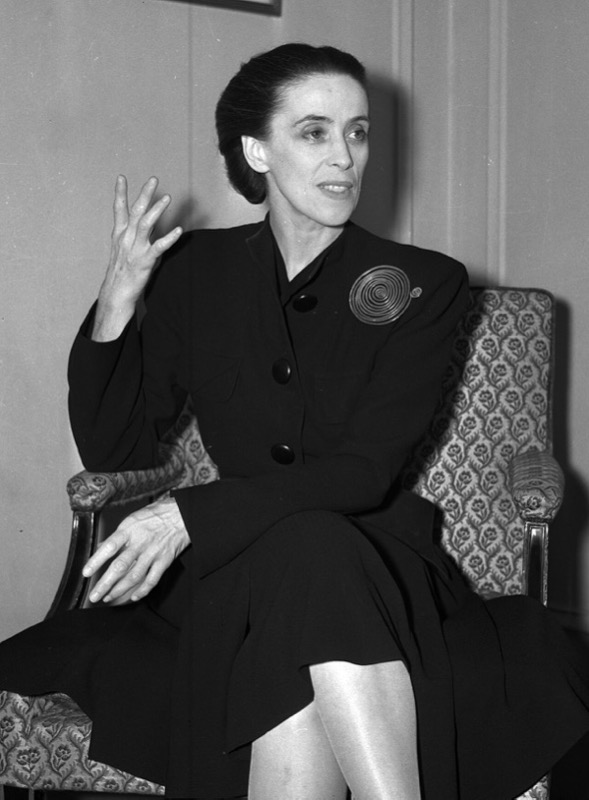
Martha Graham, c. 1940
Copland knew that the premiere was to be held in the small Elizabeth Sprague Coolidge Auditorium at the Library of Congress, with Graham herself as the Bride, Erick Hawkins as the husband, and Merce Cunningham as the Revivalist.
Copland completed a piano score that fit Graham’s scene descriptions and timings by June 1944. He subsequently scored it for thirteen instruments: flute, clarinet, bassoon, four violins, two violas, two cellos, a double bass, and piano, the maximum number that would fit in the pit at the Coolidge Auditorium.
A New Sound
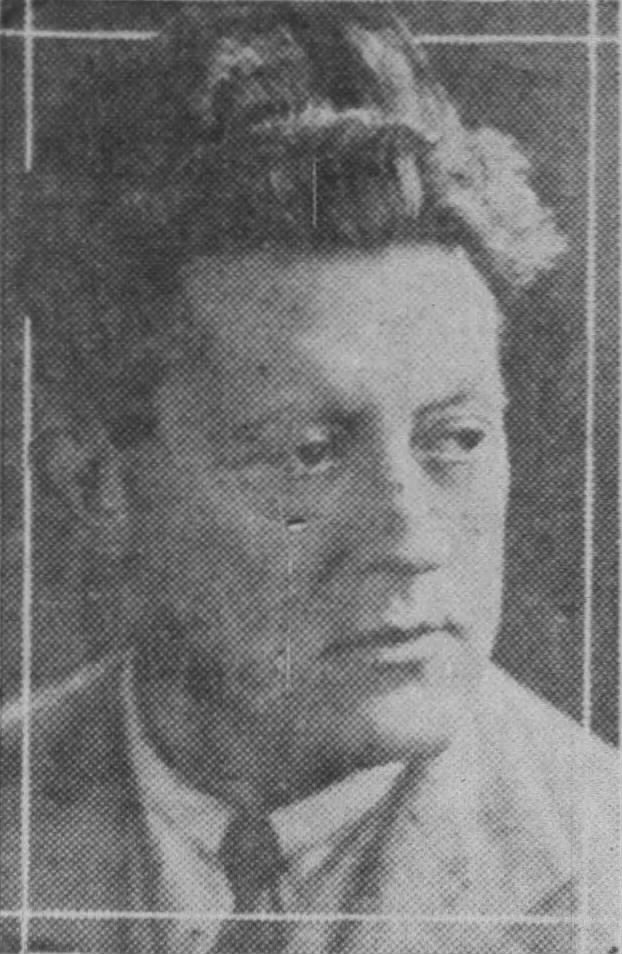
Artur Rodzinski in 1935
In the following months, Copland transformed his ballet score into a suite for full orchestra, and this version was premiered by Artur Rodzinski and the New York Philharmonic on 4 October 1945. Copland described the suite as “a condensed version of the ballet, retaining all essential features but omitting those sections in which the interest is primarily choreographic.”
The original ballet lasted between 30 and 33 minutes and featured a remarkably transparent sound, with the piano contributing rhythmic definition and the small string ensemble giving the music a chamber-like quality.
For concert performance, Copland extracted a suite with a fuller woodwind and brass section, including horns, trumpets, and trombones. Timpani and varied percussion were added, and it featured a full string section. The suite is cast in eight uninterrupted sections, and he rearranged the order of the famous variations on this melody. It is in this version that the piece has become widely known.
The difference between the two versions is immediately apparent in the opening. The original scoring leaves the individual lines rather exposed. The full orchestral version of the same music takes on a much broader and more expansive character. The sustained passages have far greater warmth and weight.
The melody of “Simple Gifts,” in the original scoring, emerges with great simplicity. The variations unfold naturally, with the small ensemble uncovering subtle changes in colour and texture. With the fuller orchestration, the musical argument takes on a heightened sense of occasion.
Aaron Copland: Appalachian Spring (Los Angeles Philharmonic Orchestra; Leonard Bernstein, cond.)
Copland’s Preferred Version
In all, Copland made changes in twelve areas of the ballet, and Eugene Ormandy approached Copland in 1954 about the possibility of restoring all of the cuts to the suite to produce an orchestral version of the complete ballet.
In the event, not all sections were restored, and in 1988, Leonard Slatkin and the St. Louis Symphony recorded a version that they described as complete. Another recording was made by Michael Tilson Thomas and the San Francisco Symphony in 2000, also combining elements of both the original thirteen-instrument ballet and the full-orchestra suite.
Finally, the Aaron Copland Fund for Music hired composer and conductor David Newman in 2016 to orchestrate about fifty measures which did not appear in any previous orchestral version.
At this time, the Copland Fund decided to withdraw from circulation the various versions of the suite, so that there are now just the ballet and the suite, each in thirteen-instrument and orchestral versions.
Interestingly, Copland himself eventually came to favour the original scoring, remarking, “In time, I have come to think that the original instrumentation has a clarity and is closer to my original conception than the more opulent orchestrated version.”
I don’t know which of the two versions you prefer, but both are entirely free of pretension. Copland did not write grand gestures or complicated musical arguments to communicate profound human emotion. Original intimacy or the glowing sonorities of the orchestral suite, notwithstanding, the music speaks directly to us all.
For more of the best in classical music, sign up for our E-Newsletter