In 2026, Japan has two magnificent reasons to celebrate its rich musical and cultural heritage. Tokyo’s magnificent Suntory Hall marks its 40th anniversary, while the Vienna Philharmonic celebrates 70 years since its first visit to Japan.
The connection between the Vienna Philharmonic and Suntory Hall dates back to 1999, when the inaugural “Wiener Philharmoniker Week” in Japan brought the orchestra to this celebrated venue.
These milestones share a deep respect for tradition and a commitment to excellence nurtured through generations of craftsmanship. Both Japanese culture and the Vienna Philharmonic value preserving their artistic heritage and passing on their traditions to future generations.
Vienna Philharmonic Japan Tour 1956
A Musical Friendship Begins
The Wiener Philharmoniker’s first concerts in Japan took place in 1956, under the baton of composer and conductor Paul Hindemith. This historic visit began a concert tradition, with subsequent tours led by Herbert von Karajan and Karl Böhm, among others.
The first engagement at Suntory Hall took place in 1987, with Claudio Abbado conducting, just months after the hall had opened its doors.
The magnificent Suntory Hall is in Tokyo’s Akasaka district and consists of a main concert hall, widely considered one of the finest in the world for its acoustics. The Main Hall also houses a magnificent organ made by the Austrian firm Rieger Orgelbau, showcasing an incredible 5,898 pipes.
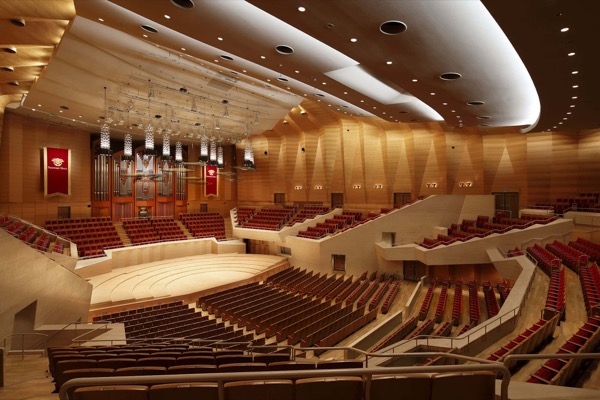
Suntory Hall
A Jewel Box of Sound
The performance complex also includes a smaller hall for chamber music, known as “Blue Rose,” and its roof is an extended, tiered landscape garden. The “Herbert von Karajan” plaza in front of Suntory Hall was created in April 1998 in remembrance of the maestro, who was involved in the hall’s design.
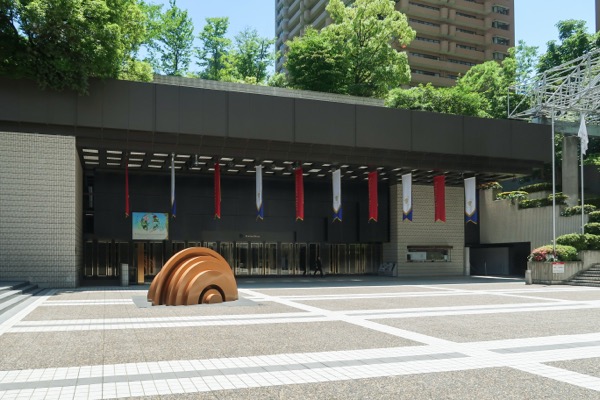
Suntory Hall (2018)
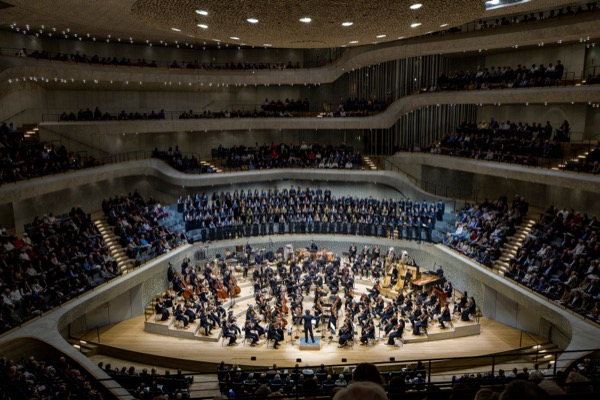
He recommended its vineyard style, in which the audience surrounds the concert floor in the Main Hall, and he helped with its acoustic evaluation. He would later call it “a jewel box of sound.”
Shoichi Sano of Yasui Architects and Engineers handled the architectural design, while Minoru Nagata of Nagata Acoustics provided the acoustic expertise. The latest research also influenced the hall’s acoustic design, as well as the opinions of music lovers.
A Second Home in Tokyo
As a result, all 2,006 seats face the stage, much like terraces of vines oriented toward the sun. This design allows musicians and audiences to feel in perfect harmony and be fully immersed in the musical experience, both acoustically and visually.
Following the 1997 visit to Japan, Suntory Hall and its founder, Keizo Saji, began inviting the orchestra and organising subsequent visits and residencies. Under this arrangement, the first Wiener Philharmoniker Week took place in March 1999, with Riccardo Muti conducting. As the chairman of the Vienna Philharmonic explained, “Suntory is our second home.”
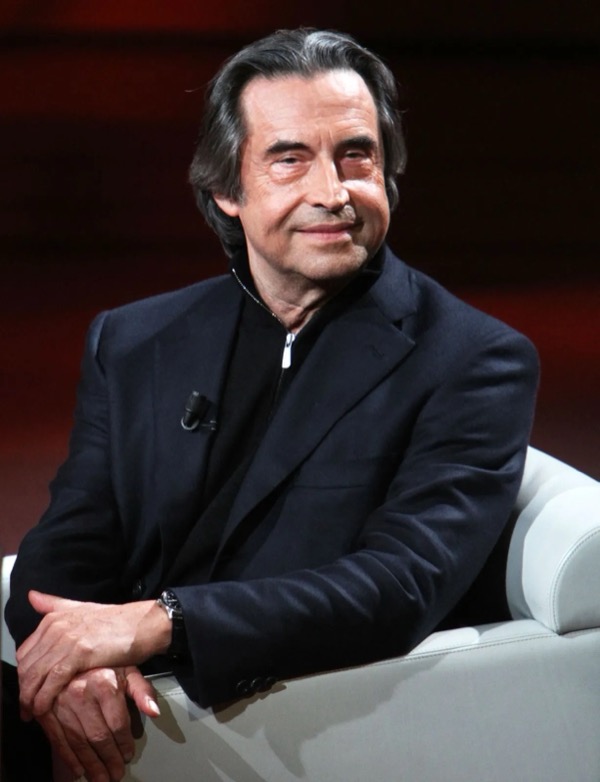
Riccardo Muti (2010)
Friendship Beyond the Stage
The orchestra and Suntory Hall share a particularly close relationship, as they have a common vision. They want to pass on the joy of music to the next generation. In addition to regular concerts during the “Wiener Philharmoniker Week,” they collaborate on special activities that connect performers with audiences, as well as special programmes aimed at young people.
A deep friendship guides the relationship between the Vienna Philharmonic and Suntory Hall. Following the devastating earthquake and tsunami in eastern Japan in March 2011, the “Music Aid Fund” was created. The Vienna Philharmonic immediately pledged one million euros, and Suntory matched the donation with another million.
Orchestra members visited and played in disaster areas such as Sendai, and they also visited schools, where they rehearsed together with the students. In the afternoon, they held master classes, and in the evening, they played concerts together.
The Heart of the Harmony
In 2016, the Wiener Philharmoniker performed a concert together with children from the affected areas at Suntory Hall, titled “The Heart of the Harmony.”
They rehearsed and performed the final movement of Beethoven’s Ninth Symphony, and, as one participant reflected, “it was about more than just playing the notes.”
The “Music Aid Fund” has since continued, with further visits to the Sendai Junior Orchestra in 2019 and musical exchanges with students in Rikuzentakata in 2025.
Opening Doors
For 2026, they have also organised several education and outreach events. There is a free open rehearsal on November 8 for students and members of the Suntory Hall Members Club, an instrumental master class with horn player Wolfgang Vladár on November 10, and a school programme for junior high and high school students on November 7.
Ninety youth tickets, for everyone from junior high students to young people aged up to 25, will be available for the concert on November 8. In addition to the four concerts at Suntory Hall, the orchestra will tour Takasaki (Gunma), Nagoya, and Osaka.
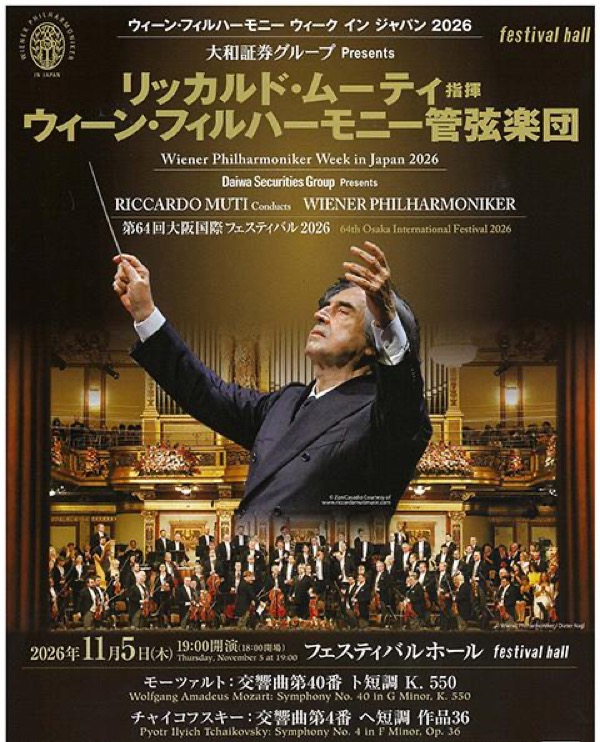
Wiener Philharmoniker Week 2026
A Living Tradition
Suntory Hall has four concerts scheduled in 2026, all conducted by Riccardo Muti, who has worked with the orchestra for 55 years. The anniversary programme is rather special, as it brings together two symphonies premiered by the Vienna Philharmonic itself.
Brahms’ Second Symphony was premiered under Hans Richter in 1877, and Bruckner’s monumental Eighth Symphony first sounded under Richter in December 1892.
Both works have become cornerstones of the symphonic repertoire, and hearing the Vienna Philharmonic return to these masterpieces many decades later means reconnecting with an important part of its own history while passing on accumulated insights to a younger generation of listeners.
Interlude looks forward to being part of this special anniversary celebration on 12 November, experiencing firsthand a musical tradition that continues to bring Japan and Vienna together.
https://www.wienerphilharmoniker.at/en/konzerte?v=05-11-2026&ia=f&iv=f&sm=f
For more of the best in classical music, sign up for our E-Newsletter