Who could be talented enough to inspire Johann Sebastian Bach, arguably the greatest composer of all time?
Bach is revered among musicians and audiences as a kind of musical god, and it’s easy to assume he burst into creative maturity fully formed, inspired solely by his own innate talent.
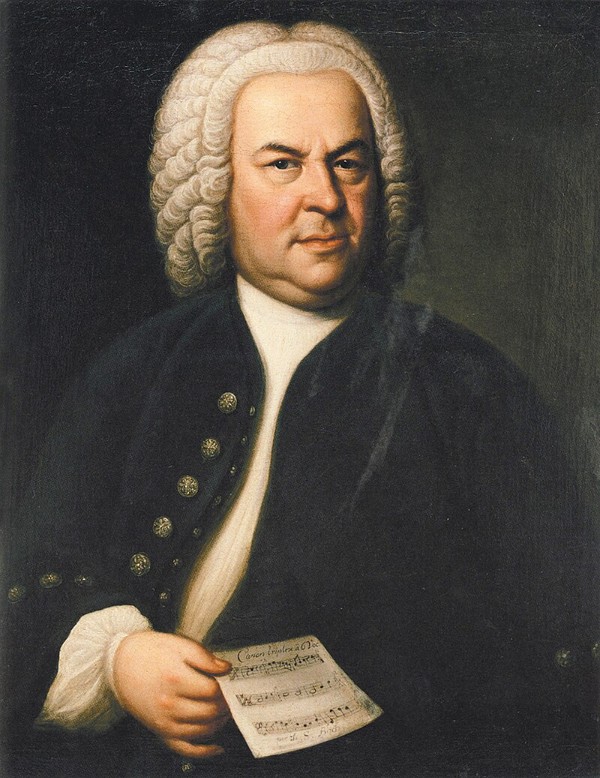
Elias Gottlob Haussmann: J.S. Bach, 1746 (Leipzig: Bach-Archiv)
But just because we don’t often talk about Bach’s debt to other composers doesn’t mean that debt doesn’t exist.
In fact, Bach remained a student of music throughout his life, gathering inspiration from many colleagues in many places. Here are six of their stories.
Heinrich Schütz (1585–1672): Father of German Music
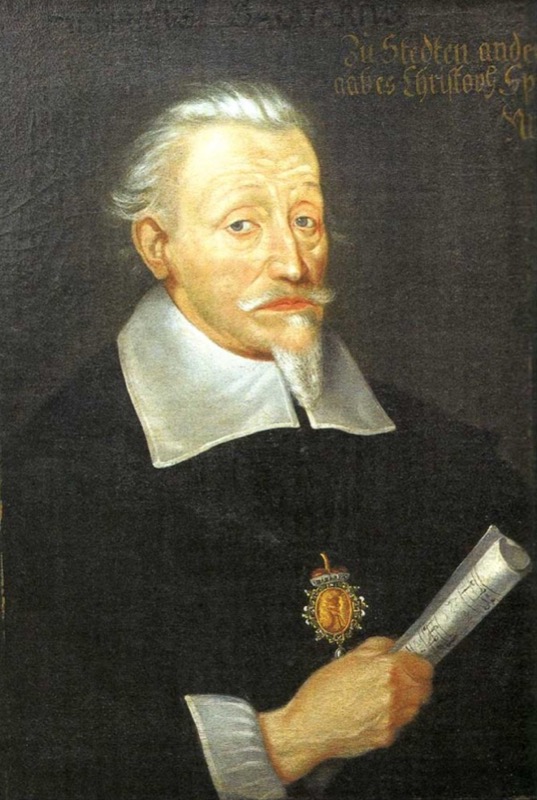
Heinrich Schütz
Schütz’s Psalmen Davids
Heinrich Schütz was born in 1585, a hundred years before Bach, in present-day Bad Köstritz, Germany, where his father worked as an innkeeper.
At thirteen, Schütz left his childhood home to study music at the court of Maurice, Landgrave of Hesse-Kassel.
After an aborted attempt to study law, he travelled to Italy to study under Giovanni Gabrieli. He stayed there for three years, then returned home, where his mature work synthesised the technical rigour of German writing and the songfulness of Italy.
Schütz helped to establish the Lutheran church music tradition that Bach would go on to master. He set the Passion (the story of the persecution, death, and resurrection of Christ) three times, using a different Gospel account each time.
These works foreshadow Bach’s Passions in important ways, including their use of an Evangelist as a narrator, a storytelling device Schütz popularised.
Schütz and Bach never met; Schütz died in 1672, thirteen years before Bach was even born.
Even so, Bach – consciously or not – was influenced by the tradition that Schütz helped set in motion.
Dietrich Buxtehude (c. 1637–1707): The Organist Bach Walked 280 Miles to See
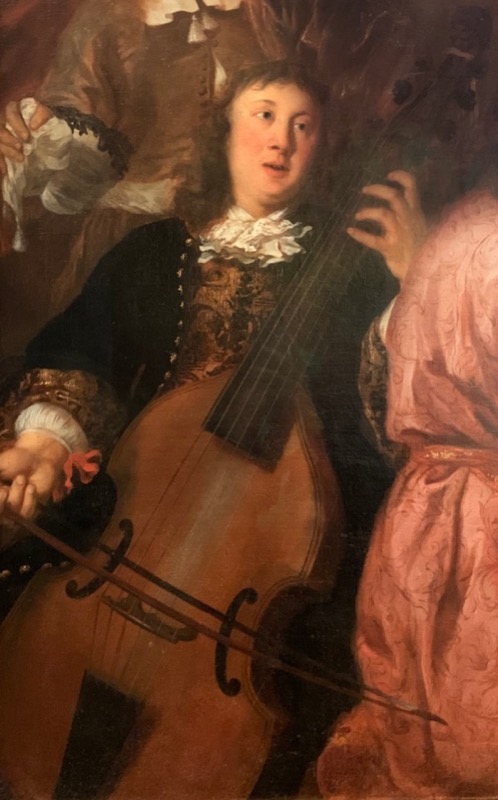
Dietrich Buxtehude
Buxtehude’s Passacaglia in D minor
Scholars believe that Dietrich Buxtehude was born in the late 1630s in present-day Helsingborg, Denmark (now Sweden).
The son of a church organist, Buxtehude joined the family business as a young man, working in Helsingborg before being hired by the Marienkirche (St. Mary’s Church) in Lübeck.
A few years later, he revived an old tradition there called Abendmusik (Evening Music), which grew to host dozens of singers and musicians. Many curious music lovers came from great distances to hear Abendmusik performances.
One was Handel, who visited in 1703. Buxtehude, who by then was ready to retire, was impressed by him and offered him the job of organist at the Marienkirche, provided Handel married his daughter. (Such arranged marriages were tradition; Buxtehude had himself married his own predecessor’s daughter.) Handel turned the job down – and left town.
Another musician who came to see the Abendmusik performances was Johann Sebastian Bach. In 1705, at age twenty, he walked about 280 miles from Arnstadt, where he worked as a church organist, to see some Abendmusik performances. He then stayed in Lübeck for weeks, risking his job to attend concerts, copy scores, and more.
Bach was especially mesmerised by Buxtehude’s dramatic, commanding, virtuosic organ playing: all traits he embraced while composing his own works for solo organ.
One can easily imagine an alternate universe where Bach married Buxtehude’s daughter, joined the family, and studied with him longer.
However, Bach decided to return to Arnstadt instead. There he was disciplined for abandoning his post – then for writing intricate Buxtehude-inspired music that officials found too indulgent.
Johann Adam Reincken (c. 1643–1722): The Organ-Playing Inspiration to Teenage Bach
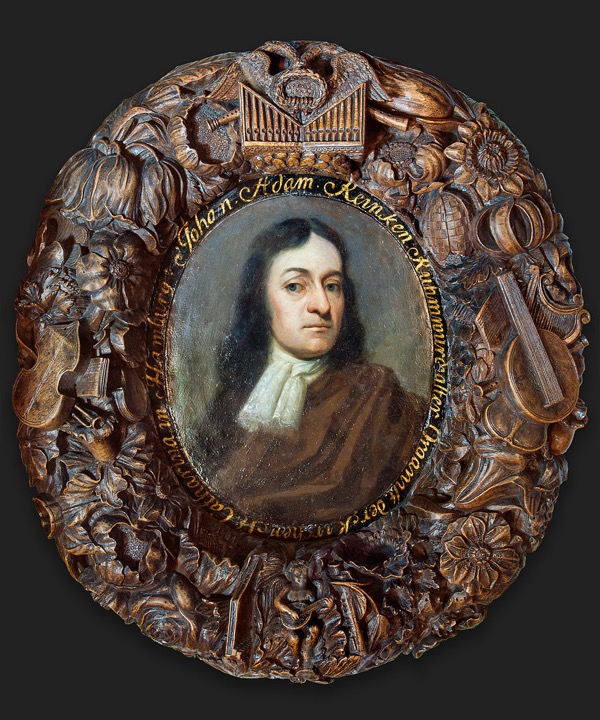
Johann Adam Reincken
Reincken’s “An Wasserflussen Babylon”
A few years before he made the 250-mile-long trek to see Buxtehude, Bach regularly walked 30 miles to hear Johann Adam Reincken.
Reincken was born in Deventer, in the present-day Netherlands. In 1654, he travelled to Hamburg to study under composer and organist Heinrich Scheidemann. About a decade later, Reincken succeeded his late teacher at St. Katharine’s Church in Hamburg.
His fame spread, and Bach began attending his performances while still a teenager.
Years later, in 1720, when he was a well-established composer himself, Bach visited Hamburg. He called on Reincken and played an improvisation on the Lutheran chorale “An Wasserflüssen Babylon” (“By the Rivers of Babylon”) for him: a gutsy move, given that Reincken had used the chorale as the basis for a well-known fantasia.
However, Bach knew what he was doing; as a 15-year-old in 1700, he’d painstakingly copied Reincken’s “Babylon” fantasia for his own teacher.
According to Bach’s early biographer, Johann Nikolaus Forkel, after hearing Bach that day, Reincken said, “I thought that this art was dead, but I see that it lives in you.”
Bach’s admiration for Reincken lasted long past his teenage years. Sometime during the mid-1710s, he transcribed three sonatas by Reincken for solo keyboard.
Johann Pachelbel (1653–1706): Bach’s Brother’s Teacher
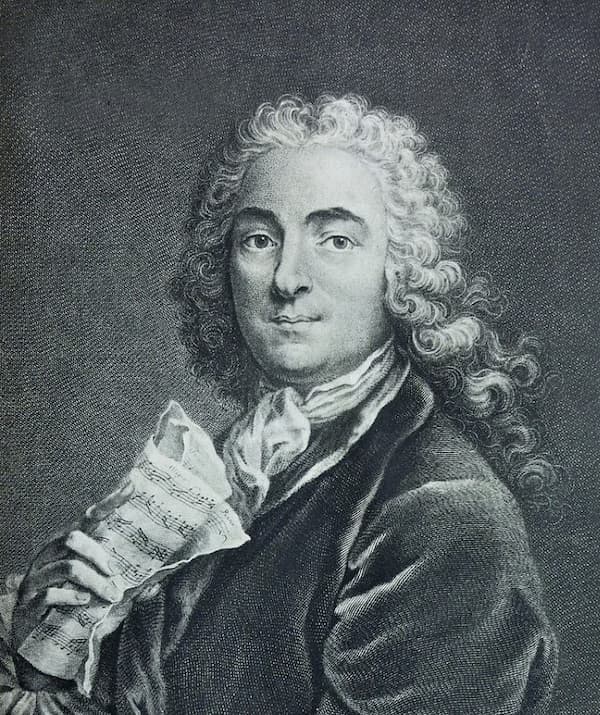
Johann Pachelbel
Pachelbel’s Prelude, Fugue, and Chaconne in D minor
Johann Pachelbel was born in 1653 in present-day Nuremberg, Germany. He was a musically talented child and won his first job as an organist in 1669, the year he turned sixteen.
By 1673, he was in Vienna, where he stayed for four years; then, in 1677, he moved to Eisenach, Germany.
He only stayed in Eisenach for one year (the death of the Duke of Saxe-Jena led to musician layoffs), but while there, he befriended Johann Ambrosius Bach, Bach’s father.
He also gave lessons to Johann Ambrosius’s son Johann Christoph, who was Bach’s older brother: the same brother that Bach would move in with after being orphaned, and who would become one of Bach’s earliest teachers. As a result, Bach was influenced by Pachelbel’s style, especially in church music.
Pachelbel specialised in a genre known as the chorale partita, a set of variations on a chorale theme for keyboard. He also wrote famous examples of fugal writing, as well as four-note repeated bass lines (foreshadowing Bach’s passacaglias and chaconnes).
These influences appear repeatedly in Bach’s music, from pieces as diverse as his Passacaglia in C minor, BWV 582, to his D minor Chaconne from the second partita for solo violin.
Nicolas de Grigny (1672–1703): The Young Ill-Fated French Organist
Grigny’s Tierce en Taille from Livre d’orgue
Nicolas de Grigny was born in 1672 to a musical family in Reims, France. We know little about his biography, but by 1693 he was working as an organist in Paris; in 1697, he was appointed organist of Notre-Dame de Reims.
In 1699, he published Premier livre d’orgue (contenant une messe et les hymnes des principales fêtes de l’année), or, in English, First Organ Book (containing a Mass and the hymns for the principal feasts of the year).
The title suggests a second book, but Grigny died young at 31, and no second volume ever appeared.
In 1711, his widow reprinted the Premier livre d’orgue. A copy reached Bach, and two years later he wrote out a meticulous copy for his own use and study.
Bach was clearly inspired by Grigny, occasionally inserting some French elements into his very German organ writing. For instance, his Fantasia in C minor (BWV 562) mirrors a fugue from Grigny’s Mass.
Antonio Vivaldi (1678–1741): Composer of the International Smash Hit
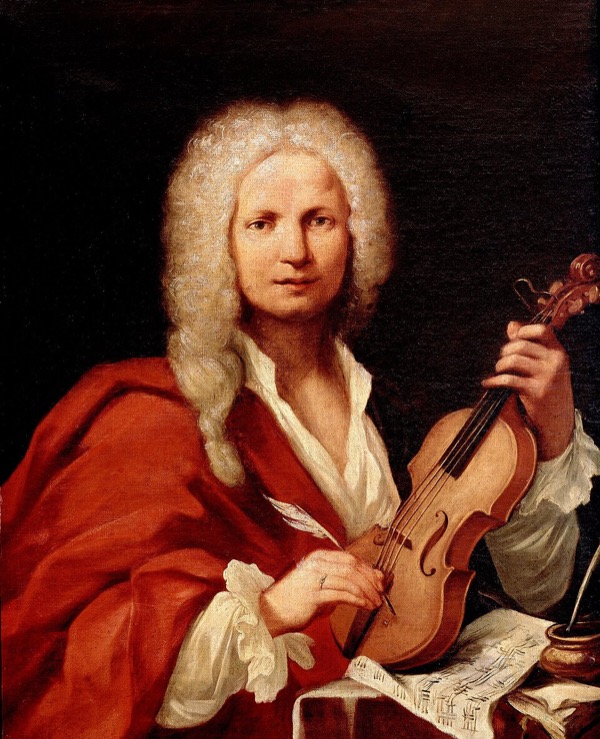
Antonio Vivaldi
Vivaldi’s Concerto No. 10 in B minor for 4 violins from L’estro armonico
Antonio Vivaldi was born in 1678 to a Venetian barber who moonlighted as a violinist. He taught Antonio music and took him to various performances around Venice.
In 1702, at age 24, Antonio was hired to teach at the Ospedale della Pietà, an orphanage with an accomplished orchestra of orphaned girls. This unusual ensemble was a tourist attraction that helped to fund the rest of the orphanage’s work. Vivaldi’s duties there included teaching instruments, conducting, and composing.
As a composer, Vivaldi’s breakthrough work was his Op. 3, L’estro armonico (The Harmonic Inspiration), published in 1711.
The collection of twelve concertos became a smash hit all across Europe. In fact, musicologist Michael Talbot has called it “perhaps the most influential collection of instrumental music” of the 18th century.
Bach fell under its spell, too. Although he’d never been to Venice, his employer at the time, Prince Johann Ernst of Saxe-Weimar, may have bought a copy while living in Amsterdam.
Bach rearranged six of the Vivaldi concertos for keyboard or organ. The process helped to cement his understanding of the Italian concerto style: the ideal proportions, the fast-slow-fast movement structure, and the use of ritornellos (alternating solo passages with orchestral ones) that created contrast and narrative tension.
He would incorporate those traits into his own concertos – even the ones that weren’t Vivaldi transcriptions.
Conclusion
Bach wasn’t inspired by the composers above in some vague way. The inspiration was concrete and even physical, oftentimes involving demanding journeys on foot or his painstaking copying of their scores.
It’s common to think of Bach as a musical god, but in reality, he was a human being who owed his growth and development to the influences of the talented musicians whose work surrounded him.
For more of the best in classical music, sign up for our E-Newsletter