Violinist Fritz Kreisler (1875–1962) was one of the best violinists of his generation.
He also enjoyed composing – but he was reluctant to fill his programs with his own works.
He solved the problem early in the 20th century by composing an array of short pieces in the style of obscure Baroque and Classical composers: Pugnani, Martini, Couperin, and others. He claimed he discovered them in European monasteries.
Audiences were delighted, and while experts may have scattered scepticism, nobody dug deeply into their origins.
However, the published sheet music did include a telling preface:
“The original manuscripts used for these transcriptions are the private property of Mr Fritz Kreisler and are now published for the first time; they are moreover so freely treated that they constitute, in fact, original works.”
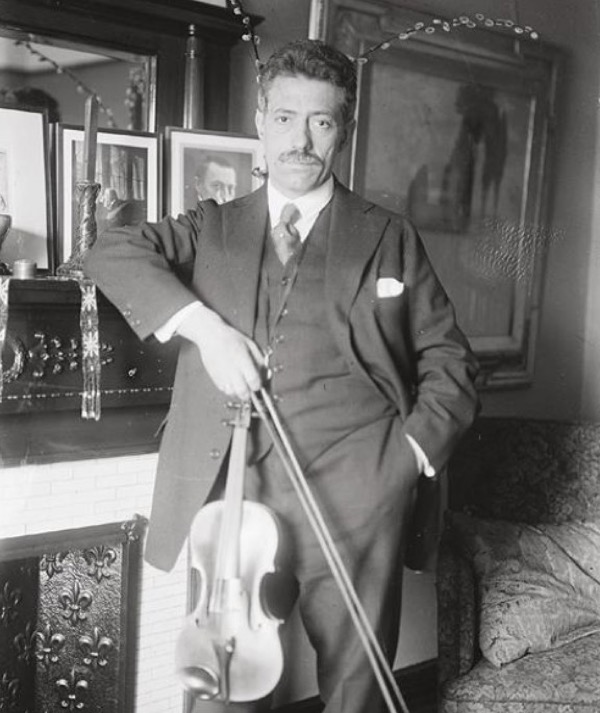
Fritz Kreisler
On Kreisler’s sixtieth birthday, New York Times music critic Olin Downes sent him a birthday telegram. As an aside, he asked Kreisler if he’d really written all those pieces. Kreisler replied with thanks – and a confession: no, he hadn’t.
The result was a front-page New York Times story exposing the hoax.
The revelation caused some controversy, but Kreisler defended himself, insisting that he’d done no harm and that audiences enjoyed the pieces – and he was right.
Here are seven of Fritz Kreisler’s best musical hoaxes and the stories behind them.
Allegretto in the Style of Boccherini
Cellist and composer Luigi Boccherini (1743–1805) is best remembered for the minuet from his String Quintet in E major.
For Kreisler’s purposes, Boccherini was famous enough to be recognisable – but obscure enough that no one would go looking for manuscript corroboration.
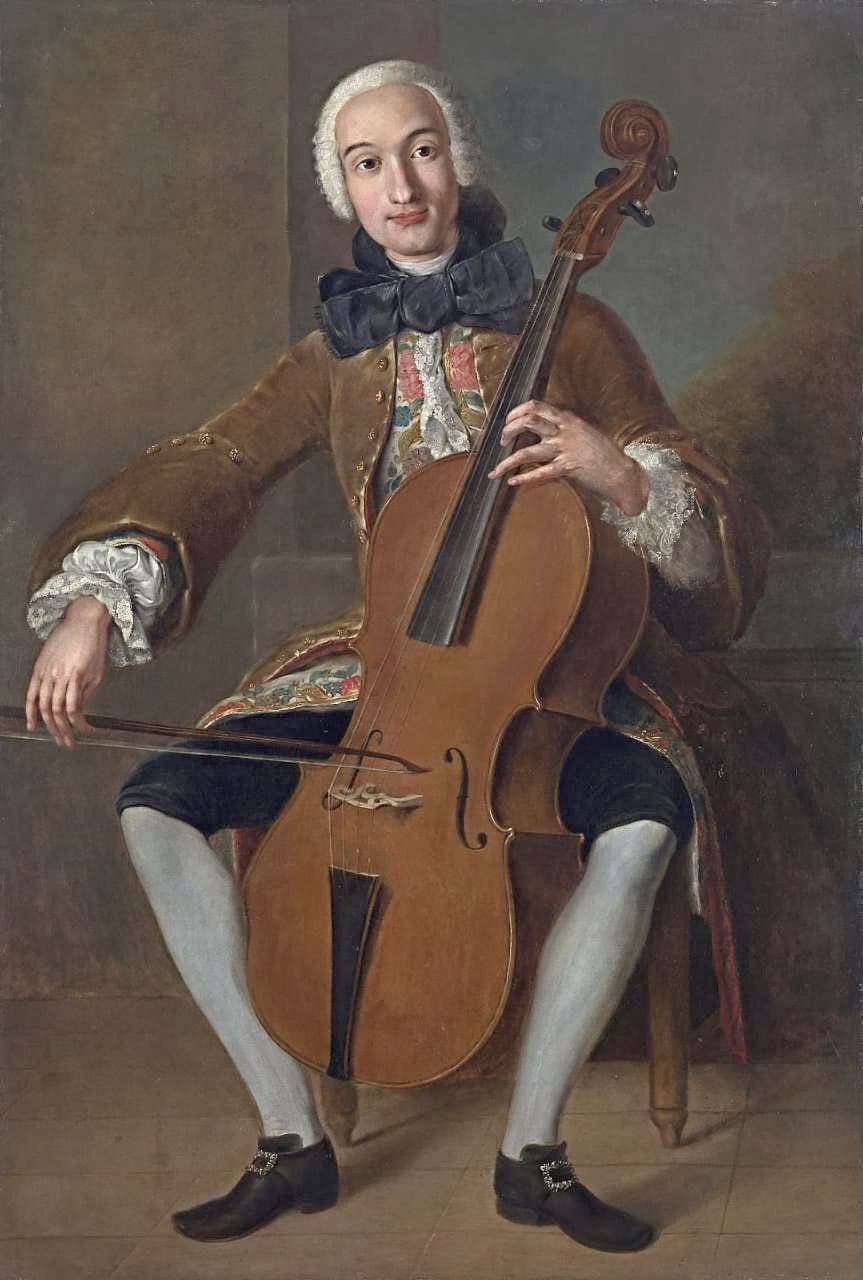
Luigi Boccherini
In 1910, Kreisler published this Allegretto under Boccherini’s name. To modern ears used to historically informed performance practice, it doesn’t sound authentic.
However, early 20th-century audiences, used to hearing Baroque works played in a more romantic style, would have connected the Allegretto’s suave, light-footed Viennese lilt to Boccherini’s famous minuet.
Andantino in the Style of Martini
Padre (“Father”) Martini – also known as Giovanni Battista Martini – was a Franciscan friar and composer who lived from 1706 to 1784. He established a composition school in Bologna and taught students like J.C. Bach and the young Mozart.
He was best known for his teaching and interest in historical music. Many of his works are unpublished.
That combination made him another ideal candidate – respected enough to lend credibility, obscure enough that no one would investigate too closely.
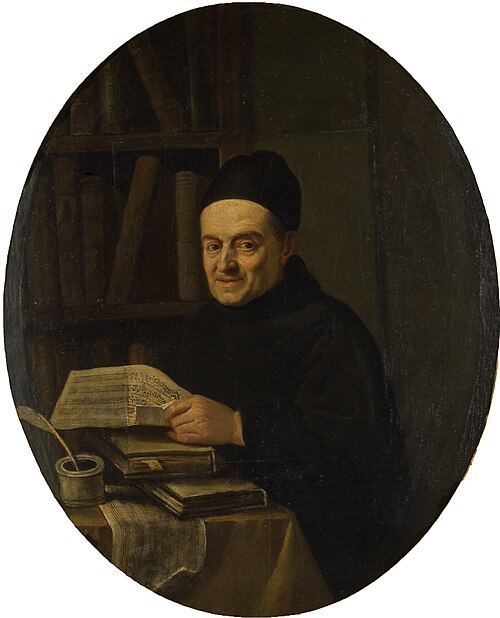
Portrait of Padre Martini, by A. Crescimbeni (International museum and library of music, Bologna)
The Andantino Kreisler, published under his name, is tender and quietly devotional, with a singing line that sounds like it could have drifted out of a church in 18th-century Bologna.
However, that singing line does give it away. It is clearly shaped for voice or violin, rather than his specialities, the harpsichord and organ.
“La Précieuse” in the style of Couperin
Kreisler attributed this piece to Louis Couperin – not the famous François (“le Grand”) Couperin, but François’s uncle, a composer who died young in 1661.
During his lifetime, Louis published nothing, and his manuscripts are scattered around Europe. Kreisler made yet another clever move to avoid detection.
Louis’s harpsichord pieces are harmonically bold and heavy on ornamentation in a way this piece isn’t – but to a concert audience in 1910, the name Couperin meant French Baroque elegance, and that was enough.
The work is charmingly atmospheric. “La Précieuse” translates to “the precious one,” suggesting a musical portrait of a prim, bewigged love interest bustling around a salon in petticoats and silk.
Violin Concerto in C major in the style of Vivaldi
Every other piece on this list is a miniature for violin and piano. However, the Concerto in C major is something else entirely: a three-movement concerto for violin and orchestra that lasts nearly twelve minutes.
Kreisler composed it in 1927 and published it under Vivaldi’s name, claiming the usual discovery in a library or monastery.
It feels as though Kreisler was starting to hope he’d be caught. On a spectrum from Baroque to Romantic, it tilts heavily toward the latter; it’s more a Baroque-style Romantic piece than a Romantic-style Baroque piece.
The first movement’s songful style and double-stops alone should have given the entire game away – but Kreisler’s hoax would continue for another eight years.
Sicilienne and Rigaudon in the Style of Francœur
François Francœur is the most obscure name on this list. A French violinist and composer who played in several prestigious ensembles, he ascended to co-director of the Paris Opéra in 1760 – until the building burned down in 1763.
Francœur had the qualifications but had never entered the repertoire.
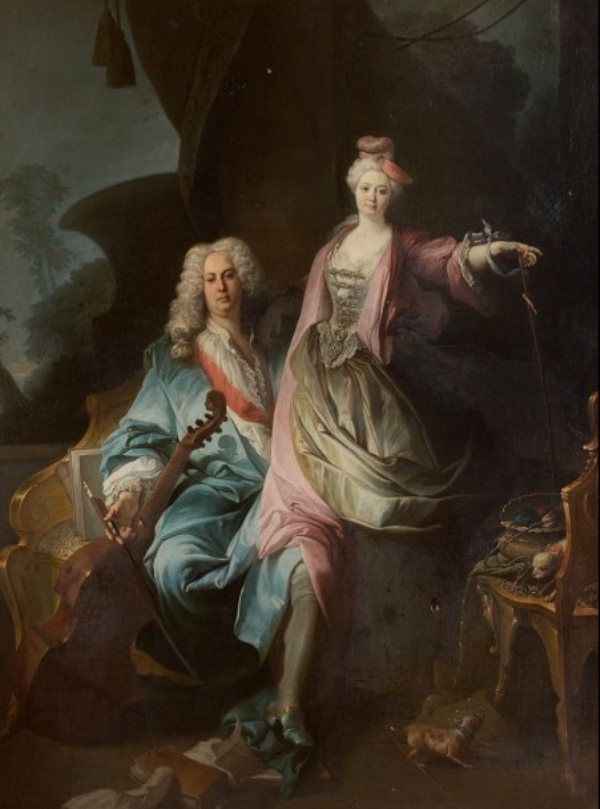
Presumed portrait of François Francœur, by Auger Lucas
The piece consists of a lilting, aristocratic Sicilienne followed by a speedy Rigaudon requiring a singing tone and quicksilver playing – not coincidentally, two of Kreisler’s greatest strengths as a player.
Today the Sicilienne and Rigaudon are among Kreisler’s most performed fakes.
Chanson Louis XIII and Pavane in the Style of Couperin
Here, Kreisler faked a work by the royal court. The opening part is a “Chanson Louis XIII,” or “Song of Louis XIII.” French King Louis XIII (1601–1643) was very musical; he started playing the lute as a young boy and composed an entire ballet.
In the title, Kreisler suggests that Louis Couperin arranged both Louis’s song and the ensuing pavane.
In other words, Kreisler wasn’t just impersonating a composer. He was impersonating a composer impersonating a king.
That said, the Louis XIII melody is one of the more genuinely Baroque-sounding works in Kreisler’s fake catalogue. The ensuing Pavane is marked Allegretto, and authentic pavanes were slow court dances.
Praeludium and Allegro in the style of Pugnani
This is Kreisler’s most famous fake of all.
It was published in 1905, making it the first of his “Classical Manuscripts.” He attributed it to Gaetano Pugnani (1731–1798), best known as a performing violinist.
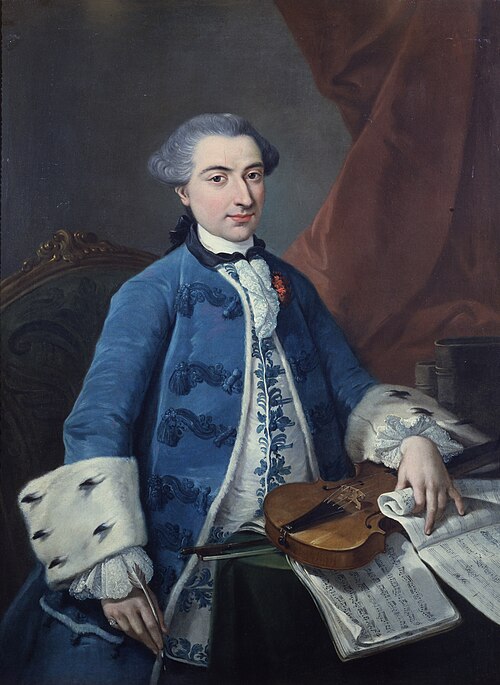
Gaetano Pugnani
The Praeludium (or Prelude) begins with a series of Bs and Es in different octaves and registers, immediately testing the performer’s intonation and ability to shape phrases.
The Praeludium is followed by an irresistible Allegro that culminates in a string-crossing section over a sustained pedal point. The movement closes with a series of triumphant chords in the violin.
In 1923, Kreisler played the Praeludium and Allegro in Paris and saw composer Vincent d’Indy wagging a finger at him in the front row. Kreisler assumed he was being chastised for his forgery – but after the concert, all d’Indy said was that Pugnani would not have taken the Allegro at such a tempo.
Conclusion
Kreisler’s fakes have outlasted the scandal that exposed them.
Audiences have long forgiven Kreisler for his forgeries, seeing them as mischief-making more than malevolence.
Whatever their historical liberties, these pieces are beautifully crafted, and they’re written with a knowledge of the modern violin that no genuine Baroque composer could have matched.
Kreisler didn’t sign his name to these works until he had to. But they’re brilliant – and there is a reason they’ve found their way onto programs and playlists for over a century.
For more of the best in classical music, sign up for our E-Newsletter