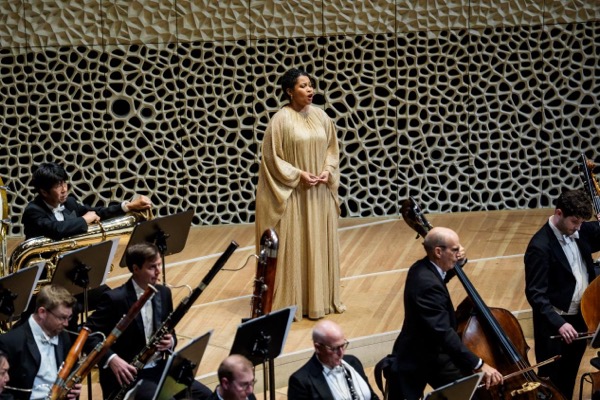
On 15 October 2026, the Greek National Opera brings its orchestra to the United States for the very first time. This debut concert will take place at Carnegie Hall and will feature the Manos Hadjidakis Ensemble, soloists Anita Rachvelishvili and Maria Kostraki, under the baton of conductor Vassilis Christopoulos.
The concert is titled “Nikos Kazantzakis: An Odyssey in Music,” and the programme traces the influence of the celebrated writer across generations of Greek composers, including Manos Hadjidakis, Mikis Theodorakis, Nikos Skalkottas, Dimitri Mitropoulos, and Giorgos Koumendakis.
As the Artistic Director of the Greek National Opera, Giorgos Koumendakis, notes, “Bringing the historic Greek National Opera to Carnegie Hall has been a vision in the making since I assumed the role of Artistic Director nearly a decade ago. During our concert at this legendary venue, we will showcase a special selection of works by some of Greece’s most notable composers.”
“I am confident that the pieces we have selected will offer the American audience a vivid introduction to Greek and Cretan culture, celebrating the depth and spirit of Nikos Kazantzakis’ multilayered body of work.”
Skalkottas/Mitropoulos: Cretan Dances and Cretan Feast
Crete & Freedom
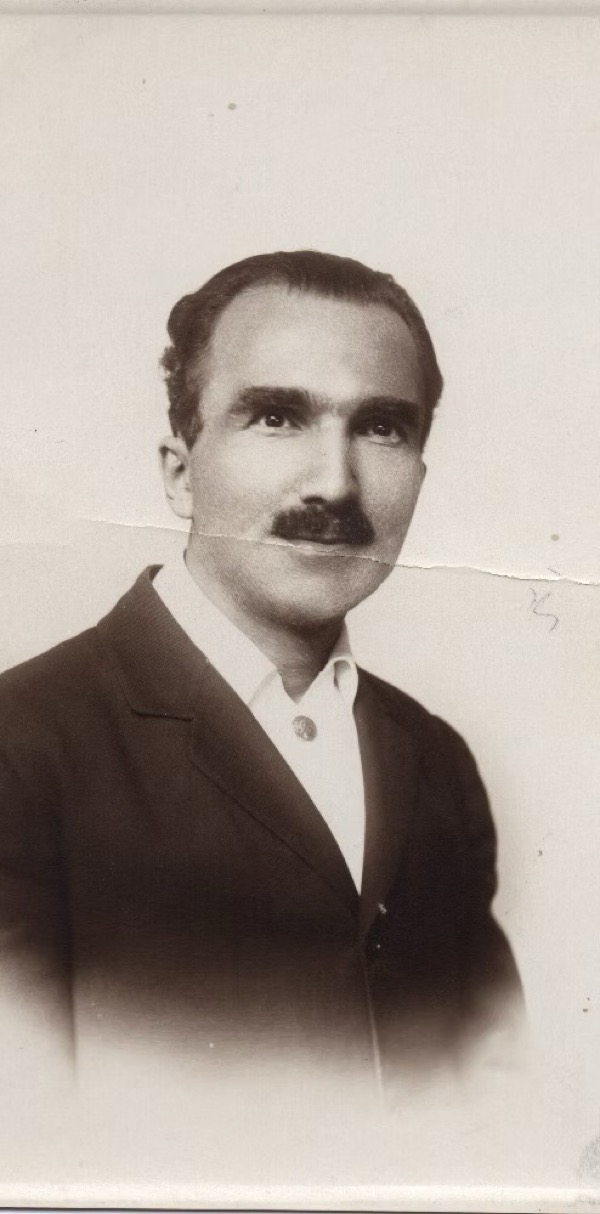
Nikos Kazantzakis
The writer, journalist, politician, poet, and philosopher Nikos Kazantzakis (1883–1957) is an undisputed giant of modern Greek literature. He was nominated for the Nobel Prize in Literature nine times, and he remains the most translated Greek author worldwide.
Besides writing plays, travel books, memoirs, and philosophical essays, Kazantzakis’ fame in the English-speaking world comes from the cinematic adaptations of his novels Zorba the Greek (1964) and The Last Temptation of Christ (1988).
Kazantzakis was born on Crete, while it was still under Ottoman rule, in the town now known as Heraklion. He grew up during the turbulent decades of the Cretan struggle for autonomy and the eventual union with Greece.
His family was forced to leave Crete during the 1889 uprising, and stories of rebellion, sacrifice, and resistance crucially shaped his imagination. Crete was his physical homeland and also his intellectual starting point.
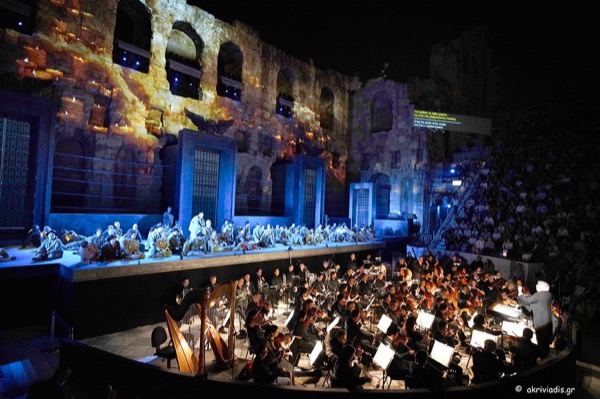
Greek National Opera Orchestra
In his 1953 novel Freedom or Death (Kapetan Michalis), Kazantzakis takes the Cretan uprising and transforms his childhood memories into an epic narrative. In fact, his father Michalis was one of the models for the character of Captain Michalis. And while we recognise the historical events and geography, the author deliberately mixes history with myth and legend.
Manos Hadjidakis: Captain Michalis (excerpt)
Language & Legacy
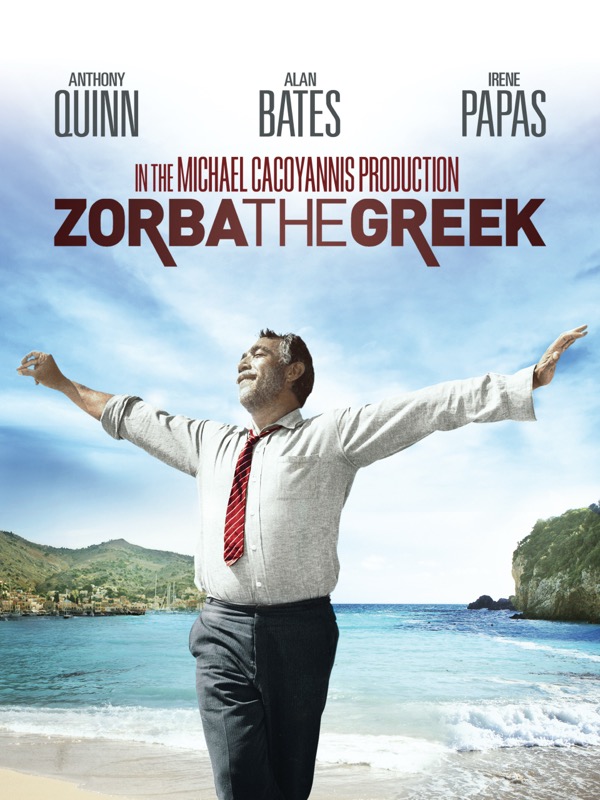
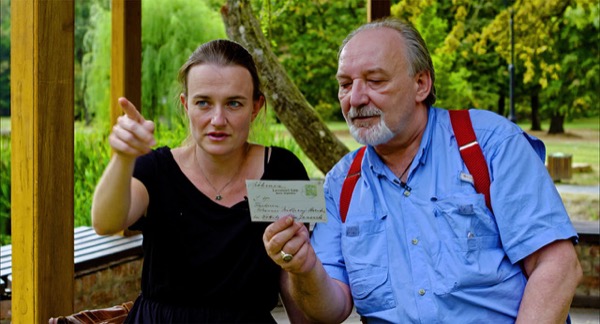
Zorba the Greek
In Kazantzakis’ most famous novel, Zorba the Greek, the educated narrator arrives in Crete to take over a lignite mine. He encounters the free-spirited Alexis Zorba, who challenges his intellectual approach to life. In this novel, Crete provides a physical and imaginative landscape in which Kazantzakis explores his central obsession: the struggle between intellectual contemplation and unrestrained engagement with life itself.
When Kazantzakis wrote his novels, most Greek artistic works were written in a pure form of the Greek language called “Katharevousa.” This was essentially created as a bridge between Ancient Greek and Modern, or Demotic, Greek to purify the modern language.
Yet Kazantzakis chose to write in Demotic Greek to capture the spirit of the people, and he wanted to prove that the common spoken language of Greece could produce artistic and literary works. However, his language is highly individual, full of Cretan vocabulary and idioms, and elements drawn from Byzantine and older Greek.
The scholar Peter Bien argues that each Kazantzakis story presents different aspects of post-World War II Greek culture, including religion, nationalism, political beliefs, the Greek Civil War, gender roles, immigration, and broader cultural practices and beliefs.
His stories explore what Kazantzakis believed was Greece’s unique physical and spiritual location: a nation that belongs to neither the East nor the West. As Bien writes, “Kazantzakis viewed Greece’s special mission as the reconciliation of Eastern instinct with Western reason.”
With his powerful literary vision, Kazantzakis has shaped musical creation in Greece for decades. He has inspired composers working across symphonic music, opera, theatre, ballet, and film, creating a sustained dialogue between literature and sound. As such, the New York concert features a programme connecting generations of composers influenced by Kazantzakis and the Greek island of Crete, whether as a place of origin, heritage, or symbolic reference.
Giorgos Koumendakis: Amor Fati (excerpt)
Kazantzakis in Music
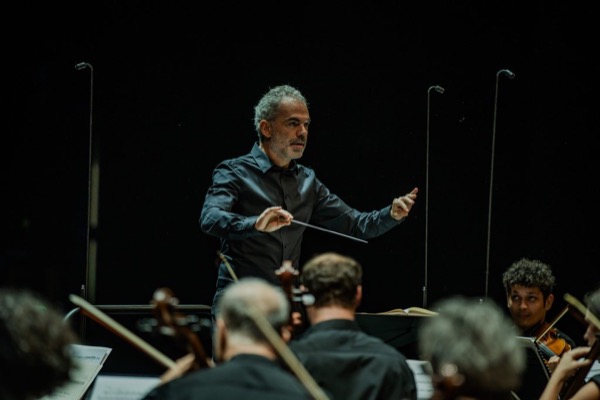
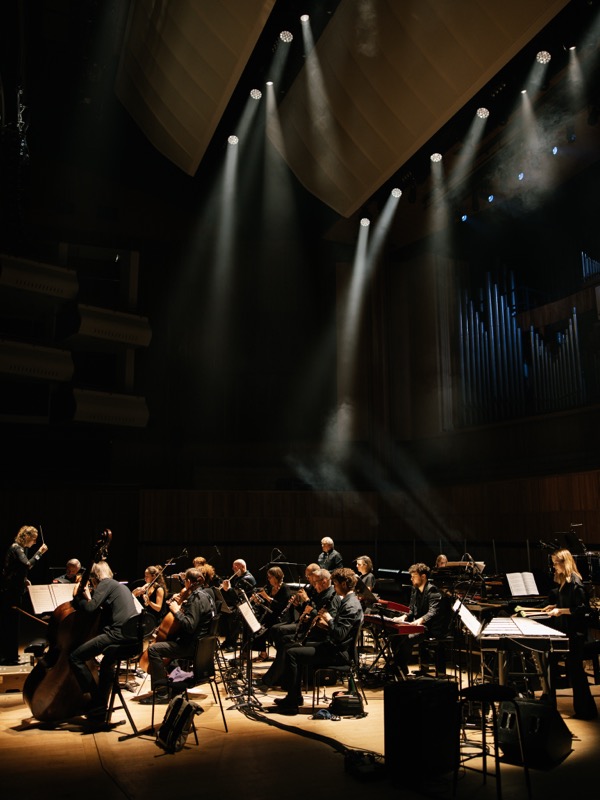
Maestro Vassilis Christopoulos with the GNO Orchestra (photo: A. Simopoulos)
Manos Hadjidakis (1925–1994) drew inspiration from Kazantzakis’s novel Captain Michalis when composing music for its 1966 theatrical adaptation, transforming themes of sacrifice and inner conflict into a lyrical, introspective musical language.
Mikis Theodorakis (1925–2021) created the most internationally recognised musical expression of Kazantzakis’s world through his iconic score for Michael Cacoyannis’ film adaptation of Zorba the Greek, giving the central character a musical voice, especially through the famous “Zorba’s Dance,” that became synonymous worldwide with Greek cultural identity.
Giorgos Koumendakis (b. 1959) composed the symphonic work Amor Fati in 2007, reflecting Kazantzakis’s philosophical outlook while drawing on the sound world of Cretan music through contemporary orchestral writing. Written for the fiftieth anniversary of the author’s death, the work captures the Kazantzakian concept of embracing one’s fate alongside the composer’s deep connection to Cretan musical identity.
The programme also includes Nikos Skalkottas’s (1904–1949) Three Cretan Dances, drawn from his landmark collection of 36 Greek Dances, which explores folk music and traditional melodies from across Greece.
Dimitri Mitropoulos’s (1896–1960) Cretan Feast is one of his early notable piano works, composed in 1919 and later orchestrated by Skalkottas, and reflects the lasting influence of Cretan musical traditions on modern Greek composition.
From Crete to Carnegie Hall

Nikos Kazantzakis: An Odyssey in Music
The New York performance is made possible by a grant from the Stavros Niarchos Foundation, an organisation that has supported the Greek National Opera for 30 years. This concert marks a major milestone in the company’s international activity. It offers U.S. audiences a rare opportunity to experience a century of Greek musical expression shaped by Kazantzakis’ literary legacy.
Bringing this repertoire to New York places Greek music, rooted in the cultural ground from which Western artistic traditions emerged, in the spotlight at one of the world’s most famous concert halls. It brings Kazantzakis’ Greece to life, including ancient traditions, Cretan roots, and the constant tension between East and West. It is a journey through the trying times that shaped Kazantzakis, and the contemporary musical world he helped to shape.
https://www.carnegiehall.org/calendar/2026/10/15/nikos-kazantzakis-an-odyssey-in-music-0800pm
For more of the best in classical music, sign up for our E-Newsletter