American pianist, writer, and teacher Jonathan Biss comes from a family of professional musicians, including his grandmother Raya Garbousova, for whom Samuel Barber composed his Cello Concerto, and his parents, violinist Miriam Fried and violist/violinist Paul Biss.
He studied with Evelyne Brancart at Indiana University and Leon Fleisher at the Curtis Institute of Music. As Fleisher said of Biss in the run-up to his Carnegie Hall debut recital, “His ability and interest go for things of transcendence and sublimeness…”
Biss joined the piano faculty at the Curtis Institute in 2010, and in 2018 assumed the role of co-artistic director, with Mitsuko Uchida, of the Marlboro Music Festival in Vermont.
Biss launched Beethoven/5 as a commissioned project in association with The Saint Paul Chamber Orchestra in 2015. Five composers selected by Biss wrote a piano concerto in response to one of Beethoven’s. To celebrate Biss’ birthday on 18 September, let’s take a closer look at his collaboration with Brett Dean’s “Gneixendorfer Musik” and Beethoven’s Emperor Concerto.
Ludwig van Beethoven: Piano Concerto No. 5 in E-Flat Major, Op. 73, “Emperor”: I. Allegro (Jonathan Biss, piano; Swedish Radio Symphony Orchestra; David Afkham, cond.)
A Lifelong Conversation with Beethoven
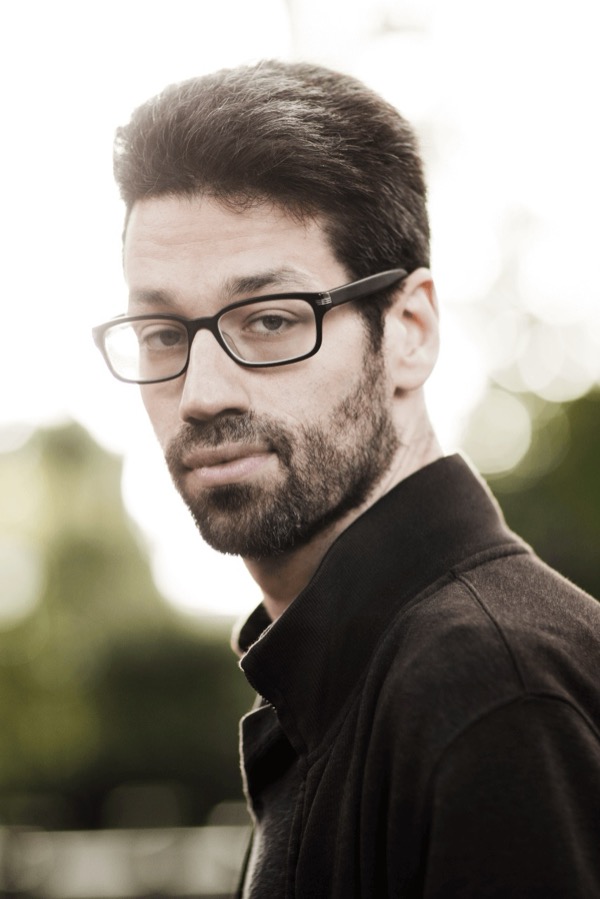
Jonathan Biss
For Jonathan Biss, Ludwig van Beethoven‘s music always held special meaning. After years of studying and performing Beethoven, he embarked on a nine-year project to record all 32 Beethoven Piano Sonatas in 2011.
The COVID pandemic forced Biss to examine the interplay between his lifelong passion for the music of Beethoven and his personal struggles with anxiety.
As he writes, “The confinement of life in the COVID era has given me, at long last, the time, the space, and the freedom to examine my relationships with music and with myself. It is a paradox much like the one at the heart of my relationship with Beethoven, who has both amplified my anxiety and, in recent times, suggested a better way of co-existing with it.” (Biss, Unquiet: My Life With Beethoven, 2020)
Ludwig van Beethoven: Piano Concerto No. 5 in E-Flat Major, Op. 73, “Emperor”: II. Adagio un poco moto (Jonathan Biss, piano; Swedish Radio Symphony Orchestra; David Afkham, cond.)
Hearing Beethoven All Over Again
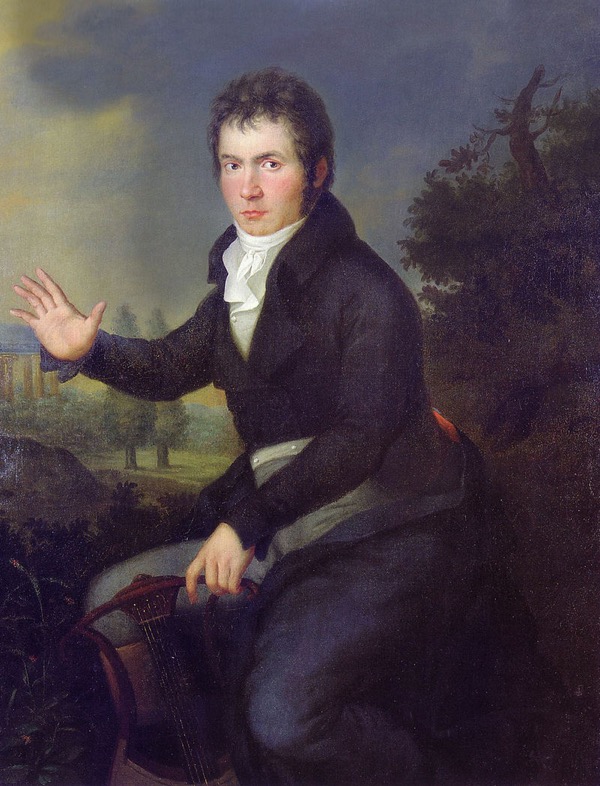
Joseph Willibrord Mähler: Beethoven, 1804 (Vienna Museum)
For Biss, the Beethoven piano concertos are pathbreaking, full of spirituality, play, and fierce conviction. They are the very essence of great music; however, they are ubiquitous. As he writes, “they are a constant presence in concert programs and recordings, and with so many opportunities to hear them, there is a tendency to forget to listen to them.”
“Hearing them is more than pleasant, but it will not alter your body chemistry; that takes listening. Hearing without listening downgrades them from vital works of art to comfortable pieces of furniture.” (Biss, Beethoven/5, 2015)
Because the Beethoven Concertos have become so familiar, it is easy to forget how revolutionary and vital they actually are. And this observation is at the heart of the Beethoven/5 project. It asks five different compositional voices from different parts of the world and different musical traditions to write a work that responds to one of Beethoven’s piano concertos.
Participating composers included Timo Andres, Caroline Shaw, Sally Beamish, Salvatore Sciarrino, and Australian Brett Dean, who shared his engagement with Beethoven’s Emperor Concerto through his “Gneixendorfer Music.”
For Biss, “it is a raucous and moving essay on Beethoven’s vitality and frailty, and it takes his Fifth Piano Concerto as its point of departure, quoting from it liberally, though always through a distorting lens, and always with Dean’s own distinctive voice at the forefront. It is a work of astounding creativity.”
Ludwig van Beethoven: Piano Concerto No. 5 in E-Flat Major, Op. 73, “Emperor”: III. Rondo: Allegro (Jonathan Biss, piano; Swedish Radio Symphony Orchestra; David Afkham, cond.)
A Chance Encounter
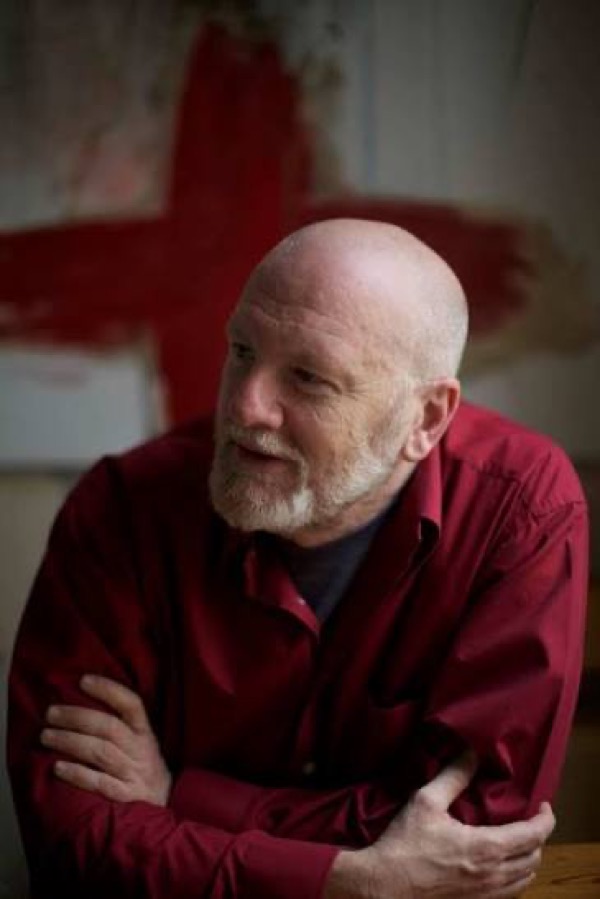
Brett Dean
The Australian composer Brett Dean played viola with the Berlin Philharmonic for fourteen years. He started composing during his time in Germany, and his music draws on literary, political, environmental, or visual stimuli, including artwork by his wife, Heather Betts.
Leading conductors and orchestras worldwide champion his music, and his work is internationally recognised. During the 2023/24 season, he was Composer in Residence at Wigmore Hall, and previously at the Grafenegg Festival in 2013.
One afternoon, he drove along the Danube with his wife and stumbled upon a “Beethovenhaus” in the small village of Gneixendorf. Beethoven took up residence there in September 1826, amid family trouble, and stayed for two months.
He composed his final string quartet there, and completed revisions and metronome markings for his Ninth Symphony. Returning to Vienna on 1 December in freezing conditions, he contracted pneumonia and died the following March.
Beethoven’s Final Winter
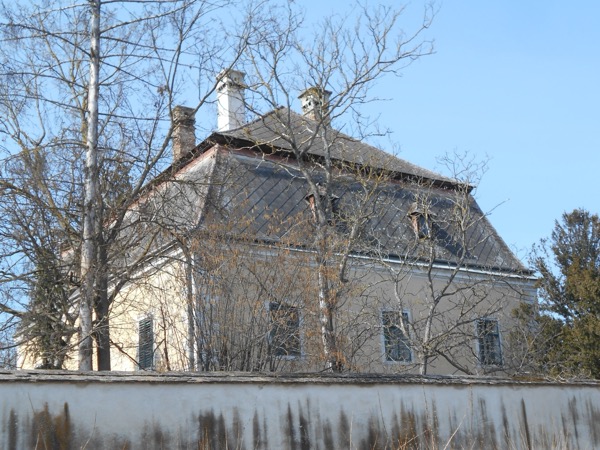
Beethovenhaus, Gneixendorf
As Dean explains, “My piano concerto takes this unexpected and memorable brush with cultural history as one of its starting points. However, in finding inspiration not only from this great piece but also from the story of his ill-fated time in Gneixendorf, my new concerto is an attempt to enter into the state of mind of the composer as he confronts profound familial conflicts as well as failing health towards the latter stages of his life.”
The concerto unfolds in three conjoined movements, with individual titles drawn from well-documented quotes and anecdotes from the final phase of Beethoven’s life. Interestingly, the soloist begins the piece seated at an upright piano within the orchestra. Played using the practice pedal, this muffled sound, according to Dean, may be seen as a metaphor for Beethoven’s worsening deafness.
The soloist eventually takes his place at a grand piano, but a couple of short visits to the upright piano provide a stark contrast to the sonic power of the modern concert grand. Dean liberally quotes from Beethoven’s Emperor Concerto throughout the work, but he filters these familiar passages through his own modern musical language. At its premiere in Stockholm, Swedish critic Nicholas Ringskog Ferrada-Noli described the piece as an inventive response to Beethoven’s final piano concerto.
Although Dean’s music portrays a physically weakened Beethoven, the music remains “mostly energetic and intense.” (Ferrada-Noli, Dagens Nyheter, 2020) The musical portrait clearly does not show an old, defeated Beethoven, as the turmoil still rages beneath the physical decline.
Brett Dean’s Gneixendorfer Musik is only one piece of the Beethoven/5 puzzle. In future episodes, we will take a look at the other four concertos as well.
For more of the best in classical music, sign up for our E-Newsletter