Alexander Scriabin (1872–1915) now has the reputation of being one of the most controversial composer-pianists of the early 20th century. In this new recording by Hayk Melikyan, we can hear the development of his radical position.
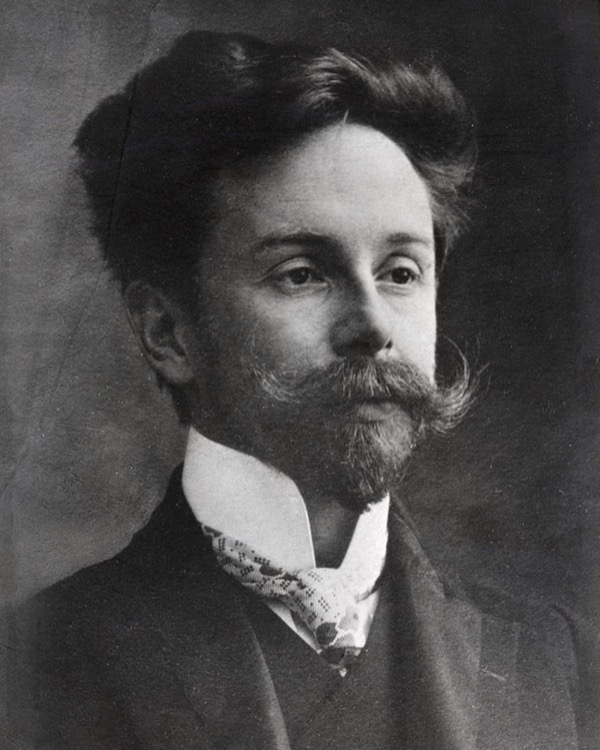
Charles-Louis Klary: Alexander Scriabin, 1909
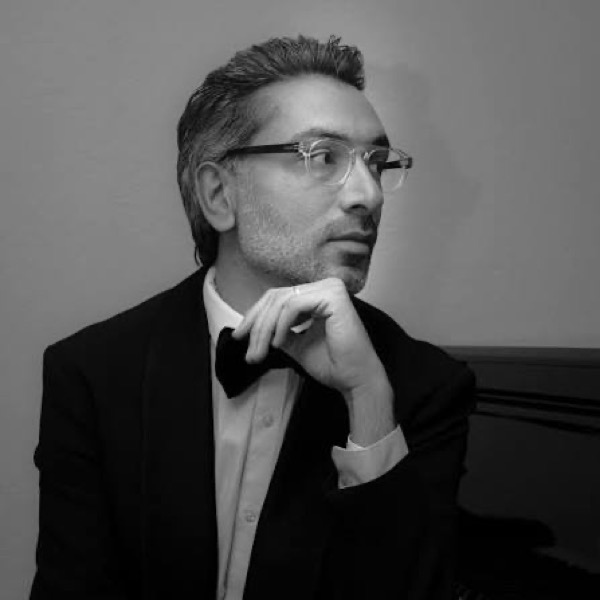
Hayk Melikyan
The works on this album are presented in chronological order, from his Op. 1 Waltz of 1885 to his Cinq Prèludes, Op. 74 of 1914. Over those nearly 3 decades, we hear how Scriabin evolved from his initial imitations of Chopin to developing his own unique voice.
Of interest are the Prelude and Nocturne, Op. 9, written in 1894 after Scriabin damaged his right hand and couldn’t use it to play. These two works, written for left hand only, show the composer’s ability to create a work that still sounds like it’s for two functioning hands. We’re still in the Romantic world of Chopin, but there’s a tragic underlayment that’s purely Scriabin.
Alexander Scriabin: Deux Morceaux pour la main gauche, Op. 9 – II. Nocturne
With a great deal of medical help and personal effort, he regained use of his right hand. He came under the patronage of the publisher Mitrofan Belyayev, who supported his work not only by publishing it but also by ensuring that his orchestral works were performed. In 1904, Scriabin moved to Switzerland and began his international touring career.
There’s always a side of Scriabin that’s tied to mysticism and spirituality, and that comes through here, particularly in the later works. His music carries a unique polyphonic signature, with intertwining figurations and extraordinary textures. His music is song-like, but not vocal, spiritual but not religious, inventive and challenging but not without a goal.
When we get to his Trois Morceaux, Op. 52, written in 1905 and 1906. Scriabin’s mysticism is complete. Tonal centres don’t get pinned down, and his colour-based harmonic system prevails more than the ‘old-fashioned’ Romantic tonic / dominant polarities.
Poème languide, the third of the Morceaux, becomes its own floating world, looking out but not involved in externals because the internals are so fascinating. The new Scriabin has arrived.
Alexander Scriabin: Trois Morceaux, Op. 52 – III. Poème languide
The spectrum of Scriabin revealed here gives us, through a single medium, the quality and life that the composer brought to his work. Melikyan gives us an exquisite view into the development of the heart of a highly complex composer.
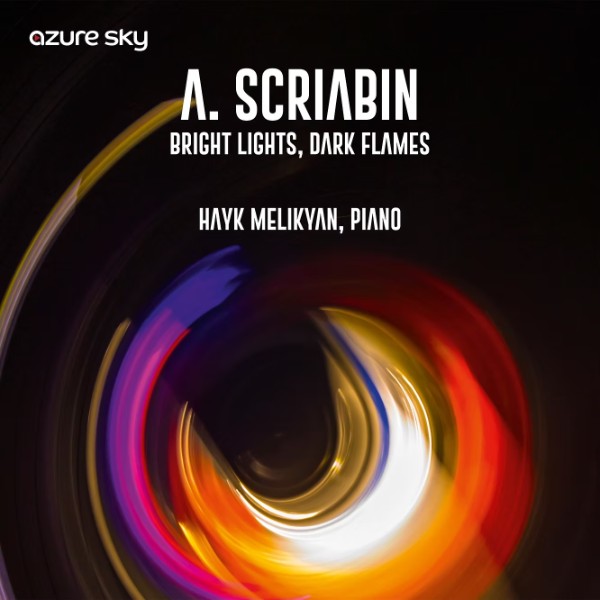
A. Scriabin: Bright Lights, Dark Flames
Hayk Melikyan, piano
Azure Sky AZ1030
Release date: 11 September 2026
For more of the best in classical music, sign up for our E-Newsletter