Ralph Vaughan Williams remained creatively active into old age. Between 1954 and 1958, he composed four songs to poems by his second wife, Ursula Vaughan Williams. Possibly intended as two separate song cycles, they were assembled and published posthumously under the title Four Last Songs in 1960.
In part, these songs represent the final tribute to the woman who had been his mistress and his muse. Vaughan Williams died suddenly in the early hours of 26 August 1958, and, to commemorate his passing, let’s take a closer look at his final settings of Ursula Vaughan Williams’ poetry.
Ralph Vaughan Williams: Four Last Songs, “Tired”
The Poet, Muse, and Partner
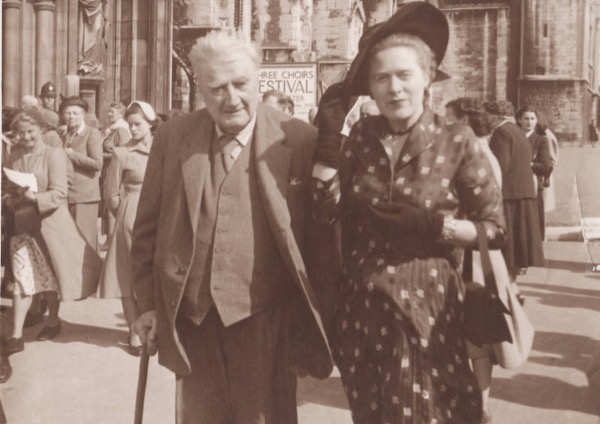
Ralph and Ursula Vaughan Williams
Ralph Vaughan Williams met the poet Ursula Wood in 1938. They had corresponded with a view to her writing a libretto, but they fell in love at their first meeting. Despite both being married and a four-decade age gap, they soon began a love affair that lasted in secret for more than a decade.
Ursula became the composer’s muse, helper, and London companion, and later helped him care for his ailing wife, Adeline. Ursula and Ralph were married in February 1953, and Ursula, who had begun writing at the age of ten, published her first collection No Other Choice in 1941.
A leading figure on the artistic and social scene of London, Ursula published seven collections of poems. She contributed words to nine of Vaughan Williams’ major works, and after Ralph’s death she wrote a biography of her husband. She also wrote three published novels and libretti for two operas, with her poems set to music by more than 30 composers.
Her poetry speaks of love, nature, and memory, and one composer said, “There is beauty to it. It is very sensitive. She can capture moods and ideas in a few words or lines. Above all, the words are evocative, and stimulate a musical response.” (Ralph Vaughan Williams Discoveries, 2016)
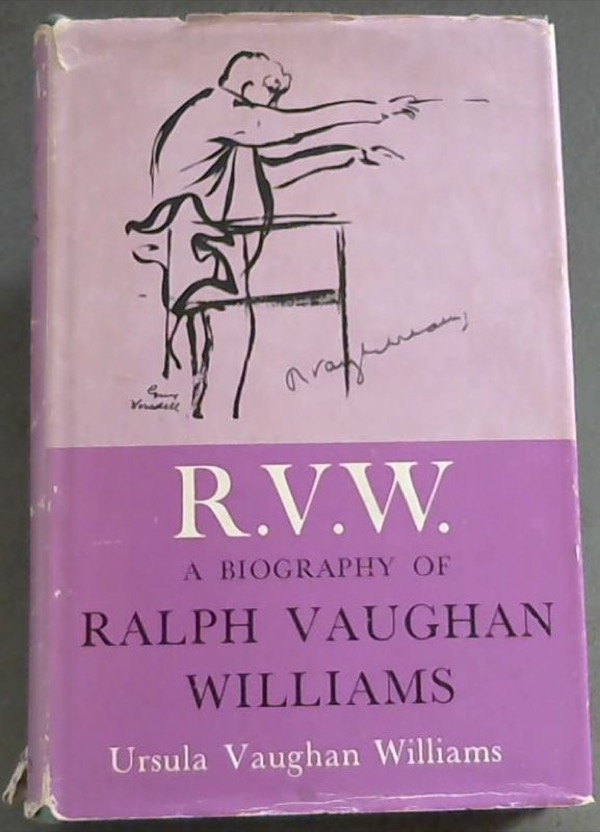
Ursula Vaughan Williams: R.V.W.: A Biography of Ralph Vaughan Williams
Ralph Vaughan Williams: 4 Last Songs (arr. A. Payne): No. 1. Procris (Roderick Williams, baritone; Bergen Philharmonic Orchestra; Andrew Davis, cond.)
A Song of Love and Loss
All four songs were composed between 1954 and 1958, but there is still debate over their proposed grouping. In the event, the current order was established by Ursula Vaughan Williams in 1960, with Anthony Payne crafting an orchestration in 2013.
The opening and closing songs are both on classical subjects, and the inspiration for the poem “Procris” originated in the painting “The Death of Procris” by Piero di Cosimo. In ancient mythology, Procris, suspecting her husband Cephalus of having a secret lover, sneaks up on him while he hunts in the woods. Startled by noises behind him, he turns and shoots Procris with his bow.
The poem, taken from Ursula’s published collection Fall of Leaf in 1943, is a subtle telling of the sad fate of Procris. In the early 1940s, the subject may well have had autobiographical associations for the poet, particularly in the poem’s telling final line.
Procris
Procris is lying at the waterside,
the yellow flowers show spring, the grass is green,
before a gentle wind the thin trees lean
towards the rushes, the rushes to the tide.
She will not see the green spring turn to summer, summer
go in a long golden dusk towards the snow,
With eyes so lit by love that everything
burned, flowed, grew, blossomed, moved on foot or wing
with the guessed rhythm of eternity.
All her hope and will
flowed from her unavailing
and she knew darkness, as her eyes know now
shut to the daylight, and despair prevailing
she saw no way to go.
Ralph Vaughan Williams: 4 Last Songs (arr. A. Payne): No. 2. Tired (Roderick Williams, baritone; Bergen Philharmonic Orchestra; Andrew Davis, cond.)
A Song of Intimacy
The poem “Tired” originates in the same 1943 collection, in which Ursula describes the sleeping Ralph Vaughan Williams. Apparently, he found the poem on Ursula’s desk in 1956 and wrote the music in one day. It is a gentle and tender love song, and according to scholars, it is the only example of a work in which the composer wrote music with himself as the direct subject.
Tired
Sleep, and I’ll be as another sleeper
holding you in my arms, glad that you lie
so near at last.
This sheltering midnight is our meeting place,
no passion or despair or hope divide
me from your side.
I shall remember firelight on your sleeping face,
I shall remember shadows growing deeper
as the fire fell to ashes and the minutes passed.
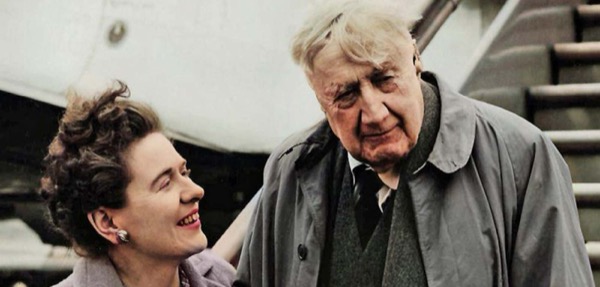
Ralph and Ursula Vaughan Williams
Ralph Vaughan Williams: 4 Last Songs (arr. A. Payne): No. 3. Hands, Eyes and Heart (Roderick Williams, baritone; Bergen Philharmonic Orchestra; Andrew Davis, cond.)
Love and Homecoming
“Hands, Eyes, and Heart” sets the last section of a longer poem “Prologue.” It comes from No Other Choice of 1941, and concerns Ursula’s love for Ralph.
Hands, Eyes and Heart
Hands, give him all the measure of my love
surer than any word.
Procris is lying at the waterside,
Eyes, be deep pools of truth, where he may see
a thought more whole than constancy.
Heart, in his keeping, be at rest and live
as music and silence meet, and both are heard.
The first song to be composed and performed was “Menelaus,” which dates from 1954. When Vaughan Williams and his wife were reading from a translation of Homer’s The Odyssey, Ursula felt compelled to write some verse. It touches on Menelaus’s homeward journey to his wife, Helen, after the Trojan War.
Menelaus
You will come home, not to the home you knew
that your thought remembers, going from rose to rose
along the terraces and staying to gaze at the vines
and reeds and iris beside the lake
in the morning haze.
Forgetting the place you are in when the cold sea winds
go crying like gulls on the beach where the horned sea
poppies grow.
Homesick wanderer, you will come home
to a home more ancient, waiting your return:
sea frets the steps that lie green under waves
and swallows nest below lintel and eaves;
there lamps are kindled for you, they will burn
till you come, however late you come,
till the west wind’s sheltering wing
folds round your sail and brings you to land.
Stretch out your hand, murmuring, lapping sea and the
lamps and the welcome wait to draw you home to rest.
You shall come home, and love shall fold you in joy
and lay your heart on her breast.
The Four Last Songs by Ralph Vaughan Williams represent a musical coda to his creative life. In Ursula’s poetry, he found an intimate language of love, memory, and tenderness. What makes this set special is the fact that it moves between myth and autobiography. Regardless of the intended design, it is a quiet testament to a remarkable partnership.
For more of the best in classical music, sign up for our E-Newsletter
Ralph Vaughan Williams: 4 Last Songs (arr. A. Payne): No. 4. Menelaus (Roderick Williams, baritone; Bergen Philharmonic Orchestra; Andrew Davis, cond.)