
In November 1828, composer Franz Schubert died in his brother’s house, unmarried. The fact is somewhat ironic. He is widely acknowledged to be one of the most emotionally expressive composers of his generation. He helped invent the Romantic-era art song, pouring his deeply felt longing and heartbreak into hundreds of Lieder.
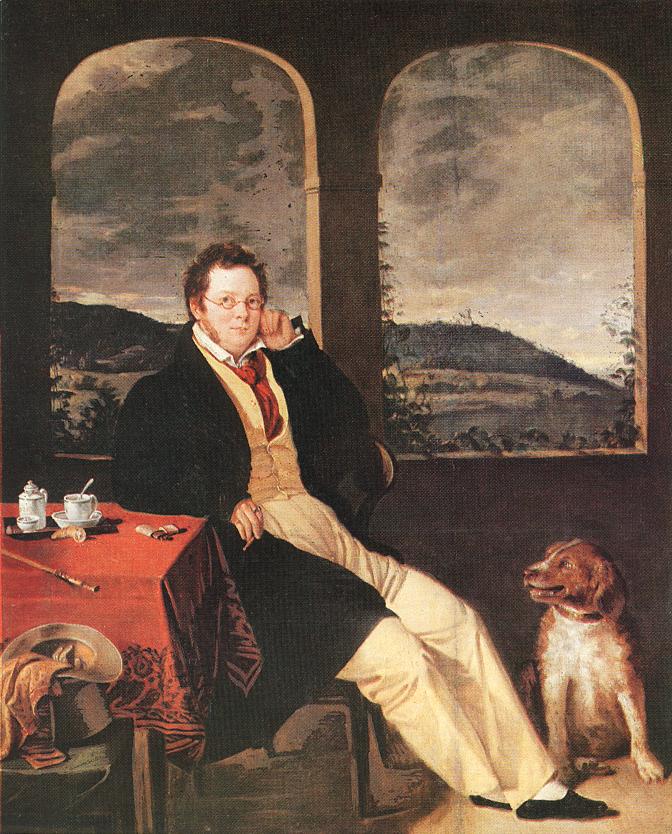
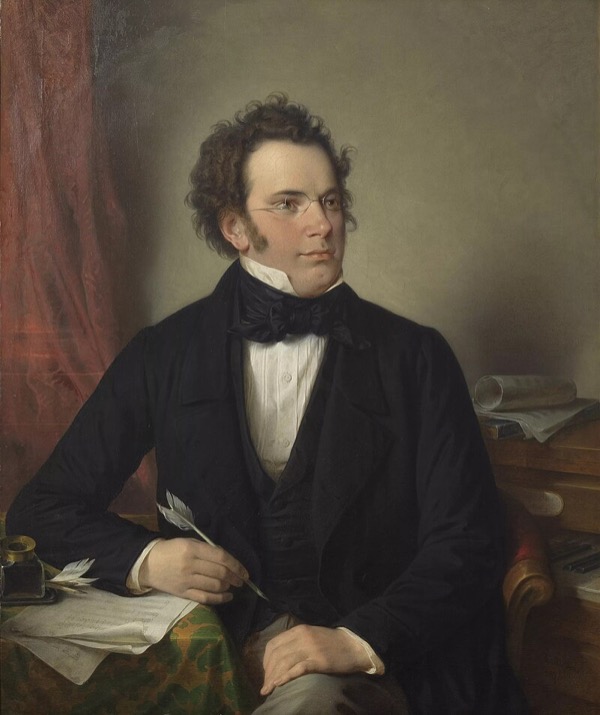
Gábor Melegh: Franz Schubert, 1827 (Budapest: Hungarian National Gallery)
Yet despite his lifelong fascination with love and beauty, he died unmarried at 31. As best as we can tell, his romantic life was a tangle of thwarted hopes and tightly kept secrets.
The question “why didn’t Schubert marry?” is worth answering, and the answer is more complicated than most biographies let on.
Schubert and Therese Grob: The Love He Couldn’t Afford
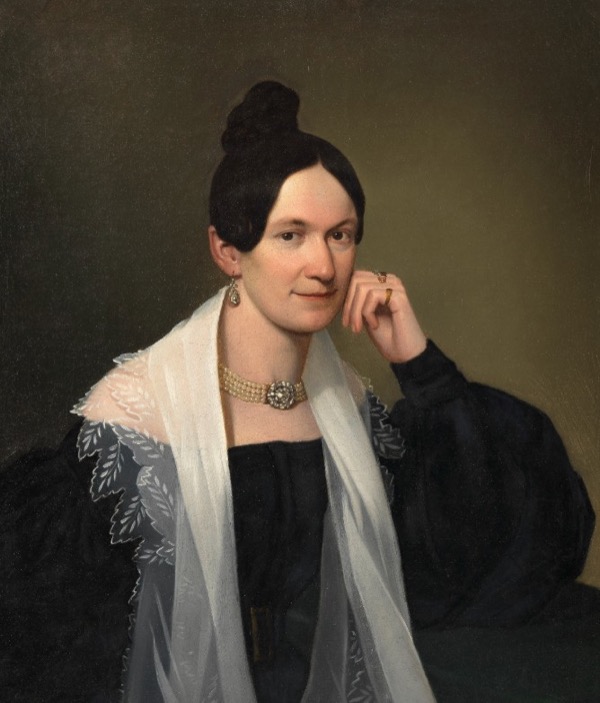
Therese Grob
When historians address the question, they usually point to Schubert’s doomed relationship with Therese Grob.
Therese was born in 1798, the year after Franz. She was a talented soprano who grew up singing in the same church that the Schubert family attended.
In the summer of 1814, when Franz was 17, he composed his first Mass (the Mass in F, D. 105), writing with Therese’s voice in mind. He conducted the premiere, and she sang the soprano part.
Franz Schubert: Mass No. 1 in F Major, D. 105 (Trine Wilsberg Lund, soprano; Bettina Ranch, alto; Min Woo Lim, tenor; Assaf Levitin, bass; Immortal Bach Ensemble; Leipzig Chamber Orchestra; Morten Schuldt-Jensen, cond.)
We don’t know if their relationship extended beyond the professional and the platonic; no correspondence between them has survived.
However, years after Schubert’s death, his friend Anselm Hüttenbrenner claimed that Schubert told him he’d contemplated marrying her.
If so, his plans were thwarted. In 1815, a draconian marriage consent law passed in Vienna, requiring potential grooms to prove that they had the means to support a new family.
This law was part of a governmental push to decrease the size of poor and working-class populations. Schubert failed to meet the income threshold and was therefore barred from marrying.
Therese ended up marrying a baker in 1820. Her choice wounded Schubert deeply and caused him to renounce women entirely – or so Hüttenbrenner claimed.
Was It Really Just Money? The Bohemian Life He Chose
After Therese, Schubert had opportunities to stabilise his finances. He didn’t take them.
He did teach for a few years at his schoolmaster father’s school – it would be the most lucrative job he would ever have. But he preferred composing.
Instead, he spent his time networking in bohemian Viennese circles, living rent-free or at reduced cost with artistic friends, and submitting works to publishers for almost nothing – selling the songs of Winterreise for the equivalent of twenty cents apiece.
He also made no move to establish himself as any kind of performer, unlike Haydn (a conductor who composed for a court orchestra), Mozart (a freelance piano virtuoso), and Beethoven (a renowned improviser who made his name in the drawing rooms of the Viennese aristocracy).
This was not the behaviour of a man prioritising the economic stability that marriage legally required.
Did Schubert Fall in Love With a Countess?
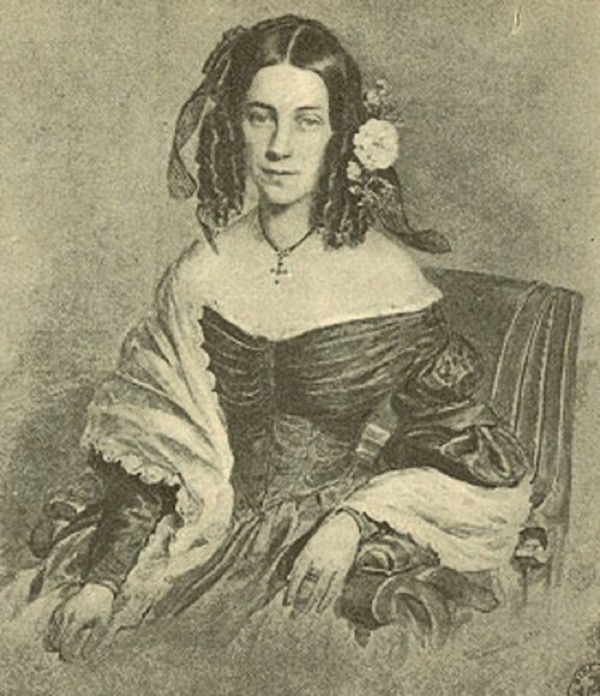
Caroline Esterházy
During the summers between 1818 and 1824, Schubert got a seasonal job teaching piano to the young Countess Caroline Esterházy at their family’s estate.
When they met in 1818, Franz was 21, and she was 12, so they worked together during most of her teen years.
After his death, Schubert’s friend Eduard von Bauernfeld wrote about the countess, “He was, in fact, head over heels in love with one of his pupils, a young Countess Esterházy.”
However, over the years, his financial situation did not change, and if he wasn’t able to marry Therese Grob, he certainly wasn’t able to marry the wealthy Caroline Esterházy.
Still, as with Therese, we have no love letters or firsthand accounts from Schubert describing this relationship.
Schubert’s “Secret Love Life”: What His Friends Wouldn’t Say
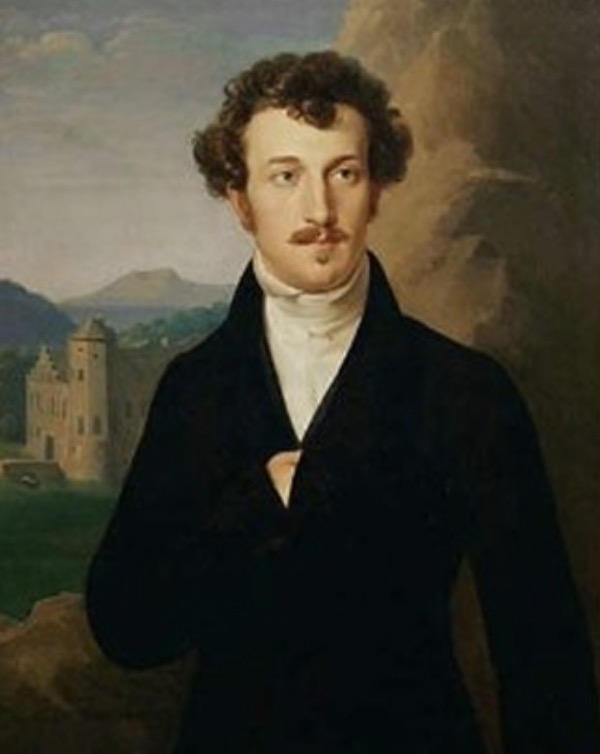
Franz von Schober
In 1869, Eduard von Bauernfeld asked members of Schubert’s circles to share their memories of the great composer.
Schubert’s close friend, author and actor Franz von Schober, provided an intriguing answer – that there had been “a great love story” but that Schober wasn’t even sure if it was publishable.
During their lives, Schubert and Schober had been close friends, rooming together and even working together on the song “Viola.” They nicknamed themselves “Schobert” – in the vein of a modern celebrity couple name.
Schubert’s Viola, D. 786
When Schober was traveling in 1823, Schubert wrote to him, “Only you, dear Schober, I shall never forget, for what you have meant to me no one else can mean, alas!”
The two would remain close until the end of Schubert’s life; in fact, the last letter that Schubert ever sent was to Schober.
The idea that Schubert may have had romantic relationships with men has been controversial. There is obviously much that scholars don’t know.
But even the possibility of Schubert’s queerness suggests that the question “why didn’t he marry?” is richer than it first appears.
Poverty, Illness, and Time He Didn’t Have
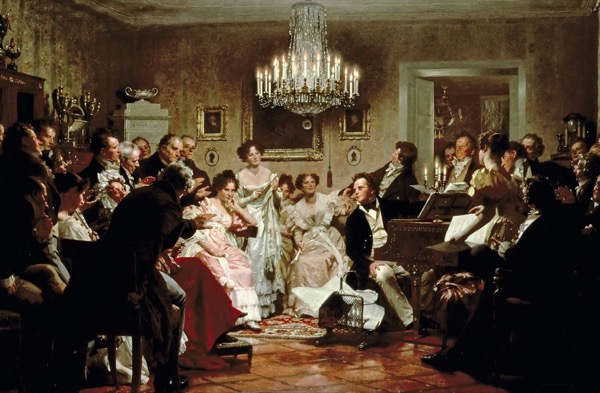
Schubertiade
At the end of 1822, Schubert contracted syphilis. He was 25.
He died six years later.
Facing a terminal diagnosis, he threw himself into composing Winterreise, the String Quintet, and the late piano sonatas.
Marriage was not a priority.
Schubert’s “Der Leiermann” from Winterreise
So Why Did Franz Schubert Never Marry?
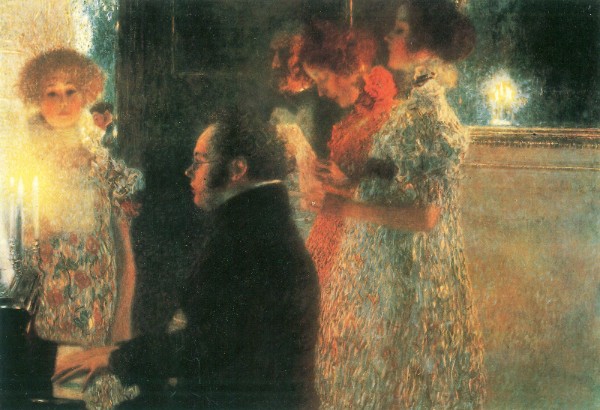
Schubert at the Piano (1899) by Gustav Klimt
The honest answer? There probably wasn’t a single reason.
A punishing law blocked him from the woman he may have loved first. He then chose a life structurally incompatible with the financial stability marriage required. A countess he tutored for years was as far out of reach socially as Therese had been economically. And if his closest friends are to be believed, the question of who Schubert loved may have been more complicated than any of those stories suggest.
He died at 31, in his brother’s house, having written nearly 1,500 compositions. Lucky for us, the music he left behind tells us more about his inner life than any marriage record could.
For more of the best in classical music, sign up for our E-Newsletter





Perfect story!
Thank you for a very enlightening article. Everyone knows Schubert contracted syphilis, but that is not what killed him. It was gastroenteritis as a result of food poisoning. Schubert had eaten a fish supper when out with some friends and a few days later he was dead. Anybody interested in composers’ diseases should read the book “That Jealous Demon, My Wretched Health” by Jonathan Noble.