Credit: https://visitestonia.com
Coastal History and the Festival’s Origins
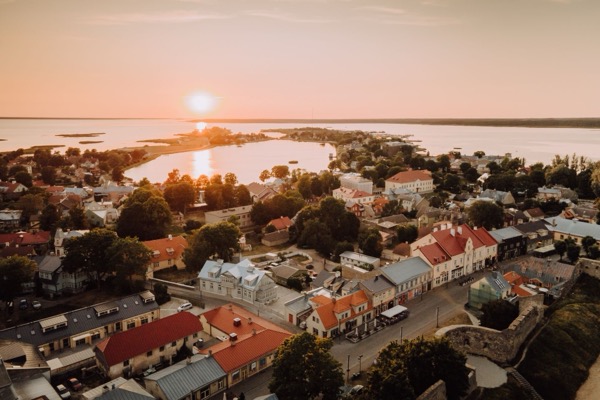
Long before flourishing as a favorite summer retreat for the Russian imperial court, Haapsalu carried its coastal geography in its very name—derived from the Estonian haab (“aspen”) and the archaic salu (“forested island”). For centuries, this tranquil coastal town on Estonia’s western shore served as the cultural heartland of the Estonian Swedes (Aibofolk). Today, the town unfolds gracefully around its central thirteenth-century medieval fortress, extending slender peninsulas into the Baltic Sea where multi-layered reed beds and wetlands merge into fragrant pine forests.
Credit: Silver Raidla
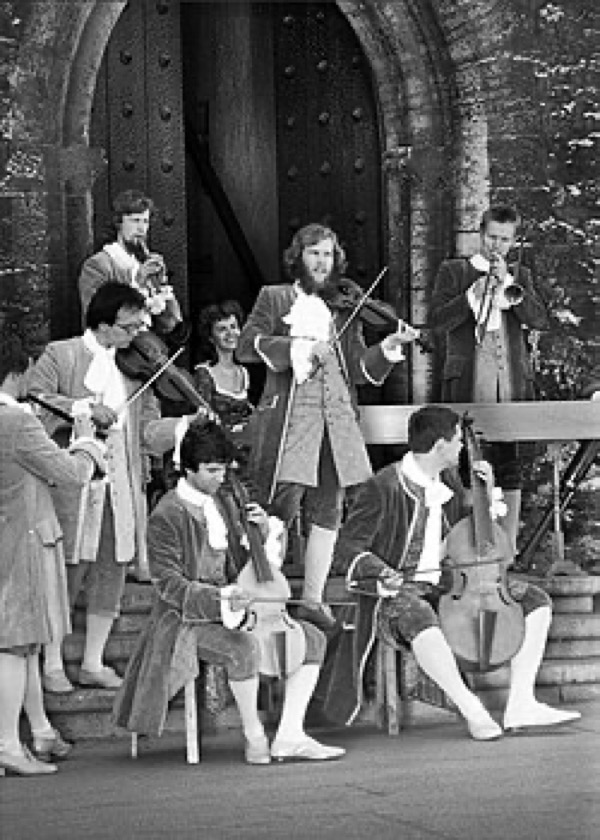
Established in 1994, a pivotal moment shortly after Estonia regained its national independence, the Haapsalu Early Music Festival (Haapsalu Vanamuusikafestival) emerged out of a deep cultural desire to reconnect with Western European traditions. While pioneer ensembles like Hortus Musicus had bravely kept early music alive during the Soviet era, Estonia lacked a dedicated summer haven where musicians and audiences could explore medieval, Renaissance, and Baroque repertoires in historically authentic settings. With its intact medieval castle, slow-paced summer rhythm, and luminous northern nights, Haapsalu offered the perfect backdrop. Over more than three decades, the festival has matured from a modest local gathering into one of Nordic region’s most respected summer pilgrimages for early music specialists.
Hortus Musicus, 1985 (Credit: Jaan Künnap)
Visionaries, Artistic Mission, and Youth Education
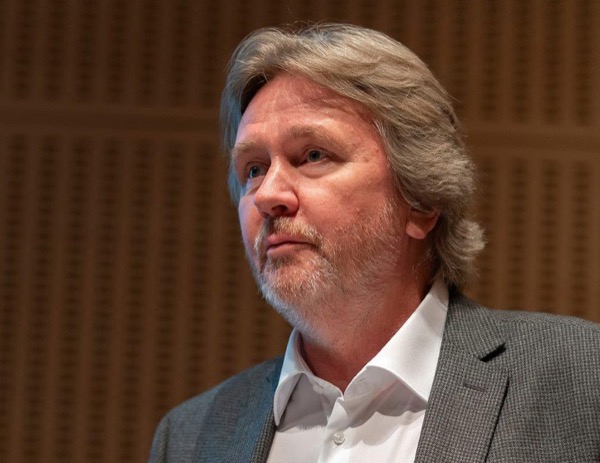
The identity and artistic longevity of the festival are closely tied to its leadership, most notably its founder, musicologist and educator Prof. Toomas Siitan. A professor at the Estonian Academy of Music and Theatre, Siitan is widely regarded as the founding father of modern Estonian early music scholarship. His guiding philosophy treats historical performance as a living, breathing language capable of speaking directly to modern listeners. In his conducting with the Haapsalu Festival Baroque Orchestra, Siitan favors organic warmth, structural elasticity, and emotional authenticity.
Credit: https://leadingvoices.ee
Crucially, the festival’s mission extends beyond professional showcases. Alongside the mainstage series, the festival actively nurtures the next generation through the annual Haapsalu Early Music Youth Summer Course, culminating in a dedicated showcase concert that weaves emerging talent directly into the festival’s fabric.
The Two Historic Venues
The acoustic and aesthetic identity of the festival is defined by two contrasting medieval sanctuaries in town:
Haapsalu Cathedral: Embedded within the medieval fortress, Haapsalu Cathedral is one of the largest single-nave churches in the Baltic region. Defined by its massive stone walls and soaring Gothic vaulting, its interior spans an unobstructed, column-free space. The cathedral’s vast volume creates an enveloping, highly resonant soundscape, making it the ideal home for grand Baroque oratorios, choir masterpieces, and orchestral programs.
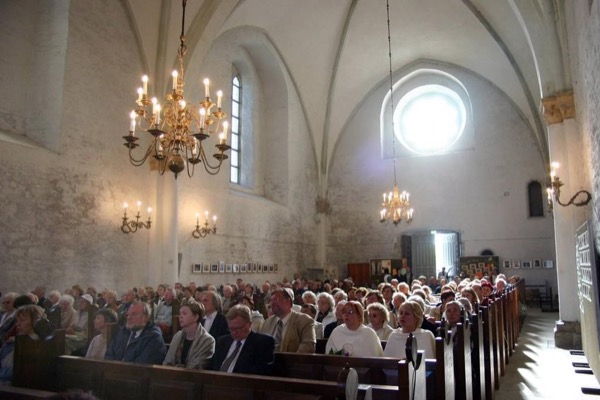
Credit: https://visitestonia.com/images/377982/kirikukontsert3.jpg
St. John’s Church: A short walk through the town’s wooden-housed streets leads to St. John’s Church. Featuring a modest white-plastered facade and slender red spire, St. John’s houses an intimate, sunlit nave anchored by exquisite Baroque woodcarvings. Its direct and warm acoustics provide an ideal sanctuary for solo recitals, lute music, and intimate chamber dialogues requiring precise micro-articulation.
Program Overview: Highlights of the 2026 Edition
This year’s edition presented a richly curated journey across four centuries of early music, seamlessly moving between monumental orchestral events in the Cathedral and contemplative chamber recitals in St. John’s Church.
The festival opened in Haapsalu Cathedral with Handel’s dramatic oratorio Joshua, conducted by Toomas Siitan with the Haapsalu Festival Baroque Orchestra, the Tumult Ensemble choir, and a stellar solo cast featuring Guy Cutting, Alvar Tiisler, Tuuri Dede, and Maria Valdmaa. Conceived as a poignant plea for peace, the three-hour performance offered a breathtaking visual spectacle as audiences watched the shifting colors of the Baltic summer dusk through the altar windows.
Vocal masterworks remained a core pillar: tenor Guy Cutting and bass Alvar Tiisler rejoined Ensemble Floridante for a flamboyant program of Baroque male arias, spanning the dramatic intensity of Handel to Purcell’s haunting “Cold Song.” For Renaissance enthusiasts, the renowned Dutch ensemble Cappella Pratensis presented Jacob Obrecht’s monumental Missa Maria Zart, gathered around a single wooden choir desk reading directly from a facsimile score. Closing the festival, Concerto Copenhagen delivered an elegant program of 18th-century Nachtmusik and Divertimenti by Mozart, Mysliveček, and Haydn.
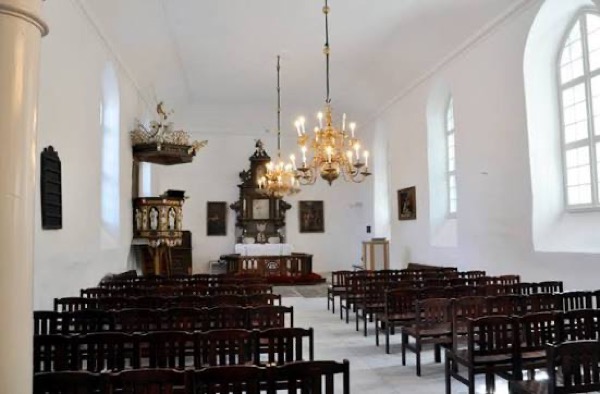
Credit: https://www.teelistekirikud.ekn.ee
At St. John’s Church, afternoon recitals focused on chamber music and solo literature. Lutenist and singer Kristiina Watt presented a contemplative program tracing John Dowland’s Italian journey alongside works by Holborne and Caccini. Duo Lislevand-Duncumb (gambist André Lislevand and theorbo player Jadran Duncumb) led listeners through a four-century musical labyrinth featuring Marin Marais, Telemann, and contemporary adaptations. Meanwhile, violinist Aira Maria Lehtipuu and Pirkanmaa Barokki paired Alessandro Stradella’s adventurous sinfonias with readings from the composer’s own letters depicting his tempestuous life.
Otseülekanne. Haapsalu vanamuusikafestivali avakontsert | Klassikaraadio | ERR
Exploring the Region: Local Heritage & Curiosities
While the festival occupies center stage, Haapsalu’s surroundings offer visitors fascinating excursions into coastal nature, aristocratic romance, and Cold War history:
Ungru Manor Castle Ruins: Located just four kilometers southwest of town, the romantic ruins of Ungru Manor stand as a magnificent, unfinished copy of Germany’s Merseburg Castle. Built in the late 19th century by Count Ungern-Sternberg for his German fiancée, the majestic roofless brick shell offers a photogenic sight set against wild fields.
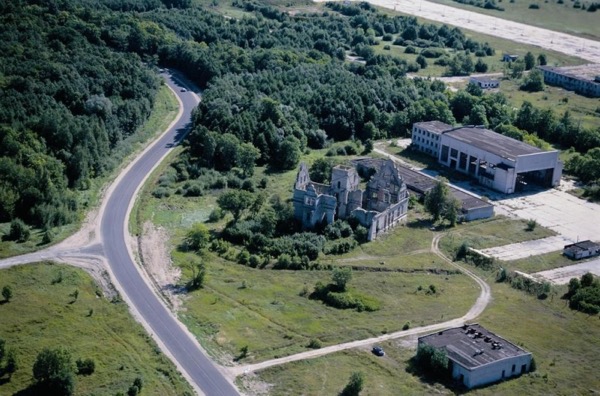
Credit: https://www.explorow.com/places/ungru-castle-ruins/10383
Kiltsi Soviet Airfield: Adjacent to Ungru Manor lies the abandoned Kiltsi Airbase, featuring a massive 2,500-meter concrete runway and military bunkers built by the Soviet Union in 1939. Once home to MiG-23 interceptors, it presents a stark, historical contrast to Haapsalu’s medieval charm.
Vormsi Island: A 45-minute ferry ride from Rohuküla harbor reaches Vormsi, the traditional sanctuary of Estonian Swedes. Visitors can explore juniper-lined coastal paths, traditional wooden villages, and St. Olav’s Church, famous for its historic graveyard containing centuries-old limestone ringed crosses.
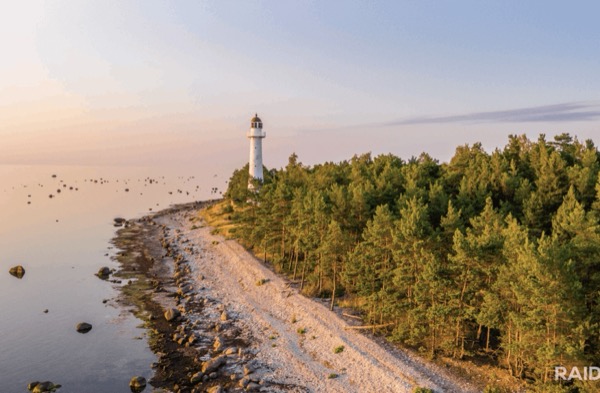
Credit: https://www.visithaapsalu.com/en/for-visitor/discover/vormsi/
Conclusion: A Luminous Baltic Tradition
As the final notes of the festival fade into the cathedral vaults, the music finds its natural continuation outdoors in Haapsalu’s summer dusk. Stepping out into the endless northern twilight, visitors are met by a striking scene: a lingering streak of orange dusk still burning along the Baltic horizon under deep midnight blue skies, while warm lamplight illuminates the ancient castle walls. It brings to mind Frans Eemil Sillanpää’s famous opening line from People in the Summer Night:
“The northern summer night is not a night at all; it is only a fleeting moment of twilight.”
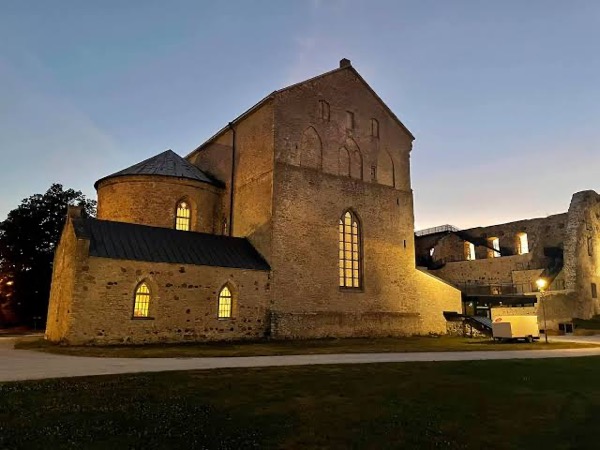
(Credit: https://muuseumioo.muuseum.ee)
Looking ahead to 2027, as Haapsalu prepares to deepen its artistic resonance alongside Finland’s Sastamala Gregoriana—the very heartland of Sillanpää’s literary inspiration—this shared twilight across the Gulf of Finland promises an even richer, cross-Baltic tapestry of early music.
https://www.studiovocale.ee/en/
Haapsalu Early Music Festival – Meet the REMA members
For more of the best in classical music, sign up for our E-Newsletter