On the morning of 5 December 1791, composer Wolfgang Amadeus Mozart died in Vienna at the age of 35. He had only been ill for two weeks.
His widow Constanze was 29 years old. She had been at his bedside through his illness, nursing him through his final days.
“Words fail me…to describe how his devoted wife in her utter misery threw herself on her knees and implored the Almighty for His aid,” her sister Sophie wrote in a letter years later.
Completely grief-stricken, Constanze was unable to attend his funeral.
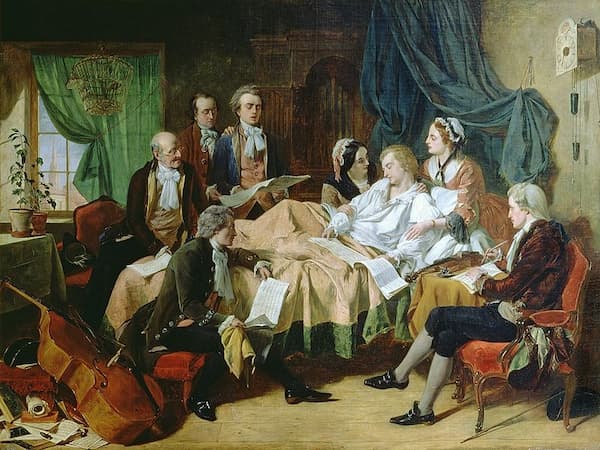
Henry Nelson O’Neil: The Last Hours of Mozart, 1860s
The obstacles she’d face in her widowhood would be staggering. Mozart had died with substantial debts. There was no inheritance to speak of, only a chaotic collection of musical manuscripts. Plus, she had two surviving children to care for: Karl Thomas, age seven, and Franz Xaver, just five months old.
It would have been understandable for Constanze to crumble, but she did not. On the contrary, over a period of decades, she would oversee the canonisation of her husband – and ensure that her husband’s music would outlast them both.
Escaping Poverty: Constanze’s Early Widowhood (1791–1797)
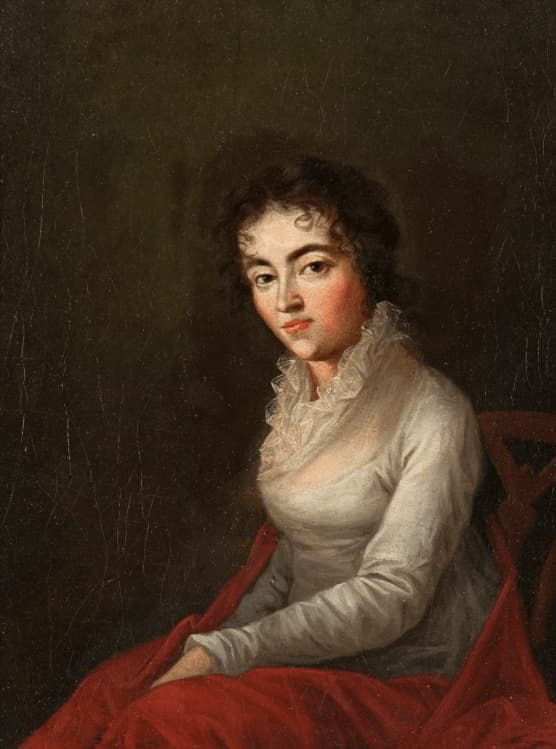
Constanze Mozart as portrayed in 1782 by her brother-in-law Joseph Lange © Wikipedia
In an era before reliable social safety nets and few professional opportunities for young widows and mothers, Constanze knew she had to move quickly after Wolfgang’s death to stabilise her finances.
She began by petitioning Emperor Leopold II for a widow’s pension. Granted within weeks, it provided a modest but essential lifeline, thanks to Mozart’s position as imperial chamber composer.
Friends, family members, and admirers also helped out, organising benefit concerts in Vienna and Prague. Constanze’s sister Aloysia – a well-known singer – performed at one, as did a young Ludwig van Beethoven.
Mozart’s Requiem
Crucially, Constanze arranged to have Mozart’s Requiem finished quickly – while shaping the narrative around it.
The work had been commissioned by Count Franz von Walsegg, an amateur composer known for passing off commissioned works as his own. To prevent this, Constanze hired composers Joseph von Eybler and Franz Xaver Süssmayr to complete the score. She then presented it as entirely Mozart’s, allowing her to claim the commission fee – and, importantly, block Walsegg from taking credit.
She also circulated the claim that Mozart believed he had been poisoned. Whether she truly believed this or used it as a form of myth-making remains unclear, but the story helped fuel 19th-century fascination with Mozart and continues to shape his legacy today.
At the same time, Constanze recognised the financial value of Mozart’s manuscripts. As their sole custodian, she sold them strategically and negotiated major editions with the Leipzig publisher Breitkopf & Härtel. These editions became foundational to later scholarship and performance.
Sextus’s aria from Mozart’s La clemenza di Tito
A trained soprano, Constanze also returned to the stage. In 1794, she organised benefit performances of La clemenza di Tito in Vienna and elsewhere, singing the role of Vitellia while Aloysia performed Sextus.
In 1795–1796, the sisters undertook an ambitious concert tour of northern Germany, promoting Mozart’s music. The tour proved both artistically and financially successful, helping to enhance his reputation across Europe.
By the late 1790s, thanks to her persistence and strategic thinking, Constanze had stabilised her financial situation.
Meeting the Tenant Who Became Her Husband: Georg Nikolaus von Nissen
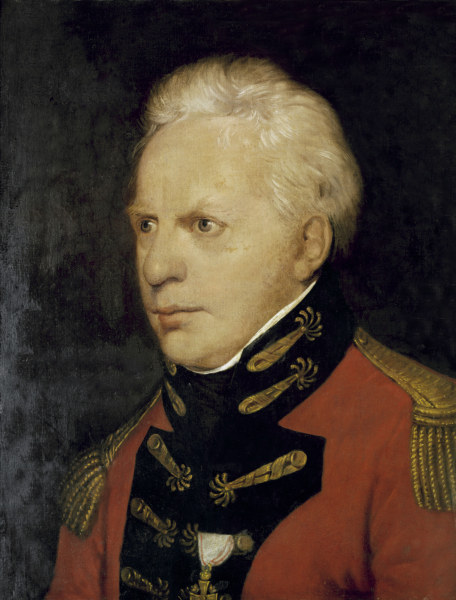
Georg Nikolaus Nissen; painting by Ferdinand Jagemann, 1809
Around 1797, in her mid-30s, Constanze began taking in boarders to supplement her income.
One of them was Georg Nikolaus von Nissen, a Danish diplomat and writer with a deep interest in music. The two grew close, and by September 1798 were living together as a couple.
In June 1809, they travelled to Pressburg (modern-day Bratislava) to marry.
Like her first marriage, this one was reportedly happy. Both of Mozart’s sons were fond of Nissen.
In 1810, the couple moved to Copenhagen, where they remained for a decade. After further travels, they settled in Salzburg – Mozart’s birthplace – in 1824. By then, Constanze was in her early sixties.
There, they began work on what would become one of the earliest major Mozart biographies.
How She and Her Second Husband Wrote the Definitive Mozart Biography
Nissen devoted years to the biography, drawing on family letters, interviews with contemporaries, and, above all, Constanze’s firsthand knowledge.
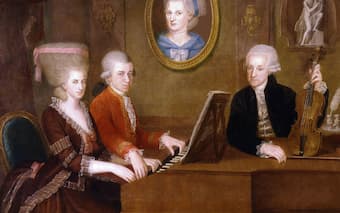
Wolfgang, Nannerl and Leopold Mozart
A key contribution came from Mozart’s sister Nannerl, who provided approximately 400 family letters. Although she and Constanze had not been close during Mozart’s lifetime, they reconnected in later years.
Nissen died on 24 March 1826 before completing the manuscript. Once again, Constanze stepped in – hiring Johann Heinrich Feuerstein to finish the work, much as she had arranged for the completion of the Requiem.
The biography was published by Breitkopf & Härtel in Leipzig in 1828 and became enormously influential.
Constanze’s Final Years in Wolfgang’s Hometown of Salzburg
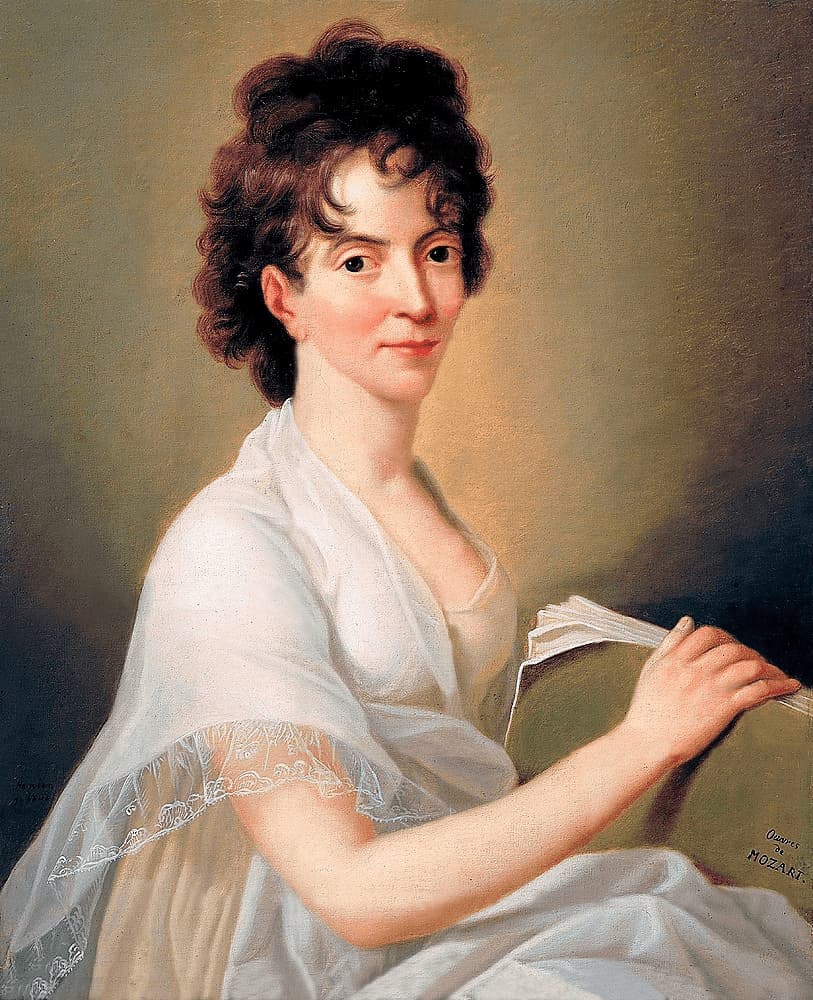
Constanze Mozart in 1802, portrait by Hans Hansen © Wikipedia
After Nissen’s death, Constanze remained in Salzburg.
Her sisters Aloysia and Sophie joined her there, and all three Weber sisters ultimately spent their final years as widows in the same city.
In later life, Constanze suffered from severe arthritis and became largely housebound. Even so, she maintained correspondence with her sons, with Nannerl – by then blind – and with the growing network of Mozart scholars seeking her insight.
Before her death, she and her sons donated the family’s collection of manuscripts, letters, and memorabilia to what would become the Mozarteum Foundation Salzburg.
That bequest remains one of the most important archives in classical music.
Death and Burial
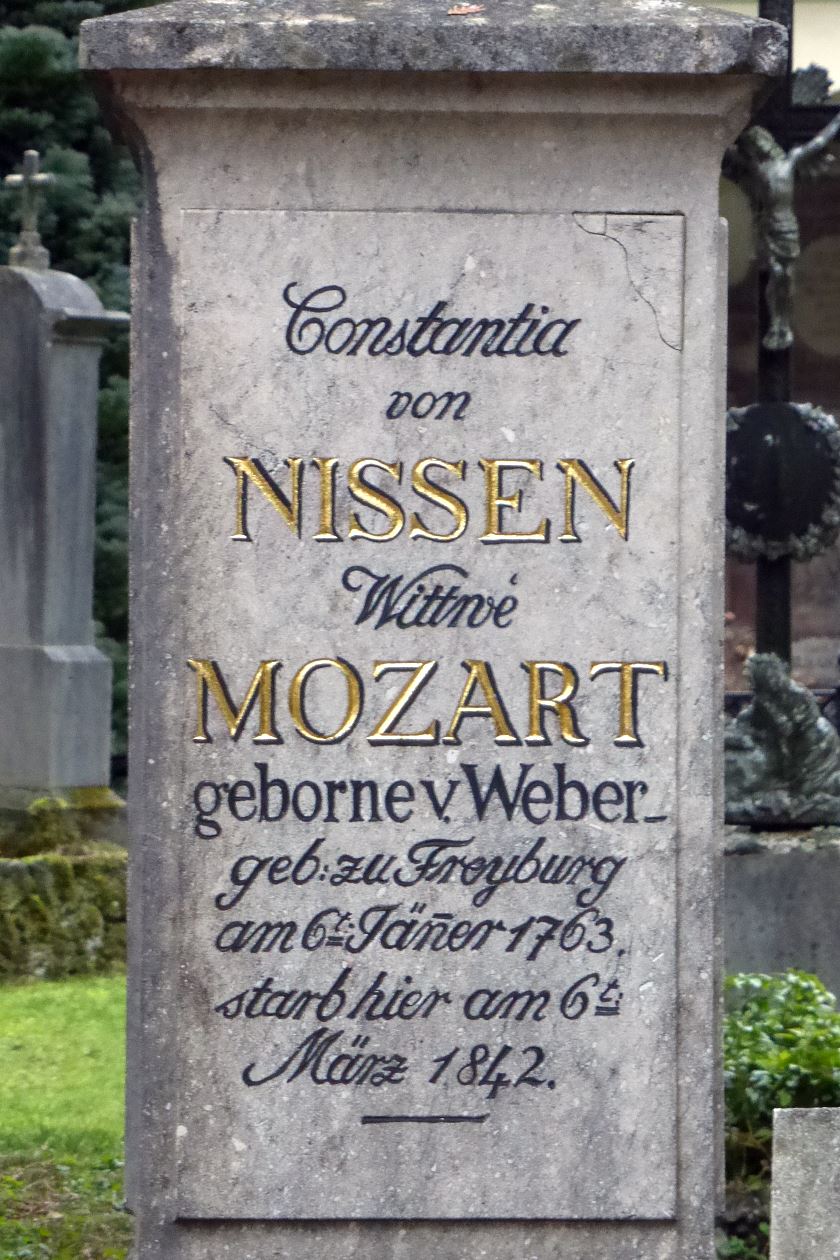
Tombstone of Constanze Mozart, cemetery of Sebastian Church, Salzburg
Constanze Mozart died on 6 March 1842 in Salzburg at the age of 80.
She was buried beside Georg Nikolaus von Nissen. She could not be buried alongside Mozart, who – like most middle-class Viennese of his time – had been placed in a common grave.
She had survived him by 51 years – and spent those years ensuring his legacy endured.
Mozart’s Ave Verum Corpus
The Legacy of Constanze Mozart
Constanze Mozart has long been a controversial figure.
Nineteenth-century biographers, influenced in part by Mozart’s father Leopold – who never fully approved of the marriage – portrayed her as shallow, extravagant, and unreliable.
Modern scholars have pushed back on that characterisation. As feminist musicologist Eva Rieger noted in 1991, the charges levelled against Constanze – that she was a poor housekeeper, that she was flighty or frivolous, that she was too often ill, that Mozart was settling when he married her – dissolve under scrutiny.
A woman who bore six children in eight years, managed an unstable household income, and then rebuilt her life after being widowed at 29 was neither passive nor incompetent.
Today, her achievements are clearer: she preserved Mozart’s manuscripts, shaped his posthumous reputation, and laid the groundwork for modern Mozart scholarship.
If she contributed to certain myths, it was within the constraints of a society hostile to unmarried women – and in service of her family’s survival. At the same time, she safeguarded the very documents that later allowed those myths to be questioned.
The lucrative global legacy of Mozart today – the recordings, performances, scholarship – rests in no small part on decisions Constanze began making in the winter of 1791, when she was 29 years old, newly widowed, and left with little more than her last name and a pile of manuscripts.
For more of the best in classical music, sign up for our E-Newsletter