Over the centuries, the devil has made countless cameos in classical music.
Composers across four centuries have been drawn to Satan as a subject. Sometimes he is a figure of genuine menace; sometimes he is the avatar for musical rebellion; and sometimes, his supernatural powers grant an excuse to write something that pushes the boundaries of what instruments can do.
From Baroque Italy to 20th-century Hungary, here are eight classical music pieces that feature the devil himself.
Tartini – Devil’s Trill Sonata (ca. 1740s?)
The Devil’s Trill Sonata was written by a Baroque-era Italian violin virtuoso named Giuseppe Tartini, who had one of the most famous dreams in classical music history.
He claimed that in 1713, when he was 21, he had a dream in which Satan appeared to him and played an astonishing violin work.
Tartini immediately woke up and tried to transcribe what he remembered, but the end result was “so inferior to what I had heard, that if I could have subsisted on other means, I would have broken my violin and abandoned music forever.”
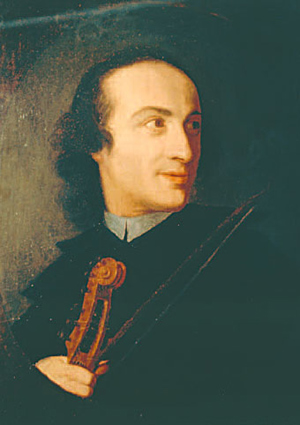
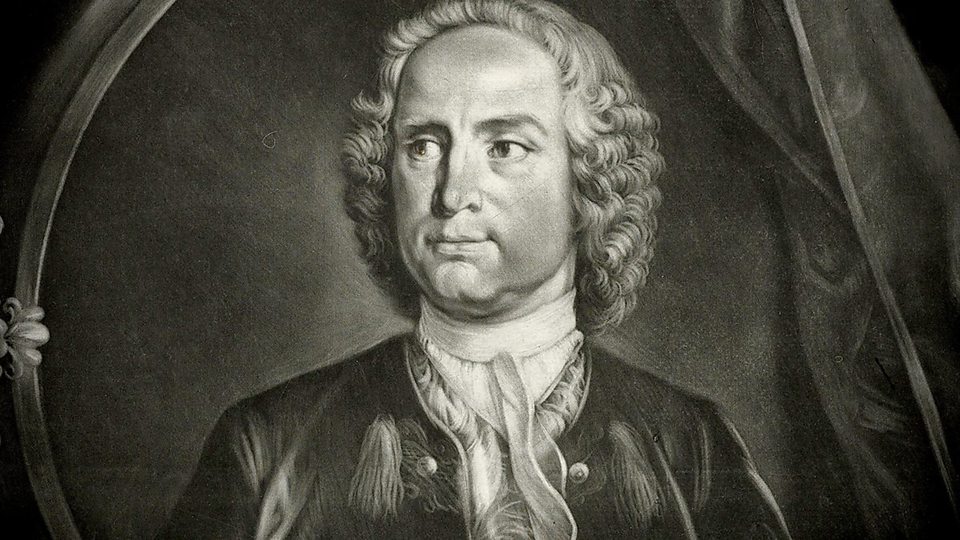
Giuseppe Tartini
It’s a great story but questionable; scholars believe the work dates to the 1740s, and it wasn’t published until the 1790s, three decades after Tartini’s death.
On the other hand, as the saying goes, the greatest trick the devil ever pulled was convincing people he doesn’t exist.
Paganini – Caprice No. 13 (ca. 1810)
Virtuoso violinist Niccolò Paganini became a superstar in early nineteenth-century Europe.
His pale skin, gaunt face, and stringy black hair – as well as seemingly supernatural technical abilities – convinced the continent that something about him was satanic in origin.
He was a showman and a businessman who thrived on controversy and happily played into these rumours.
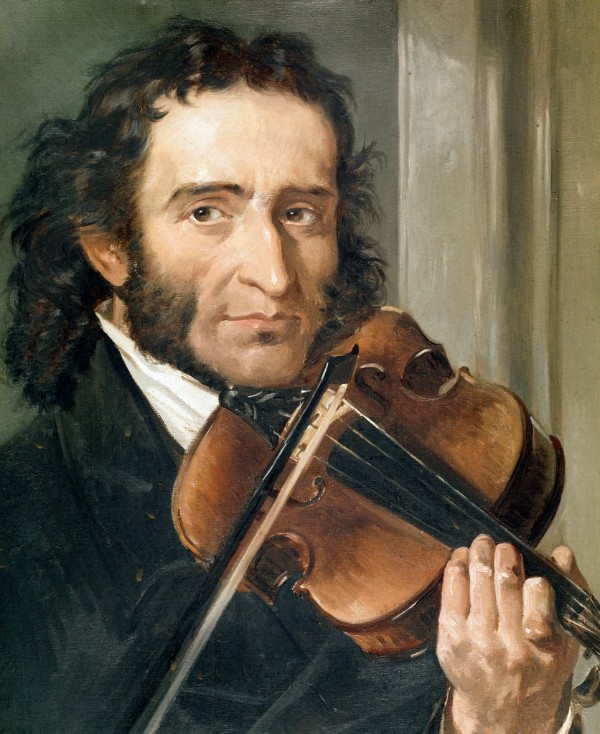
Niccolò Paganini
His thirteenth caprice from his set of 24 Caprices is subtitled “The Devil’s Laughter.”
Violinist Rachel Barton Pine said in a 2017 interview: https://www.violinist.com/blog/laurie/20176/21223/
“It’s not because of the diabolical middle section; it’s actually named after the outer section, which has these chromatic descending thirds that sound like somebody going, ‘Heh heh heh heh…!’ You finish the middle section, which is so fiery, then you go back to this mischievous outer section again, and if you do it right, you can hear the audience chuckle.”
Paganini himself didn’t bestow the nickname, but based on his embrace of the various diabolical rumours, you get the sense he would have approved.
Weber – Der Freischütz (1821)
Carl Maria von Weber‘s opera Der Freischütz (The Marksman) tells the story of Max, a forester who must win a shooting competition to marry Agathe, the head forester’s daughter.
Satan – appearing under the name of Samiel, the Black Huntsman – gets involved through Max’s colleague Kaspar.
Kaspar has already sold his own soul to the devil and is desperate to avoid his own damnation. Kaspar has an offer for Samiel: Kaspar can delay his damnation by delivering Max’s soul instead.
Kaspar lures Max into a midnight ritual at the Wolf’s Glen, where Samiel presides over the casting of the bullets. Six will fly true, while Samiel will direct the seventh and final one – to Agathe.
You’ll have to watch the opera to see what happens next.
Strauss II – Mephistos Höllenrufe (1851)
Johann Strauss II wrote his Mephistos Höllenrufe (Summons of Mephistopheles from Hell) in 1851.
Its title refers to Revelation 20:10, which describes the devil being cast into a lake of fire and brimstone, tormented day and night forever.
What better way to commemorate the eternal torture of Satan than with a dance for the Viennese aristocracy?
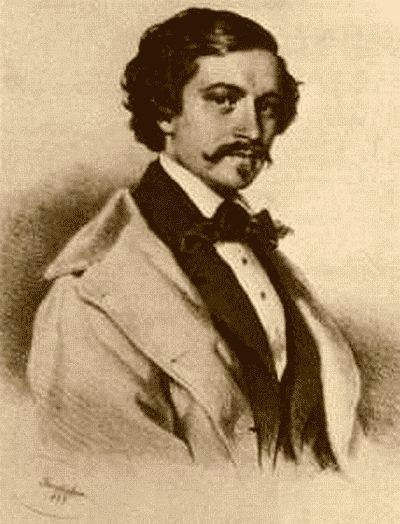
Johann Strauss II
The work features a typical light-hearted waltz tune that is interrupted by an ominous chromatic gesture – a musical shorthand for diabolical doings. It’s a striking contrast. But the carefree joy of the waltz wins out in the end.
Liszt – Mephisto Waltz No. 1 (c. 1860)
Liszt wrote four Mephisto Waltzes; the earliest – originally written for orchestra and then transcribed for piano – dates from around 1860.
It dramatises a scene from Austrian poet Nikolaus Lenau’s 1836 verse drama Faust.
In it, Faust and Mephistopheles stop by a joyful rural wedding reception, and Mephistopheles plays the violin.
In the printed score, this description of ensuing events appears:
“The amorous Faust whirls about with a full-blooded village beauty in a wild dance; they waltz in mad abandon out of the room, into the open, away into the woods. The sounds of the fiddle grow softer and softer, and the nightingale warbles his love-laden song.”
Sullivan – Prologue from The Golden Legend (1886)
Sir Arthur Sullivan – a composer best known for his operettas today – wrote a cantata in 1886 called The Golden Legend.
It was a massive success and, during his lifetime, was widely considered to be one of his best works.
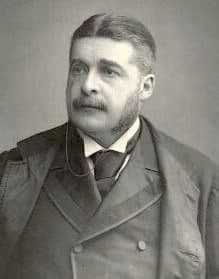
Sir Arthur Sullivan
The Prologue is especially devilish. It portrays a storm hitting the glorious Strasbourg Cathedral in Alsace, France.
The storm is caused by Lucifer and his minions, who are attempting to knock down the crosses on the cathedral’s spire.
The cathedral bells ring and finally scare Lucifer off.
Prokofiev – Suggestion Diabolique from 4 Pieces for Piano (1908)
Prokofiev’s 4 Pieces were born during his student days. The teenage Prokofiev wanted to create a new modernist musical language for himself, no matter what objections his conservative conservatory teachers had.
The final piece of the set, “Suggestion Diabolique”, means “Diabolic Suggestion.”
It features terrifying dissonances, loud and in-your-face dynamics, and chromatic lines that mutter as they descend.
Every component of the piece is underlined by a gleeful artistic conviction and independence.
Ligeti – L’escalier du diable from Études (1993)
Hungarian composer György Ligeti wrote eighteen etudes for piano. The thirteenth, called “L’escalier du diable” (“The Devil’s Staircase”), was written in 1993.
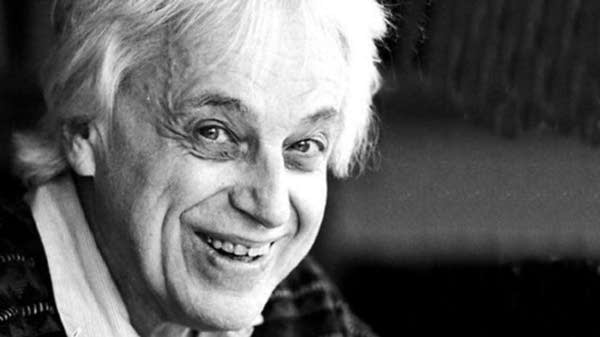
György Ligeti
It is the longest etude in the set, clocking in at around six minutes. It is also notable for its extreme dynamics, including a ffffff marking (six fs), as well as a ffffffff (eight fs) marking. Both instruct the player to play as loudly as possible – and to try to play even louder than that.
The titular staircase refers to the frantically rising lines in the piano. Those rising lines portray the desperate ascent of a very determined individual attempting to climb out of the depths of hell on the devil’s own staircase.
Eventually, the music seems to portray ringing bells, which is an interesting connection to Sullivan’s Prologue.
You’ll have to listen for yourself to hear if the pianist ultimately succeeds in their ascent.
Conclusion
From Tartini’s dream in the 1700s to Ligeti’s infernal staircase in 1993, composers have never quite been able to resist the devil’s temptation – and classical music is richer for it.
Whether he appears as a fiddler at a wedding, a huntsman in the forest, or a virtuoso in a dream, Satan has proven to be one of the most interesting inspirations in classical music history.
For more of the best in classical music, sign up for our E-Newsletter