
Gustav Mahler was a composer obsessed with expressing various shades of sadness in his music.
As a child, he experienced the death of a number of siblings. As an adult, his own child died; his wife was unfaithful; and he was diagnosed with a terminal heart defect.
These tragedies sharpened an imagination already given to an obsession with transience and loss.
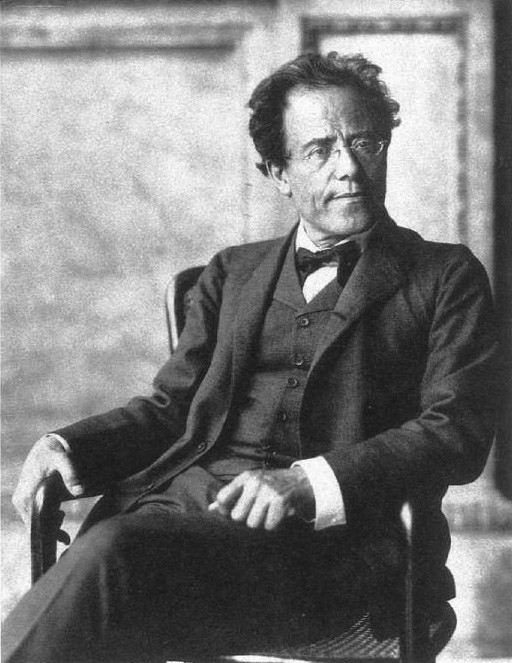
Gustav Mahler
Consequently, across his output of nine symphonies, sorrow appears in many forms: ironic and grotesque, apocalyptic and defiant, tender and intimate.
Today, we’re looking at seven symphonic movements that explore the vast emotional terrain of Mahlerian sadness.
Symphony No. 1 – Movement 3, Funeral March
Mahler’s first symphony contains one of the strangest funeral marches ever written.
The movement opens with a minor-key version of “Frère Jacques,” played by the principal bass and then heard in canon, like a children’s nursery song.
What should be innocent becomes macabre, and the music lurches forward with a kind of scorn and sardonic detachment.
Mahler said that it was meant to be a musical portrait of a famous engraving called The Hunter’s Funeral Procession, which depicts forest animals escorting a hunter to his grave.
In his program notes, Mahler wrote about the emotion of the movement:
“At this point, the piece is conceived as the expression of a mood now ironically merry, now weirdly brooding.”
This shade of sadness is an unsettling one of bitter irony.
Symphony No. 2 – Movement 1, Allegro maestoso
The first movement of Mahler’s second symphony – nicknamed the “Resurrection” – is monumental.
Fittingly, given its size, it actually began life as a freestanding symphonic poem called “Totenfeier” (“Funeral Rites”) before Mahler incorporated it into the second symphony.
The work begins with arresting string tremolo and growls from the cellos and basses. Over the course of the movement, the orchestra surges, collapses, and erupts again in recurring waves of grief and fury.
Mahler himself described this music as being akin to standing beside the coffin of a hero.
Symphony No. 5 – Movement 4, Adagietto
The Adagietto from Mahler’s fifth symphony is arguably the most famous music he ever wrote.
Although his wife Alma Mahler claimed it was a love letter to her, the music has also taken on a second life as a kind of elegy. This connotation was made explicit when Leonard Bernstein programmed it after the assassination of Senator Robert F. Kennedy.
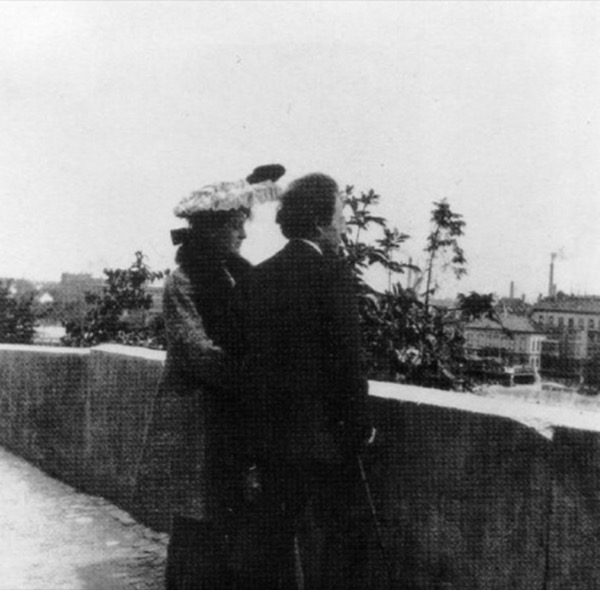
Alma and Gustav Mahler
As a result, the Adagietto is in the unique position of being love music dressed in mourning clothes.
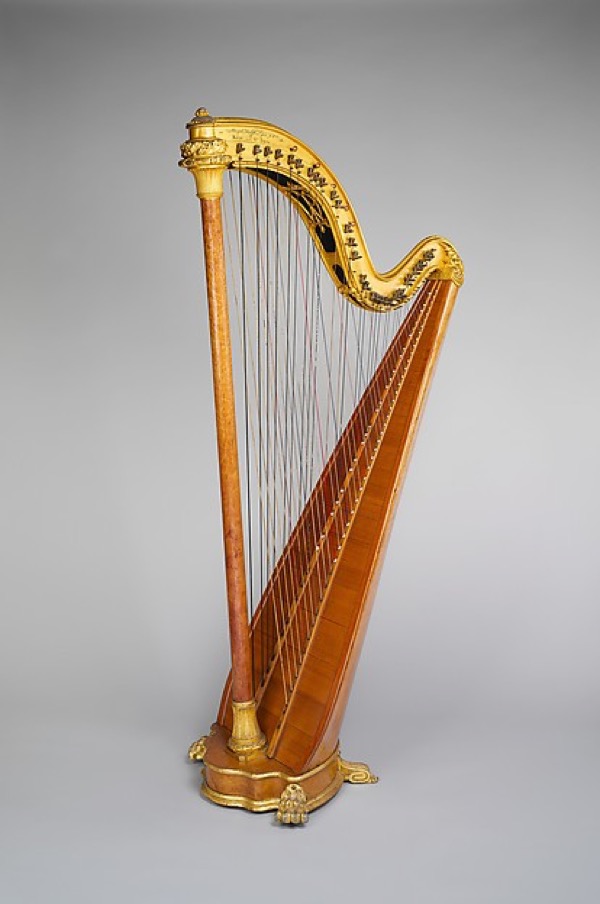
The music is written for harp and strings. Accompanied by strums from the harp, the string lines stretch upward in breathless suspension.
The sadness here feels restrained and internalised.
Symphony No. 6 – Movement 2 (or 3), Andante moderato
Mahler’s Symphony No. 6, nicknamed the Tragic, has an unusual history. Mahler couldn’t decide what order to put the movements in, so he experimented with placing this Andante as both a second and a third movement.
This music isn’t catastrophic, like the symphony’s opening movement. Instead, it’s reminiscent of bittersweet nostalgia, or memories of past happiness.
Its melodies are tender and luminous. However, all are tinged by the darkly violent mood that suffuses the symphony’s opening.
Symphony No. 3 – Movement 6, Langsam. Ruhevoll. Empfunden
Mahler’s Third Symphony lasts between 95 and 110 minutes, depending on the interpreter. Just the final movement – marked “Slow. Peaceful. Deeply felt” – takes half an hour.
In 1958, conductor Bruno Walter wrote about this work:
“In the last movement, words are stilled – for what language can utter heavenly love more powerfully and forcefully than music itself?”
Bruno goes on to write movingly about how the Adagio is “eloquent of comfort and grace,” despite its “passages of burning pain.”
The glowing brass chorales and long-breathed phrases are reminiscent of light slowly lowering during a sunset.
Symphony No. 10 – Movement 1, Adagio
Mahler’s unfinished tenth symphony was composed during the turbulent final months of his life, amid an unfolding marital crisis and his declining health.
The opening movement of the tenth symphony – an Adagio – is raw and exposed.
The movement builds toward a series of shattering dissonant climaxes. (The passage in question begins around 18:00 in the video above.) Afterward, the music collapses; the blood seems to drain out of it.
The resulting contrast in the shades of sadness it portrays is stunning.
Symphony No. 9 – Movement 4, Adagio
The final Adagio of the Ninth Symphony ended up being Mahler’s final fully completed farewell.
This movement is practically a symphony on its own, lasting nearly half an hour. Long string lines stretch and fracture. Climaxes rise only to dissolve.
By the end, the orchestra’s sound has been stripped down to the strings alone. The last two pages of the symphony last for around six minutes.
As if prophesying his own death, Mahler marked the last note “ersterbend” (“dying away”).
There is no irony here, like there is in the first symphony. No theatrical fury, like in the second. Only quiet acceptance – and then gradual disappearance.
It feels less like the end of a movement and more like the end of a life.
Conclusion
Mahler’s saddest music never remains in a single emotional register.
It begins in the first symphony’s grotesque nursery song parody, passes through catastrophe and intimacy, erupts in personal anguish, and ultimately, by his ninth symphony, thins into near-silence.
That journey – from the ironic sadness of minor-key nursery rhymes to the grief surrounding death – is one of the most affecting arcs of Mahler’s symphonic output.
Few composers have mapped the terrain of sorrow this thoroughly, transforming a lifetime of grief into music that is simultaneously vast and profoundly human.
For more of the best in classical music, sign up for our E-Newsletter






Composers don’t write sad music. Listeners just attach feelings to them. A musical composition is a complex aesthetic technological creation of a human mind. The emotions of the composer are not expressed in a composition. Our brain, with exposure, is able to make sense of a piece, of its structure, harmony, themes. But, like the process of composition, this is an intellectual process as is our response. Opera is an exception because it is visual as well as aural, and can create a dramatic situation that evokes emotions.