Carl Czerny was an incredibly industrious musician, teaching Franz Liszt and Theodor Leschetizky and thereby training the two most important piano teachers of the 19th century. He gave as many as ten or twelve lessons a day, yet he still found time to compose an enormous amount of music.
To commemorate his passing on 15 July 1857, let us look beyond Czerny’s familiar exercises and studies by exploring some of his finest piano concertos.
Carl Czerny: Piano Concerto No. 1 in A Minor, Op. 214 (Howard Shelley, piano; Tasmanian Symphony Orchestra; Howard Shelley, cond.)
How Czerny Composed
Carl Czerny wrote an astonishing amount of music. He authored over a thousand works, including nine symphonies, string quartets, chamber music, and piano concertos. I’ve read reports that Czerny had four music desks set up in his studio.
According to an often-repeated anecdote, there was a different composition on each desk, in the process of being completed. Czerny would work on one until the end of the page, then move on to the next composition to do the same.
By the time he had finished the bottom of the page on the fourth desk, the ink on the first page was dry. He could then turn the page and continue with the composition. At any rate, true or embellished, it’s a good story.
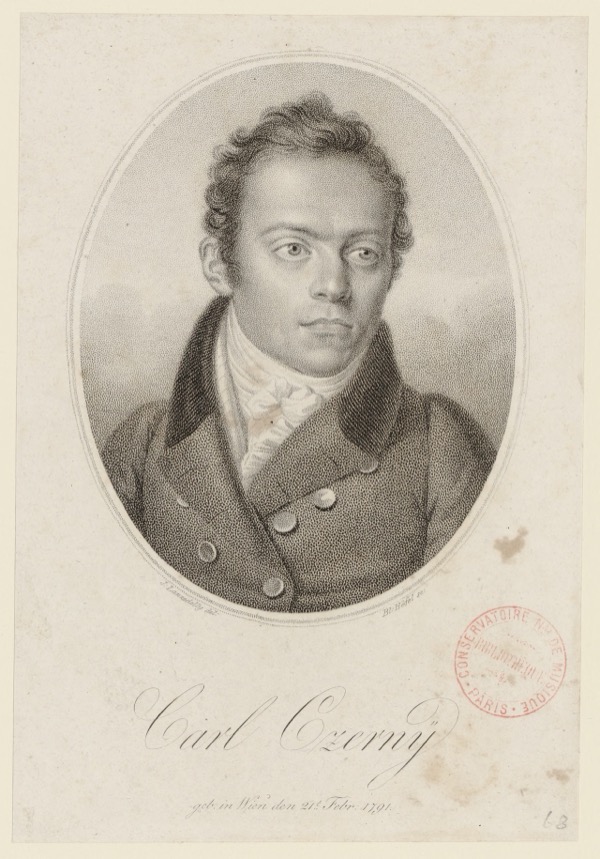
Carl Czerny as a young man
Between Admiration and Neglect
Since Czerny was also a deeply religious man, he also wrote a great deal of liturgical music, including cantatas, hymns, and eleven Masses. Franz Liszt wrote to Otto Jahn in 1852 that it is a pity that, by his super-abundant productiveness, Czerny has necessarily weakened himself.
This idea is echoed in a number of dictionaries that state that the host of lesser works has involved the really good ones in undeserved forgetfulness. Czerny was also admired by Brahms, particularly for his insights into Beethoven and the performance of these works. “There should be more respect for this excellent man,” Brahms writes to Clara Schumann.
Carl Czerny, it seems, was well-respected as a pedagogue and as a pianist. However, he was very modest by nature and never prone to self-promotion. As a student of Beethoven, Czerny tirelessly promoted Beethoven’s music above his own.
In addition, Czerny was very popular with publishers, who couldn’t get enough of his countless potpourris, fantasies, and teaching pieces. However, his serious piano pieces were considered extremely difficult to play, and there probably wasn’t a great market for them.
Czerny’s Most Famous Concerto
The Piano Concerto in A minor, Op. 214 is probably his most famous composition in this genre. It dates from 1829 and was published the following year in Leipzig. It is dedicated to the French composer, pianist, and music critic Amédée Méreaux, today remembered for his 60 Grandes Etudes, Op. 63.
Scored for strings, two flutes, two oboes, two clarinets, two bassoons, two horns, two trumpets, and timpani, Op. 214 occupies a stylistic position between the late Classical concerto tradition and the emerging Romantic virtuoso concerto.
The opening “Allegro moderato” is the longest and most substantial movement of the concerto, with a solemn orchestral introduction establishing a dramatic atmosphere. The piano enters with a dazzling display of virtuosity, which has been described as “a true compendium of the technical difficulties that pianists of the time were likely to address.”
Some commentators hear a possible Austrian folk tune in the “Adagio,” but above all, it highlights Czerny’s ability to write extended, graceful melodies that are reworked several times. The concluding “Rondo” is a cheerful dance movement with pianistic effects designed to astonish audiences.
For listeners who know Czerny only through his exercises, this concerto can be a genuine surprise. It is a large-scale and attractive concerto with flowing melodies and virtuoso demands.
Carl Czerny: Piano Concerto in D Minor (Rosemary Tuck, piano; English Chamber Orchestra; Richard Bonynge, cond.)
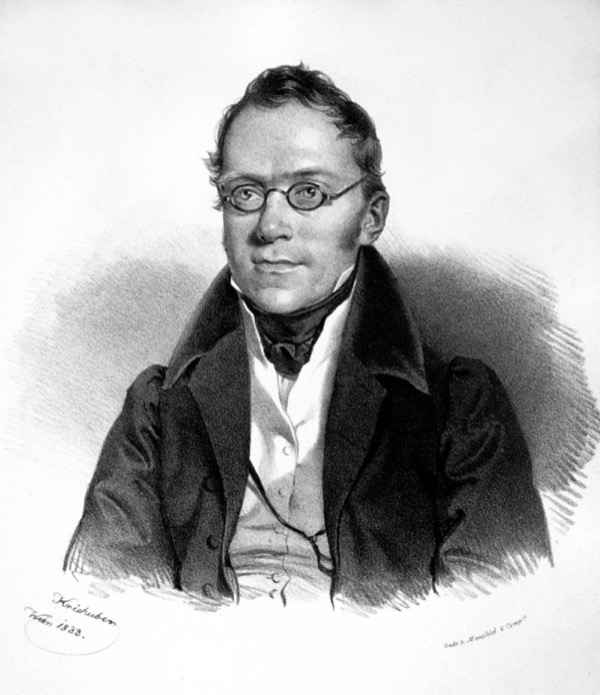
Carl Czerny, 1833
Beethoven’s Influence
Although Op. 214 is often titled “Concerto No. 1,” it is hardly Czerny’s first effort in this genre. Only recently discovered, the Piano Concerto in D minor dates from 1812 and was written when Czerny was only twenty years old. It predates his famous Op. 214 by almost two decades.
This concerto bears the stylistic signature of a student deeply influenced by his teacher. Czerny began his studies with Beethoven around 1801, and by 1812, their relationship had evolved into profound admiration and respect.
Czerny openly acknowledged his indebtedness to Beethoven, and the opening “Allegro molto” unfolds as a turbulent landscape with the piano taking on the role of dramatic protagonist.
As listeners, we are treated to conversational dialogue, extended, flowing melodies, and a good deal of counterpoint. It also explores chromatic harmonies and heightened dramatic tension, with the piano anticipating the dazzling virtuosity later associated with Franz Liszt.
A surprisingly concise slow movement unfolds as a lyrical cantilena, creating a pastoral atmosphere, while the exuberant finale reveals that Czerny was more than a mere composer of exercises.
A Work of Adaptation
In this context, we might also mention the Piano Concerto in F Major, Op. 28. However, this is not an original piano concerto by Czerny, but a piano arrangement of the Third Guitar Concerto, Op. 70, by Mauro Giuliani.
The reason I have included this work as part of my blog on Czerny’s piano concertos is that it reveals yet another aspect of Czerny’s craft. Besides being a revered teacher and highly respected composer, he was also an accomplished transcriber.
In this work, Czerny transformed the solo guitar part into a highly idiomatic piano part. He retains Giuliani’s original structure, but expands the solo writing to suit the piano. He adds pianistic figuration and exploits textures impossible on the guitar.
With this arrangement, Czerny might have responded to market demands, and it was published in the early 1820s in Vienna and Paris. And since an original arrangement appears to have been crafted by Johann Nepomuk Hummel, the Czerny version is dedicated to him as well.
Carl Czerny: Piano Concerto in F Major, Op. 28 (Howard Shelley, piano; Tasmanian Symphony Orchestra; Howard Shelley, cond.)
Concerto for Four Hands
Dating from around 1825, and first performed in public probably in 1828 at the Gesellschaft der Musikfreunde in Vienna, Czerny’s Concerto for piano four-hands and orchestra in C Major, Op. 153, might well be one of his most attractive compositions.
This work adds yet another side to Czerny’s craft, as he experiments with a highly unusual concerto medium. We know the two-piano concertos by Felix Mendelssohn and Max Bruch, but Czerny predated them by decades.
A substantial “Allegro” features an energetic orchestral introduction, immediately followed by sparkling passagework in the piano. The music seems to probe the possibilities of four-hand playing, and Czerny also pays meticulous attention to each section of the orchestra.
A graceful “Adagio” provides the lyrical contrast, with plenty of trills and flourishes emphasising a mournful theme. The orchestra is reduced in spots, providing an almost chamber-like quality to the music.
The concluding “Rondo alla Polacca” uses the same title as Beethoven’s Triple Concerto, and this exuberant polonaise is enlivened by dazzling keyboard figuration and playful dialogues. The two pianists weave a tapestry of surprising complexity, yet they never get in each other’s way despite the virtuoso nature of the score.
In the featured concertos, we find Czerny far removed from his narrow image as an “exercise composer.” He was a musician of real imagination, drawing on Beethovenian drama and Viennese elegance to lead music into the emerging virtuosity of the 19th century.
For more of the best in classical music, sign up for our E-Newsletter
Carl Czerny: Concerto for Piano 4 Hands in C Major, Op. 153 (Duo Tal and Groethuysen; Munich Radio Orchestra; Bruno Weil, cond.)