In its latest issue in its series The Beecham Collection, SOMM Recordings puts together 3 works well-known through their studio recordings, but these live recordings bring something new and vital to what you know of his work. Sir Thomas Beecham (1879–1961) was one of the major influences on British musical life in the first half of the 20th century. Coming from a wealthy industrial family, Beecham financed opera, staging seasons at Covent Garden, Drury Lane and His Majesty’s Theatre. He and Malcolm Sargent co-founded the London Philharmonic, and in 1946, after three seasons in the US, he returned to the UK and founded the Royal Philharmonic Orchestra, which he led until his death in 1961. He was an advocate for composers who were neglected at the time, including Delius, Berlioz, and Saint-Saëns, but is associated with the music of Haydn, Mozart, Schubert, and Sibelius. Of the latter, Mozart was the composer he held in highest regard.
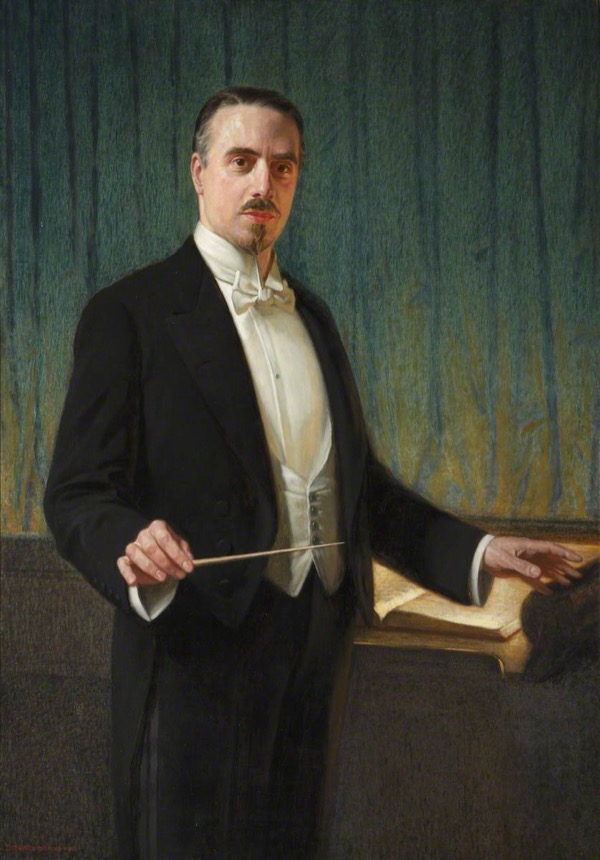
Bernard Munns: Sir Thomas Beecham, 1913 (Wadham College, University of Oxford)
These recordings, done with his own Royal Philharmonic Orchestra, which he established in 1946, were recorded live at the Royal Festival Hall between 1957 and 1960. Two works by Camille Saint-Saëns, the Bacchanale from Samson and Dalila, and the Cello Concerto, with Mischel Cherniavsky as soloist, and Rimsky-Korsakov‘s Scheherazade, with Steven Staryk as violin soloist.
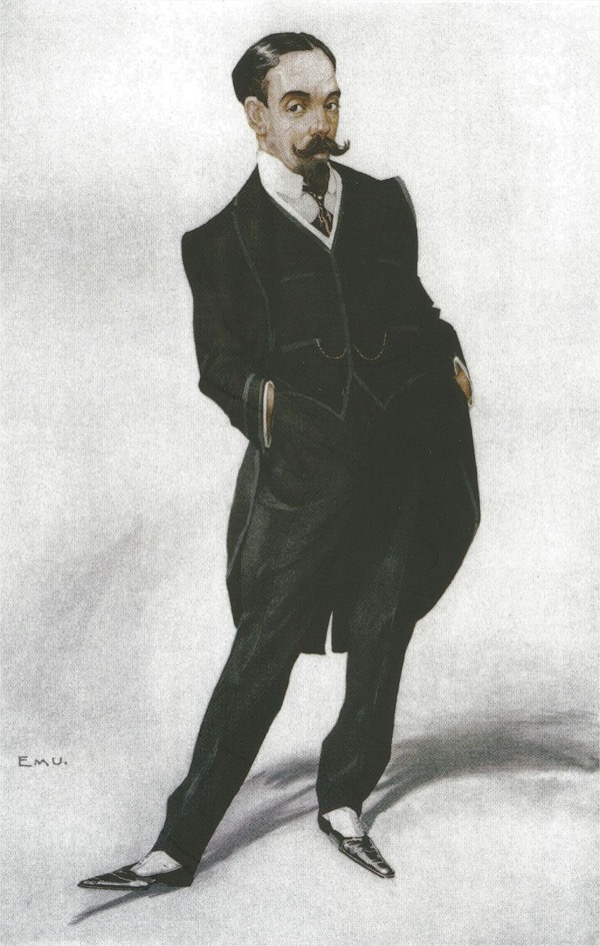
EMU: Caricature of Beecham, 1910
Of particular note is Rimsky-Korsakov’s Scheherazade. In the liner notes, Nigel Simeone observes that ‘famous studio recording of Rimsky-Korsakov’s Scheherazade was made at Kingsway Hall on 17–19 and 28 March 1957. The live performance on this release was given at the Royal Festival Hall on 21 March’, i.e., right in the middle of three intensive days of rehearsal. Simeone calls out, in particular, the first movement, The Sea and Sinbad’s Ship, where the thrilling elements missing from the studio performance come through clearly. Steven Staryk was the solo violinist for both the studio and live recordings.
Nikolai Rimsky-Korsakov: Scheherazade, Op. 35 – I. The Sea and Sinbad’s Ship
The third work on the album is Saint-Saëns’ Cello Concerto No. 1, Op. 33, recorded on 19 October 1958. Critics at the time noted Beecham as being a ‘quietly persistent advocate’ for the French composer, although the critic went on to despair at what he regarded as Saint-Saëns’ ‘poverty of ideas except for a few flashes of poetry’. Opinion on Saint-Saëns has changed over the years, and in this recording, with cellist Mischel Cherniavsky, we’re given a mostly conventional performance.
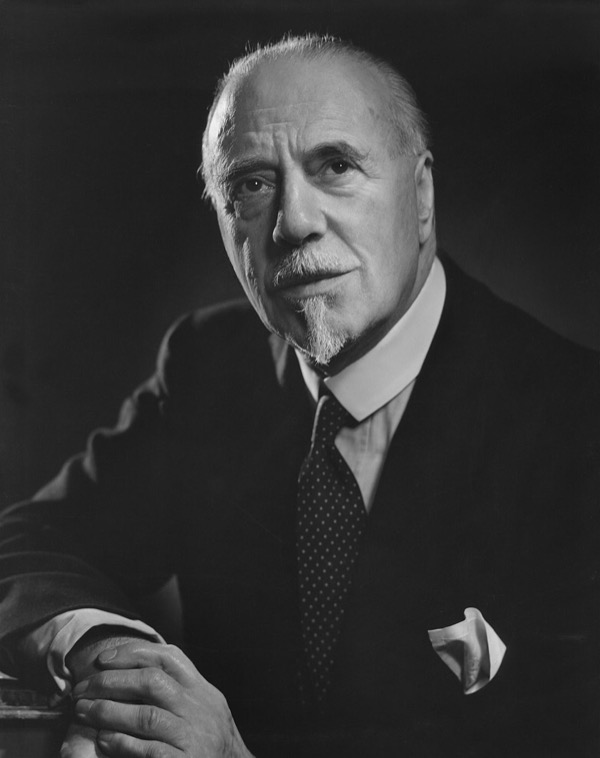
Karsh of Ottawa: Beecham, 1946
This recording opens with the Bacchanale from Saint-Saëns’ Samson et Dalila, which culminates in a far wilder ending than the studio recording could muster. Here is where we can really see Beecham responding to the presence of an audience, creating a performance that remains memorable.
Camille Saint-Saëns: Samson and Dalila, Op. 47 – Act III, Scene 2 – Bacchanale
The Bacchanale was recorded on 24 April 1960 and was part of the last concert that Beecham conducted with the RPO in London. 2 months later, Beecham suffered a cerebral thrombosis and never conducted again; he died on 8 March 1961.
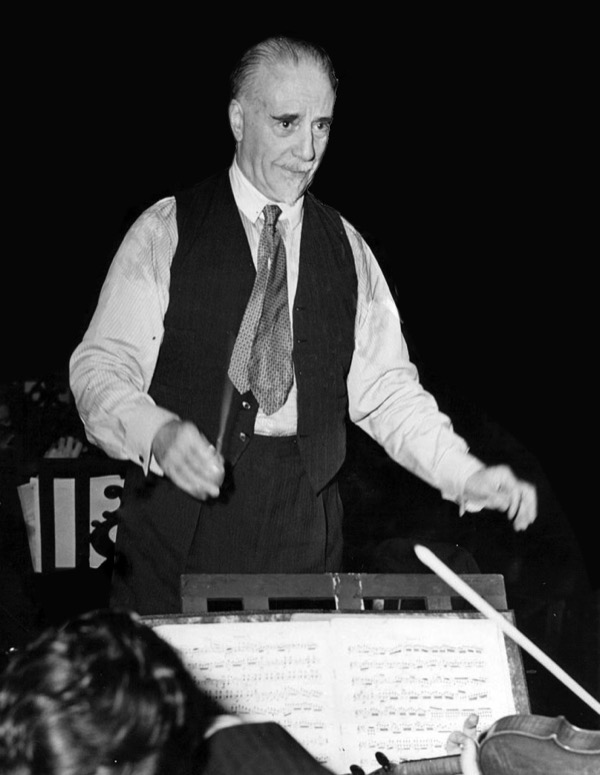
Beecham rehearsing in the US, 1948
We can have our own modern reaction to this live performance, but SOMM have sought out Jon Tolansky, formerly a principal in the Royal Opera House Orchestra, and now a maker of documentaries on composers and performers. He writes about being at the 1960 performance (age 11 ¾) and recalls being ‘shell-shocked’ by the Bacchanale – you’ll hear the audience reaction at the end of the track and realise that same effect on everyone in the hall! Tolansky muses, ‘Might I have been fantasising all this time about its exceptional power and the breathtaking rhythmic impact at its final climax? Well, if I had been scared in 1960, I was now startled in 2025’.
The audio restoration engineer is Lani Spahr, and he gives us a recording well worth close listening, particularly compared with the more familiar studio recordings made at the same time.
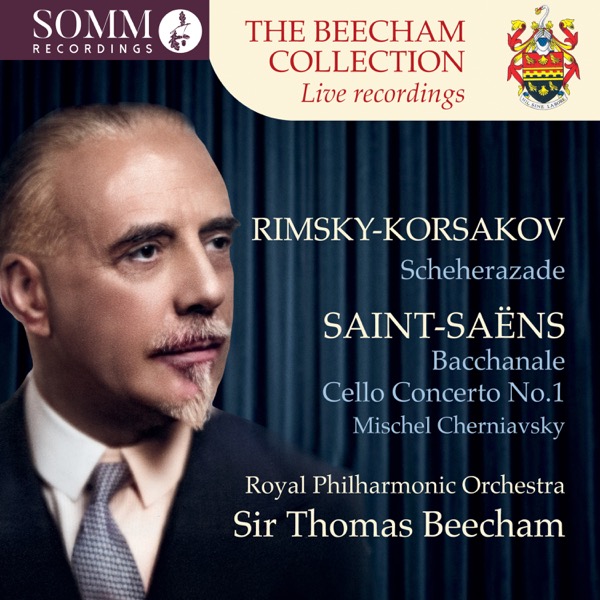
The Beecham Collection: Rimsky-Korsakov: Scheherazade – Saint-Saëns: Bacchanale, Cello Concerto No. 1
Mischel Cherniavsky (cello); Royal Philharmonic Orchestra; Sir Thomas Beecham (conductor)
SOMM Recordings SOMM-BEECHAM 34
Official Website
For more of the best in classical music, sign up for our E-Newsletter