The magnificent German-born French composer Jacques Offenbach composed nearly 100 operettas, and his opera The Tales of Hoffmann had a powerful influence on Johann Strauss II and Arthur Sullivan.
But did you know that he also composed music for the 1860 ballet Le Papillon (The Butterfly), his only work in this genre?
To celebrate Offenbach’s birthday on 20 June 1819, shall we revisit this often-overlooked chapter in his life?
Alina Somova performs Offenbach’s Le Papillon (The Butterfly)
A Ballet for Emma Livry
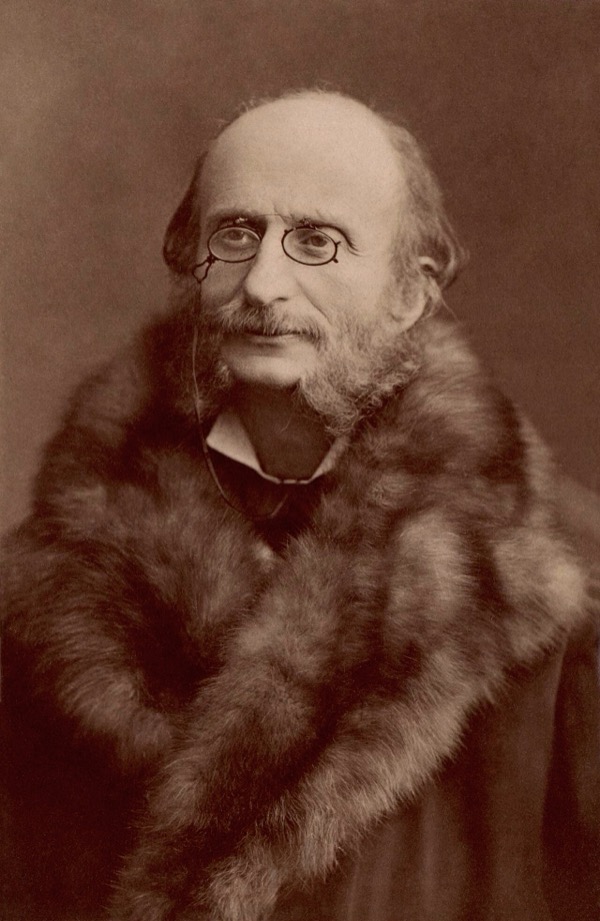
Jacques Offenbach (photo by Nadar)
The idea of creating the ballet originated with Marie Taglioni, a Swedish-born Italian ballet dancer whose fragile and delicate dancing typifies the early 19th-century Romantic style. Yet, Taglioni didn’t want the leading role for herself, but for her young protégée, the French ballerina Emma Livry.
Emma Livry gave her triumphant début in La Sylphide in 1858, and she danced the leading role in a divertissement in the opera Herculanum in 1859. A new star was born, and a new ballet was commissioned with Taglioni as the choreographer, Saint-Georges as the librettist, and Jacques Offenbach as the composer.
For the new ballet, hoping to create a work entirely identified with Livry, Saint-Georges opted for a fairy tale that was lighter in character and devoid of complexities. Essentially, it would tell the story of good and evil fairies, an enchanted princess who is cursed by the evil fairy, and the lovestruck prince who sets out to rescue her.
Jacques Offenbach: Le Papillon, Prelude and Act I Scene 1: Part I (London Symphony Orchestra; Richard Bonynge, cond.; John Georgiadis, violin)
A Butterfly by Any Other Name
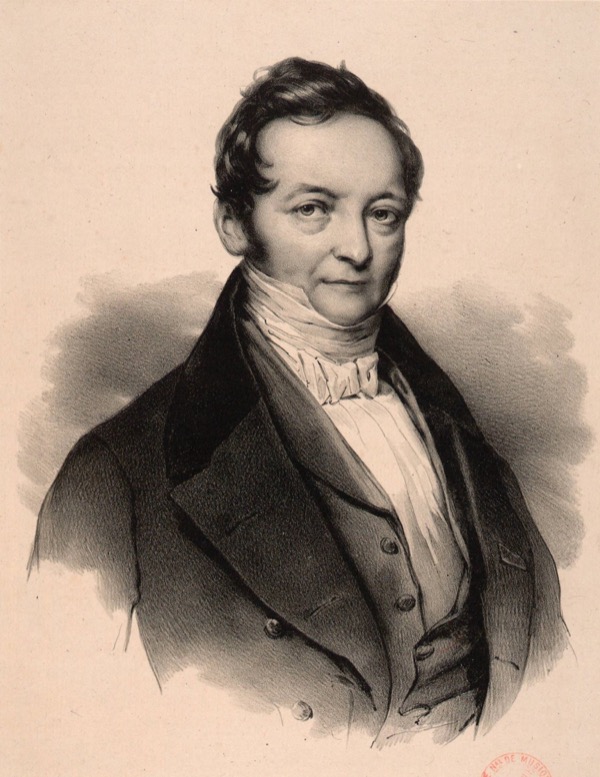
Jules-Henri Vernoy de Saint-Georges
According to petipasociety.com, the ballet’s title was decided at the last moment. “Saint-Georges favoured Zaidée, which he had intended to be the name of the heroine, but Marie Taglioni requested Farfalla, the Italian word for butterfly.”
“Royer, the Opéra director, preferred the title Le Papillon et la Fée (The Butterfly and the Fairy), but those who were guarding Emma Livry’s interests objected, arguing that such a title took the focus away from her and gave too much prominence to a secondary character. After some discussion, it was finally decided that the ballet would be simply called Le Papillon.” (Le Papillon)
Jacques Offenbach: Le Papillon, Act I Scene 1: Part II (London Symphony Orchestra; Richard Bonynge, cond.; John Georgiadis, violin)
An Enchanted Forest in Circassia
The action is set in Circassia, a former country and historical region in Eastern Europe that spanned the western coastal portions of the North Caucasus, along the northeastern shore of the Black Sea. The first act takes place in a forest, and we meet the evil old fairy Hamza, treating her servant roughly.
Hamza has been turned into an ugly woman for once, abducting Farfalla, the Emir’s daughter, who now serves as her maid. As she looks in the mirror, Hamza’s only wish is to become young again and be eligible to marry, but she will only recover her beauty if someone kisses her.
The young Prince Djalma and his entourage enter the scene, and they come across Hamza’s cottage. After enjoying food and much wine, Hamza sees this as the opportunity she has been waiting for. However, when the prince sees Farfalla, he falls in love. He dances a mazurka with her and thanks her with a kiss.
Jacques Offenbach: Le Papillon, Act I Scene 2: Part I (London Symphony Orchestra; Richard Bonynge, cond.; John Georgiadis, violin)
The Butterfly Princess
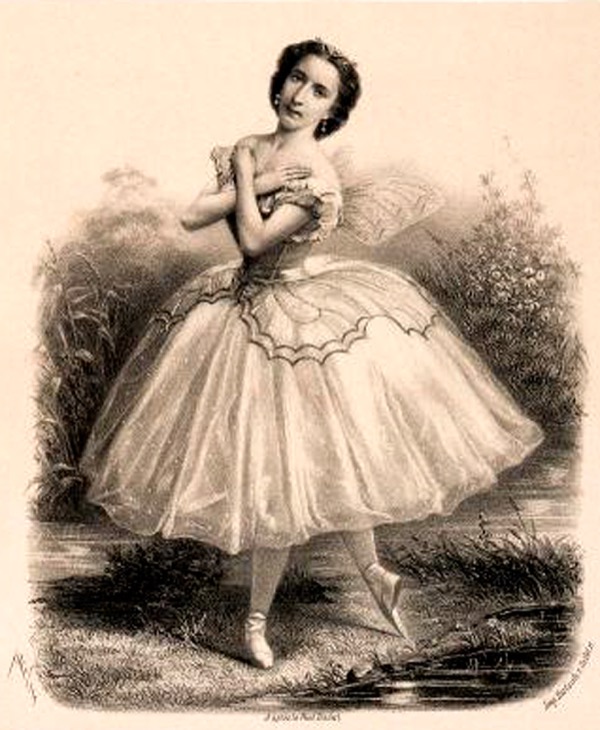
Emma Livry as Farfalla in Le Papillon
Once the prince has left, the tipsy Hamza is teased by the others and flies into a rage. She lures Farfalla into a box and, with her magic crutch, transforms Farfalla into a beautiful butterfly. The cottage is soon filled with butterflies, which Hamza chases away.
With the prince resting in a forest clearing, a member of his party brings him a butterfly he has caught. But when the butterfly is pinned to a tree by the prince, it suddenly turns into Farfalla. She escapes from his grasp and rejoins the other butterflies.
Jacques Offenbach: Le Papillon, Act I Scene 2: Valse des Rayons (London Symphony Orchestra; Richard Bonynge, cond.; John Georgiadis, violin)
Hamza now arrives in the clearing with her gardener. She locates Farfalla with her magic crutch and tries to catch her in a net. Yet, as she has left her magic wand unattended for a moment, her gardener Patimate recognises Hamza as the kidnapper of the Emir’s missing daughter.
He seizes the magic wand, and when Hamza loses her powers, he frees Farfalla. Patimate tells Djalma about Farfalla’s real identity, but he forgets to take the magic wand, and it is stolen by a leprechaun. While the leprechaun rushes away with the wand, the prince carries Farfalla to his uncle’s palace.
Jacques Offenbach: Le Papillon, Act I Scene 2: Conclusion (London Symphony Orchestra; Richard Bonynge, cond.; John Georgiadis, violin)
Temptation and Deception
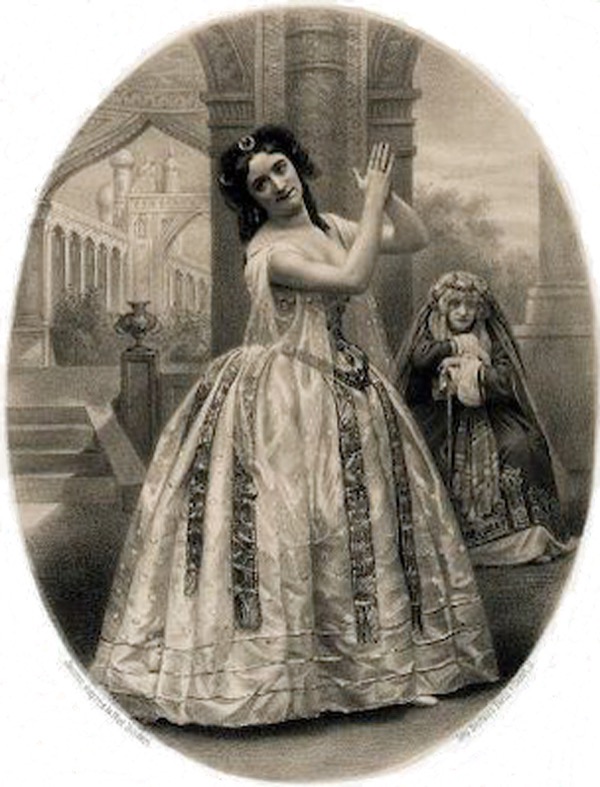
Louise Marquet in Le Papillon
The second act takes place at the Emir’s palace, and the happy Djalma and Farfalla arrive in a golden carriage. It is quickly established that Farfalla is indeed the Emir’s daughter and that she can marry his nephew.
Djalma is overjoyed, but when he tries to embrace Farfalla, she repulses him. Farfalla reminds him that not long before, he wanted to impale a butterfly on a tree. As he tries to kiss her anew, Hamza, who had been lurking nearby, throws herself between them and obtains the kiss meant for Farfalla.
The spell on Hamza is working, and she is turned into a beautiful young girl. Prince Djalma is confused by seeing two beautiful women, and he courts Hamza, hoping that Farfalla will throw herself into his arms.
Treacherous Hamza, however, turns Farfalla back into a butterfly and puts a spell on Djalma, conjuring up a vision of an enchanted garden before his eyes. Clearly, Hamza wants to marry Djalma herself.
Jacques Offenbach: Le Papillon, Act II Scene 1: Part I (London Symphony Orchestra; Richard Bonynge, cond.; John Georgiadis, violin)
Broken Wings and Broken Spells
In the last tableau, amid the grandiose gardens, Djalma awakens to find himself surrounded by a swarm of butterflies, including his beloved Farfalla. Hamza, accompanied by her sisters, the Diamond Fairy, the Pearl Fairy, the Flower Fairy, and the Harvest Fairy, arrives for the wedding.
At the rehearsal for her wedding, she summons a band of golden harps and a torch carrier. Farfalla is attracted by the glow of the torch, but in touching the lamp, she burns her wings, and the spell is broken.
She regains her human form, and Hamza’s sisters break the magic crutch and together transform Hamza into a statue. Farfalla and Djalma are reunited, and the fairies lead them into the enchanted Fairy Kingdom, where they are married.
Jacques Offenbach: Le Papillon, Act II Scene 1: Part II (London Symphony Orchestra; Richard Bonynge, cond.; John Georgiadis, violin)
High Expectations and Mixed Reactions
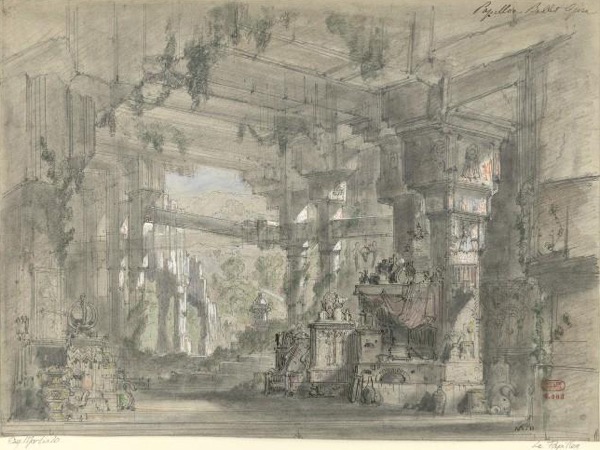
Le Papillon, 1860 stage décor
Le Papillon was first presented, to high expectations, by the Paris Opera Ballet at the Salle Le Peletier on 26 November 1860. Even Emperor Napoleon III was in the audience, but the ballet received a mixed response.
“The plot was criticised for lacking simplicity and flow, and many felt that it had relied too much on the scenic effects. Offenbach’s score was also criticised, but this mainly came from music purists who were shocked that such a composer of popular music should be given a hearing within the walls of the Opéra.”
“The more open-minded, who listened without forming their opinions in advance, gave a more positive reaction, praising the skilful orchestration and the abundance of melodies. Some of the numbers that were particularly praised were the Valse des rayons, the mazurka entitled La Lezginka, the Bohémienne and a pastoral march.” (Le Papillon)
Jacques Offenbach: Le Papillon, Act II Scene 1: Part III (London Symphony Orchestra; Richard Bonynge, cond.; John Georgiadis, violin)
Russian Revival
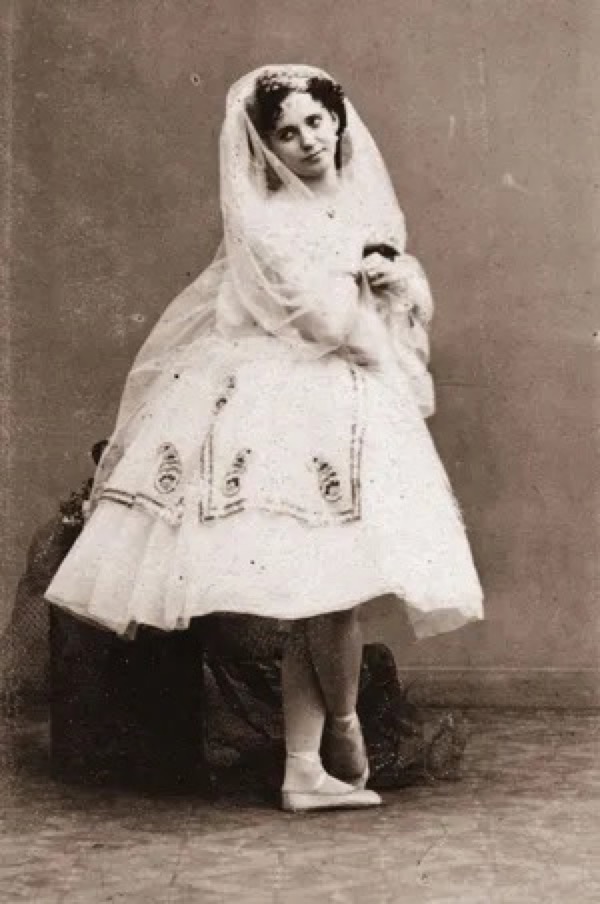
Marie Taglioni (1850)
Livry’s performance was a huge success, and Taglioni said about Emma, “it is true that I never have seen myself dancing, but I would like to think I did it like her.” Between 1860 and 1862, Emma Livry performed Farfalla forty-two times. However, she suffered fatal burns in a tragic theatre accident in 1862. She died in 1863 at the age of just twenty, and the ballet disappeared from the Paris Opéra repertoire.
Le Papillon was resurrected in 1874, but not in Paris, but rather in Russia. Marius Petipa, the dancer and choreographer who worked for nearly 60 years at the Mariinsky Theatre in St. Petersburg, extended the ballet from two to four acts, and Ludwig Minkus composed brand new music for Offenbach’s score.
Jacques Offenbach: Le Papillon, Act II Scene 2: Pas de deux (London Symphony Orchestra; Richard Bonynge, cond.; John Georgiadis, violin)
Revivals and Legacy
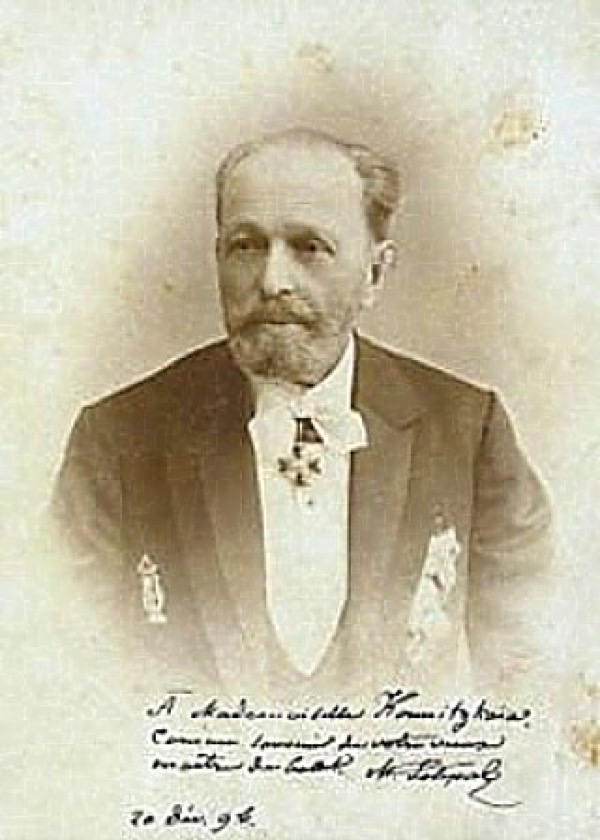
Marius Petipa
Fast forward to 1979 and a production for the Houston Ballet, which adapted the scenario with the score re-orchestrated by John Lanchbery. The plot was pared down and reset in Persia, retaining many of the comic situations. Compared to Offenbach’s original 1860 score, however, Lanchbery integrated his own composition while changing the order of the numbers in the original score.
Today, Le Papillon is often considered a historical oddity, yet its story remains compelling. Conceived for the extraordinary Emma Livry and brought to life by Offenbach’s intoxicating melodies, it remains a relic of a vanished theatrical world.
While Le Papillon was Offenbach’s singular excursion into ballet, the score reveals many of the qualities that would later make him a great success. Above all, his unfailing gift for melody would subsequently light up the operetta stage, and some of the best melodies from Le Papillon found their way into later compositions.
For more of the best in classical music, sign up for our E-Newsletter
Jacques Offenbach: Le Papillon, Apotheosis (London Symphony Orchestra; Richard Bonynge, cond.; John Georgiadis, violin)