The solo violin has long been acknowledged as the perfect instrument to express emotions like love, longing, heartbreak, rapture, and romance.
The Romantic era lasted from the early nineteenth century to the early twentieth century and produced numerous works that focused on expressing a range of emotional extremes. During this time, composers often turned to the violin as a singing, confessional voice, perfect for conveying those kinds of ideas.
© medium.com
Together, those works form a lineage of pieces that define romantic – and Romantic–classical violin music.
Today, we’re looking at the most romantic violin concertos of all time.
Mendelssohn – Violin Concerto (1845)
Mendelssohn‘s violin concerto is the prototype for the Romantic violin concerto.
Its passionate opening theme is played by the soloist with minimal accompaniment, doing away with any introductory orchestral preamble and creating an instant sense of intimacy between audience and soloist.
The slow movement unfolds like a tender love song – gentle, affectionate, yearning – and the fairy-like finale sparkles with wit and good humour.
As the earliest work on this list, it is the most reminiscent of the Classical era, offering carefully considered proportions and an elegant restraint.
Bruch – Violin Concerto No. 1 (1866)
If Mendelssohn’s romance is refined, Bruch‘s is gritty.
This concerto wears its heart on its sleeve from the opening: a haunting passage for solo violin, followed by answering statements from the timpani and the winds.
Its famous second movement adagio (beginning at 9:00 in the performance above) is one of the most beloved slow movements ever written for the violin, both aching and autumnal. Like the Mendelssohn, it also sounds like a love song.
Its finale (beginning at 17:14) somehow manages to be both triumphant and defiant simultaneously.
Lalo – Symphonie espagnole (1874)
Although technically not a concerto (it’s a five-movement work for violin and orchestra), Lalo’s Symphonie espagnole is one of the most flirtatious and sensuous works in the entire violin repertoire, which is why it deserves a place on this list.
Its romance is full of rhythmic vitality, dance-like swagger, and Iberian colour. That daring romantic spirit is obvious from the unforgettable rhythm of the opening.
Throughout the piece, the solo violin alternates between teasing charm and searing lyricism. The fifth movement, Rondo finale, is especially saucy.
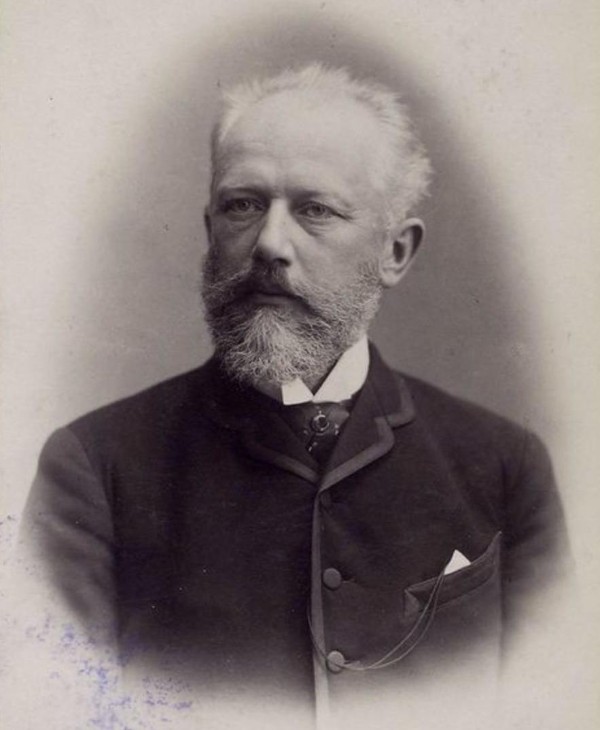
Tchaikovsky – Violin Concerto (1878)
Few concertos capture the emotional intensity of romance as vividly as Tchaikovsky‘s.
It was one of the first major works he wrote after his ill-advised marriage ended in catastrophic failure in the summer of 1877.
He fled Russia and eventually found his way to Switzerland, where he met up with a former lover, violinist Yosif Kotek.
Kotek played the then-new Symphonie espagnole for Tchaikovsky, and he was deeply inspired to write his own work for solo violin.
What resulted was a soaring first movement, a pleading and vulnerable second movement, Canzonetta, and a vigorous and virtuosic finale.
This concerto’s solo violin part often feels operatic in scale, capable of ecstatic joy one moment and quiet heartbreak the next. The romance it portrays is passionate, impulsive, and deeply personal.
Dvořák – Violin Concerto in A minor (1879–83)
Dvořák‘s Violin Concerto offers a cosier kind of romance than the extroverted Tchaikovsky. It is dramatic, but also cheerful in a way that the Tchaikovsky concerto isn’t.
The entire concerto is infused with Dvořák’s folk-music-tinged romanticism from start to finish.
However, the slow movement in particular (starting at 10:00 in the recording above) feels like an intimate love song: tender, open-hearted, and suffused with quiet affection.
The concluding third movement is cheeky and charming in equal measure.
Saint-Saëns – Violin Concerto No. 3 in B minor (1880)
Elegant and refined, Saint-Saëns‘s third violin concerto embodies a distinctly French sensibility. Its romance is particularly poised, expressed through sophisticated-sounding melodies and graceful orchestration.
The violin sings throughout with elegance and restraint, suggesting deeply felt emotions beneath a polished exterior.
Its slow movement (beginning at 8:50 in the recording above) starts as both floaty and flirtatious, before becoming increasingly passionate.
Its sassy finale (beginning at 17:48) calls to mind Lalo’s Symphonie espagnole. The violin takes on the role of a dashing and determined romantic hero, clearly ready to go to great lengths to achieve his aims.
Elgar – Violin Concerto (1910)
Elgar‘s Violin Concerto is among the most introspective and emotionally complex works on this list.
Beneath its massive, expansive scale – it is famously one of the longest concertos in the standard repertoire, lasting around 50 minutes – lies a deeply personal and intimate voice, full of nostalgia and longing, especially in its searching slow movement.
Its dedication reads “Aquí está encerrada el alma de …..”, a quote from the novel Gil Blas, meaning “Herein is enshrined the soul of …..” Some have theorised that those five dots represent the name Alice for Alice Stuart-Wortley, a friend whom Elgar loved. Others believe the reference is to someone – or something – else, but the romantic mystery remains.
Elgar famously wrote after finishing the concerto, “It’s good! Awfully emotional! Too emotional, but I love it.” That intense emotion is what landed it on this list.
Korngold – Violin Concerto (1945)
Erich Korngold‘s Violin Concerto represents late Romanticism at its lushest.
Korngold was born in 1897 and was one of the most astonishing musical prodigies of his generation.
However, his composing career was derailed by the rise of Nazism. He was forced to relocate to the United States, where he vowed not to write concert music like this concerto until after Hitler was defeated.
For this concerto, one of his first major works after Hitler’s death, he used themes from various 1930s Hollywood romances he had scored, including Another Dawn, Juarez, Anthony Adverse, and The Prince and the Pauper.
Drawing on those cinematic themes, the work just glows. This is romance in dazzling Technicolour: radiant, virtuosic, and unapologetically emotional.
Conclusion
Taken together, these violin concertos chart the evolution of musical romance across more than a century of composition.
From Mendelssohn’s intimate immediacy to Bruch’s autumnal yearning, from Tchaikovsky’s emotional volatility to Elgar’s haunted introspection, each of these works reveals a different way that composers used the violin to articulate the Romantic spirit in sound.
These Romantic violin concertos invite listeners into intensely personal inner worlds and remind us why the violin concerto remains one of classical music’s most powerful vehicles to express the emotions surrounding romance, vulnerability, and human connection.
For more of the best in classical music, sign up for our E-Newsletter