Cecilia Bartoli, born in Rome on 4 June 1966, was already an established star when she turned seriously to Mozart‘s music. Initially, she focused on Mozart’s mezzo roles, which often portray passionate or conflicted characters.
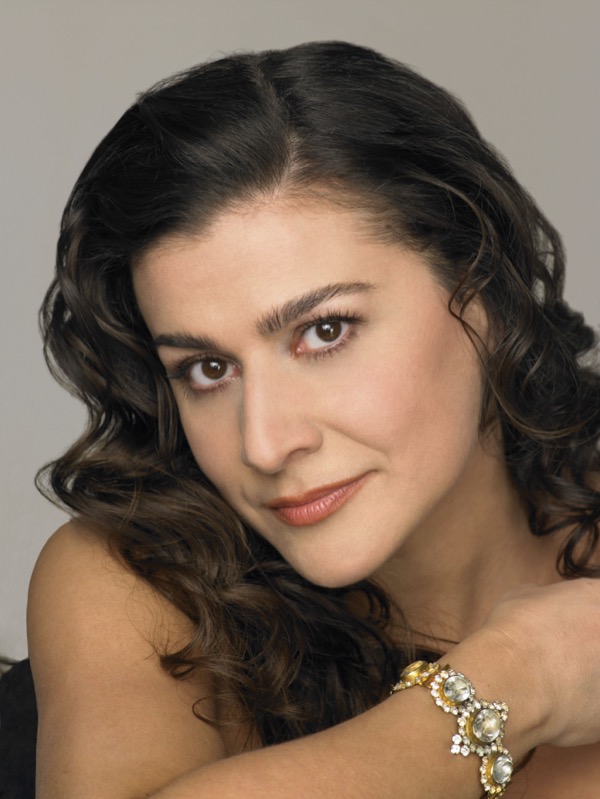
Cecilia Bartoli
However, she soon began to explore Mozart’s concert arias, which allowed her to discover Mozart’s more introspective and virtuosic side. With her rich lower register and agile top, Bartoli was ideally suited to engage with these arias.
As we celebrate her birthday on 4 June, let us sample Bartoli’s warm and flexible interpretations of Mozart’s concert arias, blending her trademark tenderness with flashes of operatic brilliance.
Cecilia Bartoli sings Mozart: “Vado ma Dove”
The Human Mozart

Cecilia Bartoli (Photo by Uli Weber / Decca)
In various interviews and programme notes, Cecilia Bartoli has explained her great love for Mozart. She is constantly in awe about the amount of marvellous music Mozart created in an unbelievably short space of time.
For Bartoli, Mozart created a universe, a world of its own, which gives us endless pleasure. More than anything, she loves to transmit the joy of singing and performing Mozart’s music for her audiences.
Mozart, for Bartoli, is not cold classical perfection, but rather deeply human music filled with theatre, emotion, and character. After all, the elegant surface of his music hides an intensely psychological and dramatic life underneath.
Wolfgang Amadeus Mozart: Alma grande e nobil core, K. 578 (Cecilia Bartoli, mezzo-soprano; Vienna Chamber Orchestra; György Fischer, cond.)
The Art of Exposure
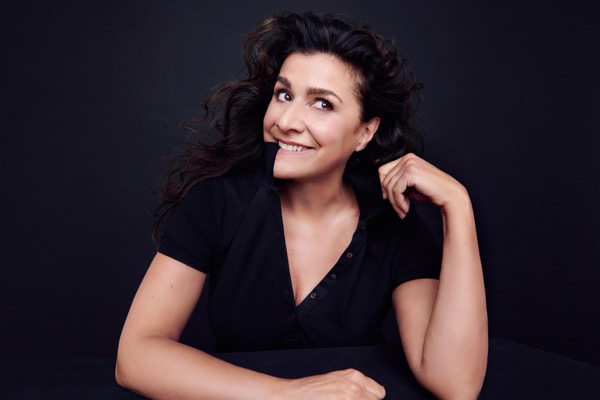
Cecilia Bartoli (Photo by Kristian Schuller / Decca)
Singing Mozart, for Cecilia Bartoli, is a truth test for singers. Since everything in his musical language is exposed and transparent, there is really nowhere to hide. That exposure applies to technique, breath control, intonation, and above all, to musical honesty.
According to Bartoli, Mozart must sound alive and spontaneous. As such, ornamentation and phrasing are not decorative extras but part of expressing the drama and personality of the music.
Likewise, Bartoli avoids excessive vibrato, allowing the melodies to shine with clarity. The musical line has to be kept flexible and alive to allow the music to sound natural and almost speech-like.
Wolfgang Amadeus Mozart: Chi sa qual sia, K. 582 (Cecilia Bartoli, mezzo-soprano; Vienna Chamber Orchestra; György Fischer, cond.)
Precision and Passion
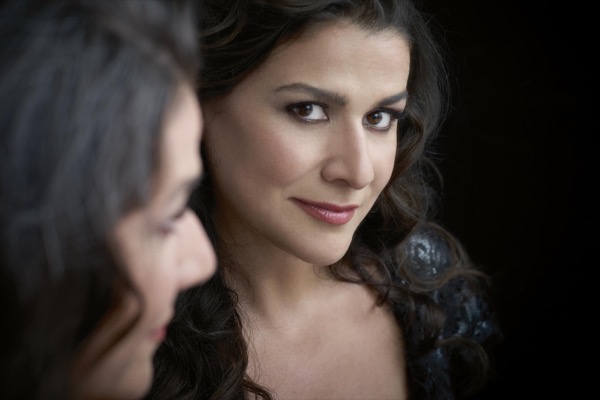
Cecilia Bartoli
For Bartoli, Mozart’s music requires the perfect balance of technical control and emotional spontaneity. It takes absolute discipline in rhythm and phrasing while still allowing space for expressive freedom.
In terms of Mozart’s concert arias, Bartoli reminds us that Mozart is never just beautiful; he is always about storytelling through precision and dramatic intent.
In her 1991 album “Mozart Arias,” Bartoli confirmed that she wasn’t singing showpieces. Instead, the recording gave her the opportunity to explore the dramatic personality inside Mozart’s arias.
Wolfgang Amadeus Mozart: Ch’io mi scordi di te … Non temer, amato bene, K. 505 (Cecilia Bartoli, mezzo-soprano; András Schiff, piano; Vienna Chamber Orchestra; György Fischer, cond.)
Mozart Arias as Living Drama
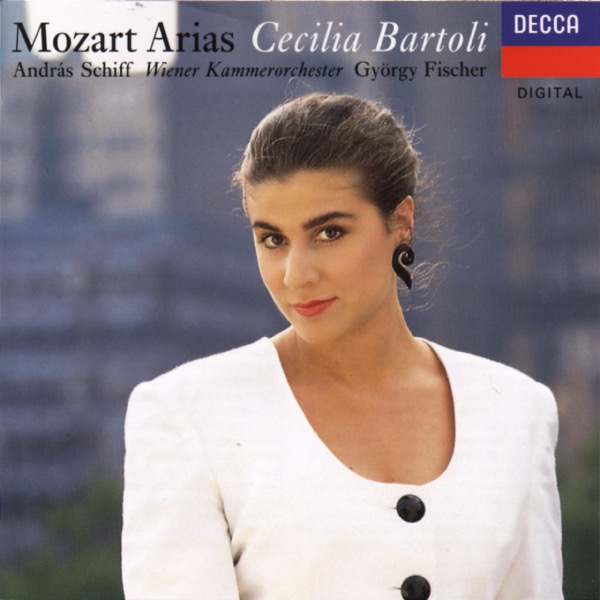
Cecilia Bartoli: Mozart Arias (Decca, 1991)
Released by Decca in 1991, “Mozart Arias” did not focus on a particular Mozart opera. Instead, it became a vocal portrait of Bartoli’s ability to tackle famous operatic excerpts alongside less familiar concert arias.
Critics, and for good reasons, were highly enthusiastic, and critic Martin Bernheimer praised Bartoli as “one of the most formidable stylists and one of the most virtuosic technicians of our time.”
Cecilia Bartoli singing Mozart is an artistic statement, as she approaches each selection like a living drama. Just below an impeccable musical surface, Bartoli is constantly probing the theatrical vitality hidden within the music. It is no accident that she has been one of the most popular opera stars of recent years.
For more of the best in classical music, sign up for our E-Newsletter