In the world of classical music, when careers can last for decades, few losses are as profound as those of extraordinary talents who die young.
During the mid-twentieth century, a number of remarkable violinists captivated audiences with their brilliance, charisma, and technical command – only to have their careers cut tragically short before their mid-thirties.
Today, we’re looking at five such artists. Although their lives were brief, their impact was not: each left behind important recordings that continue to shape how the violin is played and heard even today.
Michael Rabin (1936–1972)
35 years old
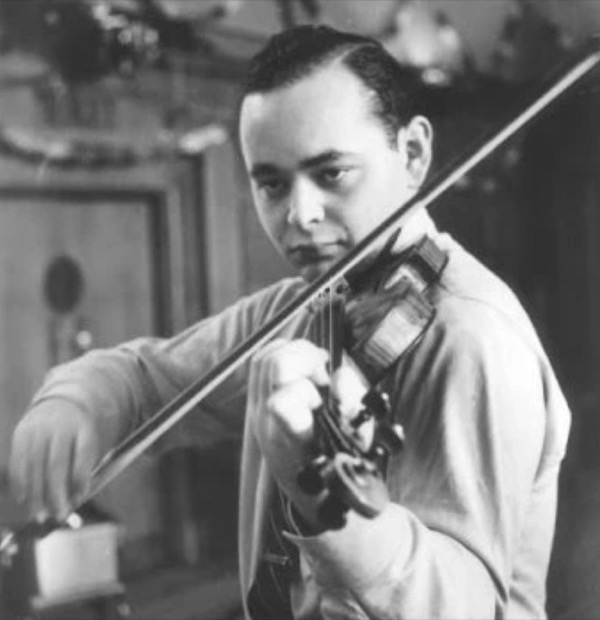
Michael Rabin
MICHAEL RABIN, violin. F. Kreisler – Caprice Viennois, Op.2
Born in New York City in 1936 to a musical family, Rabin showed exceptional musical aptitude as a young child.
The Rabins engaged the well-known teacher Ivan Galamian, who famously remarked that the boy had “no weaknesses, never” in his playing.
By age 10, he was performing Wieniawski’s Violin Concerto No. 1 with the Havana Philharmonic.
Rabin’s rise to fame was meteoric. He made his Carnegie Hall debut when he was just 13, performing Vieuxtemps‘s Concerto No. 5 to a standing ovation in 1950.
Throughout the 1950s, he appeared with major orchestras across the United States and internationally, cultivating a reputation as one of the most brilliant violin virtuosos of his generation.
Behind the scenes, however, Rabin’s personal life and health were increasingly fraught. The pressure of early fame and relentless touring began taking a terrifying toll.
By his mid-20s, he began suffering from a mysterious neurological condition that affected his balance. In one incident during a Carnegie Hall recital, Rabin suddenly lost balance and fell on stage. Some accounts suggest that these dizzy spells resulted from a form of epilepsy or inner-ear disorder.
His physical health, coupled with possible emotional strain and rumours of substance dependency, led to a temporary retreat from the concert stage in the mid-1960s.
Rabin sought medical treatment and even spoke candidly about seeing a therapist to regain control of his life.
But by 1967, he was making a comeback, including a spectacular outdoor concert in New York’s Central Park that drew 65,000 listeners: proof that his virtuosity could still magnetise the public.
Sadly, that comeback was short-lived. On 19 January 1972, Michael Rabin died at his New York apartment, only 35 years old. He was found after collapsing from a fall that caused a fatal head injury.
Doctors concluded that Rabin likely suffered an epileptic seizure, which led him to slip on the parquet floor and strike his head on a chair.
The coroner’s report also noted a heavy presence of barbiturate sedatives in his bloodstream. Whether the drugs contributed to the fall or were simply part of his medical regimen remains unclear, but the end result was tragic.
Ossy Renardy (1920–1953)
33 years old
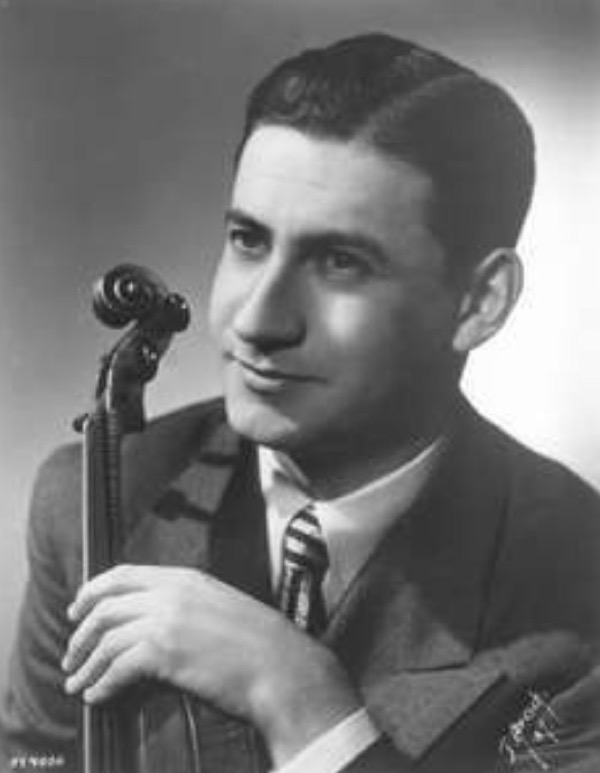
Ossy Renardy
PAGANINI 24 Caprices – Ossy Renardy
Oskar Reiss, born in Vienna in 1920, was the son of two restaurant waiters.
When he was six years old, the Viennese violin teacher Theodore Pashkus spotted Oskar loitering outside his studio and, on a whim, invited the child in to try a violin. To Pashkus’s amazement, the boy had a knack for the instrument.
Under Pashkus’s tutelage, young Oskar – who later adopted the stage name “Ossy Renardy” – blossomed into a virtuoso.
By his early teens, he was touring Europe in varieté shows, astonishing audiences with his precocious skill.
Renardy’s youthful touring quickly led to serious classical engagements. In Milan, he performed under the baton of maestro Victor de Sabata, who in turn invited the 15-year-old to play with the Vienna Philharmonic. Through the mid-1930s, he concertized across Scandinavia, Western Europe, and his native Austria.
With the rise of the Nazis in the late 1930s, due to his Jewish ancestry, Renardy left mainland Europe for the safety of the United Kingdom and soon made his way to the United States. His American debut came on January 8, 1938, at New York’s Town Hall, after a tour of Midwestern cities.
In an astounding feat, Renardy performed all of Paganini’s 24 Caprices in a single concert at Carnegie Hall in October 1939, as part of a recital that also included concertos by Lalo and Nardini.
The following year, 1940, Renardy made the first-ever recording of the Caprices, albeit in a special arrangement with piano accompaniment. This accomplishment was historic; the entire set of unaccompanied Caprices wouldn’t be recorded until seven years later, by Ruggiero Ricci.
During World War II, Renardy contributed his talents to the Allied effort. He played hundreds of concerts for troops as part of the USO (United Service Organisations). In 1942, Renardy enlisted in the U.S. Army, becoming an American citizen by 1943. He ultimately performed nearly 500 concerts for servicemen during the war, bringing moments of musical solace to those far from home.
On 3 December 1953, Renardy was on tour in the American Southwest when his life was cut tragically short.
Travelling by car with his accompanist after a recital in Las Cruces, New Mexico, their car hit an icy patch and skidded out of control, veering into the path of an oncoming vehicle. Renardy was killed instantly.
Miraculously, his precious Guarneri violin survived the accident undamaged.
Julian Sitkovetsky (1925–1958)
32 years old
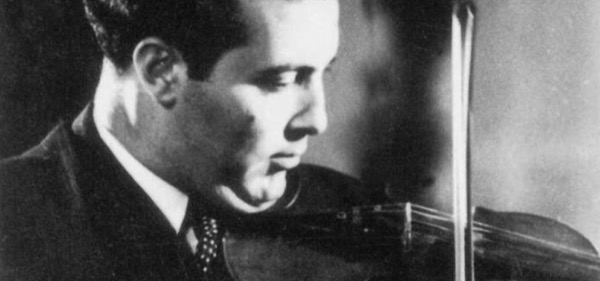
Julian Sitkovetsky
Julian Sitkovetsky plays Glazunov violin concerto in A Minor, op.82
Born in Kiev in 1925, Sitkovetsky began learning the violin at age 4 under the tutelage of his father. At 9 years old, Julian performed Mendelssohn‘s Violin Concerto with the Kiev Symphony, an early indication of the poised virtuosity he would display as a teenager.
After World War II, Sitkovetsky began amassing distinctions in major music competitions, heralding him as one of the Soviet Union’s top young violinists.
Between 1945 and 1955, he won prizes at the All-Soviet Union Young Performers Competition, the World Youth Festival, the International Henryk Wieniawski Violin Competition, and the Queen Elisabeth Competition.
In 1950, he married the gifted pianist Bella Davidovich (who would later win the Chopin Piano Competition). Together, they had a son, Dmitry Sitkovetsky, born in 1954, who would also become a noted violinist and conductor.
It seemed that Julian had everything. But a devastating lung cancer diagnosis upended his life in 1956, when he was only 30 years old.
He curtailed his concert touring drastically after the diagnosis. Unfortunately, audiences in the West never got to hear much of him in person, as Soviet authorities kept his limited appearances mostly to the Eastern bloc due to his illness. This fact led to his relative obscurity today: during his life, it was assumed he would become one of the greats of Soviet violin playing alongside figures like Oistrakh and Kogan.
Despite Sitkovetsky’s treatment, his health rapidly declined, and he died on 23 February 1958 in Moscow. He was only 32 years old.
Ginette Neveu (1919–1949)
30 years old
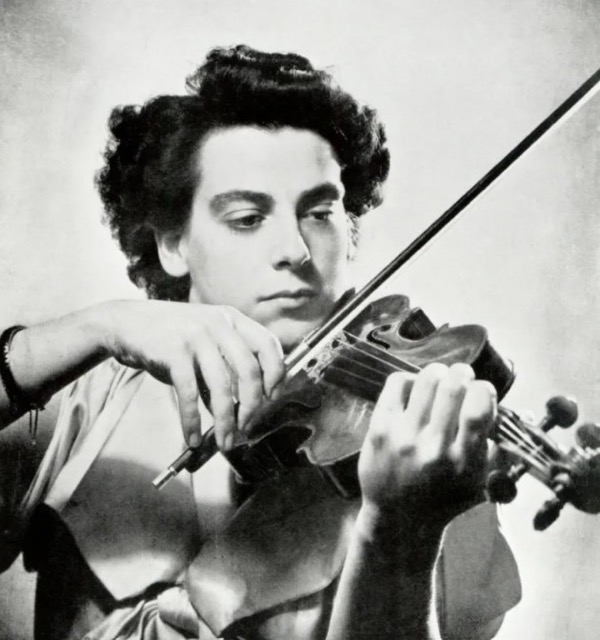
Ginette Neveu
Ginette Neveu – Chausson Poème (studio recording in 1946)
Born in Paris in 1919, Ginette Neveu displayed astonishing musical talent from an early age.
She received her first lessons from her mother, a violin teacher, and by the age of 7 was already performing major concertos by Bruch and Mendelssohn.
At just 11 years old, Neveu won the Conservatoire’s premier prix (first prize), confirming her status as a violin wunderkind.
Famed pedagogue Carl Flesch was so impressed that he offered to teach her free of charge, reportedly telling the young Ginette, “My child, you have received a gift from heaven… All I can do is give you some technical advice.”
Neveu’s breakthrough came at 15, when she entered the inaugural Henryk Wieniawski International Violin Competition in Warsaw in 1935. There, the teenage girl astonished the jury and audience alike and clinched the first prize, outperforming dozens of seasoned violinists, including 26-year-old David Oistrakh.
In the late 1930s, she toured Europe, the Soviet Union, and America, earning admiration for her intense, soulful playing. The outbreak of World War II briefly interrupted Neveu’s ascendant career, confining her largely to occupied Paris.
But after the war, Neveu resumed her trajectory as one of Europe’s foremost young virtuosos. Joined by her brother, Jean Neveu, at the piano, she delivered lauded performances across continents.
A 1947 Carnegie Hall recital introduced her to American audiences and drew rave reviews; critic Virgil Thomson hailed her as “the finest, from every point of view, of the younger European artists,” noting a special intensity in her playing.
Tragically, Ginette Neveu’s rising star was extinguished at age 30. In October 1949, while en route to a concert tour in the United States, she boarded Air France Flight 009, departing Paris for New York. Her brother Jean accompanied her on the journey.
During a refueling stop in the Azores in the early hours of 28 October 1949, the Lockheed Constellation aircraft crashed into a mountainside on São Miguel Island. All 48 people on board perished, including Neveu, her brother, and famed French boxer Marcel Cerdan.
Neveu’s Stradivarius violin was destroyed in the crash.
Josef Hassid (1923–1950)
26 years old
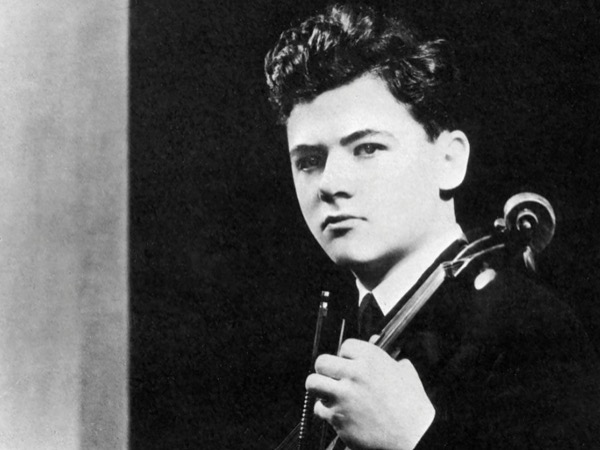
Josef Hassid
Josef Hassid: The complete recordings (1939/40)
Born in 1923 in Suwałki, Poland, to a modest Jewish family, Hassid was a self-taught violin wunderkind who quickly outpaced his local teachers. By age 10, he was studying at Warsaw’s Chopin Music School.
In 1935, the 11-year-old Hassid entered the Wieniawski Competition in Warsaw – the same event that Ginette Neveu won. Too young to place among the top laureates, he nonetheless made a strong impression before a memory lapse in his performance cost him a prize.
Hassid began working with Professor Carl Flesch in 1937. Just as he’d done with Neveu, Flesch agreed to teach the 13-year-old prodigy free of charge, later remarking that Hassid’s talent was “too extraordinary” to be ignored.
Josef Hassid debuted in London in 1940 to great acclaim. After one Wigmore Hall recital that year, The Times praised his imagination and musical insight. Violinist Fritz Kreisler remarked that a violinist like Heifetz came around once every hundred years, while one like Hassid came around once every two hundred years.
Yet even as his star rose, storm clouds gathered. Hassid began exhibiting troubling mood swings, anxiety, and lapses in memory beyond normal youthful nerves.
By early 1941, only months after his triumphant London debut, the 17-year-old violinist began showing signs of severe mental illness. He became sullen and withdrawn, at times not even recognising close friends, and developed a sudden aversion to his violin and even to his devoted father.
Doctors diagnosed him with acute schizophrenia. In June 1941, Hassid was admitted to a psychiatric hospital in Northampton, where he underwent insulin coma therapy and electroshock treatments.
Despite brief improvements, Hassid’s condition deteriorated. He was committed to an asylum in late 1942.
In October 1950, after nearly eight years of illness and institutionalisation, doctors performed a last-resort procedure – a prefrontal lobotomy – in the hope of relieving Hassid’s schizophrenia symptoms.
The 26-year-old developed a postoperative infection that led to meningitis, and he died on 7 November 1950.
It was a quiet, tragic end for one who only a decade earlier had been hailed as a once-in-two-centuries virtuoso.
Conclusion
The early deaths of violinists Michael Rabin, Ossy Renardy, Julian Sitkovetsky, Ginette Neveu, and Josef Hassid were all major blows to the history and development of violin playing.
Their loss meant that music lovers were denied decades of artistry: countless performances, recordings, and musical insights that would never be realised.
And yet, within the time they were given, these five violinists reached artistic heights that most musicians never attain, leaving legacies that continue to educate, challenge, and inspire new generations of musicians and music lovers long after their deaths.
For more of the best in classical music, sign up for our E-Newsletter